POEM: Man’s Best [and Faster] Friend

img_2586

Once there was a dog and a man.
The dog chased and the human ran.
The dog got leaner, the man fitter.
But sometimes got bit, and being bit got bitter.


Chased, one day, a bone in hand.
The man devised a clever plan.
Raising the club, he flung it aside.
The dog caught its meal in mid-stride.


From that day on man carried meat.
To offer dog a tasty treat.
Dog, it seems, had trained its master.
No more racing to get faster.


Thirty thousand years then past.
Pavlov trained at dog at last.
Humans are slow, but can learn.
As the world, in due time, turns.


BOOK REVIEW: Inside Jokes by Matthew M. Hurley, et. al.

Inside Jokes: Using Humor to Reverse-Engineer the MindInside Jokes: Using Humor to Reverse-Engineer the Mind by Matthew M. Hurley
My rating: 4 of 5 stars

Amazon page


This book examines the science of why we find funny what we find funny. Most people probably feel about this as did E.B. White who said, “Analyzing humor is like dissecting a frog. Few people are interested and the frog dies of it.” Still, while analyzing humor may not be as fun as reveling in it, it’s fascinating to scientifically inquiring minds.

Humor is universal (not the humor of a specific joke, but the experience of somethings being humorous.) A skilled science fiction writer might conjure up an alien race that is credibly humorless. But it defies credulity that even the remotest of aboriginal Earthling wouldn’t giggle or guffaw at the sight of an off-course ball careening into an unsuspecting man’s crotch. Humor’s universality begs certain questions. First and foremost, one expects there to be some evolutionary advantage to a sense of humor. That evolutionary mechanism is precisely what Hurley, Dennett, and Adams attempt to demonstrate in this book. The authors suggest that the pleasure associated with humor is a reward for recognizing an incongruity, and they go into great deal to fill in the details needed to explain the panoply of things people find funny, while suggesting why alternate explanations are inferior.

While there’s a lot of frog-killing academic analytics and needlessly messy scholarly language, this book does offer a vast collection of examples of humor to support and clarify the authors’ points. So, unlike many books on evolutionary and cognitive science, this book does have a built-in light side. WARNING: there’s also a discussion of why some attempts at humor fail. This means one is also subjected to a number of puns, elementary school jokes, and comedic misfires that show the reader why sometimes humor implodes.

The book starts by building a common understanding of what humor is. It turns out that this isn’t simple because people find many different kinds of things funny–from caricatures to wordplay. (And, whatever the initial evolutionary purpose of humor, our species has run with that reward system to places that couldn’t have been readily anticipated.) Next, the authors discuss the many varieties of theories of humor that have been raised. This subject has been studied for some time, and thinkers have suggested that humor’s pleasure derives from a number of different causes from feeling superior to recognizing surprise–just to name a couple. After considering the competition, Hurley et. al. start laying out the basis of a cognitive / evolutionary explanation. In chapter five they describe 20 questions they think must be dealt with, and–in the last chapter (13)–they give their responses as a summation of the book’s main points. Along the way, the authors take on important related questions such as why humor sometimes fails, what others will see as the weakness of their argument, whether a robot could be humorous, and why we laugh. The last point opens another can of worms. Even if one concludes–as the authors have–that humor is a reward system for recognizing incongruities, the question of why there is an advantage to spontaneously announcing that recognition still arises.

There’re are a few graphics in the book, mostly these are cartoons and humorous photos that serve as examples. The book is published by MIT Press, so all the usual scholarly features of notes and citations apply.

I found this book to be thought-provoking, and the plentiful examples of jokes made it enjoyable to read as well. I’d recommend it for those interested in the science of the mind. It’s a bit dry in places for readers looking for light reading about humor.

View all my reviews

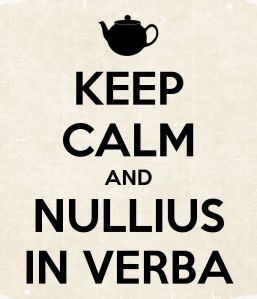
POEM: Nullius in Verba

nulliusinverba1

Said Socrates, “Oh, those poor bastards, for they think they know.

“I may be an ignorant slut, but I know I know not.”

[I paraphrase.]

My point, if I have one, is that “know” is an overused word.

Stinking up the discourse, like a bloated, floating pig turd.

[Remember Jim Carey, in the movie “Liar, Liar”]

“I object, Your Honor”… “Because, it’s devastating to my case.”

It’s a refrain seldom stated, but oft implied.

It works quite well, if you only talk to one side.

Fault us not for we’re wired to be certain.

If the cave wall shadow might be a tiger,

you don’t wait to see whether it’s a mouse.

That said, we’ve evolved these huge honking brains.

Our prefrontal cortexes might withstand the strain–

of asking:

How do I know this?

What if I’m wrong?

Might my mind deceive?

Facts: cherry-picked or  strong?

POEM: Elusive Lunatic

img_4320

he’s not your run-of-the-mill maniac

thrice escaped and twice hauled back

steely-eyed with a devil’s grin

he invented seven new deadly sins


he watches the “can haz cheezburger” cats

and will stop to fix an old lady’s flat

he’s got two souffles baking in the oven

and is cooking meth on the stove above ‘em

POEM: Trans-Temporal Vase–Possibly a Vaaz of Ming Origin

img_1075


Mama said, “Don’t touch that!

“That’s a Ming vase.”

[pronouncing it “vaaz”]

It probably wasn’t.

Mama calls things pricier things—e.g. Timex = Rolex.

Her gist is she can’t afford a broken one.

I’ll admit I’m no stranger to breaking stuff,

and not just flimsy stuff– cast iron, granite, you name it.

You could say breaking things is my superpower.

Anyhow, the vase is Chinese and looks old.

But my hand was already on it.

You’d think it would be cool and smooth.

But, it was tingly and, well, not solid.

My fingers seemed to sink into it–

like a hologram or a ghost.

So I nudged it a bit.

Turns out it was solid; it tipped.

I moved to catch it,

but it just hung there, tilted on air.

Well, I had to know how long it would stay tipped.

I stared, wondering if mama would snap a pic with her camera.

As I had this thought, the vase tumbled off its stand.

I grabbed for it, touching it with my fingertips

just as its lip—it was upside-down—crashed into the floor.

***

Time oozed; cracks spread through the vase and the world.

It shattered in slow motion.

A crackly light—blue and white—crinkled through the room.

Silence.

No breaking noise, nor the expected holler from mama.

Just white and blue arcs of light, becoming blinding.

***

Then I was squatting and reaching in another room.

I toppled face-first onto brown floor boards.

The vase was upright, whole, and sitting by the wall,

seeming like a person watching me fall in quite amusement.

The vase’s glistening white and blue stood out in the dark brown room.

Dust or tarps covered everything else.

It was a storehouse packed with fancy junk.

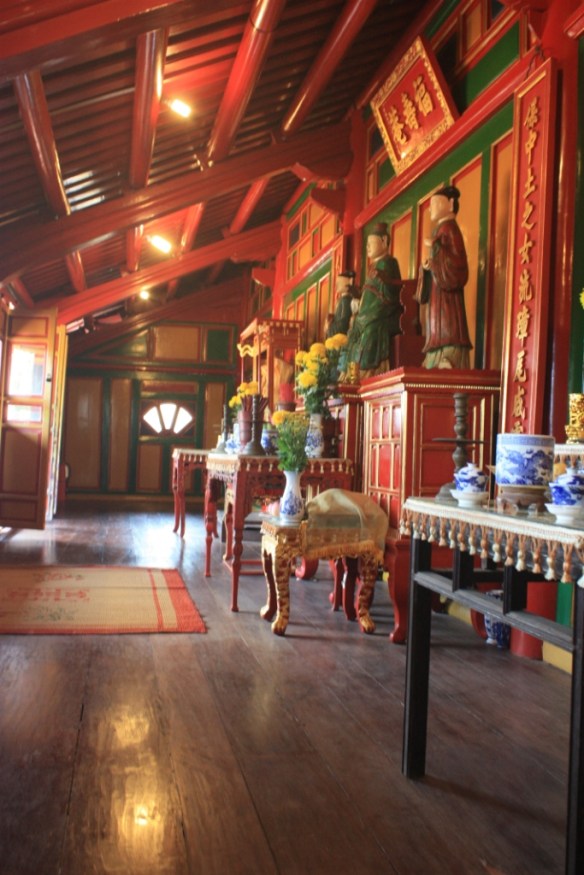
It couldn’t be confused with the temple I’d been touring with my mom.

That was bright and neat, red and gold, and had ornamental dragons.

The door flew open.

I gasped, expecting a whooping, or at least a stern talking to.

I crab-walk scurried when I saw the man who charged in.

He wore an armor that looked like rows of little roof tiles.

And he had a straight sword stuck into his belt.

I feared he’d draw the sword and poke me in my tender bits,

but he didn’t seem to see me—hard to miss as I was.

Calmed by my invisibility, my attention went to soldier’s hand.

In it I spied the spitting image of the vase I’d knocked over.

I thought the soldier would notice the resemblance,

but he didn’t notice the vase on the floor–

even though it was clean and shiny like nothing else in the room.

He put his vase on a shelf with some cobwebby bric-a-brac.

Then he spun, moving back toward the door.

He didn’t get outside before a woman barged in.

She had a lot of hair parked up on top of her head.

She was pretty, except that her skirt went from her armpits to the floor.

She was shouting in Chinese.

I don’t know exactly what she was saying,

but she was angry and her gist was that she wanted the vase.

And it didn’t seem like she just needed to hold some flowers.

Well, the soldier shoved her roughly.

She fell square on her caboose.

He drew the sword, and started shouting back.

His gist was that the vase wasn’t hers anymore.

He pointed the tip of the sword right at her face.

I shouted, but he didn’t hear me any better than he saw me–

my voice like one of those whistles that dogs hear, but people can’t.

I was going to shove him,

but shoving an angry man with a pointy object seemed like a bad idea.

Anyhow, she stood, sobbed, talking less angry and more pleading.

He backed her out the door at sword point.

The door closed to wailing sobs and rattling chains.

It occurred to me then that I was locked in a storehouse for confiscated fancy junk.

I searched my musty new cell up and down.

There were stairs to a loft, and I climbed them.

It was more storage,

but there was a door to bring things up by a pulley that dangled from the ceiling.

But it wasn’t a door, more of a piece of wood cut to cover the opening.

I unlatched it.

It fell smack down onto the head of a green, glassy doggish-liony statue.

The dog-lion’s head broke right off at the neck.

[Establishing that my knack for breaking stuff extends to worlds in which I can’t be seen or heard.]

Anyhow, I looked out to see if I was clear to escape—

forgetting that no one seemed to be able to see me.

There was just the woman—once angry, now sad.

She was kneeling in the mud in her fancy up-to-the-armpits skirt.

She sure was broken up about that vase.

You’d think it was her dog or her granddaddy.

I couldn’t see why she was so upset,

but it only seemed right to give the vase back to her.

So I went and got the vase that the soldier put on the shelf.

[Right then, my plan was to put the vase that came with me in its place, but more on that…]

I couldn’t very well chuck the vase down to her, her all teary-eyed.

So I snagged a small tarp, folded it, and put the vase into the tarp.

Taking the tarp upstairs, I called to the lady.

But she couldn’t hear me—maybe she was just too sobby.

So I took a shard of the lionish-dog’s neck, and winged it in her direction.

The green piece bounced, spattering some mud onto her skirt.

She looked over.

She scurried toward the storehouse, wiping her eyes, when she saw me lowering the vase.

Wouldn’t you know it, that slippery vase shifted in the tarp, falling out the end.

I gasped again, remembering that my superpower worked here,

but the woman caught it, hugging it to her chest.

I dropped her the tarp, and she swaddled the vase in it.

She cradled the vase like a baby,

looking up in my direction, seemingly happy and grateful.

I had to work my nerve up to jump out of that loft,

but figured I should put the other vase in place of the one I’d given away.

I was sick with sad and lonely.

I was stuck in a place where I knew no one and couldn’t speak the language.

Even if I had spoken Chinese, no one could see or hear me.

But an idea formed.

I picked the vase up, and, instead of putting it on the shelf,

I smashed it against the floor.

***

[blue and white crackly light]

And there I was once again, a tourist in a temple in a far away land,

my fingers barely touching the vase.

I yanked my hand back like that vase was a scalding pot.

Mama said she had something called “temple fatigue.”

So we went for ice cream.

Ice cream is safe.

Ice cream never banished anyone to ancient lands or to an alternate dimension.

At least, I’d like to think that…

POEM: Worse Ways

img_0488

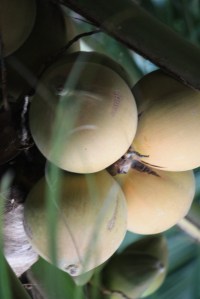
Every few days a villager steps from his hut

only to be killed by a falling coconut.

It’s a death with the taint of the inglorious.

Dying should somehow be more laborious.

But what’s more the mark of courage and grace,

than causing people to smile at Death in its face?

A life punctuated by one misstep is not to be bemoaned.

It beats a life whose living has been indefinitely postponed.

img_0486

POEM: A Zombie’s Dilemma

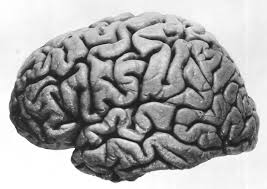
brain


I ambled out the gate, down the street, and noticed:

  • Everyone was going my way.
  • Everyone was on foot.


Well, you can imagine what I thought,

I’ve fallen in with a zombie horde!


But, how to check?

Somehow asking,

“What is your stance on raw brain?”

seemed awkward.


So I concluded that I was—unquestionably—among zombies.


A sadness followed.

Couldn’t they smell that my brains were fresh, disease-free, and everything a Zombie finds delicious?

Did they know something that I didn’t?

Had my brain gone bad without my knowing?

And how could one ever know whether the thing one knows with is sour?


The sadness was short-lived.

A dilemma followed.

For I saw a man walking toward me, against the horde’s flow.

If I didn’t club him in head and try to eat his brain—given his clear unhorde-like behavior–would the horde realize that I was an imposter?


If I did… Well, I would be worse than Tom Hanks trying to get into that coconut in “Cast Away.”

Quite frankly, I had no idea how to get to the brains.

Should that be something I should know?

A piece of common knowledge I’d lost when my brain curdled?


But the horde didn’t descend on the man.


So I concluded it was–unquestionably–a defective zombie horde.


And I went about my day.

POEM: The Glazed Eyes of Mega-Mart Refugee

800px-barf_soapI’m like a Pyongyang refugee.
Detergent, far as the eye can see.
In some Seoul department store,
on the cleaning products floor.


I reject your bolder and your brighter
like a Smurf-smashing gorilla fighter.
It’s the same stuff, different box.
I’ll go beat my britches on the rocks.

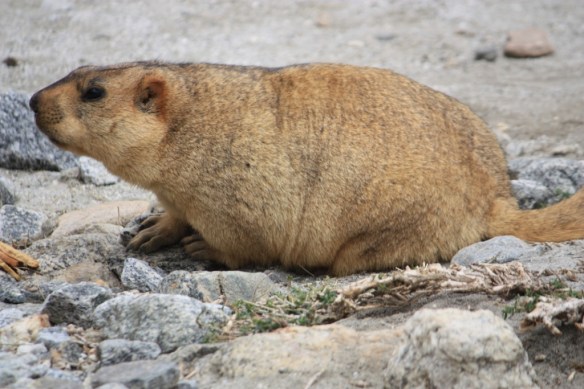
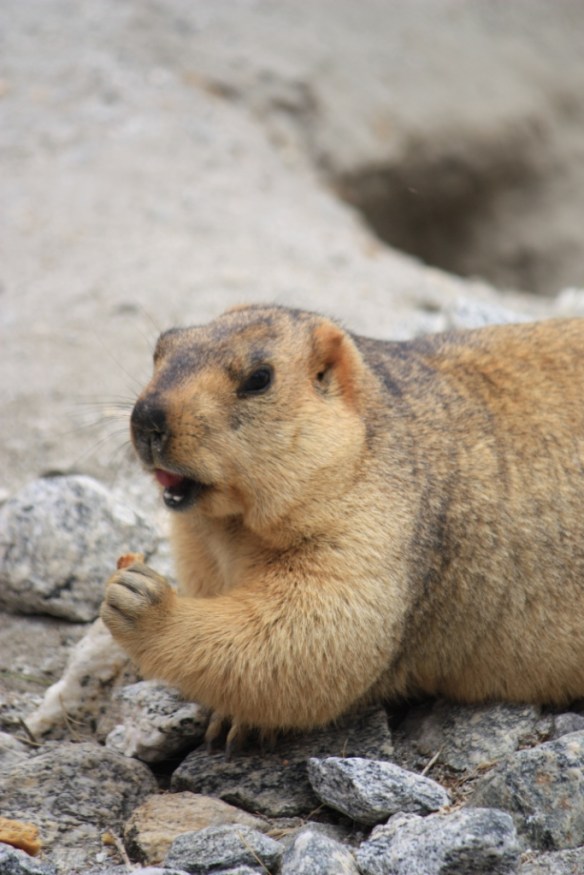
DAILY PHOTO: Marmot Along the Road to Pangong Tso

Taken along the road to Pangong Tso in August of 2016

Taken along the road to Pangong Tso in August of 2016

IMG_2577


The one on the bottom was rocking out, singing “Don’t Stop Believin'” by Journey into an air mic. Not really, but you can imagine it, can’t you? In fact, I bet you now have that tune stuck in your head. You’re welcome.

POEM: To BE… Or Not

Copy of IMG_1580“What do you want to BE when you grow up?”

They ask you when you’re just a little pup.

So, what part of what I must BE,

is different from the me you see?

Dad thought, “the part that they’ll pay you for.”

Like an allowance for finishing a chore?

“Yes, young man, but you can safely assume, 

no one else will pay you to clean your room.”


Kids don’t think of being gainfully employed.


Which seems to make grownups quite annoyed.

At five, I wanted to be a cowboy.

“Son, there’s no jobs in that line of employ.”

That’s OK, then I’ll be an Indian.

“You’d have to be born that way, my friend.”

I wasn’t born a doctor, but you said that’s OK.

“That’s not the same, son, what can I say?”

I know what then, Dad, I’ll be the Batman!

“Come on, son, that’s not a feasible plan.”

You’re thinking Superman, Batman has no powers.

“Bruce Wayne by day, Batman at night, where’s the sleeping hours.”

You have a point there, you’ve got me stumped.

Thinking myself prematurely defunct.