BOOK REVIEW: Surviving the Extremes by Kenneth Kamler

Surviving the Extremes: What Happens to the Body and Mind at the Limits of Human EnduranceSurviving the Extremes: What Happens to the Body and Mind at the Limits of Human Endurance by Kenneth Kamler
My rating: 5 of 5 stars

Amazon page

The title says it all. This is a book about all that can go wrong with the human body when it’s exposed to the most extreme conditions possible—including places where no human can survive without the benefit of modern technology. The medical science provides plenty of tidbits of fascinating food for thought, but it’s the stories of survival (or, sometimes, the lack thereof)—many of which the author, Kenneth Kamler, M.D., was present for—that make this a gripping non-fiction read.

There are only six chapters, addressing survival in the jungle, on the high seas, in the desert, underwater (diving), high in the mountains, and in space. There’s also a prologue that sets up the book with examples from Dr. Kamler’s experiences at high elevation (specifically Mount Everest.) Each chapter is full of illuminating stories about the threats to human life that exist in all of the aforementioned environments. The author is a hand surgeon who made a secondary specialization through expeditions to extreme environments to deal with the maladies that are largely unknown to the average person’s day-to-day existence—from pulmonary edema to exotic Amazonian parasites. A few of the chapters feature mostly stories of Kamler’s own experiences. These include the chapters on the jungle, deep-sea diving, and high altitude climbing. For other chapters Dr. Kamler draws together fascinating cases of survival and perishment in extreme environments such as living in a life raft on the high seas.

Besides considering what might kill you in extreme places, this book also reflects upon a couple of other interesting tangential questions. First, what adaptations (cultural or physical/genetic) do the locals have who live at or near these extremes that allow them to live? A fascinating example of this seen in the explanation of how Sherpas of the Himalayas differ from the Andean Indians who live at high elevations in terms of their biological adaptations to elevation. These two peoples living under similar conditions share some common adaptations, but other adaptations are quite different. On a related subject, Kamler also looks at what adaptations other species have developed to allow them to be so much more successful in some extreme environments (e.g. seals in water.)

Second, the role that x-factors like belief and will to survive play are never shunted aside as irrelevant anomalies by the author. Kamler devotes an epilogue to the subject of will to survive. Dr. Kamler was at one of the camps above base camp on the day of the 1996 Everest tragedy in which 12 perished. Kamler saw and advised on the treatments of Beck Wethers and other severely frostbitten climbers. Wethers’s story is particularly fascinating as he lay freezing in the snow overnight in a blizzard, apparently snow blind—though it later turned out to be an altitude related problem with an eye surgery (radial keratotomy)—before climbing to his feet and shambling into the wind (his only guide to where the camp might be.) Kamler considers the science of how Wethers neurons might have fired to get him to his feet against what seems like impossible odds, but concedes there’s much we don’t understand about what separates survivors from those who succumb.

I found this book to be fascinating and would recommend it to anyone interested questions of what a human is ultimately capable of. If you’re interested in medicine, biology, or survival, you’ll likely find this book engaging.

View all my reviews

BOOK REVIEW: The Secrets of Judo by Jiichi Watanabe and Lindy Avakian

The Secrets of Judo: A Text for Instructors and StudentsThe Secrets of Judo: A Text for Instructors and Students by Jiichi Watanabe
My rating: 5 of 5 stars

Amazon page

Every once in a while, one stumbles onto a book that one feels desperately needed writing but which one thought didn’t yet exist. In the case of The Secrets of Judo, the book has been around for almost 60 years. First off, a more telling title for this book would be “The Science of Judo” or “The Physics of Judo.” It’s not a book that deals in arcane knowledge, as its title might suggest, but rather applies science to the skills of throwing, pinning, and submitting seen in judo.

While there’s a brief discussion of the nervous system as it pertains to reaction times, the bulk of the book is classic mechanics applied to judo techniques. The first six chapters (which constitute a little over half the book) provide a background of the relevant principles of both physics (e.g. force, momentum, and center of gravity) and judo (e.g. kuzushi [unbalancing], seiryoken zenyo [maximum efficiency], and ukemi [breakfalls].) The last two chapters provide explanations of how forces are applied to achieve successful throws (ch. 7) and grappling techniques—i.e. pins, chokes, and locks (ch. 8.)

I found this book to be invaluable and would recommend it for anyone who’s interested in grappling arts generally (whether judo or not) or even the science of human movement. The writing is clear. There are some mathematical equations, but just the algebraic formulas seen in basic physics. The graphics (mostly line drawings with a few photos) are useful, especially the drawings of the sequences of techniques which have letter labeled arrows to clarify the lines of force.

I should note that I read the original (1960) edition. Tuttle put out a 2011 edition that is probably what you will get–unless you stumble onto a copy in the used bookstore as I did. From a quick glance at the table of contents of the new edition, it doesn’t look like a major change and I suspect the new edition is at least as good.

View all my reviews

BOOK REVIEW: Things Fall Apart by Chinua Achebe

Things Fall Apart (The African Trilogy, #1)Things Fall Apart by Chinua Achebe
My rating: 4 of 5 stars

Amazon page

Things Fall Apart is about a man who conducts his life ever trying to distance himself from his father. In the process, he sows the seeds of his own destruction. Residing in the small (fictional) Nigerian village of Umuofia in the late 19th century, Okonkwo strives to be hyper-masculine in everything he does. As a young man he becomes a village wrestling champion and, when it comes time to start farming, he’s driven to be the best farmer possible in order to pay off his debts and to be as wealthy as possible. He feels that his father, who was constantly in debt and negligent in his familial duties, was weak and effeminate. On the one hand, Okonkwo’s drive is respect worthy, but, on the other, his need to appear strong in the extreme comes off as a bit pitiful.

There are a couple of crucial events in Okonkwo’s life in which his need to appear manly results in great inner distress. The first occurs when it’s determined that a young man who’s been staying with Okonkwo’s family must be killed. (The young man was sent to Umuofia as a settlement for a wrong between the young man’s father and an Umuofia resident.) Okonkwo has been a father to the young man. Even when a village elder tells Okonkwo to have no part in the killing owing to being like a father to the boy, Okonkwo feels he must participate lest he be seen as effeminate. Of course, Okonkwo is wracked with guilt because he murdered a boy who’d been like a son to him. Later, an accidental discharge of Okonkwo’s firearm kills an innocent young man. The worst part of this for Okonkwo is that an accidental killing is seen as a “woman’s offense.” As punishment, Okonkwo and his family are sent in exile on another village for seven years. Okonkwo isn’t so much torn up by killing another innocent as by the fact that the way it happened makes him look girly in the eyes of others—or so he believes.

Besides the character portrait of Okonkwo, the book is also a commentary on the nature of colonialism and proselytizing missionaries. The first part of the book is set in a pre-colonial state, but in the latter half the rapidly developing tensions between the missionaries and the local villagers is featured. When Okonkwo and his family return to Umuofia after seven years, he finds that white men have built a church and are actively seeking to turn the villagers away from the indigenous beliefs. Of course, for Okonkwo this is just too much, and he can’t believe others are putting up with this. (Adding to his torment is the fact that his son is one of the converts—possibly because that son himself wants to distance himself from the father who murdered his best friend [the boy from the other village.]) Okonkwo is ultimately unable to tolerate that the world has become something so different from what he believes is right, and to continue living means to steer away from the path that he has locked his life into.

This short and thought-provoking book is a great window into pre-colonial Africa and the clash of worldviews that colonization brought. It’s also a cautionary tale about not having sympathy for the failings of one’s father—not to mention the weakness inherent in our own humanity.

View all my reviews

BOOK REVIEW: Anno Dracula by Kim Newman

Anno DraculaAnno Dracula by Kim Newman
My rating: 5 of 5 stars

Amazon page

Anno Dracula is set in a world subsequent to the events of Bram Stoker’s Dracula. In the world of Anno Dracula, Dracula kills Van Helsing (not the other way round) and becomes more powerful than ever. In fact, the Count has married himself into line to become king. Vampires flourish in the open and their numbers are swelling. But a few of them are being gruesomely murdered. In Newman’s work, the vicious Whitechapel murders attributed to Jack the Ripper target young, “turned” working women of Whitechapel. The killings attract attention and become politically charged. The book’s plot revolves around the investigation by an unlikely duo, Charles Beauregard (human) and Geneviève Dieudonné (Vampire elder), into the murders.

Newman creates a fascinating world that blends not only his own characters (e.g. Beauregard and Dieudonné), but also characters from other popular works set in the 19th century as well as from our own history. Some of these borrowed characters are important to the story, others are mere cameos, and still others are references to the departed or imprisoned. Among the book’s fictional pantheon are those from works by Robert Louis Stevenson, Oscar Wilde, H.G. Wells, Sir Arthur Conan Doyle, and—of course—Bram Stoker. Bram Stoker lends the critical character of Dr. John Seward to the book, although there are references to most of that book’s major characters. (You’ll miss some connections if you haven’t read Dracula, but you’ll still be able to follow the story.) The next biggest contributor of characters is Sir Arthur Conan Doyle. Mycroft Holmes, Inspector Lestrade, and Professor Moriarty are all present in the flesh, though the latter plays a small role, and others—including the great detective, himself—are referenced throughout.

Many of the real world characters are literary greats (poets, playwrights, and novelists) including George Bernard Shaw, Lewis Carroll, Alfred Tennyson, and Oscar Wilde. However, also included are political figures, royalty, and—of course—the victims of Jack the Ripper. This mixing of the literary and historical worlds lures book-lovers further down the rabbit hole.

If this book seems like a murder mystery, it’s not. One of the interesting elements of Newman’s approach is that he reveals the killer from the outset. While we know who the killer is from the book’s opening, we don’t know whether or how he will be brought to justice—or what precisely justice means in this case. The book is more about the web of intrigue that surrounds the murders than it is about the murders. Ultimately, the book takes in a much bigger picture than a few murders in the seedy side of London.

Anno Dracula is intriguing and readable. If one has read Dracula, the various Sherlock Holmes stories, The Strange Case of Dr. Jekyll and Mr. Hyde, The Island of Dr. Moreau, and other contemporary literature, it’s all the more enjoyable for the way it artfully places these all in the same universe. I’d highly recommend this book for readers of the classic popular fiction.

View all my reviews

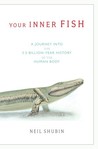
BOOK REVIEWS: Your Inner Fish by Neil Shubin

Your Inner Fish: A Journey into the 3.5-Billion-Year History of the Human BodyYour Inner Fish: A Journey into the 3.5-Billion-Year History of the Human Body by Neil Shubin
My rating: 4 of 5 stars

Amazon page

University of Chicago paleontologist / anatomist, Neil Shubin, charts the progression of life that ultimately leads to the human body. Professor Shubin’s discovery of one of the earliest fish (the Tiktaalik) to survive at the fringes of land makes him well placed to delve into this topic. The book does tell the paleontological detective story involved in tracking down the Tiktaalik. Shubin also uses his experiences in cadaver dissection to elucidate some of his points. However, the book goes beyond these stories to unshroud the development of the arms, hands, heads, and sense organs that lead to our own structure.

Along the way, the author does an excellent job of clearly presenting the overwhelming evidence in support of Darwinian evolution. A fine example of this can be seen in the quote, “If digging in 600 year-old rocks, we found the earliest jellyfish lying next to the skeleton of a woodchuck, then we would have to rewrite our texts.” Needless to say, no such discovery has been made, and the layers of rock remain an orderly record of the progress of life from simple to increasingly complex. Shubin spends more of his time talking about the evidence in terms of specific anatomical detail. For example, “All creatures with limbs, whether those limbs are wings, flippers, or hands, have a common design. One bone,… two bones,… a series of small blobs…”

The book is arranged in eleven chapters. The first chapter provides an overview and tells the story of the search for and discovery of the Tiktaalik. Then the book goes on to explain the development of limbs, genes, teeth, heads, anatomical plans, and the various sense organs. A final chapter looks at what our evolutionary history means for our present-day lives (particularly what systematic problems the process has left us, from hernias to heart disease.) The book covers many of the structures that define us as human, but notably excludes the ultimate defining factor: our relatively gigantic brains. That’s alright; the evolution of the brain is surely a book or more unto itself. There are line drawings throughout to help clarify the subject, many of these show analogous structures between various creatures.

I found this book to be readable and informative. It’s both concise and clear. It’s approachable to readers without scientific backgrounds. I’d recommend it for anyone interested in learning how the human body got to its present shape.

View all my reviews

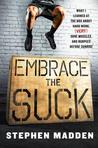
BOOK REVIEW: Embrace the Suck by Stephen Madden

Embrace the Suck: A Crossfit MemoirEmbrace the Suck: A Crossfit Memoir by Stephen Madden
My rating: 3 of 5 stars

Amazon page

Embrace the Suck is one man’s account of his experience with Cross-fit and other high intensity fitness regimens, including SEALFIT 20X. While Madden comes across as a regular Joe, i.e. not one of those crazed individuals who wreck their bodies through lack of rest, failure to heed the body’s warnings, or by way of starvation diets pursued to get that perfect cut, he’s a cheerleader for Cross-fit. If one is looking for an unbiased account of the strengths and weaknesses of Cross-fit, there are probably more objective accounts of the system’s pros and cons. This book is for someone who’s trying to psych themselves up for high intensity interval training. In that regard, the book does a good job because Madden always portrays himself as a human with the unique set of strengths, weaknesses, and limitations that condition entails. He succeeds because he guts it out in the company of the people around him who are portrayed as being more fit (at least in some dimensions) and driven than he.

Still, Madden’s account does give one a taste of the ugly side of the notoriously cult-like fitness system. For example, there is the trainer who refers to orange juice as poison–because it’s a high glycemic index carbohydrate. Even more disturbing is the wife who chastises him upon seeing a photo of him smiling as he crossed the finish line in a marathon–because it showed he hadn’t pushed hard enough. [Come on, it’s not as if, even if he’d died upon crossing the finish line from exhausting all bodily resources, that some Kenyan wouldn’t have been hours ahead of him.] Madden does include a chapter about pain and injuries, but it just suggests one should know what is run-of-the-mill fatigue and what is an actual injury. He mentions an example of a shoulder injury from his own body that he “should probably get checked out.” Furthermore, the final chapter seems to be a cautionary tale about packing too much training into too few days.

The book lays out the Cross-fit approach to exercise, and explains why it is so successful without getting deeply into the research. For those unfamiliar with high intensity interval training (HIIT), the general principle is that one constantly varies one’s workout, and that said workouts are done at maximum intensity with short and regimented rest breaks (though the core workout—i.e. the so-called WOD, workout of the day, is often quite short, i.e. 15 -20 minutes.) The track record for increasing fitness for this approach is good. Studies have indicated that one can get about the same level of cardiovascular benefit as one does from traditional cardiovascular exercise while building muscle (endurance activities like running pursued in isolation tend to result in muscle wastage) and reducing risk of repetitive stress injuries (because one is always changing one’s workout / movement.)

It sounds like there’s no down-side. The workouts are short (granted you may puke, but you’re out the door in an hour or less.) The benefits are high, and it doesn’t seem to be deficient in cardio—the one area in which one might think it would be. The jury is still out on the injury risk. Cross-fit puts out guidelines (which Madden explains) on how frequently one should take a rest day and on the need for perfect form. Those who follow the guidelines may not have any higher risk than other exercisers (the science remains insufficient.) However, the problem may be that it’s hard to maintain the aforementioned perfect form when a trainer is shouting, “faster, faster, faster” in one’s face. Furthermore, moderation and following rest suggestions has apparently not proven the strong suit for many Cross-fitters, some of whom come down with rhabdomyolysis (a deterioration of skeletal muscle from over-exertion / insufficient rest.)

Diet is, of course, an essential topic for any book on fitness, and Madden touches on the two diets that are popular with Cross-fitters. One of the diets, The Zone, is quickly dismissed as being of little use to him because it requires weighing out one’s food portions, and that level of anal retentiveness is beyond his capabilities. The other diet popular in Cross-fit is the one that Madden practices and addresses in the chapter on diet. It’s the so-called Paleo diet—in which one is supposed to eat like one’s pre-agrarian ancestors–except if it involves a high glycemic index food that our ancestors ate, in which case, no. Madden stresses the 80% rule that other Cross-fitter put him on to. That is, follow the diet in a strict way 80% of the time, but allow for a cheat here and there of no more than 20%. Madden’s approach to diet, like his workout drive, seems more moderate and approachable than that of other individuals one sees in the book.

The most fascinating chapter was his description of completing the SEALFIT 20X challenge. This is a one [long] day program in which one trains like a Navy SEAL. It’s part of a fitness and mental toughness conglomeration headed by former-SEAL Mark Divine. This training is a bit different from the Cross-fit workouts in that endurance is a major challenge, and the mind is challenged as much as the body. I don’t just mean that will is important, but the SEALFIT program tests one’s ability to use one’s brain under the pressure of intense physical training.

I’d recommend this book for those interested in learning about the Cross-fit and SEALFIT 20X experience. If one is trying to get an unvarnished view of Cross-fit, you may want to start with another book before getting to this one. It’s readable and thought-provoking.

View all my reviews

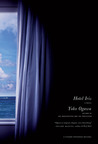
BOOK REVIEW: Hotel Iris by Yoko Ogawa

Hotel IrisHotel Iris by Yōko Ogawa
My rating: 4 of 5 stars

Amazon page

Hotel Iris follows a Japanese girl’s dangerous liaisons with a mysterious older man. Unlike 50 Shades of Grey, with which Ogawa’s novel shares the theme of a young woman’s introduction into a sadomasochistic relationship, the female lead, Mari, is attracted to a man who isn’t handsome, rich, or successful. Mari’s motivations are more intriguing and complex. This makes her relatable to a smaller demographic, but potentially more interesting to a much larger one.

As I fear I’ve made this book sound like hard-core erotica (i.e. word porn,) I should point out that it’s really character-driven literary fiction. There are only a couple of scenes that involve sexual activity—granted those are intense and graphic. However, what readers who stay with this short book are seeking to understand is what about this young woman’s life creates such an attraction for an old man who—in conjunction with the prostitute he hired—gets kicked out of the hotel at which Mari works. Mari’s motivation is far from obvious, and thus the reader is left trying to assemble a puzzle.

The biggest piece of this puzzle may be that Mari’s beloved father passed away years before, leaving her in both the care and employ of her over-protective and cold mother. The Hotel Iris is a small seaside hotel of a middling nature in an area that thrives or dives at the whim of tourists. Mari’s parents had owned the hotel, but now it’s just her mom. Mari, her mother, and one housekeeper share the workload. Mari’s mother believes the customer is always right, but she also has questionable morals in dealing with customers (i.e. if she can get away with cheating them, she will.)

In addition to trying to figure out what drives Mari, the reader also wants to learn whether the girl will make it through alright. The man she is having a dalliance with, who we know as “the translator” because he translates from Russian to Japanese and vice versa, is painted as an unsavory character. But the reader doesn’t know whether he’s a mostly harmless pervert or a killer with a cabin on a remote and scantly-populated island. He has dark appetites, but how tight his grasp on reality is remains uncertain.

I found this book to be highly readable. It’s short, well-written, and keeps the reader questioning. The Japanese penchant for grotesquerie is an unabashed feature of the book. I’d recommend it… just not for your church’s book club.

View all my reviews

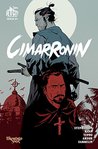
BOOK REVIEW: Cimarronin by Neal Stephenson, et. al.

Cimarronin: A Samurai in New Spain #1Cimarronin: A Samurai in New Spain #1 by Neal Stephenson
My rating: 4 of 5 stars

Amazon page

Cimarronin opens in Manila in 1632 with a masterless samurai (i.e. a ronin, hence the latter part of the name) about to commit ritual suicide. The ronin, Kitazume, is interrupted by a Catholic priest who Kitazume knows and who—it’s hinted—has the kind of nefarious past that one has trouble reconciling with the priesthood. The priest offers Kitazume a mission.

The opening hooks one. It raises several questions that the reader will want answered: Why is a Japanese samurai hanging out in the Philippines in 1632? Students of Asian history will recognize that Japan’s long warring period is a couple of decades past and there are a lot of warriors out of work. But is that all? Is the priest really a priest, and, if so, how does a blackguard end up a holy man? And most crucially, will Kitazume take the mission, and—if so—will he succeed (and will he be glad he did?) The reader always knows that the priest has something up his sleeve, but it’s only gradually revealed what that is.

We soon discover that Kitazume has some skill as a detective. This enhances our curiosity about the character. The higher echelons of law enforcement in feudal Japan were staffed by samurai, but it still adds another interesting dimension to the character.

The three book collection continues with the discovery that the priest is facilitating the transport of a Manchu princess to Mexico. (Philippines to Mexico, hence the “New Spain” subtitle reference.) The priest’s plot unfolds in the middle book, and we get a better picture of his scheme.

The second book ends with a fight with the Cimarrones—a bellicose, indigenous tribe (and the reason for the first part of the title,) and in the third and final book the Manchu Princess’s own scheme is revealed. The differing goals of the various major characters set up the potential for an excellent story. Kitazume has the simplest goal: to have a mission that makes life worthwhile and to conduct his life with some semblance of the virtue for which the samurai were known. The priest and princess weave a more complex web of scheming.

The story is peppered with flashback sequences that give us some of Kitazume’s backstory, and a substantial part of the third book is such backstory. The graphic artist uses a subdued scheme to make it readily apparent which panels are flashback and which are in the timeline of the story arc.

As this is the first three books of a larger collection, the ending is lacking (which is to say it’s not so much an ending as the set up for the story to unfold.) The story is much stronger in its beginning than its ending. The third book ends trying to entice one to read the concluding volumes more than it tries to wrap anything up. This situation also results in the fact that we don’t get a good picture of why Kitazume is the lead character in the story. I suspect that’s why there is so much backstory, to try to build sympathy and curiosity for the character while making him weak enough that his success is not apparent. At any rate, Kitazume doesn’t come off as the strongest or most competent character in the book by a long shot. Hopefully, this is so that he can pull out an underdog save in the end, but that’s just speculation.

I found this collection to set up an interesting story, but it doesn’t stand alone. It does have plenty of action and intrigue. If the historical fiction premise intrigues you, you may want to get the complete collection.

View all my reviews

BOOK REVIEW: Sleights of Mind by Stephen Macknik and Susana Martinez-Conde

Sleights of Mind: What the Neuroscience of Magic Reveals about Our Everyday DeceptionsSleights of Mind: What the Neuroscience of Magic Reveals about Our Everyday Deceptions by Stephen L. Macknik
My rating: 4 of 5 stars

Amazon page

Sleights of Mind explains magic tricks by telling one about the shortcuts, limits, and programming of brain (and attendant sensory systems) that facilitate such tricks. The reader needn’t be concerned that the book will spoil all the illusionists’ secrets for one. The authors carefully demarcate the beginnings and endings of spoiler sections that explicitly explain tricks. This allows a reader to skip over such sections if one doesn’t want to know the trick. I suspect few readers do skip the spoiler sections because that’s where the rubber meets the road in terms of the neuroscientific concepts being discussed. The spoiler sections are an attempt to comply with the magician’s code (the neuroscientist authors became magicians themselves) and to maintain a good relationships with the many magicians (some, like Teller or the Amaz!ng Randi, quite famous) who cooperated in the writing of the book.

Over 12 chapters, the authors explain the neuroscience of how various classes of illusion work. Most of the chapters address a specific class or subclass of illusion. The first few chapters deal with visual illusions. We look at the world in what seems like crystal clarity (at least with glasses on or contacts in), but there are many limitations and gaps in our visual processing system. While it seems like we are directly seeing the world around us, in point of fact, our visual experience is a product of the brain reconstructing information that the eyes take in—and it doesn’t do it as perfectly as our brain tricks us into believing. As the authors state it, “The spooky truth is that your brain constructs reality, visual and otherwise.” Chapter 3, deals with illusion in art, which is little outside the theme of the book, but it offers an opportunity to explain some intriguing facts about how the brain and eyes work in concert.

The next couple chapters (Ch. 4 and 5) deal with cognitive illusions. Just like our visual system, our conscious minds save energy by engaging in short-cuts that disguise the mind’s limits while offering the possibility of manipulation. The brain also works hard to reconcile what appear to be inconsistencies, and often this reconciliation leads us astray. Misdirection is discussed in detail. Our minds are primed to let certain actions and sensory inputs draw its attention, and humans are awful at paying attention to more than one input stream at a time. Teller explains that, “Action is motion with a purpose.” So, if one can give one’s movement a purpose (even scratching one’s chin) it will be ignored while movements seemingly without purpose are anomalous and draw attention. The authors introduce the reader to mirror neurons—the part of our brains that take observations of another’s actions and makes forecasts about that person’s intent. This system is highly hackable by magicians.

Chapter 5 informs us that we aren’t as good at multitasking as we think—which is to say we completely stink at it but tend to think we are awesome multi-taskers. The gorilla experiment is offered as a prime example of this situation. In the gorilla experiment, about half-a-dozen people, moving around randomly, pass a ball / balls among themselves. The subject is asked to count the number of passes. In the middle of this activity a man in a gorilla suit walks through the middle of the rapidly moving passers. When asked whether they saw the gorilla, most people say they didn’t (and those who do see the gorilla invariably offer a count of passes that is vastly off the mark.) [If this is either unclear or unbelievable, you can YouTube it.]

Chapter 6 examines multi-sensory illusions. The quintessential example is how our brains lead us believe that the sound of a ventriloquist’s voice is coming from the moving lips of a dummy. (Also, it seems like voices are coming from the lips of actors on-screen in the movies, even though the speakers are probably off to the side in the walls or ceiling.) Synesthesia (cross-wiring between senses and brain such that some people may always see the number 5 in red or hear a C-sharp in green) is introduced to the reader.

Chapter 7 explores the illusions of memory. Just as with our vision and attention, our memories aren’t as indelible as they seem to be. We think we’re calling up a transcription of the events of our lives, but really we’re remembering the last remembrance of said event. This can lead to a migration / distortion of events in the same manner as the kid’s experiment whereby one whispers a phrase into the ear of the kid in the next chair and it traverses the classroom. The original sentence “The cat is on the windowsill” invariably becomes something like “Lenny Kravitz steals puppies from the till.” (Have you ever experienced a situation in which a person remembers the details of an event substantially differently from yourself even if the broad brushstrokes are the same?) Some entertainers use pneumonic tricks to convince audiences that they have supernatural mental abilities when—in fact—they have merely turned understanding of memory to their advantage.

Chapter 8 considers how in-built expectations and assumptions are exploited by magicians and mentalists. Again, these methods work because our brains employ all sorts of energy-saving shortcuts. For example, our brains often do the same thing as Google’s search engine—filling in the blanks by taking advantage of one’s experience to avoid the need for costly cognitive processing.

Chapter 9 explains that our “free choices” are often not so “free” as we think. One of the most disconcerting, yet intriguing, facts to come from the onslaught of brain imaging studies since the 1990’s is that our decisions are made on a subconscious level before our conscious minds are even aware the decision has been made. Prior to this, we’d always been under the misapprehension that we are consciously making all these decisions–big and small–because the conscious mind is just a big credit stealer (to be fair, the conscious mind doesn’t recognize that it’s so out of the loop in decision-making.) So many of our decisions are made in predictable ways by emotional / automated responses, and mentalists use that fact to their advantage.

Chapter 10 is a catchall for topics that didn’t fit into earlier chapters, including hypnosis, superstitions, and the gambler’s fallacy (i.e. the idea that a roulette number that hasn’t come up in a while [or slot machine that hasn’t paid off recently] is bound to pay soon—regardless of the probability distribution that actually rules the outcome.)

The remainder of the book tells the story of the author’s try-out for a magic society and discusses the question of whether knowing the neurological and psychological roots of magic tricks will kill magic as a source of entertainment. I found the latter to be the more interesting discussion. The authors are optimistic about magic’s survival, and offer good reasons. After all, almost nobody believes that magicians are conducting supernatural activities [not even people who take some wildly unsubstantiated beliefs as givens.] Even knowing how the tricks work doesn’t create the ability to see through the tricks because so many of the factors that magicians exploit operate on a subconsciously programmed level, and such proclivities would have to be trained away. People who want to enjoy the spectacle of magic aren’t likely to go to the trouble of training themselves in that way.

I enjoyed this book even though I’m not particularly a fan of magic—though I did find myself watching quite a few YouTube clips of the magicians mentioned in the book. If you’re interested in how one’s mind and sensory systems work, and the limitations of those systems, you’ll find this book worthwhile. If you’re into magic, you’ll like it all the more so.

View all my reviews

BOOK REVIEW: The Monstrous edited by Ellen Datlow

The MonstrousThe Monstrous by Ellen Datlow
My rating: 4 of 5 stars

Release Date: October 27, 2015

Amazon page

This is a story anthology offering tales of monsters—just not your everyday monsters. In her Introduction, Editor Ellen Datlow said her solicitation for stories asked for “unusual monster stories.” She wanted neither “human monsters” (i.e. no pedophiles or serial killers) nor was she interested in your classic Transylvanian Count Dracula. With this book’s 20 stories, the authors succeed in meeting Datlow’s request—in several cases spectacularly. Some of the stories are chilling, others are creepy, and two are even humorous, but all feature monsters that are out of the ordinary, or—at least—the monsters are in extraordinary situations.

Without further ado, I’ll offer a brief synopsis of, and comments on, the stories in this anthology:

1.) A Natural History of Autumn by Jeffery Ford: Set in Japan, a salaryman takes a girl-next-door escort to a remote onsen (thermal springs bathhouse and inn.) Neither of the main characters is what they seem, and, therein, lies the story’s appeal.

2.) Ashputtle by Peter Straub: A beloved kindergarten teacher describes her life and experience of the disappearance of a bright student. This story comes closest to violating the “no human monsters” proviso, but it creates a character so intriguing that you don’t necessarily care.

3.) Giants of the Earth by Dale Bailey: Miners stumble onto something unexpected deep within the Earth. This wasn’t one of the more engaging or memorable works, though it does have an intriguing premise.

4.) The Beginning of the Year without Summer by Caitlín R. Kiernan: A professor and a young, female townie chat by lakeside, and also a discovered book is returned. This is one of two southern gothic pieces, and is more engaging for the conversation between the intelligent professor and a more “common” young woman than for monstrous or supernatural elements.

5.) A Wish from a Bone by Gemma Files: An archeological team in a war zone stumble into more than they signed up for. Like a terrestrial Aliens movie with Sumerian evil spirits in lieu of aliens.

6.) The Last Clean, Bright Summer by Livia Llewellyn: A teenaged girl in a dystopian future travels with her parents to the sea for a rite of passage of an unexpected and haunting variety. This is one of the most visceral entries, and the author captures the teenage voice to great effect. This is in my top five stories from the anthology.

7.) The Totals by Adam-Troy Castro: A get-together between monsters to discuss quarterly figures and give out performance awards. This is one of the humor-oriented pieces—though not to the extent of the Monsters animated movies. The two humor pieces (the other being How I Met the Ghoul) offer two different angles on monster humor. This piece is set in a monstrous world, but juxtaposed against that eeriness is the work-a-day feature of a staff meeting. (The other story is set in our world—or at least a very mundane world reminiscent of ours—and draws its humor from the introduction of the monster into the midst in a very banal environment.)

8.) The Chill Clutch of the Unseen by Kim Newman: The last monster killer waits for the last monster to steam into town. This is one of the entries with a wild west feel to it. A common approach in this collection is to create unusual monster stories by putting monsters that may or may not be usual (in this case they aren’t) into settings and across from characters that one wouldn’t expect to see them.

9.) Down Among the Dead Men by Jack Dann and Gardner Dozois: A man discovers that his best friend in a Nazi concentration camp is a vampire. Referring to the previous entry (i.e. the Kim Newman story), this is an example of a typical monster (a vampire) given new life by placing it in a context that one would least expect to find it—a concentration camp. This was also one of my top five from this collection.

10.) Catching Flies by Carole Johnstone: A girl and her baby brother are removed from a household (by a DFACS-like entity) after their mother dies from mysterious causes. I mentioned a story done in the voice of a teenager. This is one of a few entries written in the voice of a child—which is very apropos for an anthology about monsters.

11.) Our Turn Too Will One Day Come by Brian Hodge: A man is called in the middle of the night, and asked to come and bring a shovel—which is, needless to say, never a good situation. The monsters, while fascinatingly described and unique, are almost superfluous to this story. The monsters appear only at the end, and it would be a highly readable story without them—though it would be in the wrong collection sans the monsters.

12.) Grindstone by Stephen Graham Jones: A man who’s been shot up is fleeing from something across desolate territory. This is the other entry with a very Western feel to it. This is also one of the shortest entries of the batch.

13.) Doll Hands by Adam L. G. Nevill: Set in a dystopian future, a laborer in a luxury building takes matters into his own (doll-like) hands when he can no longer accept the atrocities the super-wealthy patrons of the building are perpetrating. One of the great features of this story is that it creates visual imagery that one isn’t sure whether to take literally or just descriptively. For example, the lead baddie is an old, rich woman who’s described in avian terms. It’s clear that something has gone terribly wrong in this world, though there is strategic ambiguity as to what. This is in my top five.

14.) How I Met the Ghoul by Sofia Samatar: A reporter conducts an interview with a ghoul in an airport lounge. This is the other story that is more comedy than horror. The comedy is born of putting the monstrous creature in a mundane setting during a workaday interview. It’s not even the kind of hard-hitting story that a well-known journalist would take on, but more like a cub reporter doing a human interest featurette.

15.) Jenny Come to Play by Terry Dowling: A former Siamese twin, separated from her twin as a teenager, admits herself into a psychiatric hospital where her psychiatrist tries to separate fact from fiction and the twisted imaginings of insanity from reality. These Siamese twins shared no common organs, just muscle, and were ideal candidates for separation as infants. However, their father kept them conjoined (and much worse) so that they could be the main attraction in his cabinet of curiosities. Not only is this story in my top five, I’d have to call it my favorite of the bunch. It reminds me a little of the work of the novelist team Preston and Child at their best. It has the same combination of creepiness and dark foreboding, while keeping one in the dark as to what imaginable events have actually transpired.

16.) Miss Ill-kept Runt by Glen Hirshberg: A family drives through the night to go to stay with family as if fleeing an ill-defined threat. This is another of the stories done in a child’s voice and perspective, and it captures that voice well.

17.) Chasing Sunset by A.C. Wise: A young man flees across country in an attempt to escape a demonic father who is after his body. This story offers the most impressive use of language. It’s one of the most enjoyable pieces to read, and, while it didn’t quite make my top five, it definitely gets honorable mention.

18.) The Monster Makers by Steve Rasnic Tem: A grandfather teaches his grandkids the family magic of being able to make others turn into monsters. In a way this seems like a thinly-veiled allegory for how grandparents turn children into “monsters,” but it’s entertaining nonetheless.

19.) Piano Man by Christopher Fowler: A travel writer doing a story on New Orleans gets caught up in a local voodoo turf war. This is another Southern Gothic piece with post-Katrina New Orleans as the setting—with all its tragic, macabre undertones.

20.) Corpsemouth by John Langan: An American visits his ancestral home and old world family in Scotland and discovers that the “gibberish” last message of his dying father actually had a rather spectacular meaning. This story rounds out my top five. I found it to be engaging, highly readable, and with an intriguing premise.

This anthology is thrilling and readable, and I’d recommend it to anyone who wants to read about unusual monsters.

View all my reviews