
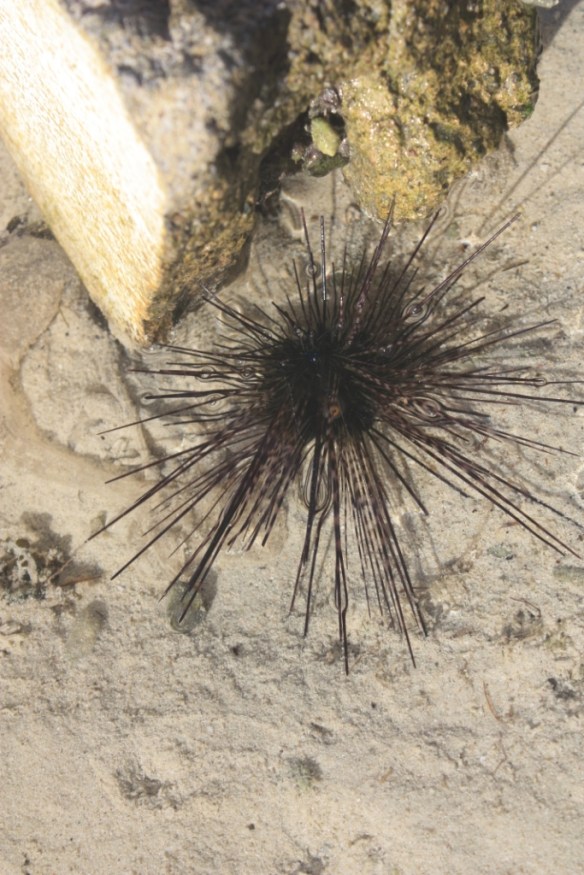
Taken on December of 2017 in San Juan, Siquijor Island
Panagsama Beach near Moalboal, Cebu Island
Panagsama Beach near Moalboal, Cebu Island

Taken on December of 2017 in San Juan, Siquijor Island
Panagsama Beach near Moalboal, Cebu Island
Panagsama Beach near Moalboal, Cebu Island
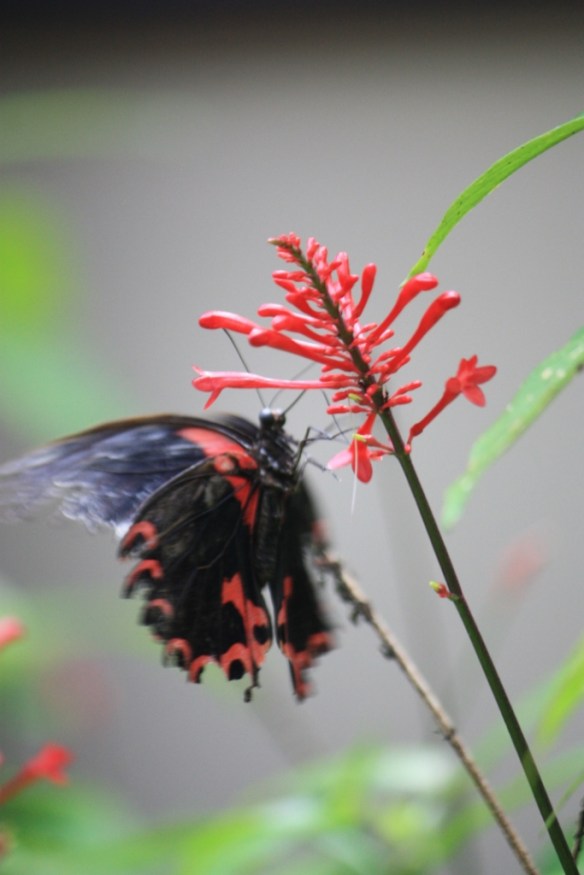
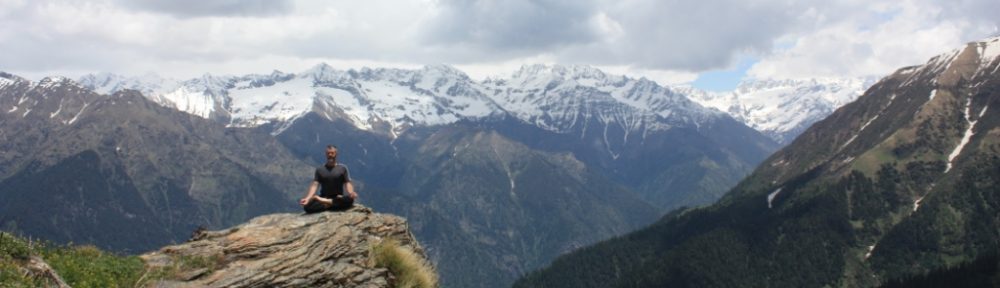
Taken in December of 2017 on Bohol Island in the Philippines



 Rasputin: The Man Behind the Myth – A Personal Memoir by Mariia Grigor’evna Rasputina
My rating: 5 of 5 stars
This was an impulse buy made at my local used bookshop. How could I not pick it up? There are few historic figures with as much swagger, and who are as steeped in mystique and myth, as Grigori Rasputin. This Russian mystic has been fictionalized as a villain by Disney and in the “Hell Boy” universe. If one knows anything about this holy man, it’s that he proved exceedingly hard to kill and that he is believed to have had great sway with the Tsar and his wife (i.e. the Tsarina) in large part owing to the apparently miraculous effect his presence had on the healing of their hemophiliac son, Alexei. (Skeptics will note that it’s widely believed Rasputin did – in fact – save the boy, but probably not through communion with a deity. Instead, he did it through a combination of luck in keeping the doctors from giving the boy aspirin [its blood-thinning nature wasn’t yet recognized], old folk wisdom [i.e. stressing the kid out with a dozen poking / prodding doctors is as likely have a deleterious effect on health as a positive one] and a placebo effect arising from the holy man’s larger-than-life charisma.)
It’s always hard to know what to expect with a biography written by a family member. In this case, the lead author is one of Rasputin’s daughters, Maria. While there is the same potential for bias in an autobiography, in a relative’s biography one never knows whether the writer will deify or vilify they subject – but one strongly suspects they will do one of the two. This is made all the more difficult in this book on the life of Grigori Rasputin because the author is at once exceedingly forthcoming about the man’s drinking and womanizing but simultaneously rails against Rasputin’s enemies and always holds that he was fundamentally virtuous and pious (outside of sleeping around, sousing it up, and taking bribes [which the author claims were redistributed Robin Hood style and which it’s further suggested didn’t result in promises to intercede with the Tsar / Tsarina that he wouldn’t have agreed to on the grounds of virtue and merit alone.]) It should be noted that there was a journalist co-author who may have rounded of the coarse edges of personal bias, though – as I suggested – Maria Rasputin comes across as being at ease with her father’s less godly proclivities.
The book begins in media res with a description of the night that Rasputin left his home and daughters never to return. This intro presents his daughter’s perspective as she experienced that night at the time – i.e. without any of the insight of later investigations and research that comes later at the book’s end. It’s a skillful set up for the book, and in general this book avoids becoming bogged down in minutiae of personal interest as is common in biographies. The book then proceeds chronologically from sparse coverage of Rasputin’s youth with particular emphasis on the events and indications that he wasn’t the typical farm boy through to the aftermath of his death. In between the book charts the rise of Rasputin from peasant farmer to personal friend to the royal couple who visited them freely while abandoning all the protocol that was required of others on visits to the Tsar’s court.
I did do a bit of research out of curiosity about how biased or neutral the book was. In general, it seems to be a reasonably accurate portrayal of events. While I did find information that seems to conflict with the author’s presentation, it doesn’t appear to be a matter of an attempt to propagandize but rather a result of differences of perspective. One type of bias revolves around the belief in supernatural powers that can readily be seen in the case of Tsarevich Alexei mentioned above. Maria Rasputin was clearly a believer that her father had powers, and so she presents the healing as being divine (though she does state that keeping the doctors away probably had a role and she says that her father never claimed responsibility for cures but always said thanks should be given to God.) Another example is the belief of the authors that Rasputin was still alive when he was thrown into the river that is based on abrasions on his wrists as if he was struggling in the water, but supposedly there was no water in his lungs. (With respect to the claim of Rasputin being hard to kill, after healing up from having been disemboweled with a knife, on the night of his assassination Rasputin was [allegedly] poisoned, shot multiple times, castrated, and then dumped into a frozen river. The author suggests it was the drowning that finally got him, but the more common view is that the gunshot to the head had already done the deed – and furthermore, the assassins probably in some way fouled up the poisoning because there wasn’t any posthumous evidence of it. It should be noted that the authors, too, suggest that the assassins must have gotten it wrong with the initial attempt to poison Rasputin because of the lack of evidence of poison – i.e. they make no supernatural claims on that issue.)
Concerns about bias aside, the book is highly readable. It is fascinating throughout and it complies with Elmore Leonard’s advice to novelists to “cut out all the parts people skip over.” The author captures the political intrigue as well as Rasputin’s mix of seedy and saintly sides that combine to make his story so fascinating. We see his ups and downs as he became immensely popular (always with powerful enemies) and then how he lost influence in World War I when his pacifism conflicted with the jingoistic outlook of the day.
I would highly recommend this book to anyone who is interested in the life of Grigori Rasputin.
 Tantric Yoga: The Royal Path to Raising Kundalini Power by Gavin Frost
My rating: 4 of 5 stars
Whenever I review a book about tantra, I have to start by clarifying which tantra I’m talking about. For tantra is one of those concepts that everybody thinks they know the meaning of, but few agree about what it is exactly. There are at least three broad interpretations of tantra. Among old-school Indian Tantrics, tantra involves the use of practices and rituals to elevate one’s consciousness, and at least some of said practices involve activities that mainstream religions (i.e. Hindu, Buddhism and others) consider vices. Two alternatives can be considered in contrast to that baseline view. The first of these is the mainstream religious view of tantra that keeps the unobjectionable practices and dismisses those practices that the fly in the face of religious prohibitions, saying that they are just misunderstandings or misinterpretations and not to be taken literally.
The second view, and the one relevant to his book, is the modern and mostly Western notion of tantra as being all about sex. This isn’t to suggest that these modern Tantrics are just guided by base desire and are only seeking tips to be better in the bedroom. Most of them see tantra as a road to an altered state of consciousness, but that alpha and the omega of that route is in sexual activity. I’d like to read a book dealing in the first view, but either that is dying out or those kind of tantrics don’t write books. This has left me with books on the alternative perspectives. I’ve already reviewed one on the mainstream religious perspective, and so here is one on the modern / Western sex-centric approach. It should be noted that the authors are aware of the differences in strains and refer to the branch they are offering as “Reconstructed Yoga” or “Neo-Tantric Yoga.”
The book that Frost and Frost deliver is designed to be one-stop shopping for those who would like to join or start a “tantric house.” A tantric house is sort of like an ashram, but smaller and focused on the “Neo-Tantric Yoga” (sexually-oriented) practices. Needless to say, there is a great deal of protocol to consider when living under such conditions. The book is logically organized. It starts with sort of philosophical and conceptual background and progresses to delving into the specific details of various practices. The ten chapters are arranged into three parts that deal, respectively, with basic precepts, preparation, and the details of the practices.
I should point out that it’s not just in the emphasis on sexually-based practices that this book differs from the traditional view of tantra. One of the best examples of this can be seen in the first sentence of a preface entitled “How to Use this Book” which says, “Many believe that teaching requires gurus, but that belief became obsolete centuries ago with the invention of printing. This book will be your personal guru…” In the old-school view of tantra, the importance of an actual teacher is considered paramount both because ritual and practice are so central to the activity and because there is so much opportunity to lose oneself in the weeds.
The book includes a great deal of ancillary matter. There are many black-and-white line drawings and diagrams. There are two appendices. The first appendix delves into the logistics of a tantric house from pet ownership to floor plans to issues to consider in considering applicants (needless to say many of these items wouldn’t be appropriate – or legal – to ask about when considering a prospective roommate or employee.) The other appendix is offered for gay participants because the rituals described throughout the book anticipate heterosexual coupling. There is a short bibliography and some brief assorted front matter as well.
This book is well written and organized for delivering what it’s intended to deliver. While it covers a lot of background information, it’s put together in a “how-to” format. This means that there are a lot of step-by-step instructions that could be useful if you intend to carry out the practices, but aren’t the most pleasant reading if one is trying to get a feel for the subject and / or to compare and contrast it to approaches with which one might be more familiar. There is certainly some intriguing food-for-thought peppered throughout, but it’s a how-to manual through-and-through.
I’d recommend this book for anyone who is interested in getting insights about life in a tantric household – particularly if one is interested in the details of ritual as well as the logistics and practical issues of such living. I’m sure there are more entertaining accounts of living in such a house, but which will not provide as much systematic explanation.
 The Forest Unseen: A Year’s Watch in Nature by David George Haskell
My rating: 5 of 5 stars
The premise of this book is simple but the result is fascinating. The author, a naturalist, picks a small patch of old-growth forest in Tennessee and visits it three or four times per month over the course of a year. He then writes an essay on something that he observed in (on, above, below, etc.) that patch that he calls “the mandala.” (FYI- A mandala is a symbolic representation of the universe, or an aspect thereof, that some Eastern religions use for meditative purposes.) While botany and zoology form the heart of Haskell’s subject matter, the subjects vary and include geology, behavior (animal and human), light, medicinal use of plants, and more.
Using a full year as his scope, Haskell catches some of the rare and ephemeral forest happenings. He drills down and offers the reader insight into what is happening beneath the bark and fallen leaves, providing background and context through his research that supplements his observations. In some of the articles we learn how the mandala may have changed over the centuries. In others we learn about happenings at scales too small for us to observe directly.
Haskell’s descriptions are often beautiful and always necessary as he conveys all through words. There are no graphics, and so the reader benefits from vivid descriptions. The chapters / essays stand alone nicely, so one doesn’t have to read the book straight through, but can rather pick the book up once in a while over an extended time — as it was written. Reading this book over the course of a year wouldn’t be a bad way to go about it, particularly if one lives in an ecosystem similarly forested.
There is a bibliography, but that’s about the extent of ancillary matter. It’s a simple book and that sparseness resonates well with the book’s theme and style.
I enjoyed this book and think nature lovers will find it intriguing and enjoyable.
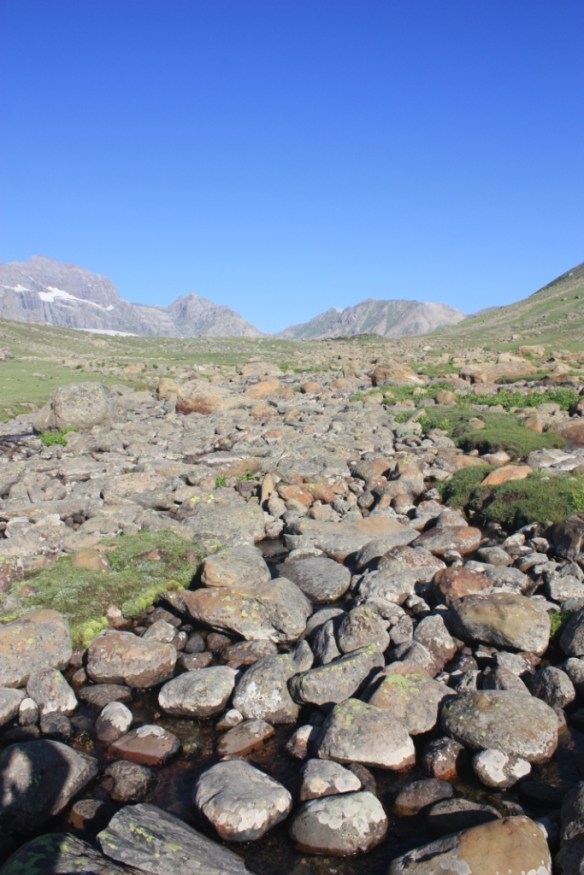
Taken in August of 2016 in Kashmir
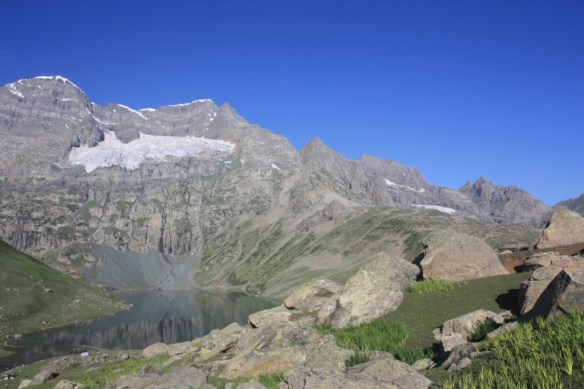
Taken in August of 2016 on the trail from Naranag to Sonamarg
destinationless pilgrimage
no step more sacred than the last
spiraling into midnight
sore feet = shoes abandoned
every step one slides a mile inside


Low Tide; Taken in December of 2017 in San Juan on Siquijor Island
monsters marching in the night
sinking into shadows against wan moonlight
you’ll know them by their low growl
when they slink behind you on their nightly prowl


