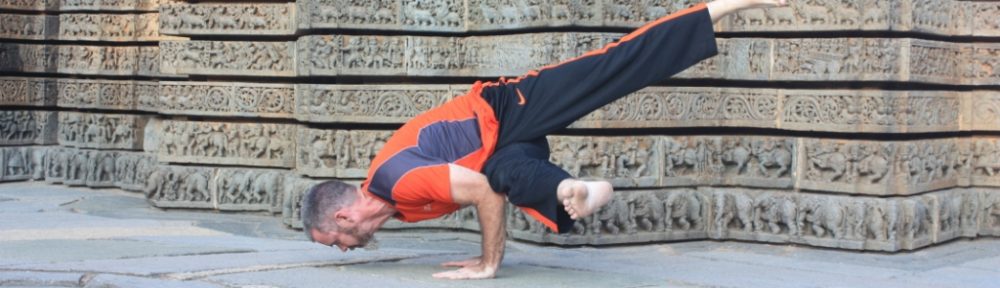
Taken on February 16, 2018 in Bangalore.




Taken in June of 2015; Sainj-Tirthan Trek in Great Himalayan National Park

There’s so little that I know.
Banal advice: “Don’t tell, show!”
But I’ve learned a thing or two worth learning.
Enough to feel the warmth of a dream burning.
Feel grateful more often than superior.
Feel contented more often than inferior.
Mother nature offers no free rides.
You won’t find your line by riding tides.
I’m not the best. I’m not the worst.
Though I’ve been loved, loathed, cradled, and cursed.
And known hunger, and burned with thirst.
Foot to fire, you’ll find fear a liar.
It steals will as life’s great briar.
Creature comfort is overrated.
It casts away the moment sated.
Feeling you have the right to live as me.
Is not a laudable love of the free.
It’s just personal pan tyranny.


Taken in Hoi An in December of 2015

5.) Sure Ways to Self-Realization by Swami Satyananda Saraswati: All you need to know about meditation and more. The first half of this book examines various yogic approaches to meditation and offers in-depth explanation of said techniques. The second half puts yogic meditation into a larger context by providing a survey of meditative approaches from around the world. It’s as close to one-stop shopping for the yogic meditator as one is likely to find, and the presentation of material on topics such as Jnana Yoga and Tantra is much more balanced and illuminating than many books.

4.) Your Brain on Yoga by Sat Bir Singh Khalsa: This Harvard Medical School Guide provides an overview of the scientific evidence for the benefits of yoga practice.

3.) A Search in Secret India by Paul Brunton: Brunton traveled India looking for the needles of yogic sagacity amid a haystack of charlatans and posers, and he found a few.

2.) Warrior Pose by Brad Willis: As the sub-title suggests, this book is about how yoga saved the life of a war correspondent who suffered from a severe spinal injury that had repercussions beyond his back — re: his state of mind.
 1.) The Heart of Yoga by T.K.V. Desikachar: This book provides one-stop shopping for building one’s yoga practice, and it does so in a very down-to-earth, secular, and non-doctrinaire way. It also includes a translation and brief commentary of Patanjali’s Yoga Sutras — hence, the reason I didn’t need to include that work on this list.

Taken in March of 2015 in Freedom Park of Bangalore
Sun Salutations (i.e. Surya Namaskara) are a sequence of poses (asana) popular in Hatha Yoga for warming up both the joints and the core — among other reasons. There are a number of variations on this practice. The version I demonstrate in the video is common, and is often associated with Swami Sivananda. Below are a few points for consideration.
5.) Don’t forget the quad when in the Lunge (Ashwa Sanchalanasana): While stepping back and forward into the lunge position (ashwa sanchalanasana), sink the thigh of the backward extended leg down to get a stretch in the hip flexors and quad. This is commonly glossed over, missing a good opportunity. Secondary note: look forward in the lunge or at least not back and down between the legs (the latter suggesting excessive rounding of back.)
4.) Lift up into Plank (Utthita Chataranga Dandasana): If you have a valley between your shoulder blades, engage the serratus anterior, lift the torso up away from the floor, and turn that valley into a small, gentle-sloping hill. In other words, try to get the shoulder blades to come further apart.
3.) Place the ankle under the knee in the return Lunge (Ashwa Sanchalanasana): This is a challenge for many students depending upon a range of factors from flexibility to thigh girth to waist girth. It’s better to put the back knee down and use your hand to pull the lower leg into place than to try to stand up with the knee considerably forward of the toes. The latter puts a lot of load on connective tissues rather than transferring it down the length of the shin into the foot and floor.
2.) Keep hips up in “Knees-Chest-Chin-Down” (Ashtanga Namaskara), if you can safely do so: This is another challenging one for many students, particularly given the common nature of thoracic hyperkyphosis (i.e. excessively rounded upper back.) If one does have hyperkyphosis, one doesn’t want to force the matter. However, this does counteract that forward rounding tendency by stretching tight muscles out.
1.) Keep shoulders down and away from ears in Cobra pose (Bhujangasana): Unlike the previous common errors, this one seems to come down to lack of awareness or effort as much as it does to physical limitations. Of course, thoracic hyperkyphosis can also make Cobra challenging because the spine wants to bend the other way. I see students who have trouble keeping their navel on the ground and their arms bent because they have an almost “S” curve in their backs.
 Dead Mountain: The Untold True Story of the Dyatlov Pass Incident by Donnie Eichar
My rating: 5 of 5 stars
The Dyatlov Incident is one of the most fascinating mysteries of the 20th century. In 1959, a crew of nine seasoned hikers headed into the Siberian wilderness in late January for an intense but vigorous trek. When they didn’t return in early February as planned (and after a bit of prodding from family members) a search was conducted, and what the searchers found was so bizarre that it would be fodder for conspiracy theorists and readers of tales of the weird for decades. It wasn’t so much what killed the hikers, almost all of them died of hypothermia — though three of the members had severe blunt force trauma injuries that contributed in varying degree to the speed of their deaths.
Instead, it was that the bodies were found on the order of a mile from their tent, none of them was wearing boots or adequate attire. There were also a range of smaller anomalies, such as one individual wearing two watches, several of the team having shredded clothing, one of the hikers missing her tongue, and some of the hiker’s clothing testing positive for radioactivity. Lest one attribute the hiker’s strange and fatal behavior to drink or other mind and mood altering substances, the hikers were known teetotalers, and the little medicinal alcohol they had was all accounted for by the search party (who admittedly drank it.) So the question wasn’t what killed them, but what drove these skilled, sober, and well-led hikers out of the comfort of their tent improperly attired in the middle of the night on the night of February 1, 1959, and what explanation could account for this range of bizzarities?
I won’t get into Eichar’s well-developed and scientifically supported theory to avoid spoilers, but it’s fascinating to consider the range of theories that people came up with over the course of the investigation (and subsequent years) to explain the odd incident. The explanations run the gamut from the otherworldly (i.e. Siberian Demon Dwarves) to a range of theories that were less provocative but which also lacked explanatory power or were inconsistent with known data (e.g. avalanche or high winds literally blowing them off the mountain.) Of course, another fact played heavily into people’s conspiracy building and that was that this was the height of the Cold War Soviet Union. While life had eased a bit since the demise of Stalin (such a trek would have been prohibited under his rule) it was still an authoritarian state, plus the memory of Stalin was fresh. This led to the most widely accepted theories involving the hikers being killed because they saw a covert weapons test or stumbled into an area where the KGB was getting up to some shenanigans. (As a sign of the times, it seems that there was some attempt to thwart the investigation and /or limit the interest in the case from low-level party apparatchiks who probably assumed shadowy elements of the government were involved [though there seems to be no evidence that they were.]) Another theory proposed that the hikers were killed by a group of escapees from the Gulags that were numerous in that part of the country. (Of course, that assumes that the poorly fed and clothed prisoners would have survived the freezing temperatures better than the fit and relatively well-equipped college students.) As evidence mounted, however, it suggested outsider involvement less-and-less. For example, the side of the tent was cut open, but rudimentary forensic investigation readily proved that it must have been cut from the inside and not from the outside by a KGB agent, Gulag prisoner, local tribesman, or a Siberian dwarf claw.
The book intersperses accounts of the happenings in 1959 with chapters that describe the author’s trips to Russia to investigate, including his visit to “Dead Mountain” and the “Dyatlov Pass” in 2012. (The former name predates the Incident and has to do with the fact that the mountain is devoid of vegetation. The latter name, i.e. “Dyatlov,” is the last name of the leader of the group of hikers.) The penultimate chapter describes Eichar’s conclusion about what caused the mysterious incident and his visits to experts that lent it credence. The last chapter offers a retelling of events that takes into account both the evidence and scientific speculation about the cause of the hikers’ panicked flight from the safety of their tent into a desolate landscape on a sub-freezing night.
There are graphics throughout, mostly black and white photos from the cameras of the hikers, which were recovered and became part of the case file. Other than the photos, there is a graphic or two to help explain the theory put forth by Eichar and others. (It should be noted that there was a group of Russians simultaneously considering the same possibility.)
I was enthralled by this book and couldn’t put it down. The mystery was fascinating and the hypothesized solution was at least as much so.
I’d highly recommend this book to readers of nonfiction, though much of it has the taut structure of fiction.

Taken in August of 2016 at Khardung-la

Taken on the route from Leh to Khardung-la

Ominous warning at Khardung-la


