


Taken in November of 2013 in Mysore at the Sri Chamarajendra Zoological Gardens


Taken in November of 2013 in Mysore at the Sri Chamarajendra Zoological Gardens
 The Prophet by Khalil Gibran
My rating: 5 of 5 stars
This is a combination of a narrative poem and a collection of morality poems. The story of the narrative poem is that a wise man (i.e. the Prophet), Almustafa, is about to sail away from his recent — but temporary — home on Orphalese, and he’s asked to speak on a range of topics so the people of Orphalese can gather his wisdom before he goes.
In 26 chapters, the prophet expounds on each topic upon which he is questioned. Topics include relationships, possessions, laws, religion, teaching, and death. The wisdom presented is practical, profound, and reflects a mystic sentiment (i.e. the idea that the divine is within us rather than something separate.) This is an extremely quotable volume. Among his responses, the Prophet says that one should not be too controlling in relationships, that one should not live life under the dictates of fear, that it’s not for one to determine what is moral for another, and that one should not engage in morality or worship for show.
I’ll keep my review short as the book is tiny and certainly worth your time. I’d recommend this book for all readers. I think it has some insight to offer just about anyone.
[Note: Some spell the author’s first name “Kahlil” and others “Khalil.” I picked one at random.]
 Conversations on Consciousness: What the Best Minds Think about the Brain, Free Will, and What It Means to Be Human by Susan Blackmore
My rating: 4 of 5 stars
Blackmore gathers together interviews from a veritable who’s who of consciousness experts from neuroscience, philosophy, physiology, psychology, and physics. While the interviews are in part tailored to tap into the special insights of the given expert, a consistent series of questions is asked of each of the interviewees. Each expert is asked what they think is challenging about consciousness, what they think about the feasibility of philosopher’s zombies (a popular thought experiment about an individual who seems to behave like an ordinary human but who has no conscious experience), what they think about the existence of free will, what happens to consciousness after death, and what got them interested in the subject. This makes it easy for the reader to see not just differences in thinking across disciplines, but also different schools of thought within disciplines. There’s enough variety to make for intriguing reading. There is also a mix between individuals who have experience with meditation (e.g. the interviewer) and those who don’t, and so it’s interesting to compare views of those with such insight to those who study consciousness entirely abstractly.
I won’t list all the authors, but they include: David Chalmers (who famously coined the term the “hard problem” of consciousness, which is one of the most widely discussed ideas in the book), Francis Crick (of DNA fame who later shifted focus), Daniel Dennett (a well-known philosopher), V.S. Ramachandran (a neuroscientist famous for work on phantom limbs and behavioral neurology), and Roger Penrose (a physicist who believes that quantum mechanics may prove crucial to figuring out consciousness.)
It’s a straightforward book. There’s an Introduction by Blackmore and then the 20 or 21 interviews (one “chapter” is a married couple – Pat and Paul Churchland — whose insights are presented together.) The only back matter is a glossary, which is quite in-depth and which helps to clarify the many confusing concepts from various disciplines. There are a few cartoon drawings that lighten the tone, but serve no essential purpose.
I enjoyed this book and found it thought-provoking. It’s quite old at this point – having come out in 2005 – but since consciousness is so intractable, it’s not like any of the questions have been cleared up. (If it were a book on AI, I’d probably say it was worthless at this point, but not this book.) I’d recommend it for anyone looking to understand the lay of the land with regards thinking about consciousness.

Taken in September of 2017 at Patan, Gujarat

pillar ornamentation

dancer
 The Spread Mind: Why Consciousness and the World Are One by Riccardo Manzotti
My rating: 3 of 5 stars
Manzotti puts forth a bold and intriguing hypothesis that one’s mental experience is the physical world and not a model or representation of the world. Unfortunately, his book doesn’t make a compelling case for “The Spread Mind” (as he calls it) over its competition. Consciousness is one of those still dim corners of our world that isn’t yet fully understood by anyone, and this has spurred many competing ideas ranging from: a.) it being illusory; b.) it being purely a construct of a complex brain; c.) it hinging on some quantum mechanical action not yet understood; d.) panpsychic (all-pervading consciousness) arguments that may or may not resonate traditional Indian / Eastern conceptions; and e.) this idea that consciousness is identical with the physical world of which one is conscious.
However, for simplicity’s sake, one can contrast Manzotti’s idea with the most widely accepted view offered by science, which is that our brains construct mental models of the world often based on [but not identical to] sensory information they take in. (If my statement isn’t clear, you can check out neuroscientist Anil Seth’s TED Talk on “how our brains hallucinate reality,” which is as diametrically opposed to Manzotti’s hypothesis as one gets – and which, unfortunately for Manzotti, also makes a more cogent argument.)
At first blush, Manzotti’s idea might look appealing. It does, after all, simplify the picture. It eliminates the middle-man of mental models and seemingly solves the mind-body problem. The mind-body problem is how to reconcile how the body (wet, physical, objectively observable matter) relates to mind (intangible, subjective, ephemeral thoughts and feelings,) — if it does. Descartes famously suggested that mind and body were simply two separate things (i.e. dualism), and while that notion has remained popular with homo religiosis it’s all but dead in the world of science. However, there is no one monism that has unambiguously replaced Cartesian dualism. The most popular variant among those who study the brain is that some action in / across neurons creates a series mental imagery, internal monologuing, and emotional sensations that make up our mental experience. The mechanism by which this could happen is still not understood, but it’s an inherently hard problem to peer into because on can’t observe mind states directly and the best tool for studying it – i.e. functional Magnetic Resonance Imaging (fMRI) is only a couple decades old (and it’s still looking at brain blood flow and not consciousness, itself.) [I defend that this mechanism isn’t yet explained because one of Manzotti’s points seems to be: neuroscience hasn’t yet explained how neurons produced mental experience so just believe in my hypothesis which offers not even a hint of a mechanism by which it could work.] Manzotti’s is also a physical monist argument, but one that denies the mind is anything more than our experience of the physical world. In other words, there is a spoon, but there’s no mind separate of it.
So, what’s the problem? The reader may have already thought of some challenges confronting Manzotti’s hypothesis, and many of the most common ones the author refutes in the middle portion of the book. Dreams, hallucinations, fantasies, and even memory (certainly false memories, which we know are a wide-spread phenomenon) should utterly destroy the Spread Mind, given the simple definition we’ve given so far. After all, if your mental experience consists entirely of the physical objects that you are exposed to, then how does one explain the doughnut-shaped, sprinkle-breathing dragon that you hallucinated when you did ayahuasca on your trip to Iquitos? OK, you say you’re not such a wild child? Alright, how do you explain your detailed remembrance of putting that water bill into the mailbox, but then finding it under the seat of your car after you got a late notice from the water utility? If our mental experience is identical to the physical objects we experience, mentally experiencing things that don’t exist or events that never happened should never occur.
Manzotti elaborates upon Spread Mind to fend off these crippling attacks to his “theory.” (I use quotes because a theory is usually defined as “a well-substantiated explanation of a phenomenon” and it doesn’t seem to me there’s much in the way of substantiation of this idea.) There are two main prongs to his defense, one of which is unproven but soundly stated and consistent with the thinking of many physicists. The other defense seems to simply be a post-hoc rationalization used to make his “theory” work. Even though these ideas are presented in the opposite order in the book, I’ll deal with the first one I mentioned first because it’s relatively simple to cover. That’s the idea that past and present all exist always and at the same time. That may seem like an out-there idea because we can only ever be in touch with a moment we think of as the present and everything else is memory or fantasy /forecasts. However, it’s not exactly a rogue notion in science, especially once one starts thinking about making sense of Einsteinian Relativity. So, without this idea, if Spread Mind was correct, we could never have that fond memory of Mr. Fluffers, the pet we had in first grade who died decades ago. If our mental experience is Mr. Fluffers and not our mental model of Mr. Fluffers, we can’t have such an experience so long after he passed away. But if all time exist simultaneously, then one can conceive of how such a remembrance could happen. The only thing special about the present in Manzotti’s conception is that it’s the time during which we can interact with objects that also exist in the same time. This may or may not prove to be true. If it proves false it will kill Spread Mind, but if proves true the theory still has many questions to answer to prove itself worthy.
The second, and far less well-supported, defense could actually be divided in two ideas, but I’ll deal with it as a unit for simplicity’s sake. The parts of this defense our: a.) misbelief about our mental experience can happen, somehow [potential mechanisms by which this might occur are not described and that’s a huge problem for the author]; b.) objects we’ve experienced can be reshuffled to make objects appear to be entities that we know do not exist [Again, the mechanism by which this could occur is never explained or even seriously speculated about.] Let me give an example to explain how these defenses work. Say you drop a tab of acid and are having a hallucination of a dragon flying through the sky. Manzotti’s idea is that you are experiencing a reshuffled creature consisting of legs, a serpent, maybe some fire, a backdrop of sky, and you have a misbelief that all these constituent parts are in the present and co-exist together in space and time (as opposed to being disparate objects from varied past times.) This is a very convenient idea for Manzotti’s “theory” but it’s not really clear why we should buy it. In the competing notion that a mental model is built, one can imagine how the mind might construct something that doesn’t exist due to neuronal cross-firing or something like that. (The bigger question, in fact, might be why it doesn’t happen more often.) However, if our experience consists of objects that we’ve shared space-time with at some point, how and why should such weirdness occur? If the author made a compelling attempt to explain how this occurrence is reasonable, one might leave the book thinking his “theory” is – in fact — a theory and give it equal or superior footing to other approaches to consciousness, but as the book mostly offers gratuitous statements telling us to accept this all as a given, it’s not very powerful.
I’d like to get into one crucial example where I think Manzotti’s thinking is flawed in a way that could prove devastating to the Spread Mind. The author admits that an extraordinary hallucination would kill the Spread Mind. He defines an extraordinary hallucination as one consisting of objects that are non-existent in our world. Earlier, I used the example of a dragon which we know doesn’t exist, and we can be reasonably certain never existed. However, Manzotti would say that it’s just a reshuffling of parts like legs and snakes that we do know exist, combined with a misbelief about when these objects exist and that they co-exist in the same time. Manzotti says that there is no evidence that a hallucination that can’t be explained by reshuffling and misbelief ever existed. I have no doubt that if one read accounts of hallucinations; one could come away with that conclusion. However, I think it’s more convincingly explained by the nature of language as a unit of communication (hence necessitating common vocabulary.)
Example: Let’s assume for a minute that I had an extraordinary hallucination, and I decide to document it. I could take one of two approaches. On one hand, I could describe every completely novel element with a new word. I could say I saw a gruzzy-wug which had three separpals and a florgnak and a long and bushy krungleswam. Of course, I’m not communicating at this point because communication requires common vocabulary. Manzotti would likely argue that I’m just reshuffling letters [linguistic objects] to make up non-sense. On the other hand, as soon as I use a common vocabulary and analogy saying such and such is “kind of like a leg, but sort of with a curly-cue spiral and a mouth on top” Manzotti would say, well it’s a reshuffling of a leg and a pig’s tail and a mouth all of which the individual has seen before.
However, an even more devastating oversight is ignoring vast tracks of what most people would consider their mental experience. It’s the penultimate chapter before the book even touches upon emotion, which most would argue is a huge part of mental experience. Throughout most of the book, one is left wondering whether the author thinks of such things as emotion and language as part of consciousness. One imagines Manzotti’s experience of the world is one physical object after the other (mostly red apples with the occasional pink flying elephant – examples he uses ad nauseam) without any conceptual experience. Manzotti does explain that one must revise one’s conception of an object to think in terms of the Spread Mind, and one can see how this might explain language – which has a huge and powerful role in one’s mental experience and which is left unexplored by the book. But while language could arguable be explained as consisting of objects, emotional experience seems hard to fit Manzotti’s hypothesis.
The book consists of nine chapters. It has graphics and bibliography as one would expect of a scholarly work
I think most readers will find this book to be repetitive and frustrating in its lack of explanation. It’s not that it’s speculative; it’s that it just bludgeons the reader with gratuitous assertions that we expect will pay off in at least a hint of how the Spread Mind could work, but it never does. (For example, I greatly enjoyed Max Tegmark’s “Our Mathematical Universe” that speculates that our world is a mathematical structure – not that it can be described mathematically but that it fundamentally is mathematical.) Spread Mind is an interesting idea, but I can’t say I’d recommend the book unless one is really interested in knowing all of the varied lines of thinking about consciousness that exist out there. I must say it was a beneficial read because it made me consider some interesting ideas, but nothing in it swayed my thinking.

Taken in November of 2013 in Mysore

Taken in April of 2017 in Cherrapunjee, India
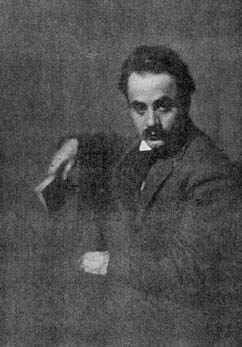 10.) “But let there be spaces in your togetherness.
“And let the winds of the heavens dance between you.”
-on Marriage
9.) “He who wears his morality but as his best garment were better naked.”
-on Religion
8.) “And you would accept the seasons of your heart, even as you have always accepted the seasons that pass over your fields.”
-on Pain
7.) “What of the ox who loves his yoke and deems the elk and deer of the forest stray and vagrant things?
“What of the old serpent who cannot shed his skin and calls all others naked and shameless?”
-on Laws
6.) “If he is indeed wise he does not bid you enter the house of his wisdom, but rather leads you to the threshold of your own mind.”
-on Teaching
5.) “For if you should enter the temple for no other purpose than asking you shall not receive.”
-on Prayer
4.) “And if it is a fear you would dispel, the seat of that fear is in your heart and not in the hand of the feared.”
-on Freedom
3.) “For what are your possessions but things you keep and guard for fear you may need them tomorrow?”
-on Giving
2.) “Only then shall you know that the erect and the fallen are but one man standing in the twilight between the night of his pygmy self and the day of his god self.”
-on Crime and Punishment
1.) “Or have you only comfort, and the lust for comfort, that stealthy thing that enters the house as guest, and then becomes a host, and then a master.”
-on Houses

Source: Spiff via Wikipedia
Silence the jittery critter.
Ride the dullness down
to where images bubble.
In that blurry dimness
one feels their logic,
but shine the mind’s light
and all sense shatters —
scattering,
dissolving into shadows
without a trace.
Leaving only the dull ache of betrayal
that, as in a dream,
something so absurd and fragile
could feel so wise.


