
Taken in August of 2018 in Chicago

Taken in August of 2018 in Chicago

Taken on Neil Island (Shaheed Island) in December of 2018

Note: This post is not advocating a new distraction yoga mashup of the type that I’ve been known to rant about, but is merely a discussion of the synergy to be found in practicing both yoga and poetry.
In Patanjali’s conception, the problem for which yoga presents a solution is the mind’s tendency to run amok. One would like to be able to hold the awareness on a given object, effortlessly and for extended periods of time, but the mind is insistent in its desire to roam. This roaming can be to many different ends, but often it’s ultimately about eliminating uncertainty. The mind wants a plan against the unexpected. It seeks solutions to problems — existing, anticipated, or imagined. It wants to replay entertaining stories, which is really a way to learn and store general solutions for later surprise problems that might otherwise catch one off-guard. The more anxious or emotionally charged the mind, the more turbulent it will be.
Poetry is the use of metaphor, imagery, and sound to strike an emotional chord. I don’t mean “emotional” exclusively in the sense of displaying strong, behavior-driving emotions. I mean all sorts of internal, subjective feelings, including nostalgia and the residue of memories and dreams.
Sometimes, the feelings a poem seeks to generate are primal emotions. For example, consider Emily Dickinson’s poem “A Narrow Fellow in the Grass” [1096] (about a snake, if you didn’t make that connection) that concludes:
But never met this FellowAttended or aloneWithout a tighter BreathingAnd Zero at the Bone.
Or, from Poe’s “The Raven:”
Deep into that darkness peering, long I stood there wondering, fearing,Doubting, dreaming dreams no mortal ever dared to dream before;
O to go back to the place where I was born!To hear the birds sing once more!To ramble about the house and barn, and over the
fields, once more,And through the orchard and along the old lanes
once more.
So, emotion is the connection. Poetry helps one form, shape, and refine emotional content, and yoga helps one to experience that emotion without applying value judgments or allowing the motive force of emotion to drive one into endless cycles of destructive feedback. That is, one feels the need to think about an emotionally charged situation, and the more one thinks about it, the more intense the emotion becomes, and the more intense the emotion, the more one thinks about it. I’ll just call this process “wallowing” — wallowing in emotion.
The word “emotion” carries with it a lot of baggage. Emotion is often juxtaposed with rationality / reason, which isn’t accurate. (Reason works great for making decisions when there is adequate information, emotion forces one to move one’s ass when there isn’t sufficient information. So they are not so much opposites as complimentary systems supporting decision and behavior.)
In the common conception, emotion also tends to be more linked to the expression of emotion rather than the experience of emotion — which are necessarily related. (Some people very readily express intense emotion despite an easy life and others are non-expressive despite constant uncertainty or even challenges to survival.) When one imagines someone unburdened of emotion — e.g. fearless — one might picture a hero — bold and courageous — but what one sees among people who suffer afflictions (e.g. brain damage) that prevents them from feeling emotion is often paralysis by analysis. Without emotion to make decisions under uncertainty, such individuals simply get bogged down. Individuals who don’t feel fear, in particular, are also prone to carelessness.
The key to making one’s yoga and poetry practices simpatico is avoiding that very popular form of poetry — the wallowing poem. If one’s poems constantly spiral into ever greater depths of angst (as many a famous — and, sadly, suicidal — poet’s work has been known to) you might want reevaluate. And, perhaps, start with haiku and that forms Zen distaste for hyperbole or analysis.

Taken in May of 2017 at Amboseli National Park
 Second Nature: A Gardener’s Education by Michael Pollan
My rating: 5 of 5 stars
This isn’t simply a discussion of lessons of gardening, though it does tread that ground. However, Pollan uses that topic as a jumping off point to explore a couple of broader topics. First, what defines the American approach to lawns and gardens, which is clearly distinct from that of our Old-World ancestors / comrades? Second, what does it mean to say some approach is more or less “natural” in an ecosystem that has been shaped by the hand of man? As a neophyte balcony-container gardener, I was attracted to the book for its gardening lessons, but I found myself most provoked to thought by these other questions.
This book starts with an Introduction to set the stage and a first chapter that contrasts two approaches to lawn and garden that Pollan saw within his own family. The other eleven chapters are divided into seasonally themed parts. These parts – Spring, Summer, Fall, and Winter – touch upon the life of a gardener during each, respective, season.
The section entitled Spring discusses the challenge of getting plants to grow against the onslaught of competitors and consumers: animal, vegetative, and other. It also discusses mowing, the open approach to lawns found throughout America, and what the latter means for the former. (It has long intrigued me that many Americans who will pledge liberty or death, often aren’t so big on their neighbor’s liberty if said individual’s lawn gets to about four inches of shag.) Lastly, Pollan educates the reader about the gardener’s passion for compost.
The three Summer chapters explore what happens through the middle of the growing phase, including the need to weed. Though Pollan explores the criticisms from the “keep it natural” camp. There’s a lot of discussion of the ideas of Emerson and Thoreau, and how they represented a change from previous thought on the garden. However, the first chapter in this section is about Pollan’s experiences with growing roses, a provocative subject among gardeners, apparently.
Fall is harvest season, but the chapter in this section that I found most intriguing was one about planting a tree. This is where Pollan brings the question of what it means to be “natural” to a head. He discusses a nearby piece of protected forest that was decimated by a tornado. There was an ardent debate between those who thought that nothing should be done with the land and it should be allowed to grow back however nature saw fit and others who thought intervention was necessary. The argument can end up turning a position on its head. What if one does nothing and the land is overtaken by a non-indigenous invasive species?
The last section has an amusing chapter on garden catalogs and how companies’s style and emphasis varies in an attempt to corner a segment of the market.
I enjoyed this book, and would highly recommend it not just for gardeners, but for individuals who have an interest in the interplay between nature and humanity.
 How to Write a Sentence: And How to Read One by Stanley Fish
My rating: 4 of 5 stars
The sentence is the unit of writing at which beauty resides. So, while sentences might not be the sexiest scale of writing, it’s worth learning how to do them well. Stanley Fish offers a book which explores why we should care about the sentence and what separates the good and bad of sentences, before it moves into investigation of various types of sentences.
The first four chapters lay the groundwork by explaining what it is about sentences that make them worth mastering, and then outlines what makes a good sentence (while simultaneously explaining how truly great sentence construction might not come about through the sources and approaches that one has been led to expect.)
Chapters five through ten examine a few different classifications of sentences. Chapters five and six contrast the subordinating style with the additive style. The former sentences are hierarchically arranged, while the latter offers the freer / less ordered approach. Each of the two approaches has its advantages. The former make up many of the pithy bits of wisdom transmitted through sentence, while the latter supports a streaming consciousness style of writing (if done well.)
Chapter seven considers satire by sentence. Chapters nine and ten turn to a different classification scheme: first and last sentences, respectively. Both first and last sentences are disproportionately remembered, and each has a unique role in written works. The final chapter is about sentences that are self-reflective.
Throughout the book, Fish uses sentences – some famous and others from famous works – to offer the reader exemplars of the craft. The general approach is a good deal less technical and more reflective than most books on the subject. This makes Fish’s book both more readable, but also more contentious (in as much as a discussion of sentences can be contentious) than related works.
I’d recommend this book for writers and those interested in crafting language.
 The Anatomy of Story: 22 Steps to Becoming a Master Storyteller by John Truby
My rating: 5 of 5 stars
Whether a story works or not is often clear to small children and demented lunatics. Why a story does or doesn’t work requires a level of technical understanding not much less complex than that required to know why an internal combustion engine is or isn’t working. Why? Story structure rests invisibly below the surface (except to the writer and those who mine for it, and sometimes even to them,) and structure is where the story wins or fails.
John Truby’s book systematically explores what components are necessary to have an appealing story, and how those components are best arranged. It’s written for writers, allowing one to systematically proceed through the chapters in order to build a detailed outline of one’s story, but it could be beneficial for those who want to understand story in contexts other than writing (e.g. business uses, film-making, etc.)
As the subtitle mentions, Truby’s model of story revolves around a 22-step framework. It should be noted that this division is neither the only one imaginable, nor the only one that works. There are numerous great books on story available, and most have their own unique ways of organizing the details. While some authors focus heavily on screenplay versus the novel versus other story forms, Truby keeps his approach generalizable. Like others, he uses examples from both film and classic novels. Having said that Truby’s way isn’t the only way, it is a way that works, and it’s among the most popular works on story building.
While would-be writers may seek out books that focus on “concrete” issues, i.e. building character details, describing setting, plotting actions, etc., this book keeps eyes on the conceptual details that make or break a story. That is, the story consists of a flawed character with a need who experiences a chain of events or trials that results in him or her having a revelation and coming away changed. This is not to suggest that Truby doesn’t investigate issues like character development and creation of setting (there is a chapter each for those issues,) but he does so always with an eye to how one takes that character from a psychological and moral need through to a revelation, coming away somehow changed. I don’t want to make the book sound boring because it focuses on concepts like moral need, theme, and symbolism. Such concepts are what good stories are built upon. If one wonders why even movies with blockbuster budgets sometimes fail, it’s often because they lack such a conceptual framework.
The book consists of eleven chapters. The first sets up the idea of story and how stories work. The second chapter is about the premise of the story, the one-line idea that shapes the happenings of the story. Chapter three describes seven key steps of story, the seven are added to / expounded upon to develop the aforementioned 22 steps. The seven steps are: 1.) weakness & need, 2.) desire, 3.) opponent, 4.) plan, 5.) battle, 6.) self-revelation, 7.) new equilibrium.
The fourth chapter is about characters. However, it’s more about arranging characters in webs of interaction and considering them as archetypes in order to advance the story, rather than the usual types of advice on making unique characters. Chapter five is about the moral argument being made by the story. The hero’s path from need to revelation will reflect some sort of moral lesson. The sixth chapter is about story world, which other books might call “setting.” Again, the approach remains focused on advancing the story, and not on picking a time and place that seems neat or interesting for their own sake.
Chapter seven delves into territory that one doesn’t see in every book of writing advice, and that’s symbolism. The chapter describes building a symbol web that – like the story world – advances the feeling one is trying to create in the story. Chapter eight is about plot, and it fleshes out the seven key steps mentioned above to offer the full 22-step model. Chapters nine and ten discuss scene, the individual events happening in a story at a given time and place. The first deals with what Truby calls “scene weave” or how scenes are organized to create optimal tension. The penultimate chapter is about how individual scenes are constructed to advance the story. Chapter ten also explains how dialogue is most effectively written. The final chapter is a brief conclusion that explains how stories with good structure maintain relevance.
The book uses text-boxes, graphics, and notes as necessary.
I found this book to be tremendously useful. Truby spends a lot of time using well-known examples from film and literature to explore how the masters put together stories, and that benefits the reader greatly. 22 steps sounds like an unduly complex approach, but it works, especially as the focus remains so tightly on the hero’s arc. I’d highly recommend this book for writers, and anyone else who needs to understand story at a detailed level.

Taken in May of 2017 in Bangalore (Bengaluru)

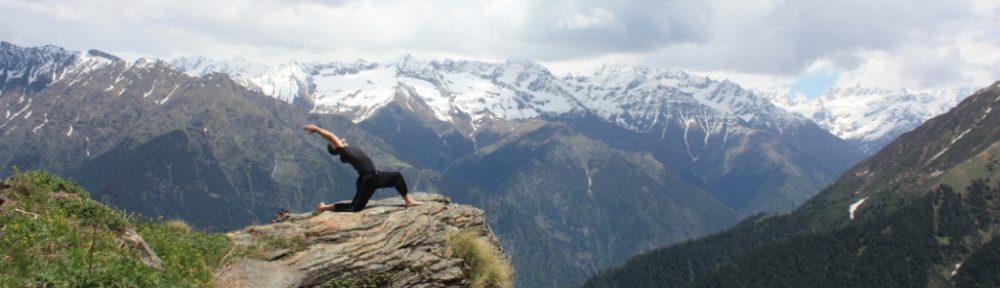
Taken in June of 2015 in Great Himalaya National Park, Kullu District, Himachal Pradesh


