
Taken on January 3, 2021 at Nagarhole National Park
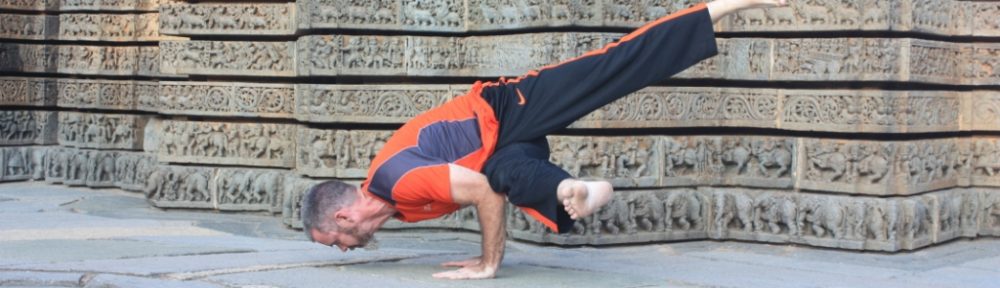

Taken on January 3, 2021 at Nagarhole National Park
 Pandemics: A Very Short Introduction by Christian W. McMillen
My rating: 5 of 5 stars
This book explores disease pandemics through the lens of History. I open with that because this is a topic that can (and has) been addressed through many different disciplines, and a reader expecting biological or epidemiological insights is likely to be disappointed. However, if one is interested in questions of how, where, and with what impacts various diseases spread, this book provides a concise overview for seven select pandemics: The Plague, Smallpox, Malaria, Cholera, Tuberculosis, Influenza, HIV/AIDS.
This book belongs to Oxford University Press’s “A Very Short Introduction” series, a massive collection of brief guides outlining a wide range of scholarly topics. This title complies with general guidelines of the series, presenting the basics of a subject in a manner accessible to a neophyte, citing sources and providing recommendations for further reading, and offering graphics to support the text where beneficial.
As mentioned, the book delves into the seven pandemics listed in the opening paragraph, and does so in the order in which they are listed. Each disease is presented in its own chapter – so the book consists of a prologue, seven chapters, an epilogue, and back matter (i.e. citations, recommendations for additional reading, and the index.)
Obviously, these seven pandemics don’t represent a complete history of disease pandemics. The book was published in 2016, well before the COVID-19 pandemic (though readers will certainly read some prescient-sounding statements — particularly in the epilogue,) but not even all past epidemics classed as pandemics are addressed. [It should be noted that there is no perfectly agreed upon dividing line between epidemic and pandemic.] Still, this book includes the biggest and most globally-widespread pandemics, but it also covers a diverse collection of diseases, including: contagious, vector-borne, and water-borne illnesses, as well as bacteria- and virus-induced diseases. It’s worth noting that The Plague is a worthy first case not only because it’s one of the diseases that has most shaped human history, but also because there’s not a great deal known about disease before then. (During the relatively recent 1918 “Spanish” Flu pandemic, the medical community still didn’t know anything about viruses, and so one can imagine how little ancient people would have understood about these causes of death.)
As the book shares information about the pandemics and their impact on the world, it also teaches one something about how medicine and science progressed as a result of these events. This is famously evident in the case of Cholera, a disease whose unusual characteristics with respect to spread baffled doctors until a clever investigator learned that cases were tied to a common water well. The case of Cholera is a prime example of how changing one’s approach can resolve a stubborn question, looking at the cases spatially offered an immediate insight that other modes of investigation had failed to present.
I found this book to offer interesting insight into pandemics. If you are looking to understand the history of disease pandemics, this is a great book with which to start one’s study.

Taken on January 3, 2021 at Bhagamandala, Kodagu

This Triveni Sangama is the confluence of the Kaveri (Cauvery,) the Kannike, and the Sujyothi Rivers. It is not the only Triveni Sangama. The most famous is the one in the North at which the Ganga, Yamuna, and Saraswati rivers are joined.

A cloud is crawling overhead;
it drags a shadow overland,
but shadows never leave a stain
and, soon, the sun can make its stand.

There was an exporter from the Philippines
who got his start in karaoke machines,
then shoes and suits
and nurses and fruits
and, lastly, stretch-Jeepney limousines.
 What the Hell Did I Just Read by David Wong
My rating: 4 of 5 stars
This is the third installment in a trilogy that began with “John Dies at the End.” The series takes place in an undisclosed and rundown Midwestern town that is prone to various catastrophic supernatural shenanigans. It’s a humor-horror cross-genre work that is heavier on the former than the latter by virtue of the fact that the tone is consistently lightened by the duo of doofuses’ jokes and unreliable narration – often in the face of apparently calamitous events.
In the first book, the narrator, David, and the titular character, John, consume a drug (street-named “Soy Sauce”) that gives them the ability to see supernatural phenomena to which the general citizenry are blind. This book continues with that idea, but — given their experience with supernatural happenings, limited as it may be – they’ve become paranormal investigators of sorts (usually unpaid and sometimes without anyone asking for their services.) Also, Amy becomes not only a more firmly established love interest to David, but also a full-fledged member of the team – albeit the one that plays straight-[wo]man to the buffoonery of the other two.
The central event in this story is a child abduction that turns into a chain of abductions, but soon it becomes in doubt whether the children ever existed in the first place – or whether they are mass delusions implanted by a monstrous source. The book unfolds as the story of the trio trying to find the “children,” to find out what their true nature is, and then to figure out what to do about them. The villain’s henchman is capable of shape-shifting and takes several forms throughout the book – including that of David, thus casting suspicion upon him.
The author takes an interesting approach to perspective. The perspective shifts between David, John, and Amy, but only the David parts are written in first person (John and Amy are allotted sections from their perspective, but they are written in third-person limited perspective.) There are section headings to clarify whose perspective is being used and so it’s not hard to follow (even context would provide a great clue.) The shifting perspectives serves three purposes. First, one can see points in time during which David is not present, allowing the team to divide and conquer and for humorous confusion to be exploited. Second, it allows one to see the difference between the various accounts of the same event, which is helpful in building confidence about what actually happened — given the unreliable narration. Third, it allows for unreliable narration to be used for comedic effect. John, in particular, is famous for being especially unreliable among the unreliable narrators, though most of his embellishment is along sexual lines. [Amy is the most reliable in that she isn’t prone to flights of fancy. However, she has no ability to see through the shapeshifters and implanted hallucinations, and so she might – in fact — be the least reliable.]
There is not a strong and satisfying conclusion to the story. In part, this is because it’s not entirely clear what really transpired. We know at the end that there is another version of events out there, an account written by a scholar of the paranormal who is a secondary character in the latter half of the book. However, it also seems that the author tries to end one the lesson that sometimes the best thing to do is to wait and see, and not create problems by one’s need to be active. That is a fine lesson, but it doesn’t make for a satisfying conclusion to the story. There is also a muddled motivation of the “missing children.” I don’t think this lack of a definitive ending is about setting up a fourth entry in the series because the author states only vague intentions to (possibly) continue the series at some undefined point in the future. I also don’t think it’s a matter of having painted himself into a corner, but it maybe that he’s trying to say something about what really happened that I didn’t actually get. That’s a risk with so much going on in a multi-perspective, unreliably-narrated book.
There is a humorous attempt to engage with the challenge of mental illness, with John and Amy encouraging David to get help toward the end of the book. [This is also addressed in the epilogue.]
This is certainly a fun read. It’s humorous throughout. The story isn’t the strongest (or perhaps isn’t the clearest.) If you’ve read the other books, or at least the first one, and enjoyed it, I’d recommend you give this one a look.

I
jagged ridges
fade to obscurity,
and so do I
II
one mountaintop
shines in the morning sun,
the rest in shade
III
sunrays slant
from clouds to mountains —
morning rips through

Taken on January 3, 2021 in Bhagamandala.


