
Unknown's avatar

About B Gourley

Bernie Gourley is a writer living in Bangalore, India. His poetry collection, Poems of the Introverted Yogi is now available on Amazon. He teaches yoga, with a specialization in pranayama, and holds a RYT500 certification. For most of his adult life, he practiced martial arts, including: Kobudo, Muay Thai, Kalaripayattu, and Taiji. He is a world traveler, having visited more than 40 countries around the globe.

Shame List: 25 books I should have read by now

To force myself to get cracking on more of the best books, I’m baring my shame. Below is a list of some of the books that it’s downright appalling I’ve failed to read as of yet. This is by no means a complete list. In fact, the initial list I compiled was about three times as long. (And it still wasn’t all-inclusive.)

I had to apply a few selection criteria to get to a reasonably-sized list. Some of these criteria are unique to a particular book, and will be noted under the book’s listing. However, there are also general criteria. If a book is commonly referred to in pop culture and I haven’t read it, that’s a cause for concern. In other words, if I’m not getting the literary references on The Simpsons, I’m a little embarrassed.  (Or pop science references made on Big Bang Theory.)

Also, I believe that one should read broadly and outside one’s comfort box. This means that one should read the counter arguments to what one believes, so as to not be happy stewing in one’s ignorance. This is part of becoming wiser and trading one’s narrow view of the world for one which is broader.

Some of these choices are idiosyncratic to myself– as opposed to being classics or masterpieces. For example, I was trained as a Social Scientist, so books on that subject might not make most people’s “essential reads” list. Also, I’m a martial artist, so my bonus picks are tied to that interest.

So, in alphabetical order, without further ado:
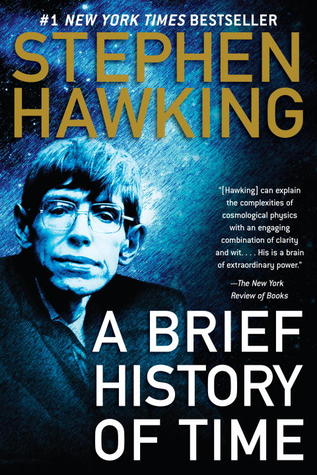

Brief history of time

1.) A Brief History of Time by Stephen Hawking

This may be an odd choice as I’m fairly certain I wouldn’t understand anything Hawking says beyond the Acknowledgements page. I once read that this book had the distinction of being “the most unread book on everybody’s bookshelf.” (I don’t know whether that’s urban legend or established fact– but I can believe it.) An Engineering PhD student from a very prestigious technical university once admitted to me that he couldn’t make heads nor tails of it. I did read The Universe in a Nutshell, which has a lot of pictures and, thus, is more my speed; it was kind of “A Brief History of Time … for Dummies.”


Confederacy of Dunces

2.) A Confederacy of Dunces by James Kennedy Toole

The backstory behind this book is fascinating and has an important moral. Toole killed himself, presumably because he couldn’t get it published. Then, posthumously, it became a critically-acclaimed hit after his mother took it around and forced literary types to read it. NEVER GIVE UP!


Farewell to Arms

3.) A Farewell to Arms by Ernest Hemingway

I’m a big Hemingway fan. I’ve read a few of his novels, many of his short stories, and even some of his non-fiction. This is my elusive great white Hemingwhale.
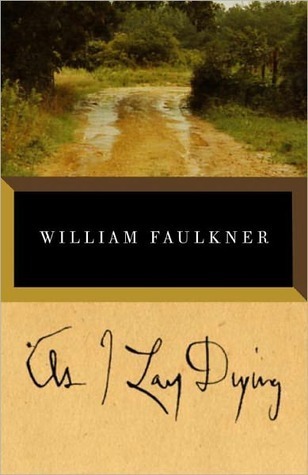

As I lay dying

4.) As I Lay Dying by William Faulkner

I was a late comer to Faulkner. I’d always heard that his writing was wordy and that it straggled. As those are bad habits of my own, I figured I should feed myself more Hemingway-esque writing. However, after reading several of Faulkner’s stories and his novel Sanctuary, I developed a man-crush on his use of language.
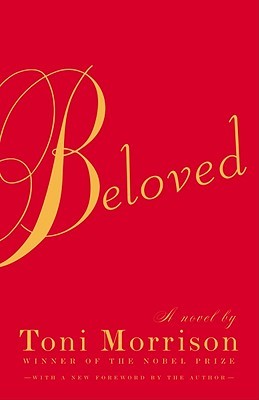

Beloved

5.) Beloved by Toni Morrison

Like many books on my list, I’ve got a copy of this on my bookshelf, and I even started it once. I’m not sure what distracted me. I picked it up originally to see how Morrison wrote accented dialogue. This is part of my advice to self to read outside my own history and experience.


cloud atlas

6.) Cloud Atlas by David Mitchell

I like cross-genre books. Furthermore, I’ve heard good things about the organization of this as a series of incomplete stories that are tied together in the final part.


crime and punishment

7.) Crime and Punishment by Fyodor Dostoevsky

This is another one that is on my bookshelf and that I started. It’s not that I didn’t like the opening (though like most all literature of its era is not exactly punchy.) Rather, it’s that I tend to end up with too many books up in the air at once. Therefore, if one takes over, the others get dropped.

I hope I don’t have a subconscious aversion to Russian literature, but–I must admit–I’ve read far too little Tolstoy, Dostoevsky, Pushkin, Turgenev, and (to a lesser extent) Chekhov. (I’ve read quite a few Chekhov short stories.)


Don quixote

8.) Don Quixote by Miguel de Cervantes

Again, I own this one. I don’t believe that I ever started it. However, anything with a sense of humor is a winner in my book.

GunsGermsSteel

9.) Guns, Germs, and Steel by Jared Diamond

While doing my Masters in International Affairs, I almost took a course  that used this as a textbook, but I had a conflict with a required course. The question of how some civilizations progress (when others don’t) is fascinating to me–as is the subject of Diamond’s more recent book Collapse, which looks at why certain civilizations unravel.


Heart of Darkness

10.) Heart of Darkness by Joseph Conrad

This one is particularly sad because: a.) I own it. b.) I’ve started it on more than one occasion. c.) It really does seem like a fascinating story, and d.) [the kicker] It’s extremely short. It’s not even properly called a novel, but more a novella or–maybe even–a long short story.


Les Miserables

11.) Les Misérables by Victor Hugo

I hate to admit that I might have some subtle anti-French bias because I’ve never read any Hugo or Camus.

Leviathan

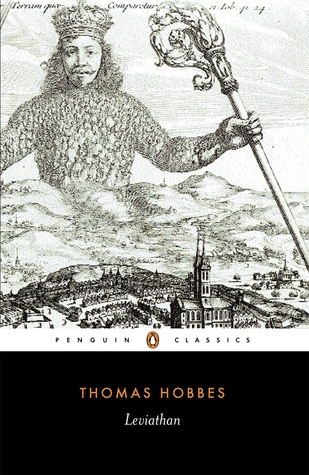
12.) Leviathan by Thomas Hobbes

This is another one that is about balanced reading. I’ve always tended toward a libertarian view of governance. So I’ve read John Locke and many other arguments for why government should stay small and limited. Leviathan is the granddaddy of counter claims. It’s about why the government must be involved in everything. I’ve read a lot of commentary on the Hobbes-Locke divide, but not this book. While I may not agree with Hobbes, that’s exactly why I should have read him. I have read Marx and others who’ve made more modern arguments for the primacy of governing over the governed.


Life of Pi

13.) Life of Pi by Yan Martel

I read the cover blurb of this when it came out and thought it would be interesting. When the movie was coming out, I thought about it again, but I just haven’t gotten around to it.


Lolita

14.) Lolita by Vladimir Nabakov

I saw the 1962 movie, but have never read this book. This is one that is often cited in pop culture. I know the general premise, but it would be good to read it.

Meditations

15.) Meditations by Marcus Aurelius

I’ve read quotes from this book, and I once started it from the beginning. I agree with the life philosophy espoused in it, so I should have finished it by now. I particularly like the quote, “It is not death that a man should fear, but he should fear never beginning to live.”

lives of a cell

16.) The Lives of a Cell by Lewis Thomas

I began it once, and it’s tiny. So double shame on me for not finishing this one yet.


Origin of species

17.) The Origin of Species by Charles Darwin

I’ve read a lot of commentary on Darwin’s ideas, but not this book– at least not in full. I include it because it’s one of the seminal works on the biological world as we know it. It contains many ideas that should be considered when reflecting on the nature of man and animal alike.


Satanic Verses

18.) The Satanic Verses by Salman Rushdie

Any writing that makes someone take a hit out on the author must be powerful stuff. Enough said.


The Stranger

19.) The Stranger by Albert Camus

This is one whose pop culture references, I suspect, elude me.

things they carried

20.) The Things They Carried  by Tim O’Brien

I’ve just heard that his is an outstanding and very readable book. It’s supposedly a great example of a sparse but evocative style. I’m interested in the literature of war, so it’s right up my alley.


Tipping point

21.) The Tipping Point by Malcolm Gladwell

This is really a stand-in for a number of pop social science titles by Gladwell that examine the behavior and decision making of individuals and groups. Blink might have been a choice as well, but I’m a little more interested in the tipping point phenomena.  I’ve read vast troves on behavioral economics and related fields, but Gladwell is such a household name that I should probably be more familiar with his work.


The Trial

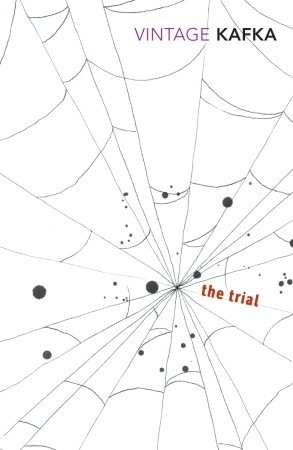
22.) The Trial by Franz Kafka

Another one that I own, I’ve started, which has many pop culture references, but which I’ve never gotten through.


wisdom of crowds

23.) The Wisdom of Crowds by James Surowiecki

This is sort of a counter claim social science book. I once read an old book entitled Extraordinary Popular Delusions and the Madness of Crowds by Charles MacKay. MacKay suggests (as Tommy Lee Jones did in Men in Black) that in groups otherwise intelligent people are stupid and panicky.


to kill a mockingbird

24.) To Kill a Mockingbird by Harper Lee

Again, there are tons of pop culture references out there on this one. I’ve heard it’s a well-crafted book, but–for whatever reason– I’ve never read it.


Ulysses

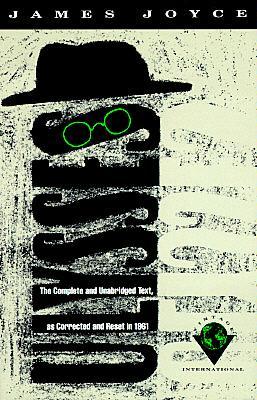
25.) Ulysses by James Joyce

I have no illusions that this would be fun reading, but some consider it the best English language novel of all time. Also, I have read some of James Joyce’s shorter stuff, and I dig his use of language. My fear is that it will be like “the greatest American novel,” Moby Dick, which I did read and would rate far lower.


Bonus Shame Picks

I just realized that my list was appallingly Western-centric, and so I’ve added a couple bonus picks  to rectify this because I’m too lazy to go back and cut a couple of the others.


Tale of genji

26.) The Tale of Genji by Murasaki Shikibu

Written in the 11th century, this Japanese work is considered by many to be the world’s first novel–or at least the first modern novel.


Water Margin

27.) The Water Margin by Shi Nai’an

This 14th century Chinese novel is one of the four classics of ancient Chinese literature. It also supposedly contains a lot of kung fu flick elements.


Your turn. Come on,  confession is good for the soul. What books are you ashamed that you haven’t gotten around to reading yet?


Drunk, Narcissist, or Buddha: What Kind of Writer Are You?

IMG_0173I read a story in The Guardian the other day entitled “What drives writers to drink?”  It was actually an edited excerpt from a book by Olivia Laing entitled The Trip to Echo Spring: Why Writers Drink.

I found this piece fascinating despite the fact that the title question seemed readily answered with another question, “In what other occupation must one regularly, repeatedly, and thoroughly get punched in the soul in order to succeed?” Writing is a personal act, and no piece of writing that is read escapes the assault of criticism, invited and uninvited, which ranges from sagacious to ridiculous.

One somehow has to find the courage to wade through what feels a lot like attacks on one’s intellectual self in order to discover what is useful and what is not. If one summarily rejects all criticism and advice, one will neither grow nor is one likely to be published. If one accepts all criticism as having merit, one may find a psychiatric ward in one’s future–and one is likely to remain unpublished. So the trick is to be able to answer the question, “What within this writing is genuinely bad?”

The problem is that it feels like the question is, “What about me is flawed?” It’s like holding a mirror up to the core of one’s being and noticing that you have some rot.

How do writers do this? There are probably innumerable approaches, but three common ones come to mind. The first is the one thoroughly addressed in Laing’s book; that is, some writers self-medicate. The article references a quote by Tennessee Williams, “…you felt as if a new kind of blood had been transfused into your arteries, a blood that swept away all anxiety and all tension for a while, and for a while is the stuff that dreams are made of.”

A second unhealthy approach is to reject any assertion that contradicts one’s perfection. In other words, be a narcissist. These are the writers who meet each and every piece of criticism with statements like, “you just don’t understand what I was trying to do there, my misspelling was actually a clever commentary on the zeitgeist of 20th century Armenia.”

The narcissists have the advantage not becoming clinically depressed by the constant rejection and criticism that is a life of writing. The downside is that they have to live in a world in which everyone else on the planet is ignorant and incapable of recognizing brilliance when it’s shining in their faces, and that is depressing in its own way. Only a few in this group manage to get published, and they do so through a combination of being truly great and, at least early on, being willing to tarnish their awesomeness by accepting some editorial suggestions.

The third approach is the one that we should all aspire to, but it’s a bitch getting there. In the title I used “Buddha” as a code word for the enlightened approach. What is the enlightened approach to dealing with rejection and criticism? First, one must realize that equating one’s writing and one’s self is illusory, and that criticism of one’s work isn’t criticism of self. Before any writer gets to the point of submitting works to agents, editors, or publishers someone along the line has told one that one’s writing is good. This fatal compliment causes one’s self-worth to become entangled in one’s writing.

Second, one must develop a confidence that isn’t rooted in external validation. In less pretentious words, one mustn’t feel it necessary to be loved by everyone with whom one comes into contact. This is hell if one’s entire life is writing. The value of published writing is inseparable from how it’s received. My only suggestion on this point is to find something else in one’s life that allows one to build self-confidence. For me, this has been martial arts. Sure there are usually rank tests, which are about validation from one’s teacher. However, what it really comes down is whether one experiences success in training and sparring. If one sees some success, the rank starts to be irrelevant to one’s confidence. I think outdoorsmanship is another such skill– for those less scared of bears than being beaten ugly with a stick. There are few activities in which other’s evaluation of one is ultimately irrelevant, but those are the activities with which one should seek to balance one’s writing.

If anyone needs me I’ll be guzzling Bourbon and contemplating how the publishing industry is run by poop-weasels.

DAILY PHOTO: Convent’s Courtyard

Taken in July of 2010 in Arequipa, Peru

Taken in July of 2010 at Convento de Santa Catalina in Arequipa, Peru

DAILY PHOTO: Big Ben

Taken in 1989-ish

Taken in 1989-ish

DAILY PHOTO: Montreal from Parc du Mont-Royal

Taken in March of 2011 in Montreal

Taken in March of 2011 in Montreal

DAILY PHOTO: Towers of Tallinn

Taken in the summer of 2011 in Tallinn, Estonia

Taken in the summer of 2011 in Tallinn, Estonia

MOVIE REVIEW: The Wolverine

I don’t normally do movie reviews because, for one reason, I don’t watch that many movies–at least not in the timely fashion necessary to be relevant. However, I figured I’d do one for The Wolverine because I did a book review of Clairmont & Miller’s Wolverine.

The Wolverine shares superficial common ground with the Clairmont & Miller book.  The setting for each is largely Japan. The movie and the book share almost the same slate of major characters. However, the characters don’t necessarily have the same relationships to each other or the same personalities as in the book.

If you’ve seen the trailers, my synopsis will be largely spoiler/surprise free. The movie opens with Logan saving a young Japanese officer. It then flashes forward to Logan living in the wilderness of the Pacific Northeast. The primary reference to the earlier films is that he is tormented by killing Jean Grey in X-men: The Last Stand (a.k.a. X-Men 3.) Yukio (a female warrior who the movie makes friendly to Logan from the get go) tracks Logan down to take him to see her employer, the same individual he saved during the war. That individual offers him mortality. After their meeting, Logan’s principal goal shifts from living by a vow to not kill to one of keeping Mariko safe. Mariko is the granddaughter of the officer Logan saved and she becomes his love interest. As in the book, Mariko is tangled in intrigues of family and company (i.e. kairetsu), but the nature of these intrigues is somewhat updated in the movie. In the book, Mariko is a helpless damsel-in-distress, but in the movie we see her strength.

The biggest strength of this movie is that Wolverine becomes mortal in the film–at least for a time. This creates stakes for Logan where none usually exist. The problem with Wolverine’s combination of rapid healing and indestructible skeleton is that there’s no nail-biting over his fate. You know no matter how much he gets tossed around, he’s going to get up and within a minute he’ll be right as rain.

In my opinion, the biggest flaw of the movie is the creation of a twist ending that fails to surprise but yet requires distorting a character. I realize it’s hard to write a good twist ending. If one foreshadows too much, one gives away the surprise. If one fails to foreshadow, then one annoys the audience with a “gotcha” type ending. In this case, one of the characters behaves in a manner that is out of character with the first act portrayal. This is a “gotcha,” but one that one couldn’t help but thinking was a possibility. There are a number of little forgivable sins that I won’t discuss, and which may be inevitable in film.

The film also contributes to the general continuity muddle of X-men films. Because this film attempts to be a standalone film, it may not seem fair to critique this point. However, by using the aforementioned piece of the X-Men 3 timeline, I think they open themselves up to this criticism. As an example, while in the X-Men Origins: Wolverine film we are told that Wolverine can’t grow back his memories, he apparently grows back his memories of what happened in WWII just fine. There’s a post-credit scene which happens three years after The Wolverine timeline that is a set up for X-Men: Days of Future Past and Professor X appears in it, but they hint that there may be an explanation for this (Xavier died in the same X-Men 3 that this film references through about half a dozen dream sequences.) This is not so much an example of  discontinuity, also because the upcoming film features time travel prominently, but may or may not be example of the general X-Men muddle.

I’d recommend seeing this movie, but only if one goes in thinking of X-Men Origins: Wolverine. If one does that one will find it an enjoyable step up. However, if one goes in expecting a movie of The Dark Knight caliber, one will be sorely disappointed.

Sharknado: or, the Rock Band or Cheesy Movie Game

Somebody on Facebook made an offhand reference to Sharknado the other day.  I had no idea what a “Sharknado” could be, except the mind-numbingly stupid idea suggested by the phonetics of the “word.” It turns out that is exactly what it was. Despite the fact that sharks exist in places like Florida and tornadoes exist in places like Oklahoma (not a lot of overlap there), the movie is about tornadoes that pick up sharks and throw them through the air at unsuspecting people. (The sharks are, of course, still alive and hungry contrary to everything we know about biological entities that get picked up in twisters.)

I once wondered why the “Sci-fi” channel changed its name to the “Syfy channel.” I now know that it must have been the threat of false advertising lawsuits that spurred this change. (Of course, this doesn’t explain why the “History channel” isn’t the Sasquatch Alien channel.) Sci-fi is short for science fiction. Let’s break that down. First, the reference to “science” means one would expect some speculative universe which is constrained by scientific laws–either the laws of physics as we know them or some reasonable set of scientific principles by which a universe could be held together. It is not a magic universe, as required by Sharknado. The target demo for science-fiction is geeks and nerds (said in the most complimentary sense of those words)–in other words, people who overthink (or, at least, think.) The target demo for Sharknado seems to be pubescent boys failing science and in need of an opportunity to masturbate to Tara Reid.

Second, fiction is a creatively-engineered story, and I’m not even sure Sharknado qualifies on this front either. The creative component seems to be limited to cramming two things that terrify people together into one word or phrase. This may work in some cases, such as with the term “divorce lawyer.” However, the two concepts that one smashes together have to have some credulity as a unified threat. The fact that motherf#$%ing Samuel L. Jackson couldn’t save Snakes on a Plane, should have made this apparent to all.

As a thought exercise, let’s try some examples:

1.) Which of the following terror-inspiring dualities are devices around which a movie plot could be built, and which are just awesome rock band names?

a.) Clown-Pirates

b.) Hobo-Scorpions

c.) Black Mamba-Teen Driver

d.) Bear-Proctologist

e.) Spiders in a Tuk-tuk

f.) Karaoke-Mugger

g.) Robo-gynecologist

h.) Newborn-Arsonist

i.) Mother-in-Law / Attorney-at-Law

j.) Anthrax-blizzard

By the way, if the Syfy channel comes out with any of the above movies or series, please shoot me an email so I can claim my Executive Producer credit. It’s more likely this will be the starting line up for Lollapalooza 2025.

Bear with bubbles

DAILY PHOTO: A Blue Hotel

Taken in the summer of 2011.

Taken in the summer of 2011.

DAILY PHOTO: Moonlight Pavillion

Taken in October 2012 in Phnom Penh

Taken in October 2012 in Phnom Penh