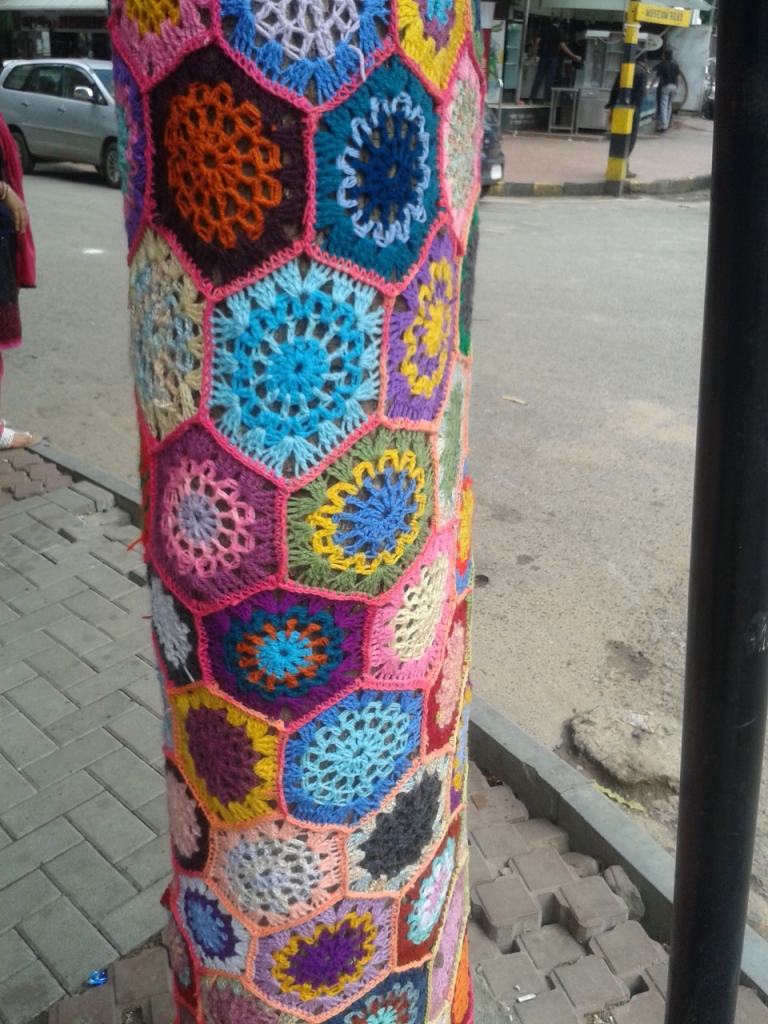
Taken in October of 2014 in Bangalore



 Sorry I Ruined Your Orgy by Bradley Sands
My rating: 3 of 5 stars
Contrary to the title, this isn’t an etiquette primer on how to make amends for a poor performance at a friend’s sexual soiree. It’s a collection of absurdist flash fiction that takes its name from a its introductory story in which a man shows up to an orgy wearing a bear costume and proceeds to behave badly.
Most of these stories are under a page long and few are longer than three pages. The stories don’t make sense, and are not intended to. (If they do make sense, the author has failed.) Instead, they are designed to subvert expectations to the maximum extent possible. Subverted expectations being the foundation of humor, there will be chuckles. However, it’s not just humor. It’s about defying one’s ability to judge what’s around the next corner by resisting any temptation to observe socio-cultural conventions about what could possibly and properly come next. Like spoken word acts, these stories are meant to invoke a response in the reader by surprises of language—often jarring surprises—more than by way of meaning.
If you are the type who doesn’t take words too seriously and take to absurdity like it’s a Zen koan, you might enjoy this brief work for the tickling it gives one’s mind. If you’re the type who takes words very seriously and are prone to get bent out of shape by “inappropriate” or loose word use, you will hate it and should avoid the trauma of reading it.
I’ll elaborate on my last statement. Irreverence, impiety, and a proclivity for the shocking are a few of the characteristics that go hand-in-hand with subverting expectations and conventions. Because of this, there’s a fair amount of profanity and jarring concepts included in the mix. I’ll offer one example of such a jarring concept that’s included in the book: “rape camp.” If you’re prone to be offended by the loose use of the word “rape,” then probably the only more reprehensible phrase than “rape camp” would be “rape fiesta” (though, to be fair, in the book a rape camp is more like a concentration camp than a summer camp.)
As a litmus test of how you’ll respond to this work, imagine opening a Hallmark card and reading the following sentence as contained in this book, “Sorry your grandma died! She molested me when I was eight.” If—despite realizing that it’s so wrong—you can’t help but grin, you’ll like this book. If your impulse is to write the author hate mail, you should avoid reading it.
It should be noted that the book is not all rape, molestation, and orgies. The book mostly consists of less prurient attempts to achieve the unexpected and/or shocking.

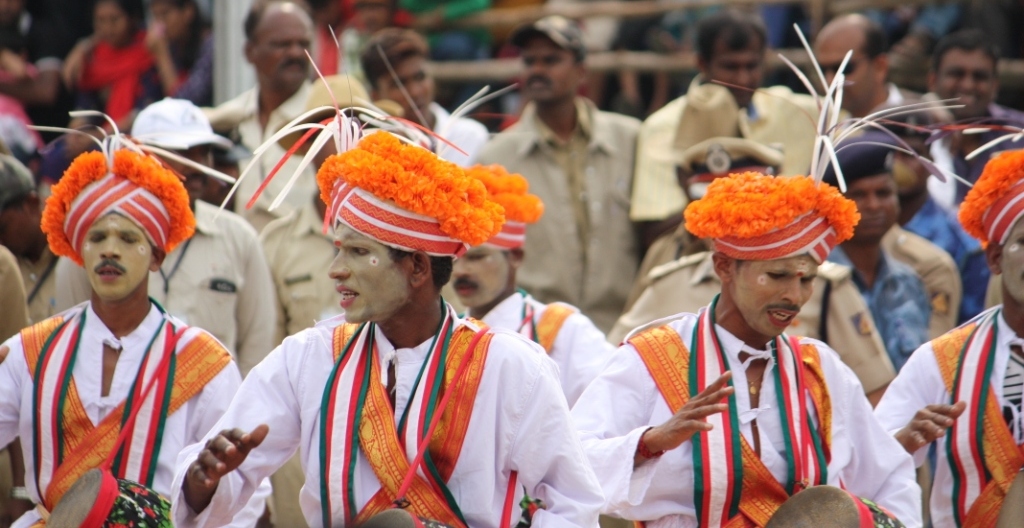
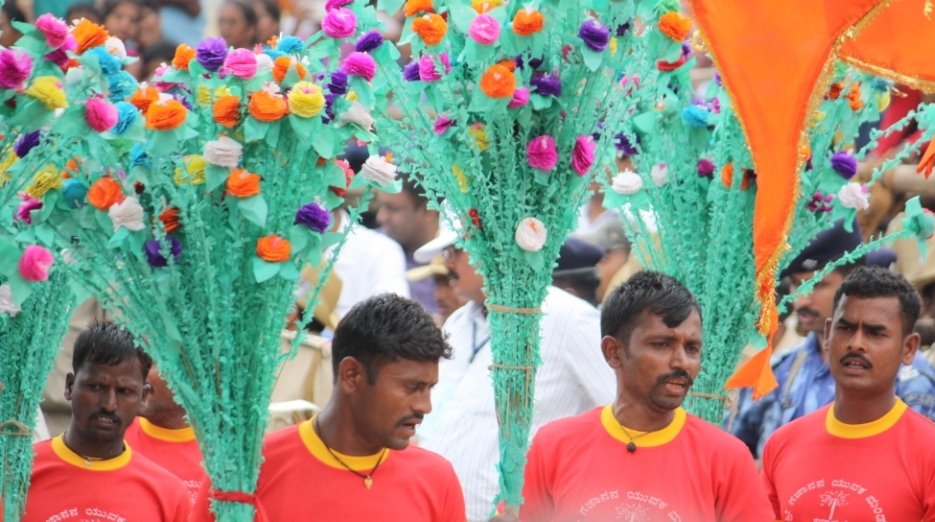
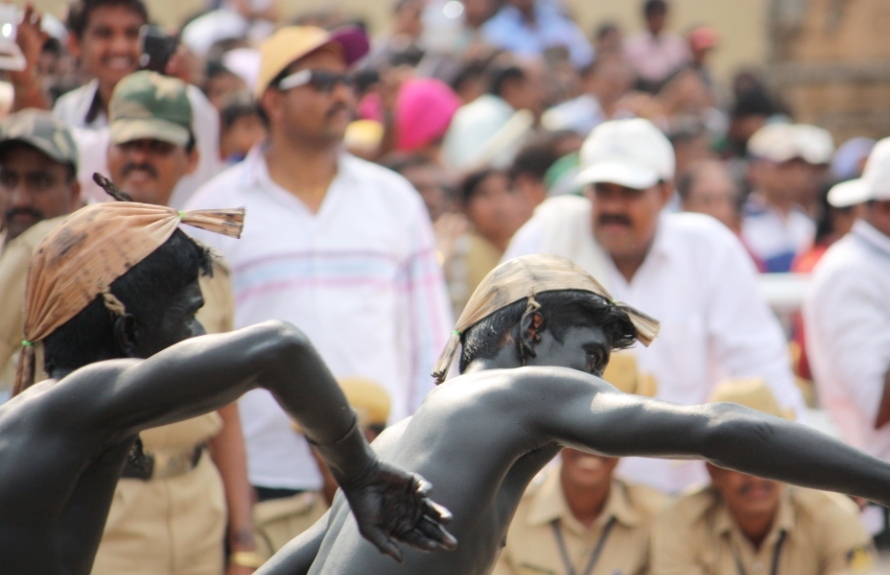
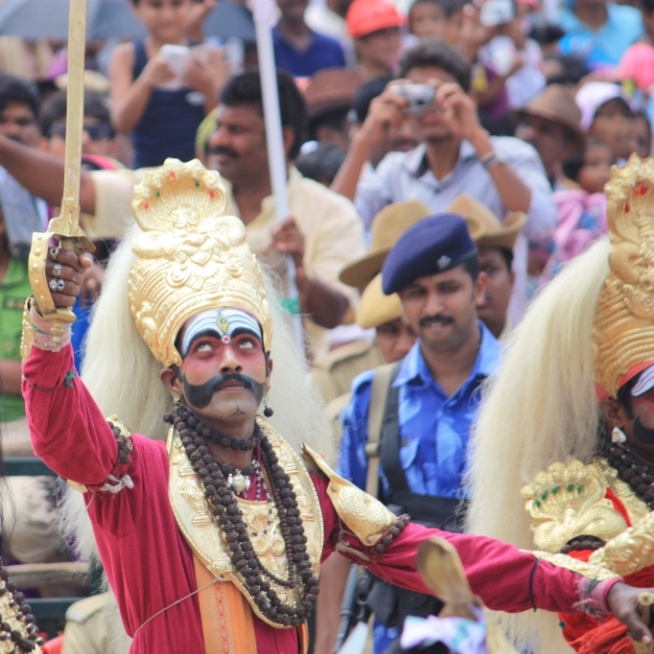
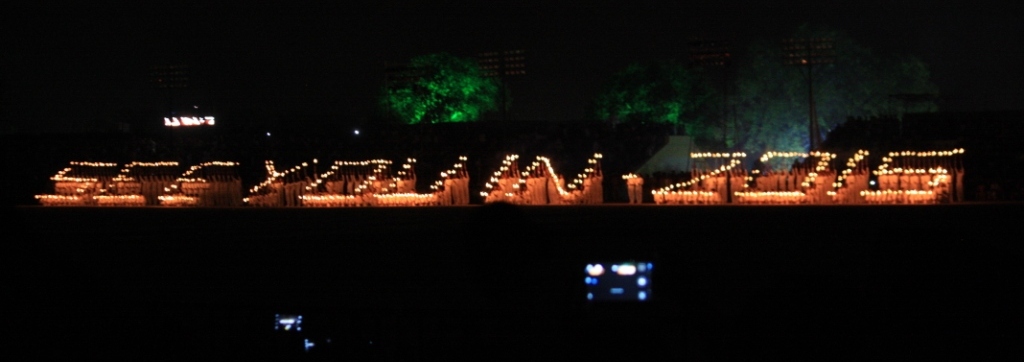
Taken October 4, 2014 in Mysore

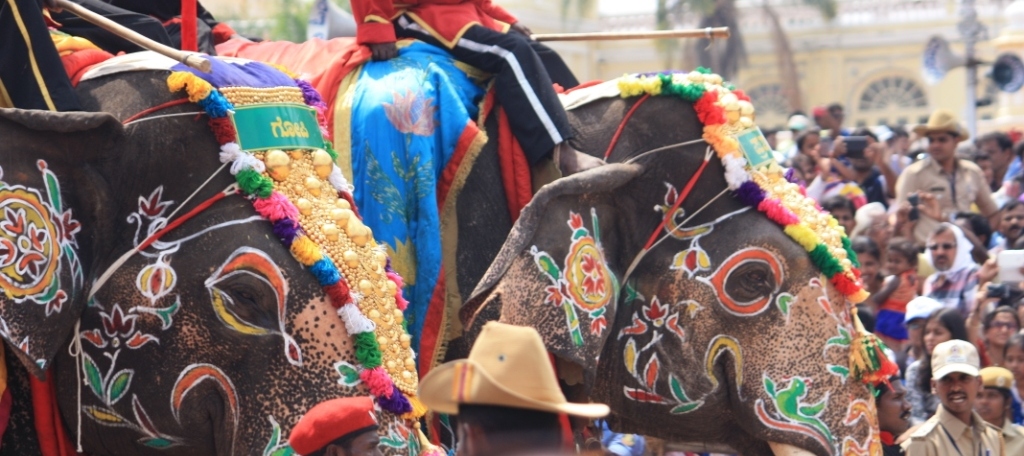
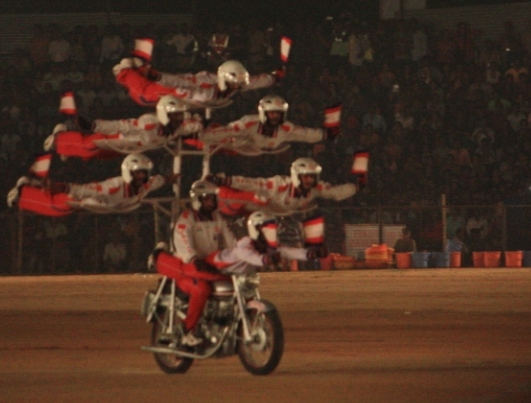
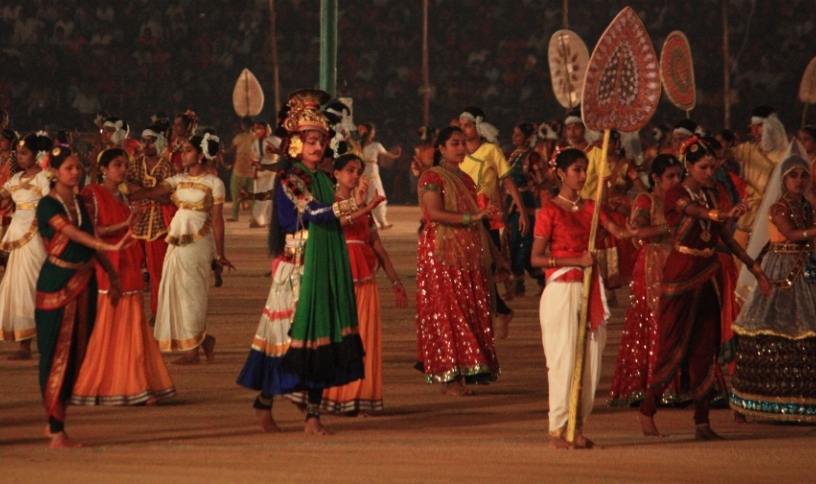
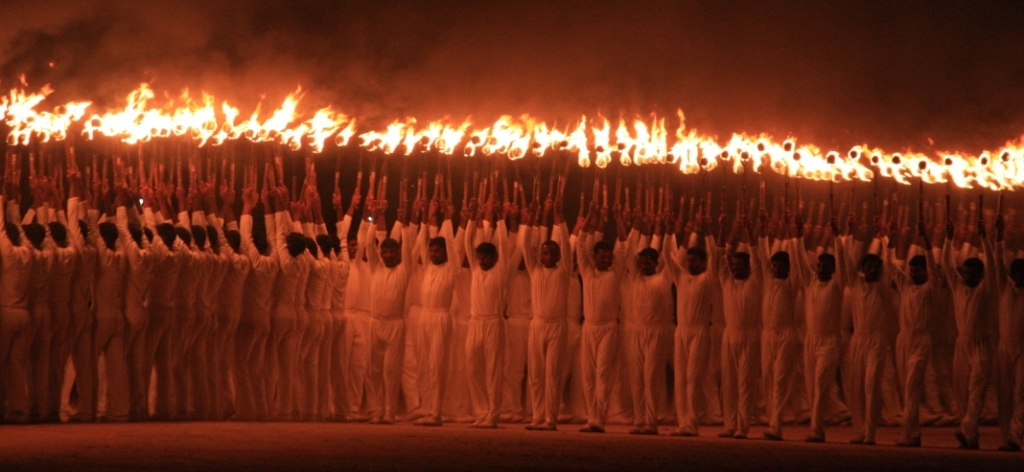
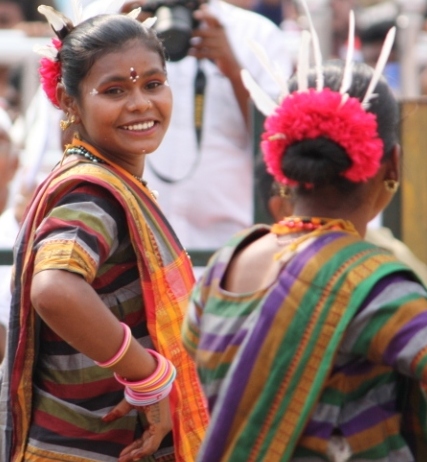
These photos were taken at the Torchlight Parade, which is a closing ceremony for the Mysore Dasara Festival.
 The Heart of Yoga: Developing a Personal Practice by T.K.V. Desikachar
My rating: 5 of 5 stars
This book’s author, T.K.V. Desikachar, was the son and student of T. Krishnamacharya. If you’re not a well-read and/or Indian yoga practitioner, there’s a good chance the latter name means nothing to you, and yet your practice has likely been influenced profoundly by him. He was the teacher of B.K.S. Iyengar, Pattabhi Jois, and Indira Devi. Iyengar, who recently passed away, popularized the use of props (blocks, straps, bolsters, etc.) as a means to achieve proper alignment until one’s flexibility was sufficient to achieve perfect alignment without assistance. Jois developed the vigorous and flowing Ashtanga Vinyasa style of yoga, which is the direct ancestor of Power Yoga—a popular style among fitness buffs in the West. Indira Devi was a Westerner actress who took an Indian name and was among the first teachers to introduce yoga to America and to adapt it to American needs. While Desikachar wrote the book, his father’s presence is seen throughout the book in photos and quotations.
After reading the book, it will not come as quite the surprise that T. Krishnamacharya was teacher to several of modern yoga’s most innovative teachers. A central concept of Krishnamacharya’s teaching philosophy was that yoga is a personal path that must be optimized to the individual. That’s what this book tries to do. Its aim is not to teach one yoga for all, but to help individuals tailor yoga to their own needs.
The Heart of Yoga is divided into four parts. The first two parts form the core of the book, and make up the bulk of its length. The first introduces yoga at a basic level and then goes on to impart practical lessons on asana (poses), pranayama (breathing exercises), and bandha (locks.) The second part instructs on the philosophical aspect of yoga, and how an individual can bring these concepts into their life. This includes ideas that are traditionally associated with Yogic philosophy as well as those of Samkhya (Yoga and Samkhya are two of the six orthodox schools of Indian philosophy, and are closely related.)
Part III of Desikachar’s book is his translation of Patanjali’s Yoga Sutras with commentary. Some will appreciate that the sutras are written in Sanskrit, a Romanized phonetical Sanskrit, and in English. In addition to this, Desikachar’s commentary not only elaborates on each sutra individually, but offers insight into how they are grouped and what meaning their organization conveys. For those who have read Yoga Sutras, you’ll know that they consist of 196 lines of instruction, each so laconic as to be cryptic. Commentary is essential, particularly if one is reading the translated sutras and doesn’t have the historical, cultural, or linguistic background to distill the meaning from these mega-concise aphorisms.
Part IV is called the Yoganjalisaram, which is a poem of 32 stanzas each consisting of three to six lines. “Poem” might be a misleading description. Each Sloka (i.e. like a stanza) is a lesson in yoga. It touches on diet, physical technique, philosophy, and religion.
In addition to what I thought were well-written, concise, and informative chapters, there are a number of ancillary features that are beneficial. There’s an appendix that describes some of the prominent historical texts that are commonly referred to throughout the book. Another appendix provides a series of asana sequences that are consistent with the teachings of Part I of the book. There is a glossary of terms that are used throughout the book. Up front there is an interview with T.K.V. Desikachar that deals mostly with his father’s approach to yoga. In addition to the many photos of Krishnamacharya, simple line drawings are put to good use to convey ideas where necessary.
I think what I found so appealing about this book is that the author has a pragmatic, down-to-earth, and open-minded approach to yoga. Some yoga books are way out there in the stratosphere, and their ethereal qualities don’t inspire confidence in me that the author knows of what he/she speaks. Others are doctrinaire about absolutist beliefs and values one “must” hold to be a true yogi or yogini. Desikachar is neither an ideologue nor flighty. He may have benefited from his education as an engineer. His lessons are presented simply and practically, so as to give confidence that he knows of what he speaks.
I’d recommend this book for any practitioners of yoga–be they beginner or advanced. It provides food for thought for bringing yoga into one’s life at a physical and psychological/philosophical level, and in a personal way.
 The Coroner’s Lunch by Colin Cotterill
My rating: 4 of 5 stars
The Coroner’s Lunch uses a popular and intriguing technique of setting a crime novel in an unconventional landscape. Like Martin Cruz Smith’s Arkady Renko novels (most famously Gorky Park), James Church’s Inspector O novels (e.g. A Corpse in the Koryo), or Laura Joh Rowland’s Sano Ichirō samurai detective novels, Cotterill’s book places a protagonist staunchly devoted to the truth into a sea of ideologues who value appearances more than facts and who will do anything to maintain their precarious grasp on power.
This approach appeals for a couple of reasons. First, it maintains a line of tension in terms of the world against the protagonist on top of whatever other plot conflicts may exist (criminal against investigator.) It also allows us to recognize the virtues that we find appealing amid a people that we think are a world apart.
While crime fiction is plot driven, this particular variant requires strong character development. We must have a lead character that stands out against the bleak landscape of the authoritarian regime that employs him. However, at the same time, the character mustn’t stand out by being bold and defiant in the manner we might expect of a crime novel set in New York City. Such a character is unbelievable amid totalitarian regimes like the Soviet Union, North Korea, feudal Japan, or—in Cotterill’s case—Laos, circa 1975. We can’t believe such a character wouldn’t be killed by leaders who have people summarily executed on a regular basis. So the character must be clever, adroit at manipulating the system, and a quiet anti-ideologue.
Cotterill’s Dr. Siri Paiboun largely fits the mold, but is a little more irreverent than usual. The old doctor is drafted into being Laos’ national coroner because most of the educated class has fled the country–this despite the fact that Paiboun’s medical expertise is not in forensics. The ultimate source of his bold demeanor is that he is an old man, and he figures that there’s not much that they can do to him. If he were to be executed he wouldn’t lose much longevity over his natural lifespan, and if they sent him to camp, it wouldn’t be as foreboding as the places he has once been. Additionally, he has a highly placed friend, and—beyond that–they can’t replace him in short order. Making Paiboun disappear as Communist regimes were known to do is not an option. Still Siri is clever and does know how to ride the line without tipping across it.
The plot revolves around two crimes. The first is the death of the wife of a high-ranking Party official. The second is the discovery of three Vietnamese government agents in a lake in rural Laos. Both of these cases are high-profile and create incentives to keep truth from coming out.
One element of Cotterill’s novel that is outside the mold for this type of book involves supernatural activities. It seems that–like The Sixth Sense’s Macualay Culkin—Dr. Paiboun sees dead people. Perhaps this device was added to set the novel apart from others in the aforementioned class. For me, this approach seemed superfluous and disadvantageous. Siri’s “gift” kind of detracts from his strength of character because it’s not so much his brilliant mind that is solving murders as the victims giving him hints.
I will say that this supernatural element is introduced in a great way and that it could have been used throughout the novel to a much better effect. When the dead people first visit him, it’s in the form of a dream. At first we don’t know whether his subconscious worked out the solution or whether there is something supernatural going on. However, the author adds a manipulation of the material world so that we know this is supposed to have really happened and later this becomes abundantly clear. I think it would have been better to maintain the ambiguity. People reach solutions to difficult problems through sleep all the time, but we don’t live in a world in which the physical is manipulated supernaturally. Not that there is anything wrong with supernatural fiction (I read a lot of it.) However, crime fiction works best in a realistic world, as does historical fiction. This novel straddles those two genres, and throwing in supernatural events muddles the setting a bit.
Overall, I thought the book was well-written and the main character was humorous and intriguing. If you liked the kind of books I mentioned in the first paragraph, I believe you’ll like adding this to the mix.
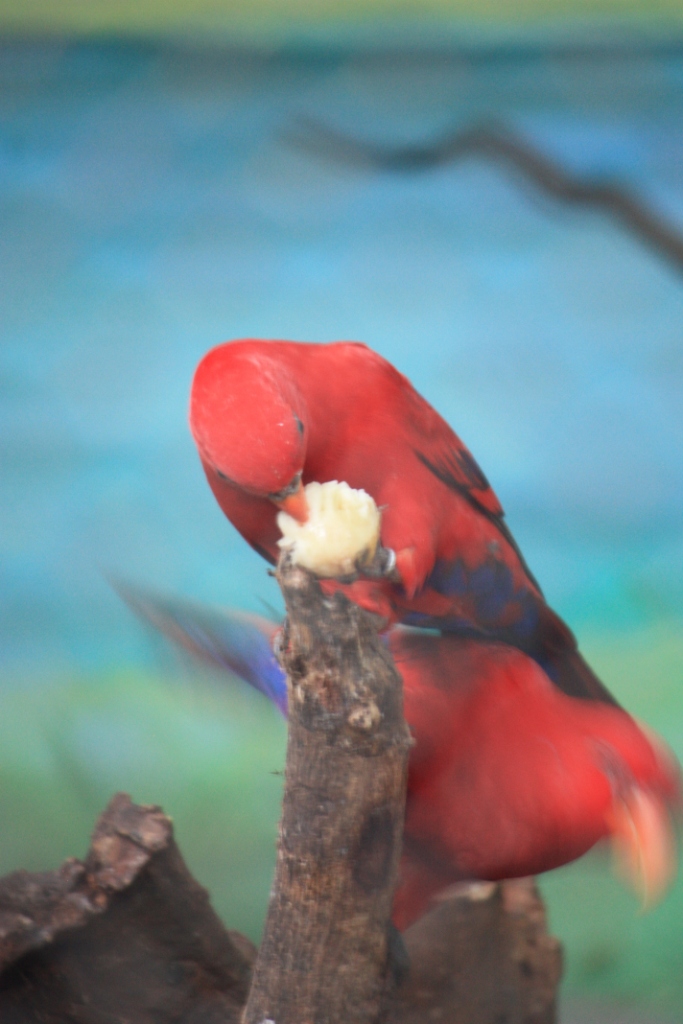
Taken on October 3, 2014 at the Mysore Zoo.
 A small group of friends, my wife, and I were in Mysore for the last day and a half of Dasara (Vijayadashami) festivities. We purchased the Gold Card tickets in order to have assigned seating to both the Jumboo Savaari Processional and the Torchlight Parade on the last day, as well as for free access to some of Mysore’s tourist attractions. As this proved to be a learning experience, I’ll provide some of our lessons learned so that they might help future visitors.
There is a page providing information about the Gold Cards on the official Mysore Dasara website, as well as relevant information amid the FAQ‘s (Frequently Asked Questions.) However, this left some questions unanswered. While the best way to get such questions answered is probably through the official Enquiries page or a call to the Deputy Commissioner’s office, some of these questions might not occur to one until one is in the thick of things, and the answer that one receives might not be helpful. So this post will be an unofficial, ancillary FAQ.
In 2014, there were two means by which to directly purchase tickets. One could go to the Deputy Commissioner’s Office in Mysore and purchase the tickets for the 7500Rs face value (roughly $122USD) or one could purchase them online through Ticket Genie for face value plus about 650Rs in charges (about $11USD.) (Plus, there may have been more costs associated with payment by credit card and with getting the ticket in hand.)
Question 1: I, like you, am a cheap skate who doesn’t live in Mysore and doesn’t want to pay rupees 650+ in fees, is there a cheaper way to acquire the Gold Cards?
We used Skyway Travel as an expediter and spent well under half of the online fees (i.e. 300Rs.) to get the tickets. Granted we would have incurred a little additional cost if we’d had to have Skyway deliver the tickets, but, as the office was located on a nearby street, there was no further costs. Even if we’d had to have them delivered, it would have remained much cheaper than the online route–especially as it sounds like one would still have such an additional charge with the online approach as well. Furthermore, Skyway gave us a nifty Mysore map and guidebook, both of which came in handy. Lest you think I’m a shill for Skyway, I will say that there may be other companies that would serve as expediters, and some may be cheaper. However, as they will undoubtedly want money up front, I wouldn’t go with a super cheap entity whose reputation is unknown.
Besides the Jumboo Savaari and Torchlight Parades, there’s a list of tourist attractions that the Gold Card holder may have entrance to. This list is on both the website and the pamphlet that you should receive with your Gold Card.
Question 2: Is the list of attractions that comes with the card all-inclusive?
No. We found that our cards got us into a flower show that wasn’t specifically listed on our pamphlet. The actual wording introducing the list is “Free entry into tourist places.” So, in short, it’s worth giving it a try whether the location/event in question is listed or not. There are a lot of events going on just for the days of Dasara that one can learn about on the Mysore Dasara website. Also, please note that one listed attraction may not be available to you and that is the actual Mysore Palace. If you’re just going for the last couple days, the Palace will likely be closed for preparations. Fortunately, we had already seen the Palace and most other major Mysore tourist attractions on previous visits.
Question 3: Many tourist attractions require a separate fee be paid for those who have cameras (at least for cameras that appear to be “professional” to the cashier who usually isn’t a photographer and uses the crude formula: clunky and/or lens sticks out = professional.) Are camera fees included?
Short answer: Yes, or so it would seem. At our first stop, the aforementioned flower show, we were asked to pay the camera fee. We paid it, having no knowledge about whether it was or wasn’t covered. Our second stop was the Zoo, and there we didn’t have to get a ticket for the camera. (We’d been ushered in through a side entrance and really didn’t want to go back to the ticket window. It was more inconvenience than cheapness that had kept us from paying the fee.) At the Zoo, the ticket taker asked for my camera’s ticket, but when we showed our Gold Card, she spoke to her boss and was told to let us through. So the correct answer is that you may be asked to pay the camera fee, but you can probably talk your way out it by waving your Gold Card around.
The brochure and / or the back of the Gold Card itself told us start times for the parade and what number of gate to enter, but this still left questions.
Question 4: What time should I get to the gate for the Jumboo Savaari and Torchlight Parade?
Our brochure said the Jumboo Savaari started at 11am, and the travel agent suggested we should get there plenty early because we might not get in if we waited until 11am. Both pieces of information proved to be incorrect. I can’t really answer Question 4. Are you the type of person for whom having the best possible seats is of the utmost importance? If so you want to get there on the early side. Are you the type of person who sees red if you’re kept sitting around for hours while you twiddle your thumbs? If so, plan on showing up late.
What I can tell you is the actual timeline of happenings. It was 10:30 when they began checking tickets and letting Gold Card holders in through the gate. It was about 1pm when the parade went wheels up. Know thyself and show up accordingly.
For the Torchlight Parade we showed up right around the published start time, and–while our seating options were limited to low seats with a camera stand in front of us (the latter didn’t matter because we didn’t look to the front but toward the center of the arena, which was laterally.) This event was begun with a military parade, and–while I won’t say it started with complete military precision–events began soon after the published start time.
Question 5: What time do the events end?
Both the Jumboo Savaari and the Torchlight Parade ran a little over 2 hours from the time they actually started (which, in the case of the Jumboo Savaari was well after the published start time.)
Question 6: They gave us a gate number to go to, but we have no idea which gate that is?
For the Jumboo Savaari, we were told to got to Gate 4. This turned out to be the gate on the South side, which is where one would normally enter if one were purchasing tickets to the palace. This is probably the norm as the procession exits the north gate and you will be toward the very beginning of the parade.
I guess this leads to the ultimate question.
Question 7: Were the Gold Cards worth it?
If you haven’t seen the Mysore tourist attractions, you can get a lot of value out of the Gold Card if you have enough time. We’d seen most of the ongoing attractions and were only there for a short time–such that we couldn’t take advantage of many of the events that occurred earlier in the week on subjects like art, film, yoga, and food.
We did visit the flower show and the Zoo, but, otherwise, it was all about the Jumboo Savaari and the Torchlight Parade. I was happier with our seats for the former than the latter. (This is not entirely because we got there early for the former and not for the latter.) The Gold Card seats for the Jumboo Savaari are right at the beginning of the parade route. There were multiple rows per tier, and so if you didn’t get in a front row, your view may have stunk–particularly if you were vertically challenged. If you stand up you will anger those behind you and possibly to the police monitoring the stands.
For the Torchlight Parade some portions, like the motorcycle stunt team, could be clearly viewed from the Gold Card holder’s portion of the stands, but the dance numbers were centered in the middle of the stadium and Gold Card holders couldn’t see that well. They did have big screens, but they weren’t that big or that close, and if I wanted to watch it on TV I’d buy the video that they seem to have been producing. (That was part of the problem is that the dance acts were densely clustered in front of the cameras, and from the ends it was hard to see.)
So it comes down to whether one is happy with what one does see. And what will you see?
This and this and this and this and this.
And this and this and this and this.
And this.
 And this.
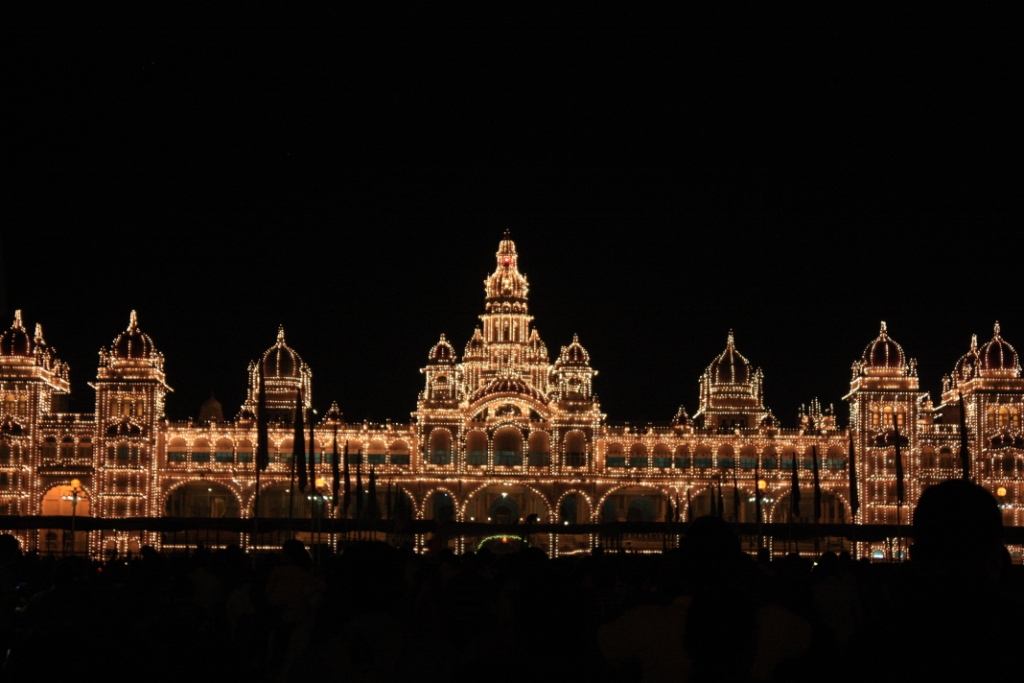
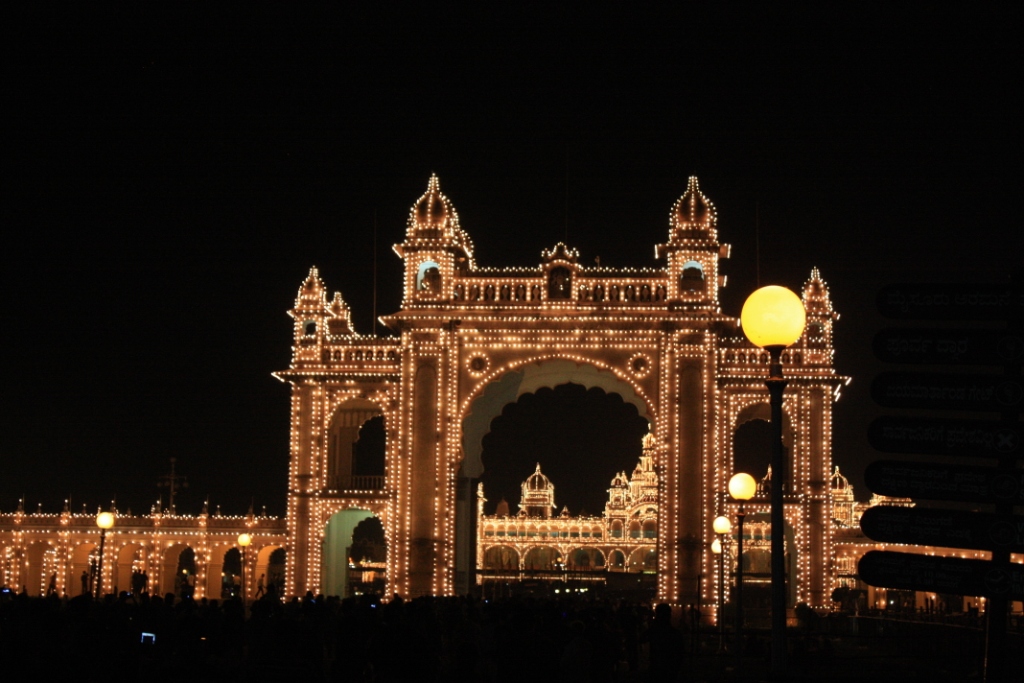
Taken on October 3, 2014 in Mysore
The Mysore Palace is usually only lit up on Sunday evenings. However, during the 10-day festival of Dasara (Vijayadashami), they light it up every night. This was taken on the penultimate day of festivities.