
Taken in September of 2014 in Bangkok.
Located across the street from Wat Po just down from the drum tower.


Taken in September of 2014 in Bangkok.
Located across the street from Wat Po just down from the drum tower.

Taken in September of 2014 in Bangkok
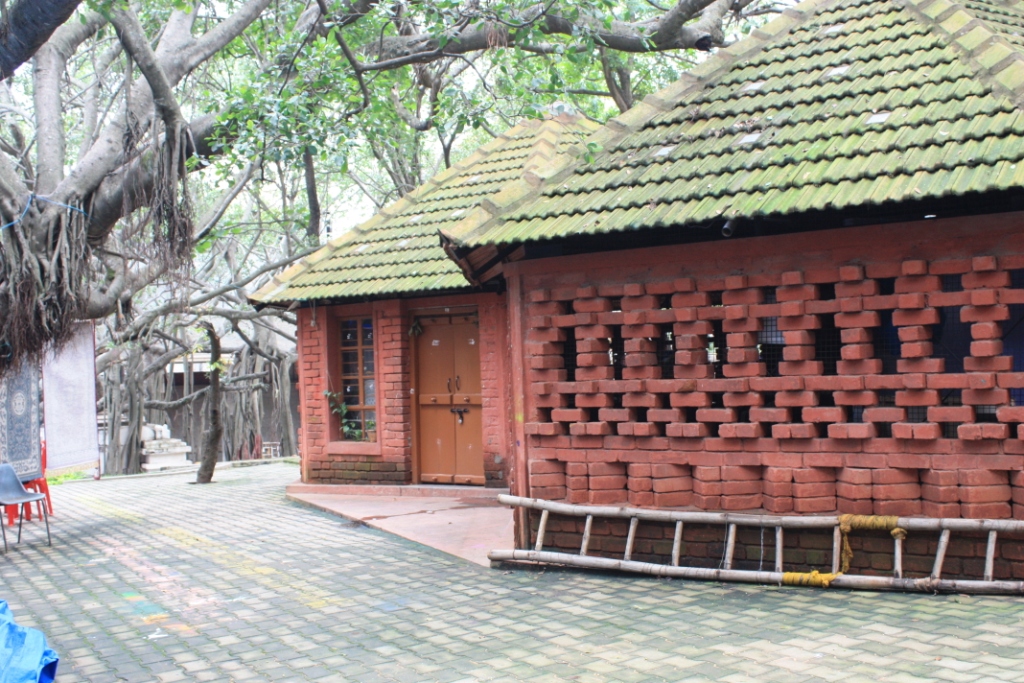
Taken on October 11, 2014 at Karnataka Chitrakala Parishath in Bangalore
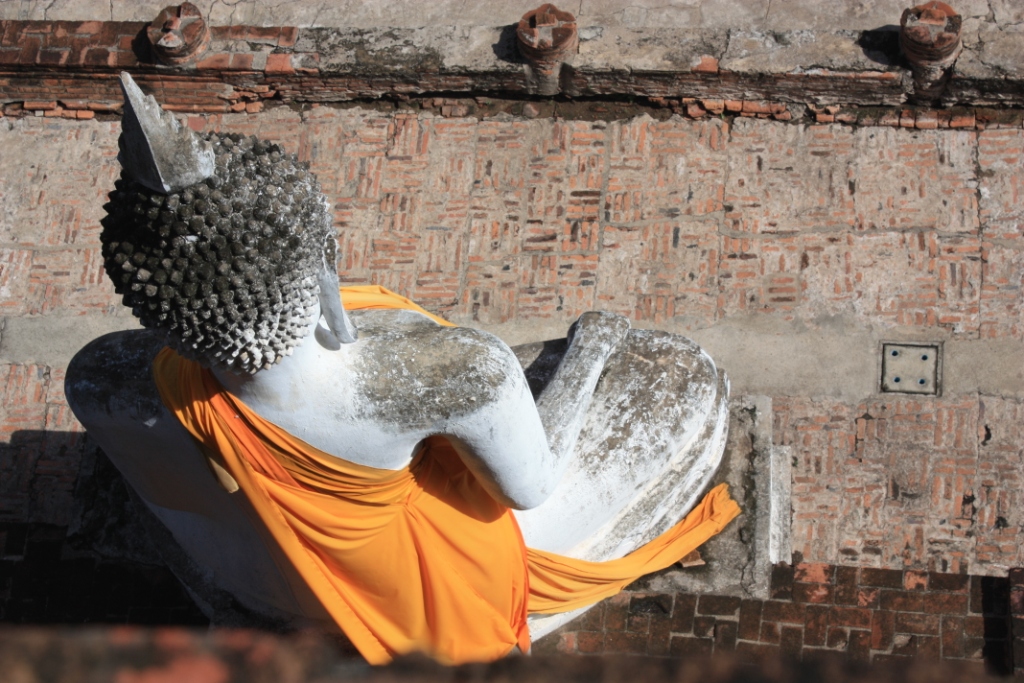
Taken in September of 2014 in Ayutthaya at Wat Yai Chaya Mongkol
 The Sayings of Confucius by Bc- Bc Confucius
My rating: 4 of 5 stars
There’s no one more firmly associated with Eastern wisdom—particularly in the form of aphorisms that fit nicely onto a fortune cookie—than Confucius. This is a book of such aphorisms.
I must admit, I’m not a wholehearted devotee of the Chinese philosopher, and am more likely to side with the Taoist sages who mocked Confucian ideas at every turn. In short, I’m not a big fan of the Confucian idea of societal hierarchies based on some elements of society accepting being infantilized in exchange for the protection and goodwill of others. It’s not just that I’m a youngest child that causes me to ask, what if the younger brother is smarter?
Once one gets beyond what is probably Confucius’s best known teaching—the five relationships—one sees a great deal of solid wisdom that even a Taoist would be hard pressed to refute.
Many of Confucius’s sayings aren’t novel or unique. Like Socrates, Confucius advocates knowing what one doesn’t know—which implies accepting that there are things one doesn’t know and not acting like one knows it all. (A common enough vice in modern times as in ancient.) Like the Indian sages, Confucius emphasized that one shouldn’t chase fame or act out of a desire for the fruits of one’s actions. Like the Stoics, Confucius said, “A gentleman knows neither sorrow nor fear.”
One of the most quoted sayings in this work is, “A gentleman should be slow to speak and quick to do.” This contains two bits of wisdom rolled into one: a.) Think before you say something stupid. b.) and, Get off your ass and do it, already. Of course, Confucius also produced an early (if not the earliest) formulation of what is usually called “The Golden Rule.) Confucius say, “What I do not wish done to me, I likewise wish not to do to others.”
I think everyone should read this short book of even shorter sayings.

Taken October 4, 2014 in Mysore

Taken on October 3, 2014 in the Mysore Zoo.
 If You Meet the Buddha on the Road, Kill Him: The Pilgrimage Of Psychotherapy Patients by Sheldon B. Kopp
My rating: 4 of 5 stars
If Kopp’s title seems gratuitously bellicose and totally inappropriate for a book about psychotherapy, you may not recognize that it’s a quote from the 9th century Zen (Chán) Buddhist master, Linji Yixuan. In reality, the quote isn’t bellicose and is quite apropos of Kopp’s message. Linji was just saying that if one collects sacred cows, one is unlikely to be liberated from delusion and find a quiet mind. Kopp’s primary point is that patients tend to deify their therapists, thinking of therapists as people who can “fix them.” In reality, the therapist is a flawed human who can only help guide the patient on a personal pilgrimage. However, when patients find out that the therapist isn’t a sage who can make them feel better as if by magic without any real change on the patient’s part, they become disillusioned and the wheels can roll off any progress they may have made.
Pilgrimage is the central metaphor of Kopp’s book. The psychologist uses an interesting approach, without which I doubt I would have read this book. He uses pilgrims of classic literature as models. The second, and by far the largest, part of the book lays out the various paradigms of pilgrim. The use of works like Gilgamesh, Macbeth, Don Quixote, Dante’s Inferno, Kafka’s The Castle, and Conrad’s Heart of Darkness makes for a work of interest to more than just psychotherapists. Kopp skillfully employs the wisdom of both the Eastern and Western worlds, often in pithy stories that have been around for centuries.
In addition to all the well-known tales that Kopp relies upon, the latter part of the book has some interesting personal stories from when Kopp was working as a therapist in a prison.
I think this book offers some intriguing food for thought regardless of whether one is either a psychotherapist or a psychotherapy patient.
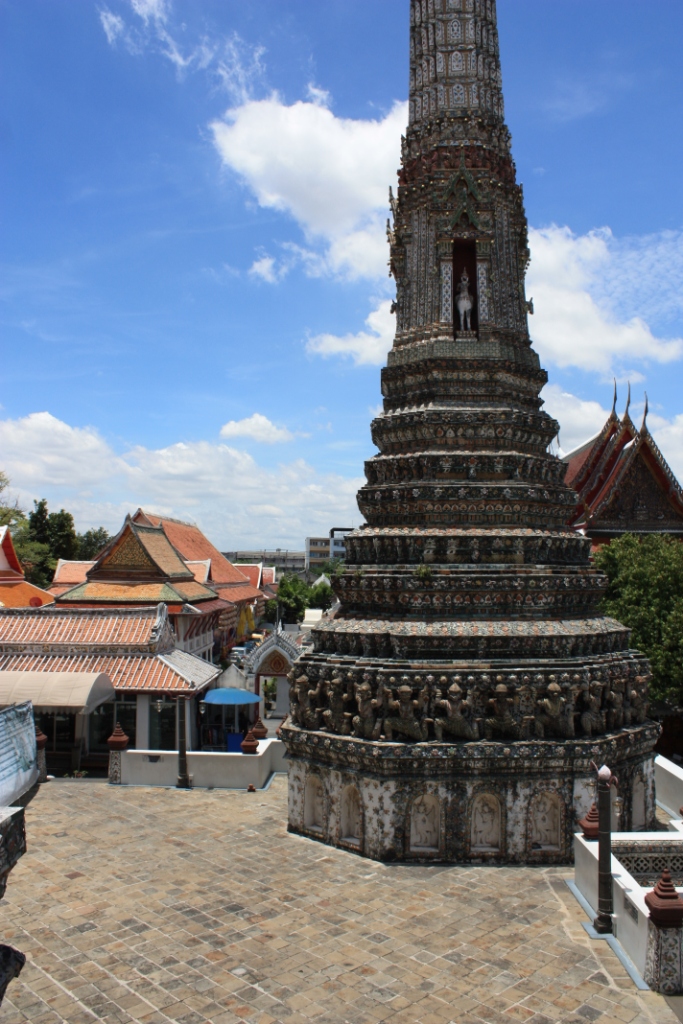
Taken in September of 2014 at Wat Arun in Bangkok.
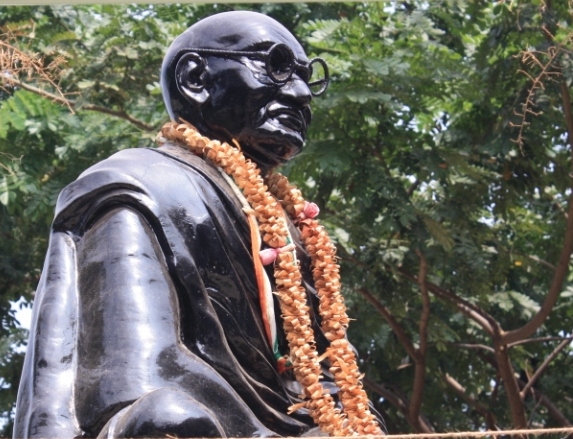
Taken in Bangalore on October 11, 2014


