Unknown's avatar

About B Gourley

Bernie Gourley is a writer living in Bangalore, India. His poetry collection, Poems of the Introverted Yogi is now available on Amazon. He teaches yoga, with a specialization in pranayama, and holds a RYT500 certification. For most of his adult life, he practiced martial arts, including: Kobudo, Muay Thai, Kalaripayattu, and Taiji. He is a world traveler, having visited more than 40 countries around the globe.

BOOK REVIEW: Zen Bow, Zen Arrow by John Stevens

Zen Bow, Zen Arrow: The Life and Teachings of Awa Kenzo, the Archery Master from Zen Bow, Zen Arrow: The Life and Teachings of Awa Kenzo, the Archery Master from “Zen in the Art of Archery” by John Stevens
My rating: 4 of 5 stars

Amazon page


Awa Kenzo is variously known as an archer without compare, a Zen master, or as the teacher of Eugene Herrigel. Herrigel was a German philosopher who wrote a thin book entitled, “Zen in the Art of Archery” that gained a global following. Herrigel’s book was about his time as a student of Kenzo and the insight that he gained into both Zen and Kyūdō—Japanese style archery—through his studies. Kenzo lived from 1880 to 1939, a period during which arts like kyūdō were used more for development of character than as fighting arts, and Kenzo was important figure in this transformation.

Stevens’ book is a thin volume (< 100 pages) consisting of three parts. The first is a short biography of Awa Kenzo. One shouldn’t expect a thorough treatment, but that may be for the best (i.e. Kenzo’s life is of interest because of his mastery of archery, but probably only his most ardent fans would want to read a 400 page biography on his life.)


The second part is a set of lessons and aphorisms attributed to the master archer. This section includes a few pages by the author to put Kenzo’s brief statements in context. The lessons themselves are sometimes in prose, sometimes in poetry, and occasionally in the form of lists. These lessons offer insight into archery, mindset, and life in general. Archery is portrayed as a lifestyle.

The third section consists of three short (very short) stories in which archery as a means to develop one’s character is at the forefront.

In addition to the three sections, the book includes front matter, annotations, a bibliography, and a few photos.

I enjoyed this book and would recommend it for those seeking insight into the nexus between Zen and the martial arts.

View all my reviews

BOOK REVIEW: Meditations on Violence by Rory Miller

Meditations on Violence: A Comparison of Martial Arts Training & Real World ViolenceMeditations on Violence: A Comparison of Martial Arts Training & Real World Violence by Rory Miller
My rating: 5 of 5 stars

Amazon page


I’ve long realized that all martial arts are models. Models are simplifications; they inevitably leave elements out—sometimes because those elements don’t seem relevant and sometimes because they can’t realistically (re: sanely) be included. Those of us trained as social scientists say two things about models. 1.) All models are wrong, and 2.) All models lie. The question is whether your martial art is the least wrong, i.e. tells the most acceptable lie, for your purposes. Rory Miller’s work illuminates the most crucial part of what martial arts leave aside, violence and the context in which it takes place in the modern world. I say the most crucial part because it’s not excluded because it’s irrelevant; it’s left out because it’s impossible to shun safety / encourage violence without the practice devolving into a last man standing competition. (FYI: If you’re saying, “Man, the martial art I study is completely street realistic,” then you need this book more than anyone.)

While it’s important to have safety in a training environment and, therefore, true violence must be prohibited (simulated, but not carried out), it’s important to understand violence so that one can prepare one’s mind for it and train oneself to recognize various types of violence so that one knows the best approach to avoid a bad outcome. One doesn’t want to end up wondering “how could this happen” as one is bleeding out on the ground as martial artists from a range of styles have experienced. I’m not saying martial arts aren’t valuable, and I don’t think Miller is either (he’s long practiced them, as have I.) While martial arts may not prepare one perfectly for a violent conflict, they move one in the right direction. The only real downside is if one allows oneself to be deluded into thinking one is going to roll through waves of enemies without a scratch like Jet Li or Steven Seagal on the silver screen. That’s why it’s important not only to read such a book as this, but to give serious thought to changing the narrative that plays out in one’s mind about the nature of violence so as to move it away from movie / sport fighting towards an approach that is most likely to get one and one’s loved ones out alive.

The book consists of seven chapters, plus front and back matter. The first chapter introduces two matrices as ways to frame one’s thoughts on the conflict. The first, the tactical matrix, looks at different types of attacks one might experience (eg. surprise ambush through preemptive attack) relative to allowable use of force (can one legitimately injure or kill one’s opponent?) The second, the strategic matrix, considers the various types of combative endeavors (e.g. self-defense, duel, sport, combat/military operations) and there goals, approaches, and dangers.

Chapter two is entitled, “How to Think,” and the emphasis is on “to think.” The central lesson is to not take ideas on faith, particularly ideas about the nature of violence from people who haven’t experienced it—particularly when those ideas seem to run counter to reality. Because violence is such a rarity, it is a subject for which there is a great disconnect between expertise and experience. (i.e. Chances are your plumber has unclogged tens to thousands of drains, but also that the person teaching you knife disarms has never been in a single knife fight.) The chapter considers the various fallacies and how they can be resistant to destruction. Emphasis is given to understanding your goals, making them realistic, and having a pragmatic path to achieving them. The take-away quote is, “Do not let yourself be crippled by something that only exists in your mind.” The chapter ends by looking at decision-making at the speed of a fight, which is pretty quick.

Chapter three gets to the heart of the subject, violence. It differentiates various types of violence, and considers the context (setting, timing, and the nature of the interaction) in which violent interactions take place. Much of the discussion revolves around what Miller calls the “monkey dance” -an attempt to exert dominance that often escalates into a fight. This is differentiated from predatory violence that demands a different approach. This section also addresses the neurochemical cocktail that gets shot into one’s system and the effects that it typically has—which is a leading cause of events unfolding differently than expected.

Chapter four describes the various types of individuals with whom one might find oneself engaged in a violent altercation. This is an important topic because the path to a best outcome varies depending upon the nature of the criminal, and so one’s ability to differentiate types of predator and to know how to best deal with each is as essential a skill as knowing the technical nuances of a punch or choke.

The fifth chapter examines training approaches, and how the typical martial arts education leaves one with blind-spots and built-in flaws. The chapter begins by looking at the many ways in which martial arts make modifications from realistic conditions in order to be safe. Most martial artists realize that they are training techniques or drilled responses into their subconscious so that their bodies can respond automatically–without the need for [slow] conscious thought–during a conflict. However, there’s a further assumption that the unrealistic parts of that movement (e.g. slowness or avoiding vulnerable targets) will go away under real life conditions. In an earlier chapter, there was a discussion of the fact that attacks are usually faster, harder, at closer range, and more surprising than expected (Miller calls it the four basic truths), and this chapter considers some ways that one can prepare for those realities.

The sixth chapter considers how one can make self-defense work. It should be pointed out that this isn’t just about how to engage in the fight, but also how to stay out of a fight or get away from it as quickly as is possible. There’s also a discussion of set rules for determining when one must fight. This is the type of notion that one must think about ahead of time, because one can’t expect to think clearly once the adrenaline has been dumped into one’s system. The remainder of the chapter explores how one is most likely to get out of an altercation alive once the fight has become inevitable.

The final chapter delves into the question of what comes after the violent encounter. This is also a subject on which many martial artists have unrealistic notions. If one survives in an unheroic / ungraceful way, one may have guilt or dismay about how imperfectly events unfolded. On the other hand, say everything works out for one, but one kills the predator. Most people seem to think that this won’t be troubling, because it was justified. This misses the fact that there are many traumatized soldiers who were also completely justified, but if you aren’t a hardcore psychopath, you aren’t wired for killing.

I found a lot of valuable food for thought in this book. The author includes many stories (sometimes funny and sometimes disturbing) that help to make the lessons memorable and poignant. Tables, charts, and the occasional photograph are used to illustrate points as well.

I’d recommend this book for anyone who’s concerned about violent altercations. If you’re a martial artist who has no such concerns because you think you have a lock on it, then you probably doubly need this book.

View all my reviews

DAILY PHOTO: Cusco Street Scene

Taken in July of 2011 in Cusco, Peru

Taken in July of 2011 in Cusco, Peru

DAILY PHOTO: Kolkata Rail Station

Taken in July of 2016 in Kolkata (Calcutta)

Taken in July of 2016 in Kolkata (Calcutta)


For scale, this is the ghat that one can see below the station.


img_0102


DAILY PHOTO: Black-&-White Basilica

Taken in December of 2014 in Budapest

Taken in December of 2014 at St. Stephen’s Basilica in Budapest

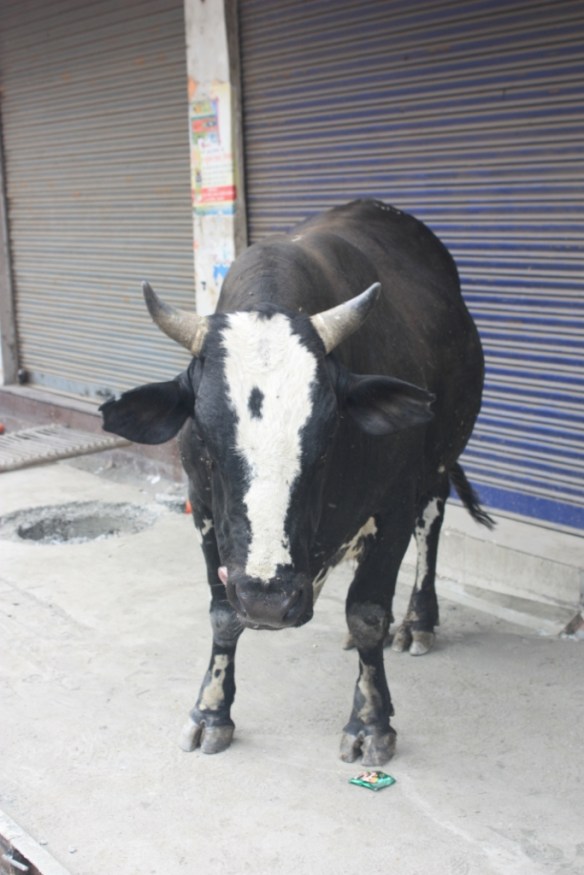
DAILY PHOTO: Stalwart Street Bovine, Amritsar

Taken in April of 2016 in Amritsar

Taken in April of 2016 in Amritsar

DAILY PHOTO: Inside a Srinagar Houseboat: Stepping Into the Past

Taken in July of 2016 in Srinagar

Taken in July of 2016 in Srinagar


img_1111 img_1115 img_1113

BOOK REVIEW: Remember When by Scientific American

Remember When?Remember When? by Scientific American
My rating: 3 of 5 stars

Amazon page


This book is part of a series put out by Scientific American magazine that collects articles on a specific topic of interest, in this case memory.

I’ll get straight to the point:

Pros: The style is readable and concise, and the book is well-organized and full of fascinating tidbits [Note: when I say “well-organized,” it’s clearly a collection of past articles of various types, and so there are a mix of short pieces, long-ish pieces, and an interview or two. However, these inconsistent “chapters” are placed in sections in a logical fashion. Furthermore, I expected much more repetitiveness from this type of collection than there was.]

Cons: First, the Kindle version that I read had lots of typos, and they were systematic typos. [Fun fact, considering this is a book on memory. My memory was that this book had typos throughout, but when I looked back through to review it, I noticed it was only some chapters, but—influentially—including the last.] By “systematic typos” I mean the same characters were replaced throughout with the wrong character(s.) While this isn’t the kind of typo that leads to confusion, it’s the kind that makes one say, “Did you really not have anyone look this over after it was machine-converted, you lazy …?” Second, because it’s a collection of magazine articles, one might see a piece from recent years right next to one from the 1990’s. This wouldn’t necessarily be anything to concern one, and might even be a positive. However, once one has seen the aforementioned laziness, it makes one wonder whether half the information isn’t outdated.

The 30 pieces that make up this collection are divided among seven sections to provide a logical organization and progression of the material.

Section 1 explains what memory is and why it seems to work so well in some cases but so poorly in others.

The second section explores the neuroscience of memory and how the brain turns experiences into memories.

Section 3 offers insight into the connection between learning and memory. This describes some fascinating discoveries on the importance of white matter (not the cells that store the memories, but the ones that connect those that do) and the role of sleep.

Section 4 is where it really gets interesting. This section investigates amnesia, hypnosis, and déjà vu.

The fifth section considers a few of the many ways that memory can fail. Besides discussing how false memories are created and attempts to erase traumatic memories, the section also explores the connection between emotion and memory.

Section 6 answers why memory gets worse with age, with discussion of a few of the methods for reducing this tendency.

The last section describes some of the methods used to improve memory. Here, I will offer the same warning as I did for the last review I did on a book of this topic (i.e. “Memory: A Very Short Introduction”), which is to say that if this is your primary purpose for buying the book, you probably want to look for a more specialized book. (Where the AVSI book was a cursory summation of proven techniques, this one focuses on the science of the moment [e.g. experimental medicines and blueberries] and not well-established techniques.)

The graphics are those from the magazine, and, therefore, tend to be detailed and “slick.” This can be a disadvantage when reading on a base model Kindle, such as mine. Even with the graphics expanded, the font is tiny and hard to read. Also, the color graphics on a black-and-white device would likely be clearer as simple line diagrams rather than complex computer renderings. However, most of the articles have little to no graphics, and so it’s not a problem that comes up with great frequency.

I’ll compare this book with the Oxford University Press “A Very Short Introduction” on the same topic that I just reviewed because they are clear competitors. This book covers a broader range of topics, including some intriguing ones such as: hypnosis and memory, déjà vu, the role of fitness on memory, and more detailed information about the connection between sleep and memory. In other words, this book is full of the latest (at the time) research of a nature intended to attract popular science magazine readers. However, the AVSI book is more concisely arranged to get a neophyte up to speed on memory without offering extraneous information. I suspect the AVSI book will age better. The Scientific American book has a fair amount of current events reporting that may be overturned (if some of it hasn’t already been) by subsequent research. The AVSI book was much more easily readable on my Kindle.

I found this book to be interesting and informative—though not without significant flaws. Overall, I’d recommend it for those wanting to learn about the research of recent decades on memory.

View all my reviews

BOOK REVIEW: Memory: A Very Short Introduction by Jonathan K. Foster

Memory: A Very Short IntroductionMemory: A Very Short Introduction by Jonathan K. Foster
My rating: 4 of 5 stars

Amazon page


Everything we think, do, or say relies upon–or is influenced by–memory, and yet our memories offer a much lower fidelity and more highly corruptible recording than we tend to think. Even those events that lead to “flashbulb” memory (i.e. JFK’s assassination, 9-11 terror attacks, or the 3-11 tsunami in Japan) aren’t remembered particularly well. You may remember where you were and what you were doing in broad brushstrokes, but you probably wouldn’t test well on the actual details of the event. Old memories are constantly over-lain with a corresponding loss of accuracy. This brief introduction explains the basics of how memory works, and—as importantly—how it doesn’t.

The book is part of Oxford University Press’s “A Very Short Introduction” [AVSI] series, and it follows that approach. It’s under 150 pages, and written for someone looking for a “ground-up” explanation of the subject. It has minimal ancillary material, just a couple of pages of “Further Reading” after the book’s seven chapters. There are a few black-and-white graphics throughout the book, a combination of photos and diagrams.

Chapter 1 introduces the reader to what memory is and what it isn’t. One learns about the three-part process of memory (encoding, storage, and retrieval), an idea which will be important throughout the rest of the book because these stages mirror the structure of memory failures and the means to build a better memory.

Chapter 2 explores the landscape of memory, which is a great deal more complex than the short-term v long-term dichotomy that we all learned in school. There’s working memory, procedural memory, semantic memory, and episodic memory.

In chapter 3, the reader learns about how memories are retrieved or recalled and the immense power of context in the process.

Chapter 4 explains the many ways in which memory fails us from simple forgetting to false or corrupted memories. We learn how being knowledgeable improves our memory, but also how it can lead us into error.

The next chapter advances the same theme by looking at amnesia. While amnesia is one of Hollywood’s favorite plot devices, the subject is generally poorly understood because of the simplified and myth-filled nature of the entertainment form of the affliction. Here you’ll learn what one isn’t seeing in the soap operas.

Chapter 6 is entitled the “The Seven Ages of Man” and it looks at memory over the lifespan, with particular attention to the ends of the spectrum. On one end, why do most of us remember nothing from our first few years—and what we do remember is often quiet suspect (false memories from hearing stories about one’s infancy?) At the other end of the spectrum, we are all well aware of how memory degrades with age—particularly those of us buying and reading books on memory. However, one learns that it’s a great oversimplification. While our episodic (event) memory degrades, some elements of memory are quite robust to aging.

The last chapter discusses what does (and to a small degree, what doesn’t) work with respect to improving one’s memory. As it’s a short chapter in a short book, this should be taken as an outline of the subject. If this is one’s main purpose for seeking out a book on memory, one may want to keep looking.

At this point, I’ve read and reviewed many books in the AVSI series, and I found this one to be typical. It’s not among the most engaging of the titles in the series, but it gets the central concepts across in a way that is readable and soundly organized. Because there’s a lot of definitional and conceptual material to cover, there’s not a lot of room for the narrative approach, which isn’t to say that there aren’t brief descriptions of key cases here and there.

I’d recommend this book for someone wanting an overview of the subject of memory.

View all my reviews

DAILY PHOTO: Himalayan Lizard


Taken in July of 2016 on the trail between Naranag and Sonamarg

Taken in July of 2016 on the trail between Naranag and Sonamarg


This isn’t the wildlife I expected to see on our Kashmiri Great Lakes Trek, but I’ll take what I can get.