Southern Giraffe; Taken on June 20, 2017 at Chobe National Park in Botswana

Warthogs

Hippopotami

Spur-winged geese and Egyptian geese

Cape Buffalo

Kudu and Egret

Elephant

Southern Giraffe; Taken on June 20, 2017 at Chobe National Park in Botswana
Warthogs
Hippopotami
Spur-winged geese and Egyptian geese
Cape Buffalo
Kudu and Egret
Elephant

Taken on June 18, 2017 on the Zambezi River (Zambian side)

Shore scene

Crocodile on the shore

Hippopotamus in the water

Sundown
5.) FACT: People who lose weight often still feel heavy and commonly maintain the body language and movement characteristic of an overweight person.
REASON: A conflict exists between the body schema (which is largely up-to-date on the current state of the body, but is largely unconscious) and body image (which relates to how we feel about our bodies, can lag behind the state of the body, and of which we are conscious.)
RELEVANCE: It may take unconventional activities to help a student realign his or her body schema and body image. e.g. Wobble boards have been shown to be effective.
REFERENCE: “The Body Has a Mind of Its Own” by Blakeslee and Blakeslee
4.) FACT: The busiest skeletal muscles in the body are the extraocular muscles (i.e. more than 100,000 moves per day.)
REASON: We don’t see over a broad area as clearly as we think we do. The illusion that we can is created by rapid saccades by which the eye is constantly moving to take in sights from the point at which our sight is best. You can prove this to yourself by fixing your gaze forward, and then–from the side–draw a playing card at random so the face is towards your cheek while holding the card out to one’s side at shoulder height, and then–eyes still fixed forward–gradually move it in an arc at arm’s length towards one’s center-line until you can make out which card it is. You might think you’d be able to make it out at say a 30-degree angle from center-line, but you’ll find it’s almost directly in front of your eye when you can make it out. If if isn’t: a.) your eyes made a cheating saccade so quickly you didn’t notice it or, b.) you are an android and have eyes (and nervous system interface) that aren’t constructed on the same principles as the human system of vision.
RELEVANCE: One may want to brush up on eye yoga. Yes, there is such a thing.
REFERENCE: There’s a section on exercises for the eyes in Swami Saraswati’s “Asana Pranayama Mudra Bandha” (commonly called APMB.)
3.) FACT: The gut has its own nervous system (i.e. the enteric nervous system) that can interact with our body’s nervous system, and increasing evidence suggests that it’s not always mental stress that causes stomach aches, but sometimes problems in the gut result in mental / emotional turmoil.
REASON: There’s a lot that remains unknown at the moment, but a lot of research is going on in this area. It seems reasonable to guess that there’s probably an evolutionary advantage for the digestive tract to be able to express its dissatisfaction in a way that changes behavior (and emotions are all about behavior change.)
RELEVANCE: Unexplained depression or emotional outbursts may have unexpected origins.
REFERENCE: I can highly recommend “Gut” by Giulia Enders, but I’ve also heard great things about the more recent “I Contain Multitudes” by Ed Young, though I haven’t gotten around to reading it yet myself.
2.) FACT: The problems that can arise due to hyperventilation aren’t about oxygen levels, they are about too little carbon dioxide.
REASON: Lack of carbon dioxide can cause arteries and arterioles of the brain and spinal cord to constrict.
RELEVANCE: Introduce kapalbhati and bhastrika with caution.
REFERENCE: H. David Coulter’s “Anatomy of Hatha Yoga” chapter on breathing (Ch. 2) deals with the physiology of breathing in an excellent fashion.
1.) There are oh-so-many more than five senses in the human body. Within the realm of “felt sensation” alone there’s not only touch (one of the five senses we usually think of), but also: thermoception (sense of temperature), nociception (sensation of pain), proprioception (sense of the location and motion of our various body parts, and balance (which relies on vision and proprioception but also vestibular sensation.)
REASON: Without these sensations we couldn’t function as we do. I don’t have to tell experienced meditators how difficult it can be to simply stand up or walk when proprioception is dampened by the pins-and-needles from sitting cross-legged such that one doesn’t notice one’s drooping foot.
RELEVANCE: At some point one should begin to practice relying on proprioception more and visual confirmation less. (Proper drishti–focal points–rarely allow one to visually confirm one’s position.)
REFERENCE: Besides the book mentioned in #5, check out David J. Linden’s “Touch.” I’ve also begun reading a Harvard Medical School Guide entitled “Better Balance” that gives insight into how to improve the sense of balance–particularly if one serves senior citizen students.
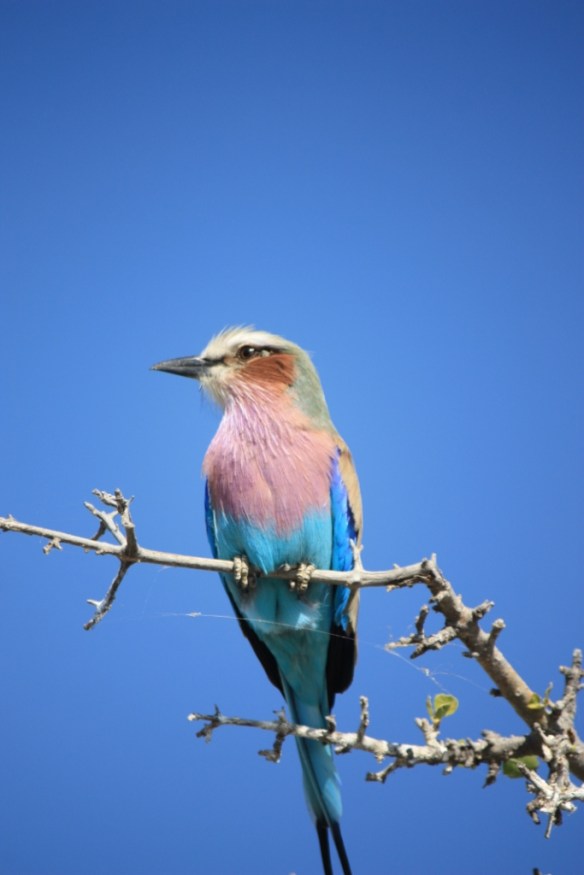
Lilac-Breasted Roller; Taken on June 22, 2017 at Chobe National Park
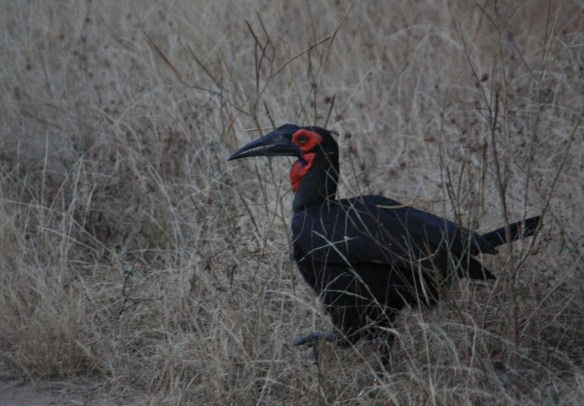
Southern Ground Hornbill
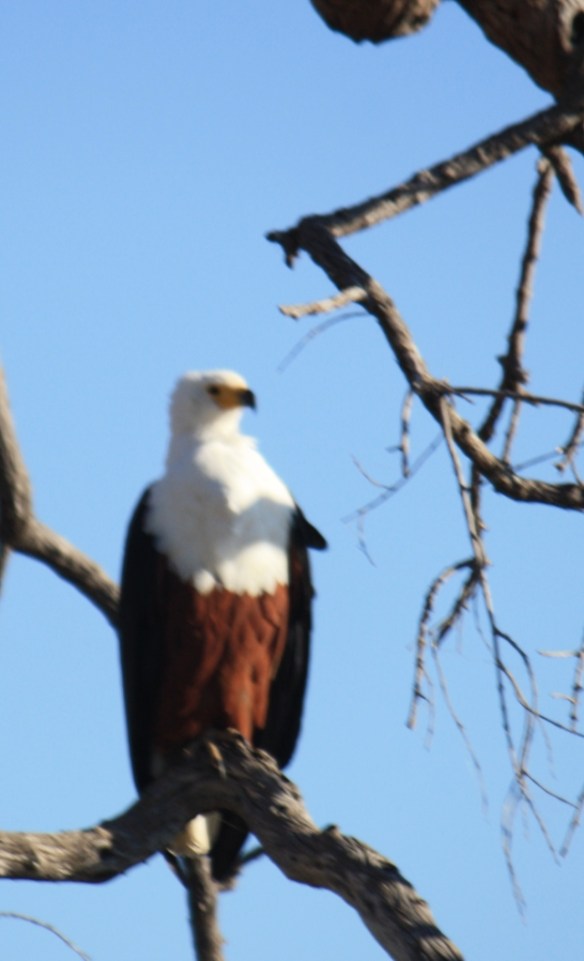
African Fish Eagle
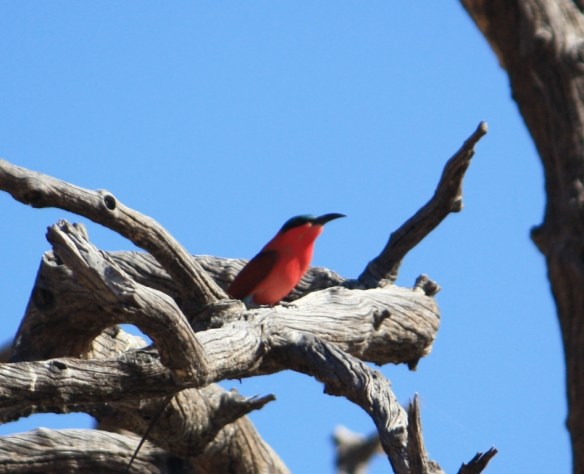
Southern Carmine Bee-Eater
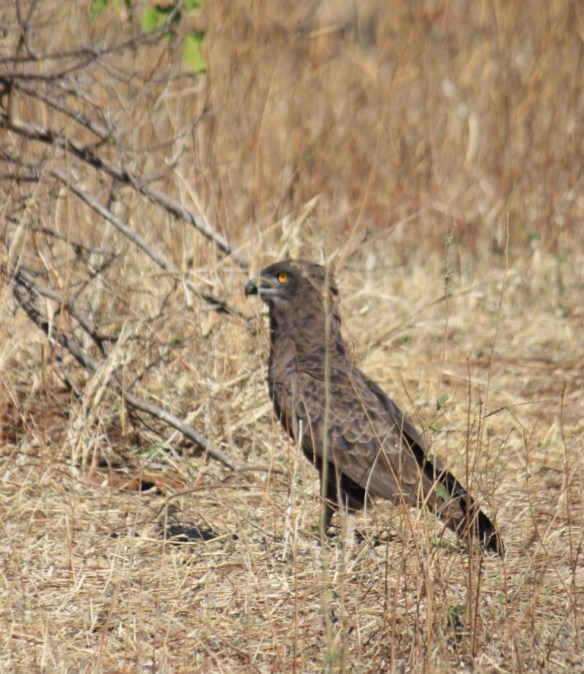
Martial Eagle
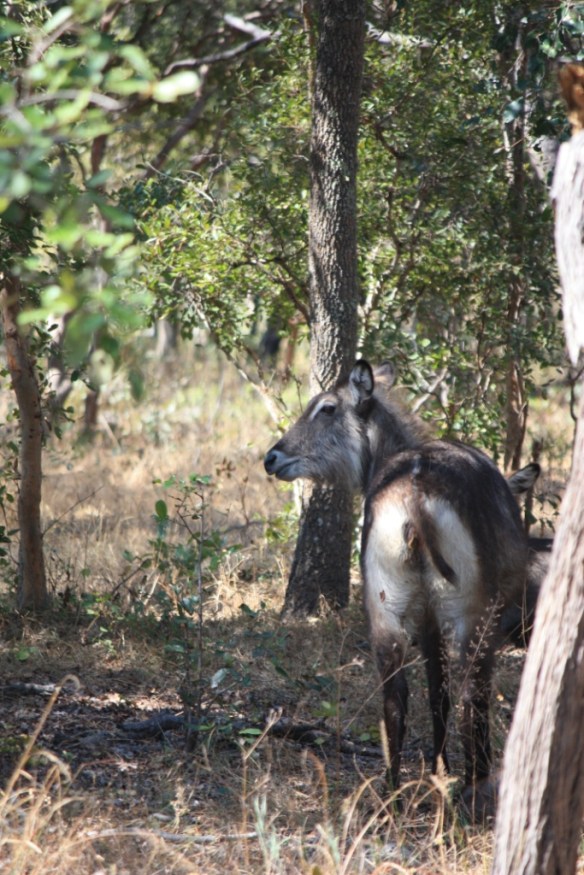

Taken on June 24, 2017 at Chaminuka Game Reserve in Zambia

What are you free to do or be?
Can you set out across an endless sea?
What deserts can your mind go roam
from which your fears won’t send you home?
Epictetus asked, “Are you free?”
Can you stand, while others flee?
Can you escape the default mode
that’s locked into your mental code?
Can truth change your way of seeing?
Are you sectless in the art of disagreeing?
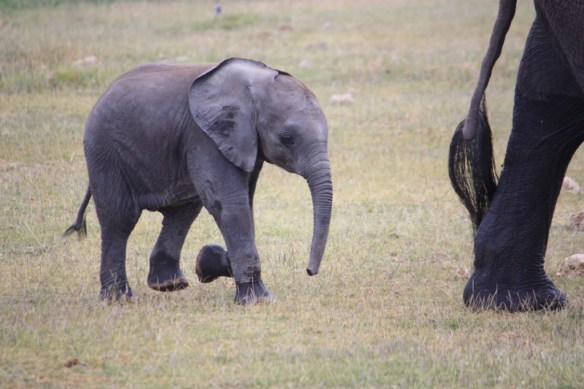
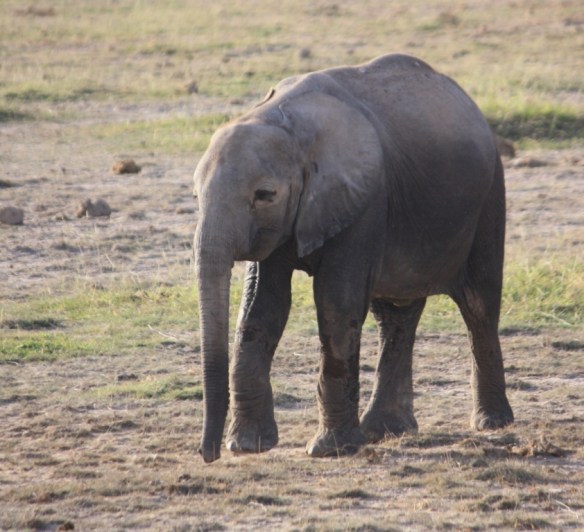
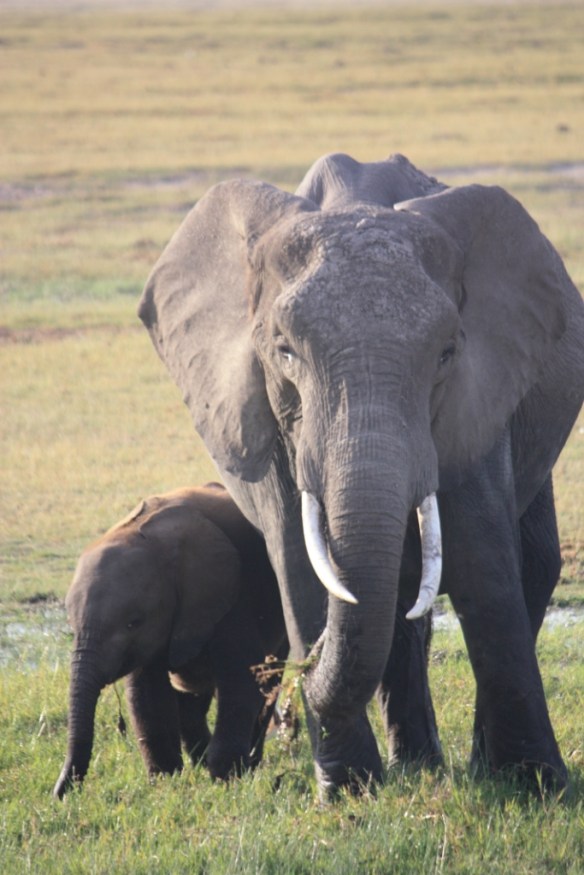
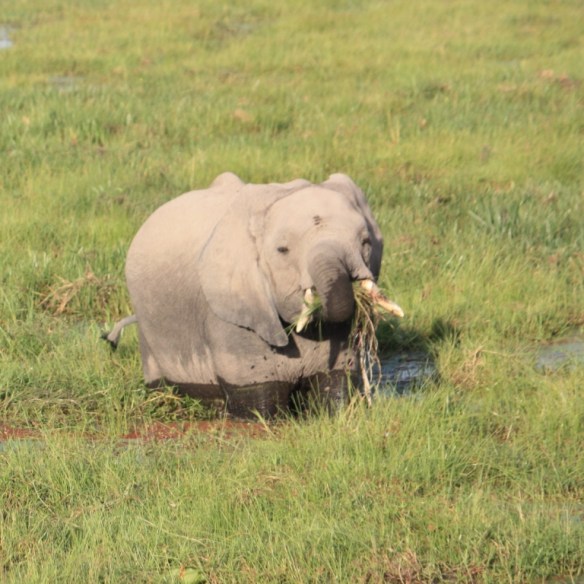

Taken on June 26, 2017 at Amboseli National Park in Kenya

Taken on June 25, 2017 in downtown Nairobi

Kipande House was built in the 1930’s and was initially used as a rail depot (today it’s a bank.) In its day, it was the tallest building in Nairobi, though it’s now dwarfed by surrounding towers.
It seems to me that there are three types of buildings in Nairobi. First, there are the stone colonial buildings, of which this is a prime example. Second, there are ill-aged buildings that look like they come from the latter half of the 20th century (re: 1970’s Brady Bunch colors and designs that one can tell were supposed to be ultra-modern but a few years down the road look retro.) Finally, there are brand new gleaming office towers. Hopefully, they’ll age better than the second category, but I doubt it.
 Black Panther: A Nation Under Our Feet Vol. 3 by Ta-Nehisi Coates
My rating: 5 of 5 stars
This is the concluding segment of a story written by Ta-Nehisi Coates in which King T’Challa (a.k.a. the Black Panther) must fight to keep his nation, Wakanda, from descending into chaos and revolution. It features “Black Panther (2016)” #9-12, as well as some supplementary material from “New Avengers (2013)” #18, 21, and 24.
As with the other volumes in this story, there is a major and a minor plot, and at the beginning of this Volume the latter resolves itself in order to fold into the main story. The major plot involves an attempted revolution fomented by a man named Tetu who heads a revolutionary organization called “the People” that has engaged in terrorist and other nefarious activities. While progress was made against Tetu and his allies in Volume 2, he still presents a threat to the throne and to Wakanda. However, Tetu isn’t the only threat to the nation. Wakanda’s problems are bigger and more systemic than that. While Tetu is a terrorist, there are dissenting factions with far more legitimacy, including the Midnight Angels (former bodyguards to the King, i.e. ex-Dora Milaje) and the much-loved philosophy professor, Changamire.
The secondary plot involves T’Challa’s search for his sister Shuri who has been trapped in the Djalia, the Wakandan plane of memory. At the end of the second volume, T’Challa resumes the search using a technology that channels and amplifies the powers of his friend “Manifold.” As it happens, bringing Shuri back occurs effortlessly, but it seems returning her to this world isn’t so critical to the story as the effect her experience had on her. She returns with an encyclopedic knowledge of the history of Wakanda as well as numerous inexplicable supernatural abilities. The past queen plays an important role in the balance of the story both by advising T’Challa, fighting, and lending her influence with the Midnight Angels (ex-Dora Milaje.)
The fight for Wakanda plays itself out as both a battle of action against forces controlled by Tetu and Zenzi as well as a battle for the minds of the people (not to be confused with the organization “the People.”) I found it to be a smart story.
The supplementary material from “New Avengers (2013)” was illuminating. My only problem with it is that it occurs after the story is complete. If one just reads this Ta-Nehisi Coates arc, one might want to go to the end of Volume 3, and read this material first or pick up the whole “New Avengers (2013)” story. By doing so, one will have a much better understanding of why there is so much conflict in Wakanda, and why T’Challa is so unpopular. It’s hinted at here and there, but I didn’t understand the motivation fully until this material showed the events rather than offering random back story tidbits.
I would recommend this story for anyone. I don’t think one needs to be a regular comic book reader or have a particular interest in the Black Panther character to find it interesting and enjoyable.