BOOK REVIEW: Trafik by Rikki Ducornet

TrafikTrafik by Rikki Ducornet
My rating: 5 of 5 stars

Amazon.in Page

Out: April 13, 2021

A robot (Mic) and a cyborg (Quiver) live and work together in close quarters, doing blue-collar work until the going gets tough and they charge off for a utopia called Trafik. I enjoyed reading this for its rich approach to language, its compelling reflection upon humanity [and isolation therefrom] and its thought-provoking imagining of the unfolding of the future. That said, I don’t think it will be everyone’s cup of tea. I’ll try to paint a picture that will help the reader to determine where they would be likely to come down on this book.

First things first, if you are expecting the usual high-adventure, plot-driven science fiction novel, that’s not where this work shines. There are a few contributing factors. First, the high density of creative language is not conducive to fast-paced consumption in which visuals form effortlessly in the mind’s eye. Second, a central question is what being human means, and what happens when one isn’t amongst others. One has Mic, a robot, who is intelligent but not inherently emotional. And, so, the aforementioned question largely pertains to Quiver, who is a cybernetically-enhanced human being. I have no idea when this was written, but it wouldn’t surprise me to learn that the pandemic lock-down / quarantining influenced the work that it turned out to be. Because a lot of the story is spent with these two different entities being plugged into the virtual world, getting a vicarious experience of being in the world. [Also, the book is only about 100 pages, and so the idea that it could have been produced in that timeline is not as unbelievable as if it were, say, five times as long.] At any rate, while this isolation and questioning of one’s humanity makes for a philosophically fascinating inquiry, it’s not really amenable to the adventure and interpersonal tension usually depicted in genre fiction, characteristics which inherently require a great deal of emotional experience and interaction.)

I’m kind of uncomfortable saying this because it’s likely to be misunderstood, but I read this more like I would read Joyce’s “Ulysses” than like I would read, say, “Ender’s Game.” That is to say, I read it more as a prose poem — immersing myself in the language and the momentary experience of the characters — rather than following the thread of events and looking out front as a rider on a rollercoaster might. I’m not comparing any works here, just my approach to reading them.

There’s a fundamental question when producing art of any kind, and that is how much one roots in the past (in established human experience) and how much one can venture into the unknown. Stick too much in past experience and your work is uninteresting. Launch yourself too much beyond the familiar, and people can’t recognize what one is trying to do – let alone enjoy it. Ducornet is clearly experimenting with how much she can charge forward. At points, I’m thinking of the arrival at Trafik, the story even reads a bit like stream of consciousness psychedelic tripping.

If you’re looking for a work that requires soaking in and reflecting upon words and futures, then you’d probably find this to be an enjoyable read, a work that verges on prose poetry. However, if you are looking for plot-driven sci-fi, you might find it ponderous. [Also, if you’re the kind of sci-fi reader who finds violations of fundamental physics unpardonable, this book might not be for you. (That said, there is some shifting between real and virtual worlds for which I might have missed cues.)]


View all my reviews

Phnom Penh Limerick [PoMo Day 7: Limerick]

There was an old woman from Phnom Penh
who liked to canoe now and again,
but boating Tonlé Sap --
despite compass and map --
she'd forget which way it flowed, now-and-then.

[Note: The Tonlé Sap is one of the few rivers in the world that changes its flow each year due to the rainy season surge. (As opposed to owing to daily tidal surges — which are more common.)]

BOOK REVIEW: Batman: Gotham by Gaslight by Brian Augustyn

Batman: Gotham by Gaslight The Deluxe EditionBatman: Gotham by Gaslight The Deluxe Edition by Brian Augustyn
My rating: 4 of 5 stars

Amazon.in Page

This volume collects five issues that [mostly] set Batman in a Victorian Era world. The issues do not present a serialized story arc, but rather four independent stories connected through world building.

The first two stories are the heart of the book, and the other two are of varying degrees of relevance and are used to round the volume out to book length. It should be pointed out that those first two issues make up about two-thirds of the book’s page count. The first, “Batman: Gotham by Gaslight,” imagines Jack the Ripper, having retired from London, moves to Gotham City, and Batman must end the serial killer’s reign of terror. The second, “Batman: Master of the Future,” depicts Gotham as it’s about to host a World’s Fair type event and is approached by a mysterious villain who warns them to cancel the event or face dire consequences. I thought the art and world-building were done nicely to create an interesting and unique conception of Batman. That said, neither story wowed me, and I particularly found the resolution of the Ripper story to be anti-climactic. [Though it was not so much a story problem as an insufficiently villainous Ripper — i.e. one who was a little too Scooby-Doo villain-like for my taste.] Usually, I would enjoy the dark, Ripper, line more, but – in this case – I think the Master of the Future edged it out. [The problem with that story had more to do with obscure motivations.]

The third issue is set in the Gotham by Gaslight domain, but is a much broader story, featuring a big team-up and a multiverse. It’s entitled, “Countdown Presents: The Search for Ray Palmer, Gotham by Gaslight, #1,” and – as that mammoth title suggests — the ensemble team is drawn to Victorian Gotham searching out a missing Ray Palmer. I liked this story even less than either of the first two. There was just too much going on in too tiny a space.

The final two issues are “Convergence: Shazam!, #1 and, #2.” Of these, #1 has nothing to do with the Gotham by Gaslight world, but it’s necessary to grasp #2 which does include both Batman and Victorian Gotham. Batman’s role in the second part is not inconsequential and we even see a little bit of his Victorian rogue’s gallery, but still the fit of this Shazam! comic in the collection is a bit questionable.

Being a fan of the Batman comics and not so much a fan of either DC team-ups or Shazam!, I liked the idea idea of the first two issues. That said, I wish more effort had been spent to make the climax and resolution satisfying, matching the level of the intriguing worldbuilding. Had those stories gripped me more, I don’t think I would have been dismayed by the other stories, chalking them up as bonus material.

I read the Deluxe Edition. It has some sketch art ancillary material, but not much else besides a story introduction by the author.

If you like stories in the Victorian Era, and are a super hero fan, you may find this intriguing — though you might also find it a bit disappointing, depending upon your tastes.


View all my reviews

DAILY PHOTO: Shades of Blue, Playa del Carmen

Taken at Playa de Carmen (looking out toward Cozumel) about ten years ago.

POEM: Flood [PoMo Day 6 – Sestina]

The rising waters spill into a flood.
All who aren't holding tightly are soon lost.
Dead swept away in tobacco-colored mud --
clogged and coated as they're rolled and tossed;
crushed and carried with all other debris;
ever moving toward a wide blue sea.

But one body will never reach that sea.
Some wide river will dissipate the flood,
and banks and bends will catch all that debris.
There's more than one route to a lifetime lost.
Not everything is caught that's deluge tossed --
some stay, hidden, buried in deepest mud.

What's stuck in mud long enough becomes mud,
and nothing more than silt reaches the sea.
Though clues will be found from the houses tossed --
like jack-booted thugs - so behaves the flood.
It ensures treasures remain ever lost,
while unloved scraps stay twisted in debris.

How quickly cherished goods become debris --
just swirl them around in some dodgy mud,
and what was loved will be forever lost
as if it were trapped deep below the sea
with speed as surprising as in flashflood.
Only spared heirlooms avert being tossed.

The churning river makes me feel I'm tossed --
as if circulating in the debris.
But I am not a victim of this flood,
just one who sees the future in the mud
and one who sees the past writ in the sea,
and, seeing both, is nonetheless still lost.

To know maps doesn't mean to never be lost.
To ride floods requires being rudely tossed,
and doesn't mean you'll ever detect the sea,
nor that you'll be classed: "unloved debris."
There's always something shining in the mud --
all the more so after the crest of flood.

So, be lost without becoming debris --
a thing that's tossed but shines in the mud,
and, never seeking sea, just rides the flood.

POEM: Intersections [PoMo Day 5 – List Poem]

Everything I know spends time stuck at intersections:
-Forgotten & Loved
-Remembered & Invented
-Lost & Found
-Lost & Remembered
-Lost & Hopeful
-Hopeful & Naïve
-Naïve & Sentimental
-Sentimental & Rational
-Rational & Irrational
-Irrational & Humble
-Lucky & Smart
-Smart & Humble
-Forever & Never

& 
so on,
&
 so on. 

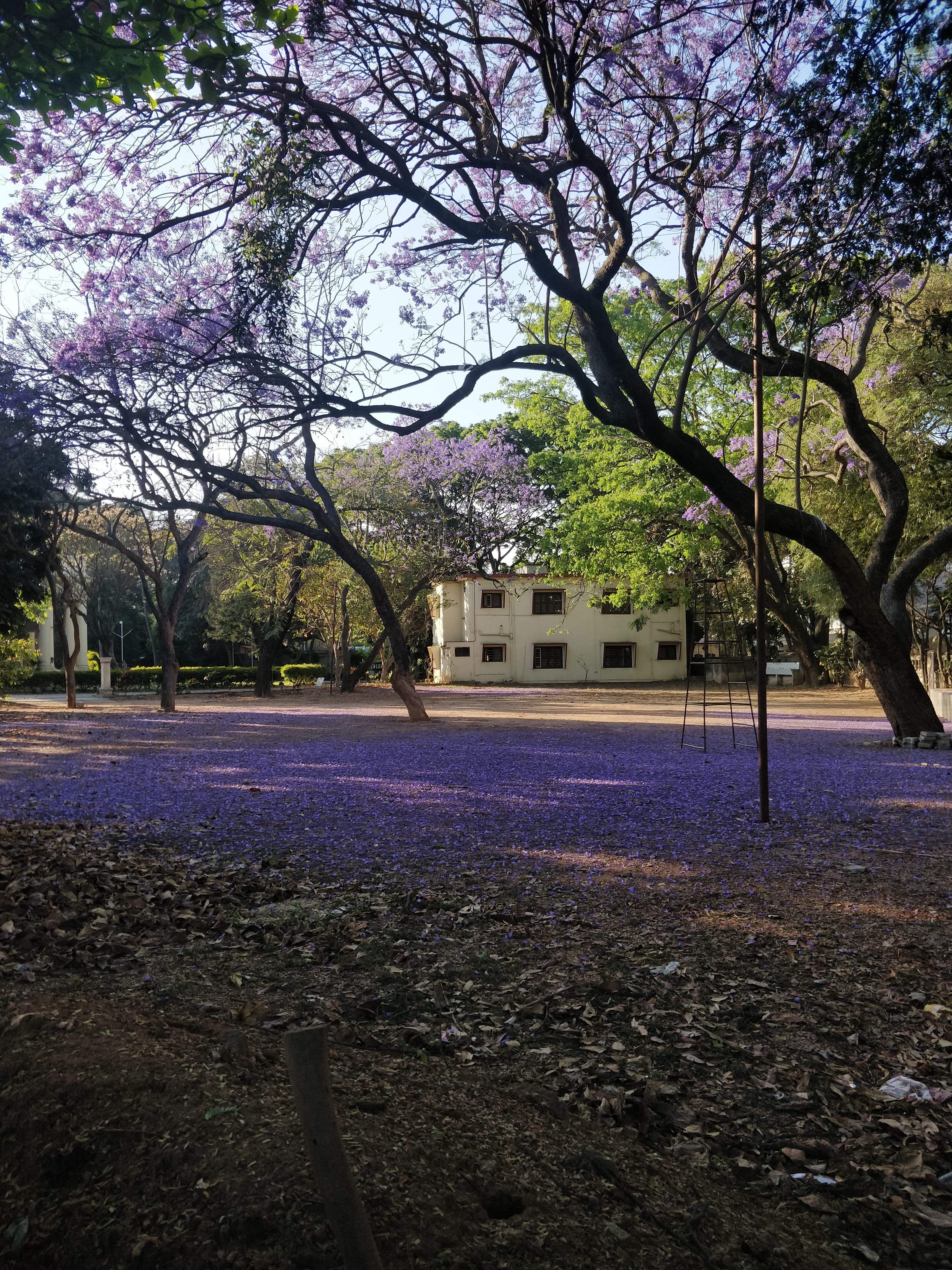
DAILY PHOTO: Purple Shadow

Image

POEM: Metaphysical Inquiry

In the early morning hours,
a staggering drunk asked me 
if I were him,

thinking he was looking 
at a mirror 
rather than through 
a glass door.

I told him it was too early 
for such metaphysical inquiry.