
Taken June 8, 2013 in Little Mulberry Park (Dacula, GA)

Taken June 8, 2013 in Little Mulberry Park (Dacula, GA)
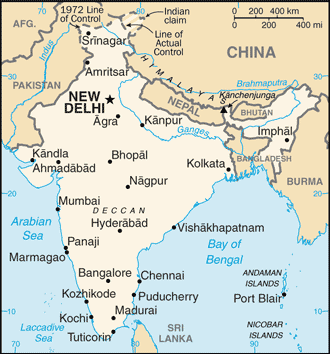 As I prepare to move to India with my wife, the string of high-profile rapes that have taken place in recent months in India have not gone unnoticed. This past week two such cases were in the news. An American tourist was gang-raped in Himachal Pradesh, and a businessman in West Bengal was charged with the rape of an Irish NGO worker. Other recent cases include a Swiss cyclist in the countryside south of New Delhi and that of a British woman who jumped out of her hotel window because a group of men were trying to force entry into her room in the middle of the night. While one might argue whether these cases should be given particular prominence just because their victims were foreign, they do speak to a certain level of boldness. In these cases, the criminals didn’t know anything about their victims, and while this makes the act no more or less reprehensible, it does suggest the attackers were particularly audacious.
Of course, the case that has garnered the most attention and outrage was the brutal gang-rape and beating of a young Indian physical therapy intern and the thrashing of her male friend last December. This case gained particular attention both because the victim later died, but probably also because the circumstances seemed like those that anybody could fall into. This wasn’t a drunk girl hitchhiking through the countryside at witching hour. The girl and her friend were going home from a movie at 9:30pm and were lured aboard a bus that was said to be going their way. In some sense, the victim was doing most things right. She was not traveling alone. It was not particularly late. She was not in an isolated area.
However, it turned out that the private bus was under the control of six joyriders. All six men, including the driver, participated in the violence. It may seem odd that the victims would get on this bus that was not a normal city bus. However, for those used to traveling in the developing world, private buses and collectivos are not that out of the norm–and sometimes are the only way to get the place you’re going.
So the question remains, is rape more common in India than elsewhere? It turns out that this question is hard–if not impossible–to answer. If one takes the statistics at face value, then one should be more worried living in America. The U.S. had almost four times as many police-reported rapes in 2010 as India. When one normalizes this for population (accounting for the fact that India’s population is over 1 billion and America’s is only 300 million), this disparity becomes even more exacerbated.
However, it’s impossible to know what these numbers really tell one. While it is a sad fact that many rapes go unreported in the U.S., there is reason to believe that unreported rapes are even more prevalent in India. In absolute terms, India has one of the highest numbers of police-reported rapes, but it also has one of the biggest populations in the world–and the biggest for a democracy. When one normalizes for population, India drops way down the list. However, up toward the top of the population-normalized list is Sweden, which would seem to speak to how important the incidence of reporting is. (I don’t imagine Sweden to be home of a disproportionate hostility toward women, but I could be wrong.)
I would also say that India is likely not as bad as many countries which institutionalize misogyny, e.g. theocracies. However, one of the breaks of being a democracy is that one gets held to a higher standard. Yes, there is a lunatic fringe in India. This was most vocally personified by Asaram Bapu, a Hindu guru who shifted blame to the victim by saying that she should have fallen to her knees, held her tormentors hands, and invoked their common religion; and, in doing so, she could have prevented the attack. Another break of democracy is having to accept that you’ll have ass-clown douche-bags with the power of the microphone. As much as most Indians might like to ship Asaram Bapu off to an island with the likes of Todd Akin (the Missouri candidate for Senate who said that women don’t get pregnant if they are really raped [presumably because, “it’s devastating to my case, Your Honor”]), that’s part of liberty–the freedom to say really stupid stuff.
As I’ve been reading about these cases, there are a number of explanations that I’ve heard that hold varying degrees of sway. Some have suggested that alcohol is the culprit. Wrong! Yes, alcohol makes one stupid, but this stupidity is usually restricted to the making and accepting of ill-considered marriage proposals. Millions of people get drunk every week without perpetrating violence other than badly sung karaoke.
There are a few cultural arguments. One is that there’s a bodice-ripping theme in Indian entertainment. This sounds like the alcohol argument and a few other arguments that shift blame away from the attackers–in this case by suggesting that they were just confused about what women want by pop culture depictions. Speaking as a man, we are all perpetually confused about women want, but knowing that a person doesn’t want to be beaten up or lose control of her body is a no-brainer.
Another argument is that Indian tendencies towards rape reflects the vestiges of ingrained power dynamics. While India may have abandoned the caste system, the idea that some class of people have the right to exert power over others may not be entirely dead.
I don’t know if India has a more extreme problem than other countries in this domain, but I’ll take the recent outrage as a good sign. If there is some societal proclivity that contributes to the problem, perhaps it is about to go down.
Most importantly, be careful out there.

Taken in the summer of 2008 in the Forbidden City (Beijing, China)
If you were a concubine in Imperial China, this is the kind of room in which you might take your meals.
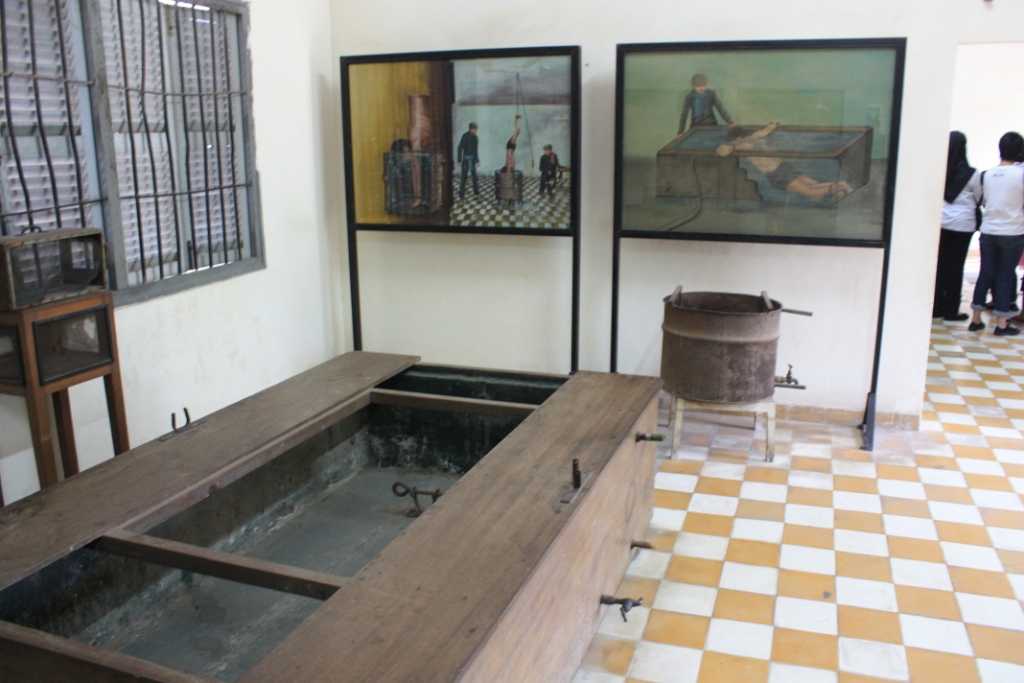
Taken in October of 2012 at Tuol Sleng in Phnom Penh.
The artworks high in the frame demonstrate how the otherwise nondescript implements of torture were used. These were a couple of the more disturbing exhibits at Tuol Sleng Museum. Tuol Sleng was a school that the Khmer Rouge pressed into use as a prison and center of torture.

Taken in the Summer of 2009

Taken June 2013 at Lullwater Park in Atlanta.

The same in black and white

Taken in the summer of 2011
I can’t recall anywhere besides Estonia that I’ve seen headstones for sale in a run-of-the-mill market. It was a market with green grocers, florists, hardware vendors, sellers of trinkets, and headstone engravers. This raised many questions for me. Who buys the headstone? Does one buy one’s own? If so, isn’t there a risk of narcissism in the engraved epitaph? If someone else buys it, is it something one would buy for a loved one or a mortal enemy? I can see it going either way. If it’s for a loved one, one probably has it made after that person’s death, but if it’s for an enemy, one gets it made and delivered beforehand–perhaps directly onto the unassuming melon of said enemy.
Anyone who understands the Tallinn headstone market, feel free to enlighten me.
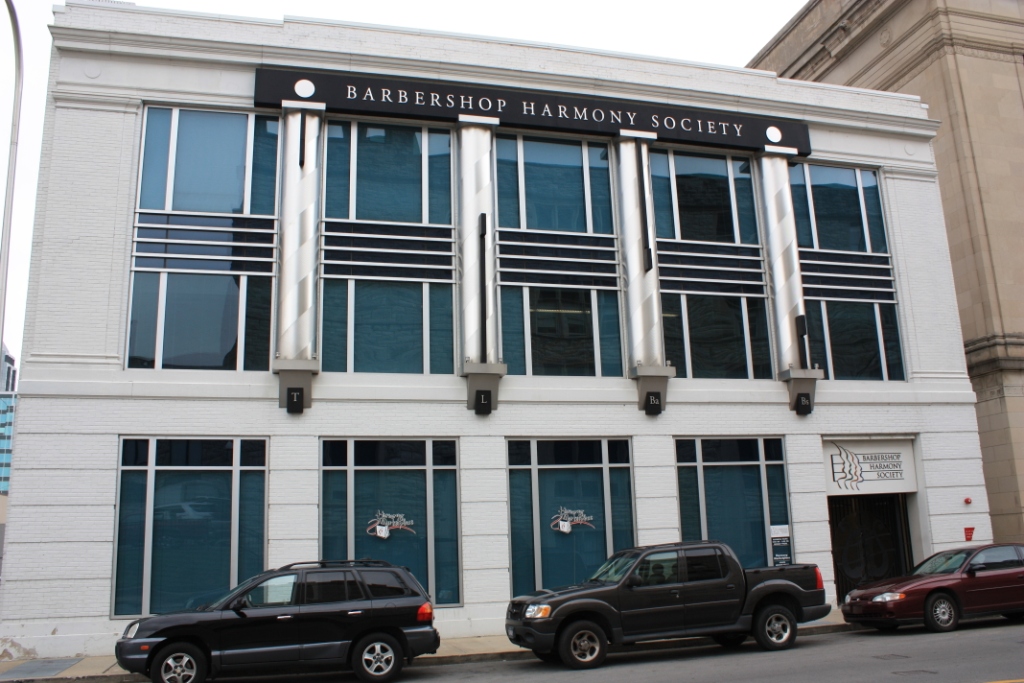
Taken March 2012 in Nashville, Tennessee

Taken Summer of 2011
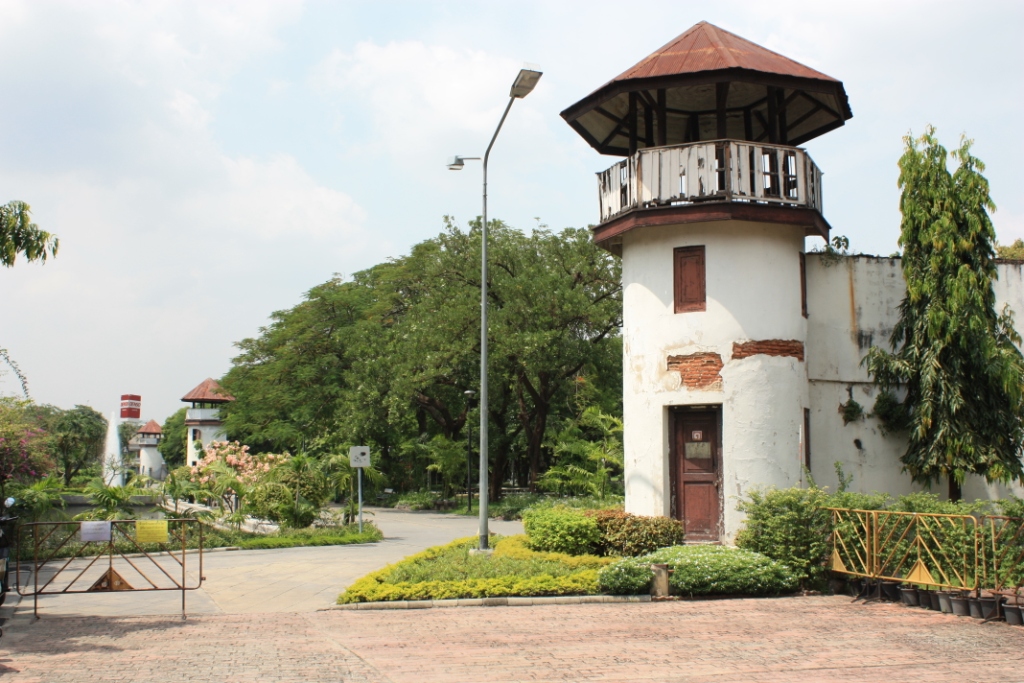
Taken in October of 2012
An old prison complex turned into a park containing a museum of corrections.


