BOOKS: “A New Interpretation of Chinese Taoist Philosophy” by You-Sheng Li

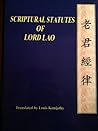
A New Interpretation of Chinese Taoist PhilosophyA New Interpretation of Chinese Taoist Philosophy by You-Sheng Li
My rating: 4 of 5 stars

Google Books Page

By the author’s admission (and the title, for that matter) this is not so much an overview of Taoist philosophy as a philosophical rendering that attempts to not only be consistent with the Taoist tradition, but also with our present-day understanding of the world. This fact has positive and negative ramifications for readers, and results in a book that will be more useful for the purposes of some readers than others.

The biggest positive is that this interpretation of Taoism is consistent with a modern rationalist worldview. Taoism is a huge system of thought and includes a lot of magical, supernatural, and astrological thinking. In short, a book on Taoist thought could contain a great deal of woo woo, but this one does not. It has not much to say on demons, deities, magic, alchemy (in the narrow, original meaning,) etc., and to the degree these subjects do crop up they do so in a way that is not arcane and doesn’t insist on belief in unsupported ideas. I think this makes this book important, as it fills a niche. Most of the central texts of Taoism were written in times that were different from our own and in which magic and the supernatural were taken for granted. So, if you want a text that draws on major ideas of Taoism but presents them in a way that is consistent with science, you may want to give this book a look.

The biggest negative is that when the book is not explicitly describing the teachings of historical figures, one doesn’t necessarily have a good way of knowing how much Li’s ideas are or aren’t consistent with Taoist tradition. There are extended discussions of ideas such as evolutionary biology and existentialism, and — unless one has a great depth of knowledge of Taoism to begin with — it can be hard to see whether Li’s views on these subjects are in line with Taoist philosophy or whether twists are being made. The most extensively discussed / cross-cutting idea of the book is that of differentiating primary from secondary society and proposing a primacy of primary society in Taoist thought. I can’t say I’ve read much elsewhere that would suggest this was a core idea for Taoists, but the political philosophy of Taoism is not an area with which I’m at all well-acquainted.

I found this book interesting and thought-provoking. I also felt it was much needed to have a scientifically consistent approach to Taoism. If you are looking for such discussion, I’d recommend this book.

View all my reviews

“Bold” [Poetry Style #11] by Sikong Tu [w/ Audio]

View flowers like a bandit;
Let nature flow through you,
Breathing in the Great Way
As you let your crazy brew.
Wander like the free winds --
Sea and mountain in gray-blue.
Feel true power overflow,
As all nature lives through you.
Before: sun, moon, and stars;
Behind: the one from two.
By dawn, sea turtles have gone,
Soak your feet where they withdrew.

NOTE: The late Tang Dynasty poet, Sikong Tu (a.k.a. Ssŭ-k‘ung T‘u,) wrote an ars poetica entitled Twenty-Four Styles of Poetry. It presents twenty-four poems that are each in a different tone, reflecting varied concepts from Taoist philosophy and aesthetics. Above is a crude translation of the eleventh of the twenty-four poems. This poem’s Chinese title is 豪放, which has been translated to “Free,” “Set Free,” and “Broad-minded” in various English language translations.

Swimmingly [Lyric Poem]

Moving at a glide --
No strain, no effort,
Rolling side to side,
No lord or escort.

Things are going SWIMMINGLY.

“Absolute” [Poetry Style #1] by Sikong Tu [w/ Audio]

With wear you will decay outside,
But inside resides the vital force.
Approach the Absolute through the Void:
One's strength will grow, and vim will course.
You can know the world and its Way,
Across space and time -- to the Source.
To desolation range hang dark clouds,
Air still as latitudes of the horse,
Move beyond all one knows by sight,
And gain the Center -- but not by force --
Hold onto this strength by hook or crook,
And flow the Endless by watercourse.

NOTE: The late Tang Dynasty poet, Sikong Tu (a.k.a. Ssŭ-k‘ung T‘u,) wrote an ars poetica entitled Twenty-Four Styles of Poetry. It presents twenty-four poems that are each in a different tone, reflecting varied concepts from Taoist philosophy and aesthetics. Above is a crude translation of the first of the twenty-four poems. This poem’s Chinese title is 雄浑, and its translated titles include: “Energy – Absolute” [Giles] and “Vigorous.”

“Fluid” [Poetry Style #24] by Sikong Tu [w/ Audio]

Like water spilling over rocks?
Like a bead's roll across the floor?
Cliches, they fail to tell the story,
As no doll shows life's splendor.
But the Earth' unsupported spin through space,
As the heaven's pivot and sprawl for more...
If you could find how it all began,
You'd see it'll be as it was before.
The high and bright realm of the gods
Returns to nothing and nevermore.
And if you lived ten-thousand years,
You might find yourself in days of yore.

NOTE: The late Tang Dynasty poet, Sikong Tu (a.k.a. Ssŭ-k‘ung T‘u,) wrote an ars poetica entitled Twenty-Four Styles of Poetry. It presents twenty-four poems that are each in a different tone, reflecting varied concepts from Taoist philosophy and aesthetics. Above is a translation of the twenty-fourth of the twenty-four poems. This poem has been alternately titled “The Flowing Style,” “Fluid,” “Motion,” etc. by varied translators from its Chinese title of 流动.

“Abstract” [Poetry Style #22] by Sikong Tu [w/ Audio]

Lonely and longing to travel;
All alone and lacking a tribe.
Like the crane up on the mountain,
Or the cloud that enshrouds its peak.
Like the portraits painted by past
Masters, of souls you couldn't have known.
Like a leaf drifting on swift winds,
Bounding through the boundless spaces.
You'll never be able to hold it,
But can hear the song it dances to,
Those who accept this can tune in,
And the signal will only get stronger.

NOTE: The late Tang Dynasty poet, Sikong Tu (a.k.a. Ssŭ-k‘ung T‘u,) wrote an ars poetica entitled Twenty-Four Styles of Poetry. It presents twenty-four poems that are each in a different tone, reflecting varied concepts from Taoist philosophy and aesthetics. Above is a translation of the twenty-second of the twenty-four poems. This poem has been alternately titled “Abstraction,” “Elegance,” and “Drifting Aloof” by varied translators, but its original title is 飘逸.

“Form” [Poetry Style #20] by Sikong Tu [w/ Audio]

Quit seeking to firm up the soul;
Return to the unadorned truth.
One can seek the shape of water;
One can write of a pleasant spring.
Winds shift the shapes of clouds,
Flowers stand tall, and flowers droop.
The great waves of a sprawling sea,
The mountain's craggy ruggedness...
They all emulate the Great Way.
Every wonderful thing is dust.
Find semblance beyond shape or form.
In this person, the multitudes.

NOTE: The late Tang Dynasty poet, Sikong Tu (a.k.a. Ssŭ-k‘ung T‘u,) wrote an ars poetica entitled Twenty-Four Styles of Poetry. It presents twenty-four poems that are each in a different tone, reflecting varied concepts from Taoist philosophy and aesthetics. Above is a translation of the twentieth of the twenty-four poems. Translated titles vary. This one has been titled “Descriptive” and “Form and Feature” by varied translators.

“Fascinated” [Poetry Style #16] by Sikong Tu [w/ Audio]

The scent: copper-carpeted pine forest;
A stream rushes through: swirling, burbling;
Blue sky and snowcaps peek through the treetops.
In the distance, fishermen are trawling.
A young lady with flowing hair and gown
Passes gracefully through the thick woodlands.
Eyes move when she moves and stop when she stops,
Following her transit down the valley.
The mind shows not its usual chaos,
But is effortlessly anchored to her.
As if to a huge rising moon.
As if to blazing autumn hues.

NOTE: The late Tang Dynasty poet, Sikong Tu (a.k.a. Ssŭ-k‘ung T‘u,) wrote an ars poetica entitled Twenty-Four Styles of Poetry. It presents twenty-four poems that are each in a different tone, reflecting varied concepts from Taoist philosophy and aesthetics. Above is a translation of the sixteenth of the twenty-four poems.

“Finely Woven” [Poetry Style #14] by Sikong Tu [w/ Audio]

The building blocks of everything --
Too fine to feel or see or smell --
Dance their way into hardened shapes
Via forces, invisible.
And so water flows, flowers bud,
But - also - dew evaporates.
This expansive path stretches on --
It's slow-going through dark lands.
It can't be spoken of smartly.
It can't be pondered fruitfully.
It's Early Spring green in sunlight,
Or like the snow seen by moonlight.

NOTE: The late Tang Dynasty poet, Sikong Tu (a.k.a. Ssŭ-k‘ung T‘u,) wrote an ars poetica entitled Twenty-Four Styles of Poetry. It presents twenty-four poems that are each in a different tone, reflecting varied concepts from Taoist philosophy and aesthetics. Above is a translation of the fourteenth of the twenty-four poems. Translated titles vary: Giles calls it “Close Woven” and others have titled it, “Fine.”

“Placid” [Poetry Style #2] by Sikong Tu [w/ Audio]

It thrives in silence and with calm --
ephemeral and gossamer.
It's ever-flowing harmony,
gliding with a solitary crane,
wisping like the gentle breezes
that rustle and billow one's robe,
trilling softly like a bamboo flute.
How does one become one with it?
A chance meeting, lucked into, but
don't lunge forward, or it'll vanish.
When you think it's attainable,
it twists in your hand and is gone.

NOTE: The late Tang Dynasty poet, Sikong Tu (a.k.a. Ssŭ-k‘ung T‘u,) wrote an ars poetica entitled Twenty-Four Styles of Poetry. It presents twenty-four poems that are each in a different tone, reflecting varied concepts from Taoist philosophy and aesthetics. Above is a translation of the second of the twenty-four poems.