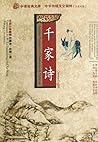
BOOK: “Golden Treasury of Quatrains and Octaves” [i.e. 千家诗] Trans. by Xu Yuanchong and Xu Ming

Golden Treasury of Quatrains & OctavesGolden Treasury of Quatrains & Octaves by Xu. Yuanchong (translator)
My rating: 5 of 5 stars

Publisher Site — China Translation Corp

This is the bilingual (Chinese-English) edition of an anthology of Tang and Song Dynasty poems commonly known in Chinese as 千家诗 (it has a much longer formal title,) which was jointly translated by Xu Yuanchong and Xu Ming (no relation.) The book is organized into four parts by the form of poem: 7-character line quatrains, 7-character line octaves, 5-character line quatrains, and 5-character line octaves. The anthology includes poems by Li Bai, Du Fu, Wang Wei, Meng Haoran, Jia Dao, Ouyang Xiu, Yang Wanli, Su Shi, and many other important Tang and Song poets — from Emperors to Hermits. That said, while the aforementioned Chinese title suggests there are works of a thousand poets involved, that’s an exaggeration. (And that’s probably all the better. While this was the golden age of Chinese poetry, going that wide into surviving poetry might involve hitting the dregs.)

Each entry has a title, byline, the poem in Simplified Chinese script and pinyin (Romanized phonetic script,) an English language translation, notes in Chinese, and a line or two of commentary in English. All but the seven-character line octaves take up just one page per poem. (Seven-character line octaves take two pages per poem.)

This is a great anthology. There’s an introduction to give insight into what approach the translators took. They stuck to rhyming verse to emulate the originals in form, but more can be learned from the introduction.

I’d highly recommend this anthology for poetry readers.

View all my reviews

“Drinking at Night in Dongpo” by Su Shi [w/ Audio]

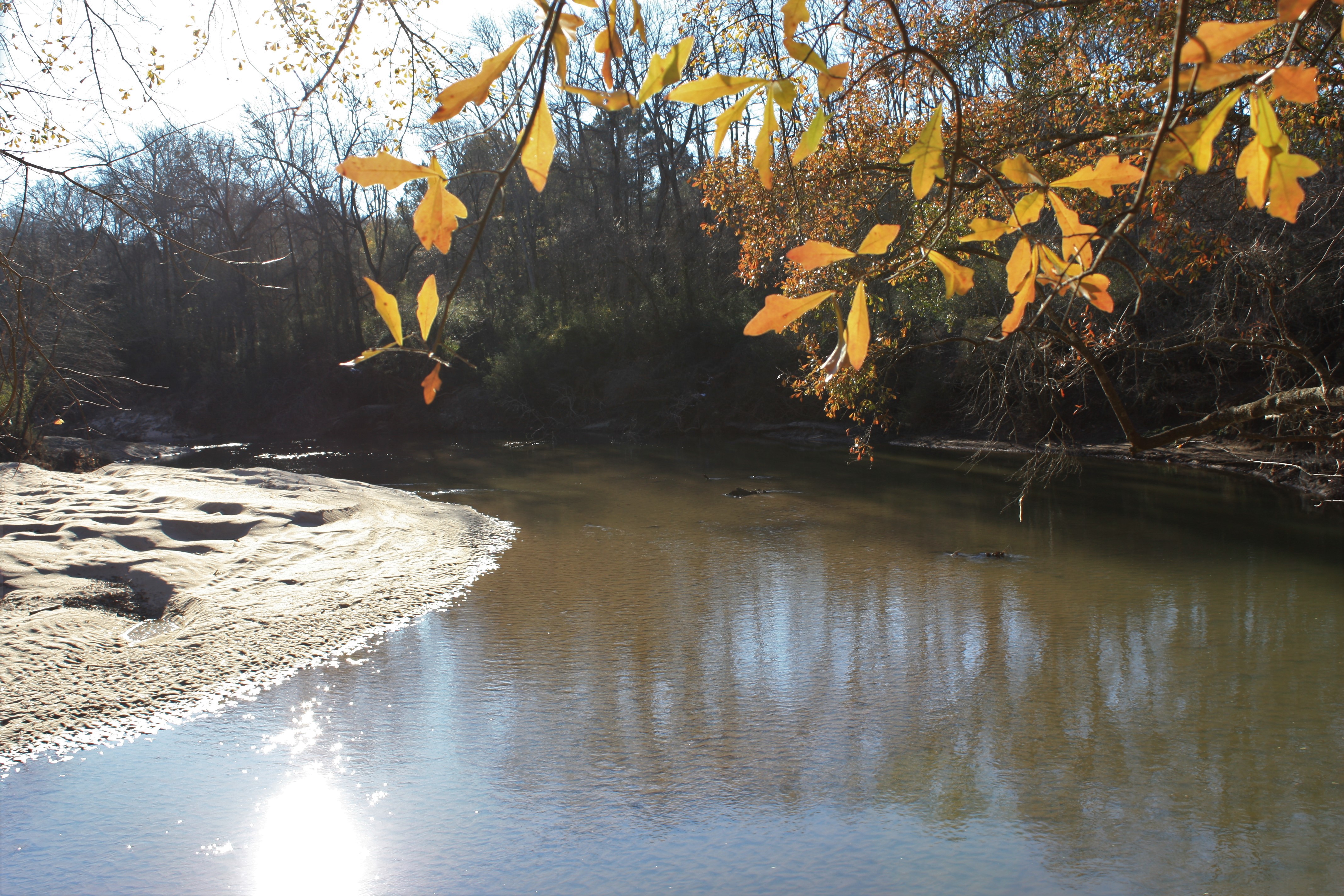
Drunk at night in Dongpo.
I sober, then drink once more;
I return at three A.M.
To hear boy's thunderous snores.
I knock but there's no answer --
Lean on my staff and listen
To water, and feel my regrets
As ripples in river glisten.
I could vanish in this boat,
And see out my life afloat.

Note: The Song Dynasty poet Su Shi [苏轼] was also known as Dongpo [東坡] or Zizhan [子瞻.]

“Fortune-teller’s Song” by Su Shi [w/ Audio]

The crescent moon hangs on a barren tree.
The water clock has stopped and all is still.
Who sees the sad man pace the shore alone?
His shadow slants and curls into a swan.

The startled man stiffens and turns to look;
His grief remains unseen by anyone.
He passes on a seat of fallen log,
And plops down on the wet and cold sandbank.

NOTE: The original title is: 卜算子.

“Silk-Washing Stream” by Su Shi [w/ Audio]

Stream-washed leaves are glistening.
Someone is boiling cocoons.
Workers gossip, I'm listening.

Dim-eyed man with a cane spoons
Food into a bowl, bending
To pass it before I swoon.

I ask when the bean leaves yellow.

“Hand in Hand” by Su Shi [w/ Audio]

Hand in hand.
Plum petals floated to her skirt.
-- Love unbound --
Now, lost souls mill about:
Thier loved ones long unseen.
Old songs are heard once more,
Recalling Tower and Temple.

On ordinary days,
I'd write a thousand lines.
Now, I brush away dust,
And think of us, together.
The moon reflects in the lake.
Willows droop beside water.
A dragon-head cloud drifts on air.

Note: Translated titles vary. e.g. Xu Yuanchong entitles his translation “Song of Incense.”

“Renunciant’s Song” by Su Shi [w/ Audio]

The night is clear, even pristine --
A nightscape in silver moonlight.
"Yes, please! Pour me a bowl of wine.
Don't skimp! take it up to the brim."

And why should I chase wealth and fame
When it is sure to end in vain?
Events pass like a horse's sigh,
A spark on stone, or dream travel.
I can put out my ideas,
But who'll accept them as the truth?
Why shouldn't I just live happily
And innocently, like a child?
I could go back to carefree days
When life's trifles weren't torturesome.
Just me, my lute, a pot of wine,
And the stories drawn by the clouds.

NOTES: Song Dynasty Poet, Su Shi, was also known as Su Dongpo. The translated title of this poem also varies. In Deep, Deep the Courtyard, translated by Xu Yuanchong, it is entitled, “Song of Pilgrimage.”

“West River Moon” by Su Shi [w/ Audio]

Wavelet on wavelet glimmers by the shore;
Cloud on cloud dimly appears in the sky.
Unsaddled is my white-jadelike horse;
Drunk, asleep in the sweet grass I'll lie.
My horse's hoofs may break, I'm afraid,
The breeze-rippled brook paved by moonlit jade.
I tether my horse to a bough of green willow.
Near the bridge where I pillow
My head on arms and sleep till the cuckoo's song awakes
  A spring daybreak.

Translation: Xu Yuanchong [translator]. 2021. Deep, Deep the Courtyard. [庭院深深.] Cite Publishing: Kuala Lumpur, p. 238

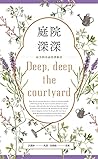
BOOKS: “Deep, Deep the Courtyard” [庭院深深] trans. by Xu Yuanchong

庭院深深:最美的宋詞英譯新詮 (Traditional Chinese Edition)庭院深深:最美的宋詞英譯新詮 by 吳俁陽(賞析)
My rating: 5 of 5 stars

Publisher Website

This is a bilingual (Chinese / English) anthology of Song Dynasty poetry. It features more than 140 poems by almost fifty poets of the Song Dynasty, but a few of the Song poetic rockstars are particularly well represented (e.g. Su Shi, Qin Guan, Ouyang Xiu, and Xin Qiji.) The principal language of the book is Chinese (Mandarin) and so, while the poems themselves appear in English as well as Chinese, the ancillary matter is only in Chinese. Said ancillary matter includes notes, contextual information, bio-blurbs on the poets, and brief front and back matter.

I learned after reading the translations, that the translator was Xu Yuanchong and that he was (i.e. he’s now deceased) a very big deal as a translator, translating classical Chinese poetry into both English and French. All in all, I enjoyed the translations and found them to be sound as poems in their own right. That said, my personal preference would have been to have had less effort put into maintaining rhyme. I suspect a closer transmission of the ideas of the originals could have been achieved without the forced constraint of rhyme. Furthermore, while in many cases metering was attended to, sometimes it was not, leaving those poems to have a doggerel quality. [I come to this conclusion by comparing a few of the poem’s translations to those by other translators as well as to literal translations.] That said, the translator was clearly no slouch, and his stylistic choices were likely informed by what was popular during his career.

This book is part of a series. Other volumes include: In the Thick Woods a Deer Is Seen at Times (Tang Dynasty poems) and A Pair of Swallows Fly (from The Book of Songs, a.k.a. The Classic of Poetry.) I picked this book up in Taipei’s Zhongshan Book Street (Eslite Bookstore,) and don’t know how widely available the books of this series are outside of Taiwan, but if you are interested in Classical Chinese poetry and can find a copy, I’d recommend it.

View all my reviews

BOOK REVIEW: Poetry and Prose of the Tang and Song [Trans. by Yang Xianyi & Gladys Yang]

Poetry and prose of the Tang and SongPoetry and prose of the Tang and Song by Yang Xianyi
My rating: 5 of 5 stars

Amazon.in Page

This collection includes works from eighteen prominent poets and writers from the Tang (618-907 AD) and Song (960 – 1279 AD) Dynasties of China. Among the most famous of the included authors are: Wang Wei, Li Bai, Du Fu, Bai Juyi, Wang Yucheng, and Su Shi. The included works (mostly poems but including some brief prose writings) explore subjects such as nature, social justice, patriotism, travel, and drinking. If some of those topics surprise you, you’re not alone. I may be letting my biases show, but I was surprised by how much social outrage and humor was contained in these works from the China of 750 to 1,400 years ago. That said, most of the works do present the kind of sparse imagist depictions of natural scenes one would likely expect from Chines poets in days of yore. (Think haiku, but longer — though no less devoid of analysis or judgement.)

As someone who isn’t an expert on Chinese literature or even a speaker of any of the Chinese languages, I can’t comment intelligently on how precise the translations are. However, the English language versions contained in this volume are evocative, clever, and, occasionally, funny.

To give one an idea of the kind of humor, I’ll offer this quote from a poem by Xin Qiji:

Last night by the pine I staggered tipsily
And asked the pine, “How drunk am I?”
When I imagined the pine sidling over to support me,
I pushed it off saying, “Away!”


I enjoyed this collection, and would highly recommend it.


View all my reviews