“Who says my poems are poems” by Ryōkan [w/ Audio]

Who says my poems are poems?
They aren't poems at all.

Only when you understand my poems aren't poems
Can we talk poetry.

This translation by Sam Hamill in The Poetry of Zen (2004) Boston: Shambhala, p. 159
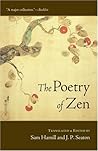
BOOK: “The Poetry of Zen” Ed. / Trans. Sam Hamill & J.P. Seaton

The Poetry of ZenThe Poetry of Zen by Sam Hamill
My rating: 5 of 5 stars

Publisher Site – Shambhala

This poetry anthology consists of translations of Chinese and Japanese poetry that play in the Zen aesthetic. They are not Zen Buddhist poetry in the sense of being sutras or sutra-like expositions on Buddhist philosophy or theology (at least, not mostly.) And while there are many monks and Buddhist layperson poets represented, not all of those included were Buddhists. (In fact, there is even some verse from the Daodejing included, though Taoism is certainly philosophically related to Zen.)

About half the book is Chinese poetry, including pieces from Han Shan, Li Bai, Bai Juyi, Wang Wei, Du Fu, and many other greats of Chinese poetry. (Note: my spellings of author names varies from those used in the book because Hamill and Seaton use Wade-Giles spellings.) The other half of the book consists of works by Japanese poets, including: Saigyo, Dogen, Basho, Ryokan, Buson, Issa, and others. The Japanese part includes a few haibun (prose poems interspersed with haiku,) adaptations of Chinese-style poems, as well as the various Japanese fixed form styles (i.e.. haiku, tanka, etc.)

The two translators, Sam Hamill and J.P. Seaton, initial the poems that each translated (some were dually translated and others singularly.) I enjoyed the translations and felt they were fine reading in their own right. With haiku and tanka, the translators stuck fairly close to the traditional form (in as much as the aesthetic could be maintained doing so,) but with Chinese lyric styles they often took a freer approach to form.

If you’re interested in poetry that conveys Zen sentiment, this book is worth investigating.

View all my reviews

“Drinking Alone in the Rainy Season” by Tao Yuanming [陶渊明] (a.k.a. Táo Qián, or 陶潜]

Whatever lives must meet its end --
That is the way it has always been.

If Taoist immortals were once alive,
Where are they today?

The old man who gave me wine
Claimed it was the wine of the immortals.

One small cup and a thousand worries vanish;
Two, and you'll even forget about heaven.

But is heaven really so far away?
It is best to trust in the Tao.

A crane in the clouds has magic wings
To cross the earth in a moment.

It's been forty years of struggle
Since I first became reclusive.

Now that my body is nearly dead,
My heart is pure. What more is there to say?

NOTE: This is the translation of Sam Hamill found in The Poetry of Zen (2004); Shambhala Publications: Boston, MA, p.24.