BOOKS: “Introducing Freud Wars: A Graphic Guide” by Stephen Wilson & Oscar Zarate

Introducing the Freud Wars: A Graphic Guide (Graphic Guides)Introducing the Freud Wars: A Graphic Guide by Stephen Wilson
My rating: 4 of 5 stars

Publisher’s Website

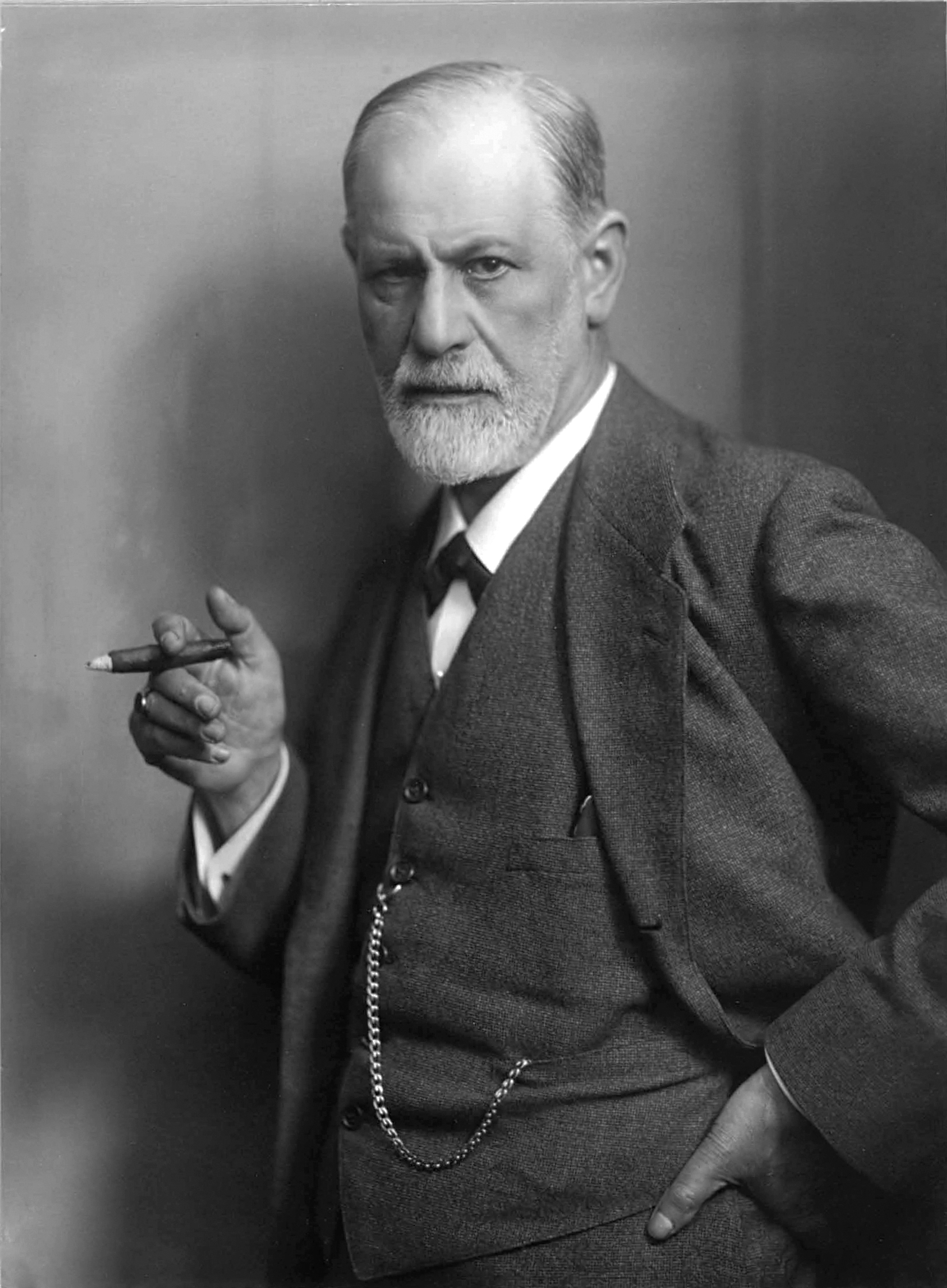
I’ve always been fascinated by a question about Sigmund Freud. I can’t think of another scholar in modern times who managed to become not only a household name but virtually synonymous with his discipline while being so spectacularly wrong on so many levels. Sure, if you go back to ancient times, you have individuals with similar name recognition (e.g. Plato and Aristotle) who made some major league intellectual boners, but that was ancient times — pre-scientific method and in an age when employment of any rationality at all set one apart. The question of interest is: How did Freud pull it off?

This book helps one better understand the issue, and to answer a crucial related question: “Did the establishment, in Freud’s day, swallow his ideas hook line and sinker?” The answer is “no,” and that is the central theme of the book, the opposition faced by Freud in his day. Wilson frames the debate, presenting both sides. (And sometimes three sides, for there were a number of “super-Freudians” who felt that Freud didn’t lean hard enough into his own ideas about childhood sexuality being the key to an individual’s adult psychology.) It should be noted that this series has a book that is on Freud and his work. I haven’t read that book, but presumably it focuses less on Freud’s detractors and the nature of their criticisms and more on the entirety of Freud’s ideas (not just the most intensely refuted among them.)

This book focuses heavily on Freud’s controversial sex-centric ideas, particularly those involving infant sexuality, the Oedipal complex, transference, penis-envy, and hysteria. It does touch upon other Freudian ideas, such as dream interpretation and the “Superego,” but these are much less intensely explored, probably because they were less controversial. (Which is not to say they were correct, but that they were less potentially damaging.)

I found this book interesting, and believe I had a better grasp of Freud and his ideas and even had a more sympathetic view of him by the end.

View all my reviews

Psychoanalyst Limerick

There once was a renowned psychoanalyst
Who found childhood events were always the catalyst.
A patient who lived happily
'Til a recent tragedy,
Learned it all stemmed from thoughts as a neonatalist.

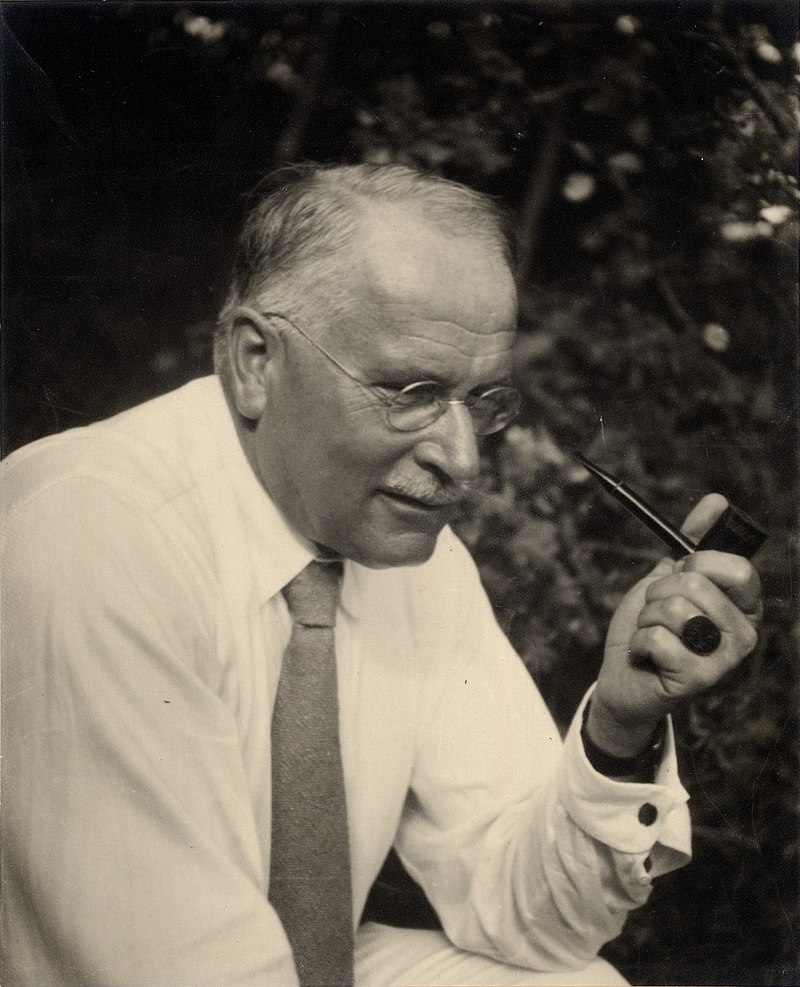
Jung Limerick

There was a psychiatrist named Jung
 who thought the Unconscious was far-flung --
  like Sandman's "The Dreaming"
  that you've seen on streaming:
 farfetched and fictional -- with heroes, unsung.

Freud Limerick

There once was a psychiatrist named Freud 
 who thought all were obsessed with filling a void...
   a void in the pants!
   Though some looked askance,
 and those whose cigars weren't cigars were annoyed.

Vienna Limerick

There was a famed therapist from Vienna
who knew the source of all angst and each dilemma.
"Sexy thoughts of your mom
made you fear the A-bomb!"
"Uh, it started last week when I fell from an antenna."

BOOK REVIEW: Ten Days in a Mad-house by Nellie Bly

Ten Days in a MadHouse: The Original 1887 Edition ( Nellie Bly's Experience on Blackwell's island )Ten Days in a MadHouse: The Original 1887 Edition by Nellie Bly
My rating: 5 of 5 stars

Amazon.in Page

Free Public Domain Version Here

This late 19th century work of immersion journalism tells the tale of Nellie Bly getting herself put into (the aptly nefarious sounding) Blackwell’s Island Insane Asylum for ten days (after which time her editor got her released.) Unlike the famous Rosenhan Experiment in 1973, in 1887 Bly had to get herself committed, and had her editor not gotten her released she might have been institutionalized indefinitely. Disturbingly, yet fortunately for Bly, it took no great acting skills to convince the authorities that she was mentally ill, pretending to be poor and having no husband got her at least 90 percent of the way to being institutionalized. Like the Rosenhan Experiments, Bly’s story showed that nobody seems to have any great capacity for determining sanity from insanity, not even the people with advanced degrees and board certifications on the subject.

At first, I wasn’t sure how skewed Bly’s account would be. She does show some bias in practically deifying journalists. She was confident that no psychiatrist would be able to discover her ploy, but she seemed sure that any journalist could out her through the briefest of conversations. So, when she complained the food was “inedible,” I considered that the same has always been said about any institutional food – from military mess halls to college cafeterias, and usually it’s perfectly adequate. That said, one of the asylum staff members did acknowledge the food was pretty horrific. Ultimately, I think the story was probably accurate because, sadly, it rings true. Bly had intended to get herself put in the violent ward, but had second thoughts after hearing and seeing what she did, being concerned that she might be seriously injured by the rough treatment those patients received.

This short book is riveting. If you enjoy nonfiction, this piece is definitely worth reading.

View all my reviews

Nellie Bly Limerick

There was a reporter named Nellie Bly:
decided she'd give the asylum a try.
'Twas just for a story.
Doctors lost all glory
when they couldn't tell a nut from a spy.

BOOK REVIEW: Introducing Jung: A Graphic Guide by Maggie Hyde

Introducing Jung: A Graphic Guide (Introducing...)Introducing Jung: A Graphic Guide by Maggie Hyde
My rating: 4 of 5 stars

Amazon.in Page

I find Jung’s ideas fascinating. Don’t get me wrong; I don’t believe most of said ideas have scholarly merit, but they’re brilliantly creative and eccentric. Some will say this would’ve been a radically different book if it’d been written by a psychologist or the like (rather than by an astrologer.) I don’t disagree. It’d likely have focused more on his work in personality types and on the unconscious mind (i.e. the work that people in psychology still talk about, whether they like it or not,) and also probably would’ve barely footnoted his ideas about “the uncanny,” synchronicity, and astrology. In short, its priorities would’ve been reversed, and it’d be a book that’s more boring but more relevant to those who are interested in Jung’s long-run influence on psychiatry / psychoanalysis.

For my purposes, I prefer the book as it is. I shouldn’t give the false impression that the author only addresses Jung’s mysticism, or that she completely avoids pointing out where Jung’s ideas were controversial and what critiques were leveled against him. The book comes across as a serious description of Jung’s work (albeit focusing relatively intensely on dream analysis, collective consciousness, and the more out-there aspects of his work.) I will say, I’ve read a few books from this series now, and Hyde does seem more a cheerleader (less a dispassionate scholar) than most of the other authors. It’s fascinating to read about Jung’s criticism of Freud. Don’t get me wrong, I’d agree that Freud was sex-obsessed, but Jung’s accusations of Freud being too concerned with one ill-supported idea does create a bit of a pot / kettle situation.

I enjoyed this book. I found the descriptions of Jung’s ideas compelling, if unpersuasive. However, I’d argue that if you specifically want to know about what ideas are still being talked about in classrooms (mainstream, not the New Age-y ones,) there’re probably better books. However, if you’re curious about Jung the mystic, this is a great place to start.


View all my reviews

BOOK REVIEW: I’m a Joke and So Are You by Robin Ince

I'm a Joke and So Are You: Reflections on Humour and HumanityI’m a Joke and So Are You: Reflections on Humour and Humanity by Robin Ince
My rating: 5 of 5 stars

Amazon.in Page

This book examines the intersection between psychology and standup comedy. It investigates questions such as whether comedians are truly disproportionately depressive personalities as a number of high-profile cases have led the public to believe in recent years. It explores issues such as anxiety and imposter syndrome. But it also looks at less pathological issues of the mind, such as the origin of creative ideas.

The tone is light, and stories and jokes are employed throughout. That said, the book is also dealing with scientific and psychological issues, but it doesn’t get into technical minutiae. Ince discusses how ideas in psychology relate to the acts of a number of comedians he’s worked with, including Ricky Gervais and Tim Minchin, but – ultimately – he’s trying to present information that is useful to the reader. Whether the issue is grieving or parenting, the use of humor and comedy is just a tool to address issues most people face.

I enjoyed this book and found it thought-provoking. You won’t necessarily find it to be a laugh-riot, but you’ll learn a thing or two while being amused.

View all my reviews

BOOK REVIEW: MonsterMind by Alfonso Casas

MonsterMind: Dealing with Anxiety & Self-DoubtMonsterMind: Dealing with Anxiety & Self-Doubt by Alfonso Casas
My rating: 5 of 5 stars

Amazon.in Page

Out: October 12, 2021

This comic offers a clever and insightful look at the voices inside one’s head. The use of cute graphic depictions of fears, doubts, and past traumas – along with lighthearted narrative analogies – allows the reader to explore the subject matter in a manner that is neither dry nor anxiety-inducing, in and of itself. This apparently autobiographical book shows how a comic artist, beleaguered by the monstrous occupants of his own mind, goes from being overwhelmed to learning to manage his mind.

At the end of the book there are a few pages of tips, both for dealing with one’s own anxieties but also for interacting with others who have intense embattled minds. It’s a book that may even be more beneficial for individuals without crippling issues themselves, but who know or love such individuals. The use of graphic depictions and adroit portrayals of anxiety may help individuals who haven’t faced severe issues to gain a better understanding of what goes on in the minds of those who do. Having said that, these “monsters” will be familiar to everyone on some level, though for many that that level doesn’t necessarily interfere with living their lives.

I’d highly recommend this book for anyone looking for a gentle and amusing introduction to the topic of the runaway mind. It’s delightfully drawn and amusingly told.


View all my reviews