6 Lessons from a Pranayama Intensive

Last week I attended a five-day workshop on pranayama, the breathing exercises practiced in hatha yoga. (Yes, I’m aware that that definition may be a radical oversimplification to many.)


Breath is like water. It’s easy to take for granted as long as it’s unimpeded, but the moment it’s cut off life is miserable–not to mention short. (If you’ve never been at an altitude that your body wasn’t adjusted to, this may not seem profound, but trust me.) We reduce breath to an autonomic function–mindless and effortless. It’s easy enough to do this if one doesn’t have an interest in getting control over one’s emotional life or one’s health.


FUN FACT: Exhalation inhibits the firing of the amygdala–two structures in the brain that are partially responsible for our experience of fear. Ergo, elongating exhalations may diminish the expression of fear.  [This isn’t a fact that I learned at the workshop, but was something I recently read in the book Zen and the Brain, which is a neuroscientist’s explanation of the nervous system and the effect of meditation on it.]


The workshop was educational and offered plenty to work on as I expand the pranayama portion of my practice. Here are a few of the takeaways I brought from the workshop:


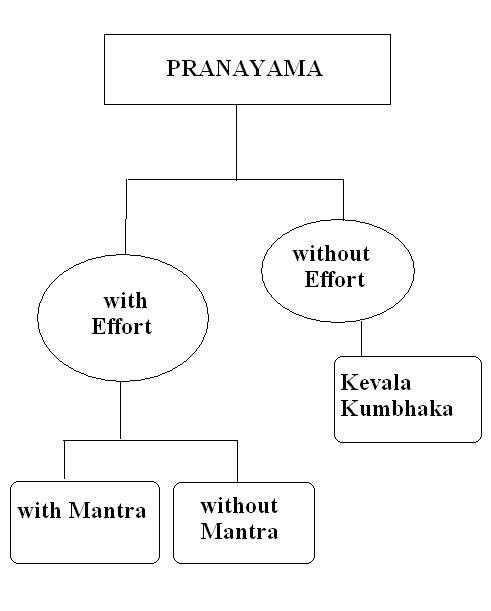
1.) There’s a thorough system of classification of the various pranayama practices. This might seem self-evident, but it’s not something I’d thought of before.

PranayamaClassification begins with the tree above, but there’s much more to it. For example, one might group practices lying under the “without mantra” box as vitalizing (e.g. Bhastrika) or tranquilizing (e.g. Sheetali/Sheetkari.) One can also classify pranayama by whether there’s a retention of breath or not, and–if so–whether the retention is done with air in (Antar Kumbhaka), air out (Bahya Kumbhaka), or both (Sahit Kumbhaka.)


2.) [Related to lesson # 1.] Some of my favorite pranayama aren’t necessarily considered pranayama.  Nadi Shodhana (alternate nostril breathing) is classified as a shatkarma (cleansing practice) rather than a pranayama by many. Furthermore, some think of kapalbhati (forced exhalation breathing) more as a shatkarma–though many accept that they can be classified either way. Certainly, it’s more important that you do it than put it in the right box, but I found it interesting nonetheless.


milk3.) Ghee is to yogis as duct tape is to a handyman.  It’s a readily available multi-purpose tool. But seriously, I learned that hot milk and ghee–for some reason–have different characteristics in the body than regular cold milk. One wants to minimize mucus producing foods when one does a lot of pranayama for obvious reasons. (Blowing snot bubbles is neither dignified nor sexy.) So it came as a surprise when ghee and warm milk were suggested foods. (Milk, when taken cold, is about as mucus-producing a food as there is.)


4.) I learned why I can hold my breath so long after kapalbhati (or bhastrika) breathing. (Kapalbhati is a breath in which the exhalation is forced out; in bhastrika both the inhalation and exhalation are forced [pumped]–i.e. these are hyperventilating breathes.) I noticed a while back that as I practice kapalbhati, doing internal retention afterward was easy to hold for a long time. This is probably one of the most counter-intuitive facts I’ve experienced in practicing breathing exercises. The body has shed a bunch of carbon dioxide and has time and capacity to build up more without the body responding severely. It should be noted that the feeling of suffocation what we experience as being “short on breath” isn’t a lack of oxygen. It’s an excess of carbon dioxide. [One should also note that the reason that one needs to exercise great caution and graduality with these breathing methods–i.e. the reason that people have been known to pass out–is that the body reacts severely to carbon dioxide levels that are outside the appropriate ranges.]


5.) Diet is considered more important in starting a pranayama practice than in starting an asana (postural) practice. The basis of this statement is that one of the most prominent hatha yoga manuals (e.g. Hatha Yoga Pradipika) recommends dietary considerations for those beginning a serious pranayama practice, but it makes no similar statements with regard to beginning an asana practice. This doesn’t mean that what / when one eats isn’t important for postural practice. Anyone who’s ever eaten a heavy meal too close to an intense asana practice will know that it’s not true that food is irrelevant for asana practitioners. However, there seems to be a belief that many specific foods can be quite detrimental to pranayama practice–and a few really mesh well with such a practice.


FUN FACT: Conscious breathing stimulates the Vagus nerve, and the Vagus nerve is crucial in the functioning of  the parasympathetic nervous system (PNS)–i.e. advancing the “relaxation response” or “rest & digest” functions. Therefore, conscious breathing practices can help one to be healthier because PNS activity supports healing functions.


6.) There’s an established sequence of advancement that can be used across many different breathing exercises. One will see breath ratios that consist of up to four numbers. (e.g. 1:1 means that inhalation and exhalation are the same length (whatever that length may be, it will vary by person); 1:2:1 means that one internally holds the breath for twice as long as one does the inhalations and exhalations; and 1:1:1:1 means that one will inhale, internally retain, exhale, and externally retain all for the same length.)


Note: the counts that those numbers represent can and should increase over time–e.g. a 1:2:1 ratio may represent a six count inhalation/exhalation with a twelve count retention or it could be an eight count inhalation/exhalation and a sixteen count retention.


The aforementioned sequence is 1:1, 1:2, 1:1:1, 1:2:1, 1:2:2, and 1:4:2.


Happy breathing.


BOOK REVIEW: The Hindu-Yogi Science of Breath by William Walker Atkinson

The Hindu-Yogi Science Of BreathThe Hindu-Yogi Science Of Breath by Yogi Ramacharaka

My rating: 3 of 5 stars

Amazon page

I got this book as a Kindle freebie. It’s made available for free because it’s in the public domain, not necessarily because it was so bad that the author couldn’t even get people to pay $0.99 for it. It was written by an American named William Walker Atkinson, who also went by the pseudonym of Yogi Ramacharaka. Atkinson was an American who lived in the latter 19th and early 20th century, and authored more than 100 books. If you’re wondering why you’ve never heard of an author this prolific, it’s in part owing to his love of nom de plumes and the fact that he dodged the spotlight.

This book is short—less than 100 pages—and is organized into 16 chapters. The early chapters provide background for an audience that would’ve been fairly unaware of yogic practices, and the latter chapters are more along of a how-to book—giving instructions on various yogic breathing techniques. The first part of the book also tries to discuss the science of breath in terms of anatomy and physiology, but in layman’s terms. All in all, the book’s organization is logical.

This book’s readability is not bad, considering its era. However, it is 19th century writing, and so sentences can be long and tortuous by present-day standards. In the instructional parts, he uses bullet pointing to explain sequences.

The book runs into some problems, in my opinion, by trying to explain breath both in terms of modern science and yogic physiology. Imagine the story of the creation of the universe being told simultaneously in terms of the big bang and the Biblical account. These explanations are at odds, and any attempt to merge them into an integrated explanation will convolute the principles of one system or the other. Furthermore, explanations of respiratory and nervous system operations from Atkinson’s day are a bit out-of-date.

I would recommend this book for someone who has a scholarly interest in yoga and how it came to be introduced to the West. I can’t say that I would recommend it for its originally intended purposes of putting pranayama (breathing techniques) in the context of Western medical science or teaching the techniques of breathing. There are better books for the former (e.g. Coulter’s Anatomy of Hatha Yoga, chapter 2—though this is a much more technical account), and a teacher is needed for the latter. If one is an intermediate (or above) student of pranayama, then experimenting with Atkinson’s methods may prove interesting. However, from what I could read, it’s not clear where Atkinson learned pranayama. The fundamentals (e.g. abdominal, thoracic, and yogic breathing) seem sound, but there are other techniques that are unfamiliar to me and seem a bit unconventional. I can’t vouch for whether these are things I haven’t learned or whether Atkinson got them wrong. However, mostly there is just not enough information to communicate the fine points of the practices, and practicing pranayama is not without its risks.

View all my reviews

BOOK REVIEW: Yoga Mala by Sri K. Pattabhi Jois

Yoga Mala: The Seminal Treatise and Guide from the Living Master of Ashtanga YogaYoga Mala: The Seminal Treatise and Guide from the Living Master of Ashtanga Yoga by K. Pattabhi Jois

My rating: 4 of 5 stars

Amazon page

Yoga Mala is a guide to yoga by one of the most influential yogis of the modern era, Sri K. Pattabhi Jois. Sri Jois, who passed away in 2009, developed an approach to Hatha Yoga that is alternatively called Ashtanga Vinyasa or Ashtanga Yoga. Herein, I will use the term Ashtanga Vinyasa to represent Sri Jois’s style of yoga, which relies on a fixed sequence(s) conducted with vinyasa, i.e. flowing transitions that link postures. The reason I chose one term over the other is that the term “Ashtanga Yoga” long predates Jois and is a more generic name for the practice of all eight limbs of yoga as described in Patanjali’s Yoga Sutras.

Having mentioned the “eight limbs of yoga,” it should be noted that this book really only gets into half of them: yama (rules for interacting with others), niyama (rules for conducting oneself), asana (poses), and pranayama (breath exercises.) Furthermore, three-fourths of the book’s pages are devoted to asana. This is not unusual as many yogis consider it a waste of time delving into the higher level practices (pratyahara [sensory withdrawal], dharana [focus], dhyana [meditation], and samadhi [liberation] with individuals who haven’t yet made headway into the more fundamental practices.

After brief discussion of yama, niyama, and pranayama, Yoga Mala launches into description of the postures of the Ashtanga Vinyasa preliminary series. This begins with the two variants of the Surya Namaskara (Sun Salutations) practiced in Ashtanga Vinyasa and progresses through the poses of the standing, seated, and finishing sequences in the order in which they occur in the Preliminary Series. There are clear black and white photos of the optimal version of each asana. The written descriptions explain the entire set of vinyasa for that asana—i.e. the flowing transitions that connect one pose to the next. Most asana have a header paragraph that tells how many vinyasas are associated with the pose and which vinyasa constitutes the asana proper. This opener is followed by a “Method” section that lays out the vinyasa in detail, and—in many cases–a “Benefits” section that explains what the posture is said to do for one–and occasionally what major the contraindications are. (However, this is a poor reference for contraindications as it mostly only says what pregnant women shouldn’t do and doesn’t get into much detail beyond that.)

There are a couple of things that I think could have been improved—mostly formatting / editorial critiques. The first is that the text increasingly lags the photos so that one has to flip forward several pages to view the associated photos. Also, the author often refers to a movement through a position using the numbering system of an earlier set of vinyasa, and this necessitates a lot of flipping back and forth. For example, the instructions often say “then go to the 4th vinyasa of the first surya namaskara sequence” whereas if he said “then do chataranga dandasana [or low plank]) they would have saved words and obviated need for the back and forth.

Sri Jois was very devout man. For those of a similar mindset, you’ll likely find the book resonates. However, if you’re the kind of person who prefers explanations rooted in a logical or scientific approach, then you may find explanations a bit summarily invoked for your tastes. In other words, he’s prone to say, just do what the Vedas and your teacher tell you and everything will be rosy. I don’t know that this is a critique so much as fair warning. If you think that the Vedas were divinely written by infallible authors, then Jois’s approach may sound good to you. However, if you think that the Veda’s reflect the biases and limited knowledge of another era (just like our present writings reflect our current biases and limitations), you may find a few comments suspect. For example, Sri Jois makes a point of saying that the Vedas state that one can do a headstand for three hours straight without adverse effects. (To be fair, he does point out that you must do it properly and under the supervision of a teacher.)

If you practice Ashtanga Vinyasa, or intend to, this is a must-read book, but it’s a useful book for those who practice Hatha Yoga of other styles as well. It’s a good summary of classic asana, and you may find something in Sri Jois’ explanation of yama and niyama to be helpful to you on your personal path.

I should point out that those who aren’t sure whether they want to practice this form should be forewarned that Ashtanga Vinyasa is an intense practice. The vinyasas require a high level of core strength as well as upper body strength for Uth Pluthi (lifts) and vinyasa motions requiring that one load all one’s bodyweight onto one’s arms. Also, the fact that one is doing the “Preliminary Series” shouldn’t falsely lead one to believe that these are all the “easy” asana. That isn’t the case; there are a number of challenging poses both in terms of flexibility and strength requirements. If you haven’t done yoga before, I would only suggest Ashtanga Vinyasa for those who have a fairly high fitness level.

View all my reviews

BOOK REVIEW: Light on Yoga by BKS Iyengar

Light on Yoga: Yoga DipikaLight on Yoga: Yoga Dipika by B.K.S. Iyengar

My rating: 4 of 5 stars

Amazon page

I recently reviewed the book Asana Pranayama Mudra Bandha [APMB] and used this book as a point of comparison, and so further insight into my thoughts on this book can gleaned from that review. This will be fairly short and to the point as the APMB review provided a great deal of detail.

Light on Yoga is the work of world-renowned yogi BKS Iyengar. Iyengar is one of several noted students of T.T. Krishnamacharya, and is celebrated for developing a system using props (belts, blocks, chairs, bolsters, etc.) to achieve correct alignment in yogasanas. You won’t learn about props in this book. Iyengar–at least the Iyengar of the 1960’s–didn’t need props to achieve proper alignment. In fact, he was capable of all manner of what can best be described as contortionism.

This book is a solid reference for Hatha Yoga. It covers all the basic asana (postures), pranayama (breathing), bandha (locks), and a large number of variations and advanced asana. Light on Yoga also has an introduction to the eight limbs of yoga (of which asana and pranayama are but two.) There are also helpful appendices like a glossary, a 300-week course outline, and a list of courses for various ailments. The book doesn’t cover shatkarma (cleansing practices) or mudra (sealing postures) in any depth.

The graphics in this book are beneficial and consist of black and white photos of Iyenger performing the asana with his perfect alignment. There are multiple shots of asana as needed either to demonstrate how to enter / exit the posture or to show the completed posture from multiple angles.

As I suggested in APMB review, my biggest complaint with Light on Yoga is that it doesn’t systematically address contraindications, and we don’t learn what evidence supports various claims of benefits.

I’d recommend this book for Hatha Yoga students and teachers. Its strengths make it a valuable text and its weaknesses can be addressed with other books.

View all my reviews

BOOK REVIEW: Asana Pranayama Mudra Bandha by Swami Satyananda Saraswati

Asana Pranayama Mudra BandhaAsana Pranayama Mudra Bandha by Swami Satyananda Saraswati

My rating: 4 of 5 stars

Amazon page

Asana Pranayama Mudra Bandha [APMB] is one of two textbooks used in a yoga teacher training course I recently attended. The other text is BKS Iyengar’s Light on Yoga. Iyengar’s book is one of the most well-known yoga books in the world, and I, therefore, expected that I would prefer Light on Yoga to the much more utilitarian looking APMB—a book that you’re unlikely to find at your local bookseller (unless, like me, you live in India—in which case it is quite popular.) However, having now read both books, I think I would give an edge to APMB. I don’t usually frame a book review in comparative terms, but–in this case–the books are similar in subject matter, and comparison may benefit the many who have the Iyengar book.

Both works are largely collections of detailed descriptions of yogasanas (postures), breathing methods (pranayama), mudra, bandha, and, in the case of APMB, Shatkarma (cleansing practices.) Shatkarma is not well-known in the West, but it is a series of 6 cleansing practices that, along with asana and pranayama, are part of the trio making up Hatha Yoga.

Before proceeding with this comparison, it should be noted that the APMB is associated with the Bihar–or Satyananda–School of yoga. Indian yogis and yoginis will likely be familiar with this school as a form of Hatha Yoga that was founded in 1964 by Sri Swami Satyananda Saraswati. Western practitioners are less likely to be familiar with the Bihar school as it has not made the same kind of splash in the West as Bikram Yoga (the most famous “hot yoga” style), Iyengar yoga (which uses props when necessary to achieve proper alignment), Power yoga (a faster and more endurance oriented form of yoga), and many other yoga styles with a hook. (I don’t mean to suggest that Westerners need a gimmick to keep their interest in yoga, but, on a whole, they do.) At any rate, while the Bihar School was founded in 1964, the yoga it presents is classical Hatha Yoga, incorporating some of the knowledge gained from modern understanding of anatomy and physiology.

What I liked best about APMB–and why I liked it better than Iyengar’s book– is its superior organization. APMB lists not only the alignments and benefits, but systematically spells out the contra-indications in their own bold headed section. Iyengar indicates contra-indications only sparsely and puts them in with the “effects” section which is mostly benefits. This makes contraindications easy to miss in the Iyengar book. APMB also has bold sections for breathing, awareness, and variations. This might make it seem like APMB would be denser, but it’s not—it’s actually more concise. Most of these subsections are short and to the point. Each asana takes between one and two pages (unless there are several variations.) While Iyengar clumps asana together with a logic, APMB delineates different sub-classes of asana (standing, forward bends, backward bends, etc.) with separate chapters.

One thing that surprised me is that I found APMB to be more forthright and scientific in its approach. I’d always heard Iyengar was modern and relatively scientifically oriented. After all, this is the man who introduced props for students who cannot perform asanas without proper alignment otherwise—so as to avoid injuries. Now I know that the Bihar School is also known for integrating present-day research into its understanding of yoga, but I was initially not so familiar with Bihar. So while both texts are better than most about depicting the risks, as indicated, Iyengar gives short shrift to the contra-indications and occasionally suggests an extreme posture for a severe ailment. While I applaud Iyengar’s passion, I think it has made him prone to see yoga as a panacea for all ills and to downplay the risks—at least in the late 1960’s when Light on Yoga was written. (Both books were written in the late 60’s, but—based solely on the front matter—it appears there may have been more revised editions for the APMB.

I should note that neither book uses citations to provide supporting evidence about what is a benefit or a contraindication. Some of these claims may be supported by scientific studies, some may be supported by experience, but some may just be old wives’ tales handed down based on pseudo-scientific or outmoded beliefs.

APMB doesn’t win hands down in all dimensions. Graphics is one area in which Light on Yoga is much more useful than APMB. Iyengar’s book uses photographs, and given Iyengar’s penchant for perfect alignment, his book’s photos are quite informative. APMB has line drawings, but some of the drawings suggest incorrect alignments (e.g. the knee well forward of the toes in an asana for which the shin should be perpendicular to the floor.) This would be a damning criticism if I thought anyone should or could learn yoga from the drawings in a book, but since I think pictures are just there to remind one of the general form of the asana, I don’t deduct too much for this flaw. [On the other hand, Iyengar is so flexible that his photos can be a little demoralizing for a person incapable of touching his or her skull to his or her coccyx.]

Iyengar’s book also has more information. While Light on Yoga has many more asana, each book has a few postures that the other doesn’t, but—for the most part—both of the books hit all the classic asanas of Hatha Yoga. I don’t give a lot of credit for having more asana or variations because both books have more than enough material to keep beginner, intermediate, and advanced students busy.

What I think may be valuable is the fact that Iyengar covers more background material in greater detail than does the APMB. Iyengar writes extensively on yamas and niyamas, and the other legs of Ashtanga Yoga (not to be confused with Ashtanga Vinyasa–a flowing and strenuous set-sequence form of Hatha Yoga from Mysore). Of course, if you are interested in shatkarmas or mudras, you’ll only get that information in the APMB.

Both books are beneficial references for students and teachers alike(not to suggest that teachers shouldn’t remain forever students, but not all students should be /need be teachers.) I’m particularly pleased to review this book as it may be an opportunity to introduce this book to some outside of India who may not be familiar with it. If you practice Hatha Yoga, you should give this book a look.

View all my reviews

Paleo-Stressing: Acute v. Chronic Stress

"What happened to the good ole days when I ate you people--not lived in your cages?"

“What happened to the good ole days when I ate you people–not lived in your cages?”

Paleolithic dieting is all the rage these days. I’m no expert on the paleo-diet, but–as I understand it–this refers to the practice of eating the foods consumed by our pre-agrarian ancestors. The idea is that if one consumes the foods that our species is evolutionarily-optimized to eating, one will be healthier.  Whether one believes in the merits of the paleo-diet or not on the whole, it’s hard to argue that one wouldn’t be better off eating less highly-processed and highly-refined foods and more things that look like food at a glance.


Our diet isn’t all that has changed since the days of our pre-agrarian ancestors. Modernity has brought with it an entirely new way of experiencing stress. Eliminating or reducing stress is a common topic of discussion, but not all stress is created equal. There’s a necessary form of stress, a stress that makes one better, stronger, faster, and smarter. We don’t want to willy-nilly eliminate stress; we want to reduce the wrong type of stress.


Our ancestors—like animals–experienced brief periods of intense stress (e.g. saber-tooth tiger attacks), followed by longer periods in which they were free of deadlines, carpools, and after-school activities. Now, no one likes to have a saber-tooth tiger stalking them. It’s unpleasant. Modern humanity has gone to great lengths to eliminate those short bursts of terror, but not without cost. (If you don’t believe me read Robert Sapolsky’s Why Zebras Don’t Get Ulcers.)


Whether or not you believe that eliminating acute instances of terrifying stress is bad for mankind, it’s hard to argue that modernity’s leveling process didn’t eliminate stress, but instead resulted in a chronic stress on a smaller scale. People today have impossibly long daily to-do lists, and they have to accept trade-offs between work, family, and personal development.


It’s true that you don’t get eaten by a giant cat when you drop the ball, but life is so packed diverse events that one may feel like one is dropping some ball constantly. If your boss thinks you’re a model employee, then your kids are probably going to need therapy. If you have a contented home life, your boss may have his or her eyes open for someone who can give the firm consistently 70+ hour work weeks. If you feel you’re doing alright on both the work and family front, your body and / or mind is probably a train wreck.


Chronic [mini] stress may feel better than acute [catastrophic] stress, but it takes its tolls in various ways. First, with our sympathetic nervous system (fight-or-flight reaction) constantly engaged our body’s power to heal itself is reduced. When the parasympathetic nervous system is engaged, the body devotes resources to long-term goals like getting healthier, but in stress mode activities not relevant to immediate survival shut down. This is a great system if you have periodic life and death stress, but is not so good if you’re under constant stress.


Second, chronic stress reduces sleep, and sleep is essential to one’s mental and physical well-being. There are a wide variety of symptoms associated with sleep deprivation such as forgetfulness, decreased concentration, decreased alertness, reduced reasoning ability, diminished problem-solving capacity, and depression—all of which can diminish our physical health through accidents, ailments, suicide attempts, and lack of energy for exercise.


Third, chronic stress can make one fat, with all the health issues that result. Some people use food as a coping mechanism. Other people eat too fast or choose their food poorly because of time constraints or because they are not mindful of eating as their monkey minds churn at a mile a minute. Then there is the more convoluted and complex issue of cortisol–a hormone released under stress that is linked to weight gain in at least some cases. Even if you don’t have a problem on the calorie intake side, the stressed individual may not do so well on the calorie burning side—either because of a lack of time to exercise or a lack of energy.


Modern humans are uniquely suited to chronic stress because we are the only species that achieves the same physiological stress response by remembering and obsessing about a stressful event as experiencing it. Abandoning the modern approach to living isn’t an option most are willing to entertain; but there are ways to combat chronic stress.


Move – Meditate – Mindfully Breath: The bad news is you’ve got to shoehorn these activities into your schedule daily (or at least several times a week.) The good news is that they don’t need to take up a lot of your day. There are a number of systems that address all three components in one handy package such as Qi Gong, Yoga, and some martial arts. I don’t think it matters so much which one chooses as how one goes about one’s practice.


Movement strengthens and strategically stresses the body, but it also increases one’s bodily awareness so that one becomes aware of how stress is manifesting itself in one’s body. Meditation teaches one how to live in the present moment, and it trains one to recognize the seeds of negative thought and emotion earlier so that one can counter-act them. Obviously, breathing is essential to life, but learning to be aware of one’s breathing patterns and to “manually override” the breath patterns associated with harmful emotional states is a beneficial skill.


Massage / Bodywork: Whether self-administered or other-administered (the latter allowing greater distressing–particularly if the masseuse is skilled) massage is an activity, like movement, that can help one become aware of where one is physically holding one’s stress. These physical manifestations of stress can exacerbate the whole experience of stress. One should take time periodically to have bodywork done. A day rarely goes by in which I don’t work on my own neck, shoulders, head, or face, and I occasionally get professional Thai Yoga Bodywork done.


The Places that Scare You: Force yourself to go someplace (not necessarily literally a “place”) that scares you once in a while. This needn’t be skydiving or hand-gliding—but it could be. It may be a martial arts class in which one has to put on the gloves occasionally and go at it. It may be joining Tostmasters and having to give a speech in front of a crowd. It may be traveling to some backwater where you don’t know the language, but you want to learn. This is a very personal issue. (i.e. A Type-A personality he-man may not find that skydiving is outside his comfort zone. If so, sorry, skydiving doesn’t count, he may need to learn ballroom dancing, or something else that truly takes him outside being comfortable.) KEY POINT: The problem with hiding from all stressors is that it doesn’t result in a stress-free life, what happens is that smaller and smaller stressors loom bigger and bigger in one’s mind. Which brings us to…


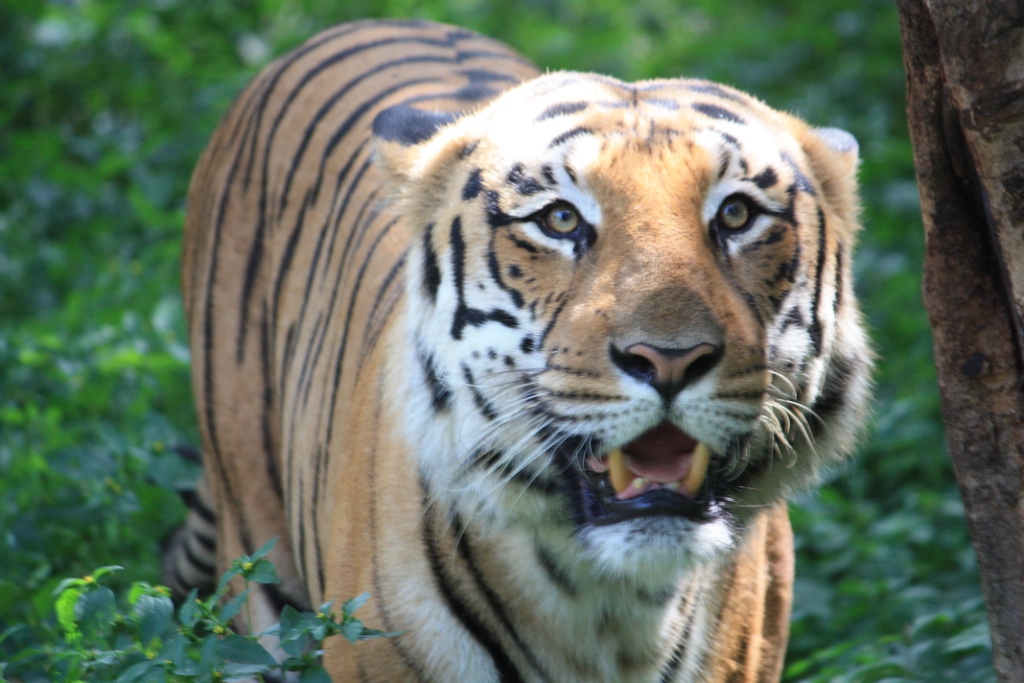
Perspective:  One must put life’s challenges in perspective. Each person’s problems are important to them, and I don’t want to diminish anyone’s problems, but—come on—you’re not going to be eaten by a freaking saber-tooth tiger.

Yoga for Martial Artists

Long before I ever took a yoga class, I was doing a kind of yoga. It may have even had its roots in India, but it also might have blossomed independently. In the Japanese martial art I study, we called it junan taiso, and many of the poses would be recognizable to a yogi. While it didn’t include the complex and balance-challenging poses seen in yoga, stretches like the butterfly (Poorna Titali Asana), straddle stretch (Upavistha Konasana), and the back stretch (Pashchimottanasana) were virtually identical. As with yoga, the manner of breathing was as important as the nature of the stretch.

Butterfly Stretch (Poorna Titali Asana)

Butterfly Stretch (Poorna Titali Asana)

Back Stretch (Paschimottanasana)

Back Stretch (Paschimottanasana)

Straddle Stretch (Upavisthakonasana)

Straddle Stretch (Upavisthakonasana)

Flexibility is key in the martial arts, and not just the ones with high-flying kicks. Even grapplers and practitioners of the less fancy striking systems gain from increased flexibility, but it isn’t only increases in range of motion that yoga offers.

Let’s consider a modest front kick to a target no higher than the solar plexus. One might be inclined to say, “I don’t need yoga to help with that, I do that kick all the time, and have no problem reaching my target.” Do an experiment. Take a full 30 seconds to do the kick, from the time the foot leaves the floor to the time it extends out, and then hold it for 15 seconds, or so. If you succeeded in this without any problem, you may be good to go.

Front kick, slow-motion style.

Front kick, slow-motion style.

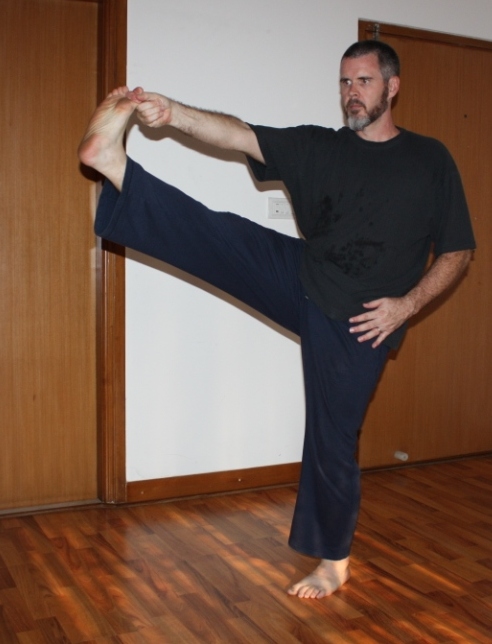
However, there are three problems that might plague one, and yoga is tailor-made to fix two of them. First, you may not have adequate range of motion. You may have thought you did because you can kick at speed and reach the target. But, you say, “Why would I need to kick in slow motion?” You wouldn’t, but this exercise shows you that you are having to use inertia to kick through the resistance of your own muscles. Unless you’re a hardcore bodybuilder that resistance might not seem too daunting, but you are essentially having the brakes applied–albeit softly–to your kick and that’s costing you speed and power.  Yoga can help you develop that range of motion. Consider the pose below, which requires the same type of flexibility.

Hand to Big Toe (Utthita Hasta Padangusthasana)

Hand to Big Toe (Utthita Hasta Padangusthasana)

Maybe you can raise your leg, but keeping it cantilevered in place is too much for you. This means you don’t have the strength to support your own leg. Either your leg is  heavy, your strength is lacking, or both. Building this kind of strength isn’t necessarily yoga’s forte. There are styles and approaches that may help you build that strength, but there are other things you can do that may be more efficient for that purpose–not the least of which is doing a whole bunch of kicks one after the other without a break until your leg is burning, and then doing some more.

You may have had the strength and flexibility, but found it hard to stay on balance. The naysayer says, “Yeah, but that imbalance would never be noticeable at speed. That is (as with the lack of flexibility) one can hide weaknesses with speed. While there maybe some truth in this, a lack of balance will cost you in subtle ways, and yoga can help. There are a number of postures that enhance one’s balance, balance on one’s foot, one’s head, or one’s hands (the latter could be useful for the ground grapplers.)

Warrior III (Virabhadrasana III)

Warrior III (Virabhadrasana III)

Headstand (Shirshasana)

Headstand (Shirshasana)

The Crane (Bakasana)

The Crane (Bakasana)

Tree (Vrksasana)

Tree (Vrksasana)

There are a couple of other areas in which yoga can help one’s performance as a martial artist. One is expansion of bodily awareness of issues of alignment and posture. These might not seem so crucial, but if you are in the martial arts for the long-haul, then having the awareness to make small adjustments can be the difference between chronic ailments or a lack thereof. It can be difficult to discover a misalignment in the quasi-combative environment of martial arts training. It’s easier to notice these issues in the slow and controlled practice of yoga.

Postures like Warrior II and the Side Angle Pose and show you where you are holding tension that you might not otherwise be aware of.

Warrior II (Virabhadrasana II)

Warrior II (Virabhadrasana II)

Side Angle Pose (Utthita Parsvakonasana)

Side Angle Pose (Utthita Parsvakonasana)

It must also be remembered that asana (postures) are only a part of yoga. Another aspect that can be extremely helpful for martial arts is pranayama, or the discipline of breathing.  There’s no substitute for cardio, but that doesn’t mean that one can’t benefit greatly from learning more about how to breath, and the science of breath. This is an area in which yoga excels. The great yogis made extensive study of breath and the effects that are achieved by various types of breathing, and these exercises can expand and strengthen the diaphragm and the muscles of the rib-cage. One tends to see the coup de grace strike and think, “There’s your problem.” However, often it’s fatigue that’s the underlying culprit. Better breathing can reduce fatigue.

Of course, meditation is another critical skill for calming the mind and learning to live in the present. Many martial artists already practice some form of meditation, but this is another option.

There is one more benefit and that is building greater confidence in your ability to exercise control over your body. There are many challenging postures in yoga. I don’t advocate all asana that have been taught historically because there can be such a thing as too much flexibility for a martial artist and some poses exercise joints in ways that were not meant to operate. There needs to be a proper balance of strength and flexibility, a proper tension within /between the skeletal and muscular systems. However, there are many poses that just take a bit of time and effort to develop the skill without putting too much wear on the body.

8-Twists Pose (Astavakrasana)

8-Twists Pose (Astavakrasana)

BOOK REVIEW: Pocket Guide to Hatha Yoga by Michele Picozzi

Pocket Guide to Hatha Yoga (The Crossing Press Pocket Series) (The Crossing Press Pocket Series)Pocket Guide to Hatha Yoga (The Crossing Press Pocket Series) by Michele Picozzi

My rating: 4 of 5 stars

Amazon page

Having moved to India, I’ve been wanting to take advantage of the wealth of expertise in yoga. However, part of the problem is that there is such a wealth of knowledge. There are many different schools, each with different approaches and focal points, and each of those with separate branches. So I began, as I often do, among the shelves of one of my local bookstores. (Yes, here in India, we still have local bookstores [plural emphasis intended.])

That is where I picked up Michele Picozzi’s Pocket Guide to Hatha Yoga. A slight book of only about 100 pages, this guide serves as a sort of “Yoga for Dummies.” (I’m aware that there is a book by that title, but it’s probably not as concise.) Despite a mild bias against learning about yoga from Westerners (what’s the point of being in India–yes, I realize it’s irrational), I picked up this thin guide because it was only 70 rupees (less than $1 US), and I like the way it was organized.

It begins with a quick overview of the many schools of yoga. Next, it does the same for the many branches of Hatha yoga–which by all accounts seems to be the most popular school. I found this very helpful. The book doesn’t get bogged down in the minutiae, but rather presents a short paragraph hitting the highlights that differentiate one sect from another.

Then the book gets to the meat of the subject (my apologies to vegetarians for that analogy.) It gives helpful tips for one who has never been in a yoga studio before. Then it has chapters on postures (asana), breathing exercises (pranayama), and meditation (dhyana.)We learn that these are but three of yoga’s 8-fold path (not to be confused with Buddhism’s 8-fold path.) For the neophyte, it may be news to learn that there is more to yoga than just bendy poses.

The last chapter deals with basics of a yogic/ayurvedic diet. Here I learned that the Dalai Lama isn’t a vegetarian, among many more important advice about how and what yogis and yoginis should eat.

There are appendices containing line drawings of about 45 of the most fundamental asanas (all of the graphics in the book are line drawings), a glossary, and a list of references.

If you are brand new to yoga, I would recommend this book. You can get it through Amazon for only a little more that 70 Rupees.

View all my reviews