Allons! the inducements shall be greater,
 We will sail pathless and wild seas,
 We will go where winds blow, waves dash,
   and the Yankee clipper speeds by under
   full sail.

Allons! with power, liberty, the earth, the
   elements,
 Health, defiance, gayety, self-esteem,
   curiosity;
 Allons! from all formules!
 From your formules, O bat-eyed and
   materialistic priests.

The stale cadaver blocks up the passage--
   the burial waits no longer.

Allons! yet take warning!
 He traveling with me needs the best blood,
   thews, endurance,
 None may come to the trial till he or she
   bring courage and health,
 Come not here if you have already spent the
   best of yourself,
 Only those may come who come in sweet
   and determin'd bodies,
 No diseas'd person, no rum-drinker or
   venereal taint is permitted here.

(I and mine do not convince by arguments,
    similes, rhymes,
 We convince by our presence.)
Allons! whoever you are come travel with
   me!
 Traveling with me you find what never tires.

The earth never tires,
 The earth is rude, silent, incomprehensible
    at first, Nature is rude and
    incomprehensible at first,
 Be not discouraged, keep on, there are
   divine things well envelop'd,
 I swear to you there are divine things more
   beautiful than words can tell.

Allons! we must not stop here,
 However sweet these laid-up stores, however
   convenient this dwelling we cannot
   remain here,
 However shelter'd this port and however
   calm these waters we must not anchor
   here,
 However welcome the hospitality that
   surrounds us we are permitted to receive
   it but a little while.
The efflux of the soul is happiness, here is
   happiness,
 I think it pervades the open air, waiting at
   all times,
 Now it flows unto us, we are rightly
   charged.

Here rises the fluid and attaching character,
 The fluid and attaching character is the
    freshness and sweetness of man and
    woman,
 (The herbs of the morning sprout no fresher
   and sweeter every day out of the roots of
   themselves, than it sprouts fresh and
   sweet continually out of itself.)

Toward the fluid and attaching character
   exudes the sweat of the love of young and
   old,
 From it falls distill'd the charm that mocks
   beauty and attainments,
 Toward it heaves the shuddering longing
   ache of contact.
Here is the efflux of the soul,
 The efflux of the soul comes from within
   through embower'd gates, ever provoking
   questions,
 These yearnings why are they? these
   thoughts in the darkness why are they?
 Why are there men and women that while
   they are nigh me the sunlight expands my
   blood?
 Why when they leave me do my pennants
   of joy sink flat and lank?
 Why are there trees I never walk under but
   large and melodious thoughts descend
   upon me?
 (I think they hang there winter and summer
   on those trees and always drop fruit as I
   pass;)
 What is it I interchange so suddenly with
   strangers?
 What with some driver as I ride on the seat
   by his side?
 What with some fisherman drawing his
   seine by the shore as I walk by and pause?
 What gives me to be free to a woman's and
   man's good-will? what gives them to be
   free to mine?
Now if a thousand perfect men were to
   appear it would not amaze me,
 Now if a thousand beautiful forms of
   women appear'd it would not astonish
   me.

Now I see the secret of the making of the
   best persons,
 It is to grow in the open air and to eat and
   sleep with the earth.

Here a great personal deed has room,
 (Such a deed seizes upon the hearts of the
   whole race of men,
 Its effusion of strength and will overwhelms
   law and mocks all authority and all
   argument against it.)

Here is the test of wisdom,
 Wisdom is not finally tested in schools,
 Wisdom cannot be pass'd from one having
   it to another not having it,
 Wisdom is of the soul, is not susceptible of
   proof, is its own proof,
 Applies to all stages and objects and
   qualities and is content,
 Is the certainty of the reality and
   immortality of things, and the excellence
   of things;
 Something there is in the float of the sight
   of things that provokes it out of the soul.

Now I re-examine philosophies and
   religions,
 They may prove well in lecture-rooms, yet
   not prove at all under the spacious clouds
   and along the landscape and flowing
   currents.

Here is realization,
 Here is a man tallied -- he realizes here what
   he has in him,
 The past, the future, majesty, love -- if they
   are vacant of you, you are vacant of them.

Only the kernel of every object nourishes;
 Where is he who tears off the husks for you
   and me?
 Where is he that undoes stratagems and
   envelopes for you and me?

Here is adhesiveness, it is not previously
   fashion'd, it is apropos;
 Do you know what it is as you pass to be
   loved by strangers?
 Do you know the talk of those turning eye-
   balls?
From this hour I ordain myself loos'd of
   limits and imaginary lines,
 Going where I list, my own master total and
   absolute,
 Listening to others, considering well what
   they say,
 Pausing, searching, receiving,
   contemplating,
 Gently, but with undeniable will, divesting
    myself of the holds that would hold me.
 I inhale great draughts of space,
 The east and the west are mine, and the
   north and the south are mine.

I am larger, better than I thought,
 I did not know I held so much goodness.

All seems beautiful to me,
 I can repeat over to men and women You
   have done such good to me I would do
   the same to you.
 I will recruit for myself and you as I go,
 I will scatter myself among men and women
   as I go,
 I will toss a new gladness and roughness
   among them,
 Whoever denies me it shall not trouble me,
 Whoever accepts me he or she shall be
    blessed and shall bless me.
The earth expanding right hand and left
   hand,
 The picture alive, every part in its best light,
 The music falling in where it is wanted, and
   stopping where it is not wanted,
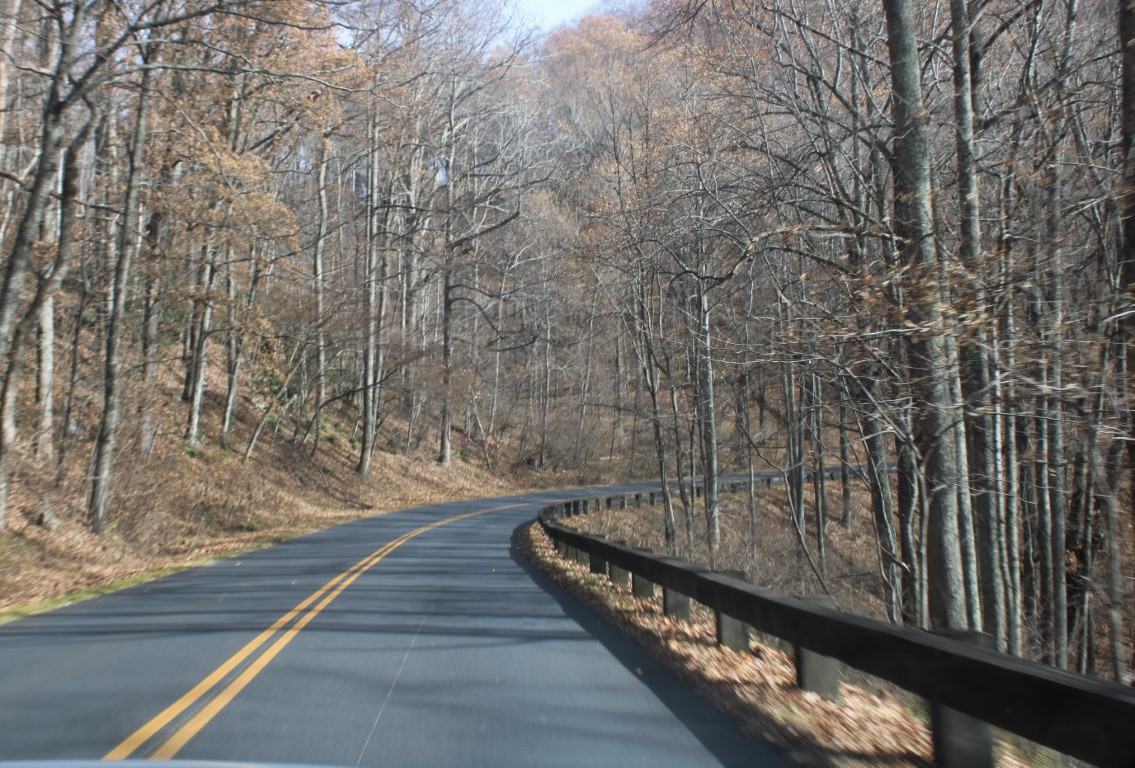
 The cheerful voice of the public road, the
   gay fresh sentiment of the road.

O highway I travel, do you say to me Do
   not leave me?
 Do you say Venture not--if you leave me
   you are lost?
 Do you say I am already prepared, I am
   well-beaten and undenied, adhere to me?

O public road, I say back I am not afraid to
   leave you, yet I love you,
 You express me better than I can express
   myself,
 You shall be more to me than my poem.

I think heroic deeds were all conceiv'd in the
   open air, and all free poems also,
 I think I could stop here myself and do
   miracles,
 I think whatever I shall meet on the road I
   shall like, and whoever beholds me shall
   like me,
 I think whoever I see must be happy.
You air that serves me with breath to speak!
 You objects that call from diffusion my
   meanings and give them shape!
 You light that wraps me and all things in
   delicate equable showers!
 You paths worn in the irregular hollows by
   the roadsides!
 I believe you are latent with unseen
   existences, you are so dear to me.

You flagg'd walks of the cities! you strong
   curbs at the edges!
 You ferries! you planks and posts of wharves!
   you timber-lined sides! you distant ships!

You rows of houses! you window-pierc'd
   façades! you roofs!
 You porches and entrances! you copings and
   iron guards!
 You windows whose transparent shells
   might expose so much!
 You doors and ascending steps! you arches!
 You gray stones of interminable pavements!
   you trodden crossings!
 From all that has touch'd you I believe you
   have imparted to yourselves, and now
   would impart the same secretly to me,
 From the living and the dead you have
   peopled your impassive surfaces, and the
   spirits thereof would be evident and
   amicable with me.
Publisher Site
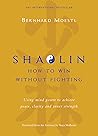
This is a self-help book that nominally draws on the philosophy of Shaolin Kung fu and its Chan Buddhist underpinnings, but – more broadly – employs quotes and examples from many, mostly Eastern, sources. For example, the ideas and stories of Miyamoto Musashi are perhaps as common as any source (Musashi was Japanese, not Chinese, and was not noted for being Buddhist. In his own words, he respected the gods and buddhas, but didn’t expect their help.)
The book offers a fine discussion of Eastern philosophic thought in action, particularly that which arose from warrior sources, but it isn’t particularly ground-breaking in any way. For those who like homework, the book does include many exercises to make the reading a more interactive experience.
I enjoyed reading this book well enough, but it didn’t distinguish itself and will soon fall into the mind-space of a fuzzy amalgamation of similar books I’ve read over the years.
You road I enter upon and look around, I
   believe you are not all that is here,
 I believe that much unseen is also here.

Here the profound lesson of reception, nor
   preference nor denial,
 The black with his wooly head, the felon,
   the diseas'd, the illiterate person, are not
   denied;
 The birth, the hasting after the physician,
   the beggar's tramp, the drunkard's stagger,
   the laughing party of mechanics,
 The escaped youth, the rich person's
   carriage, the fop, the eloping couple,

The early market-man, the hearse, the
   moving of furniture into the town, the
   return back from the town,
 They pass, I also pass, any thing passes,
   none can be interdicted,
 None but are accepted, none but shall be
   dear to me.





 Tiger Riding for Beginners