BOOKS: “A Short Stay in Hell” by Steven L. Peck

A Short Stay in HellA Short Stay in Hell by Steven L. Peck
My rating: 5 of 5 stars

Publisher Site: Strange Violin Editions

If you enjoy books like Joseph Heller’s Catch-22 or Douglas Adams’ The Hitchhiker’s Guide to the Galaxy this book will probably be right up your alley. It may not be as unrelentingly (and hilariously) absurd as H2G2, but it’s clever, amusing, and thought-provoking.

The premise is that a devout Christian finds himself in hell because it turns out that Zoroastrianism was actually the one true religion. Fortunately, Zoroastrian hell is neither as grim nor (perhaps, ironically) as fire & brimstone-oriented as the Biblical version, but it is tedious, demoralizing, and — while it might not last forever –it lasts long enough to seem like forever.

Jorge Luis Borges fans (such as myself) will find a nod to his work in the shape of said hell.

I’d highly recommend this book for readers of irreverent and humorous literary fiction. It’s funny. It’s clever. And it’s a quick read.

View all my reviews

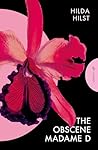
BOOKS: “The Obscene Madame D” by Hilda Hilst

The Obscene Madame DThe Obscene Madame D by Hilda Hilst
My rating: 4 of 5 stars

Publisher Site – Pushkin Classics

Release Date: May 27, 2025

This strange novella features a lot of stream-of-consciousness exchanges between the lead and her common-law spouse / lover. Hille, the protagonist, is a woman who’s decided to withdraw from her normal life and live a celibate, hermetic existence in a recess under the stairs of the home she shares with Ehud (her lover / long-time partner.)

It is a thought-provoking and philosophical work and will be most of interest to readers who like such books. On the other hand, it isn’t likely to have much appeal for readers of commercial fiction. It’s not story-driven and isn’t even deeply character-driven. [Except in the sense of showing thought processes that encourage the reader to drill down into the character’s psyche.] This book has been placed in the genre of (and titled as) erotica (or even pornography,) but I would say that it is much less accurately defined as such than other works of that category, including Hilst’s “Letters from a Seducer.” This isn’t to say the book doesn’t use graphic language or mention past sexual activity, but it’s not erotic at the core. It’s not shy about sex or “vulgar language” by any means, but it is a book about a woman who has given up sex along with other activities of ordinary life.

Ultimately, I’d recommend this book for readers of psychological and philosophical literary fiction. It is not intensely readable as a story and is not intensely erotic as erotica, but it does keep a curious person wondering about the motives and future of Hille.

View all my reviews

BOOKS: “Gothic Tales” by Marquis de Sade [Trans. by Margaret Crossland]

Gothic TalesGothic Tales by Marquis de Sade
My rating: 5 of 5 stars

Amazon.in Page

Release Date: September 3, 2024

This collection of short fiction is an excellent entry point for the reader wishing to be introduced to the philosophy and literary stylings of the Marquis de Sade. It is less visceral and explicitly violent than the works for which Sade is most famous (i.e. Justine, 120 Days of Sodom, and Philosophy in the Boudoir.) While it does deal in libidinal issues throughout and has a few stories that are explicitly erotica (notably the last couple pieces,) it never ventures up to or over whatever thin line separates erotica from pornography.

While all the pieces share Sade’s signature philosophy and interests, it is in other ways a quite diverse collection of writings. The first piece, “Eugenie De Franval,” is a novella that takes up about half the book, and it is followed by a piece that, in today’s parlance, might be called flash fiction, “The Horse-Chestnut Flower.” Pieces such as “Eugenie De Franval” and “Florville and Courval” are tragedies while the comedies include: “Emilie De Tourville,”[granted with grim elements] “The Husband Who Played Priest,” “Room for Two,” and “The Self-Made Cuckold.” Those last three – as well as “The Horse-Chestnut Flower”– are comedic in a modern sense, not just the literary sense.

I can’t say how much of the difference in tone and intensity of these pieces from Sade’s other stories is owed to the selected source material and how much is owed to translation and editorial decisions, but it makes for a read that is more intriguing in story and less shocking and disturbing than many other translations of Sade’s work.

I enjoyed these stories. They had many clever twists and turns that I don’t recall experiencing in Sade’s novels. Several stories rely on a great deal of deus ex machina coincidences, but I think that works just fine — particularly in the more humorous stories. I’d highly recommend this for readers looking to ease into the work of the Marquis de Sade.

View all my reviews

Five Great Yarns from Kahlil Gibran’s The Madman

The MadmanThe Madman by Kahlil Gibran
My rating: 5 of 5 stars

Project Gutenberg Page

The Madman is a collection of poems and short fiction (often micro-fiction) of a philosophical nature. The protagonist claims he became a madman when a thief broke into his house and stole his masks, the masks that people wear to fit into society and appear “normal.” Beyond the thread created by this mad character, the entries meander along, each with its own moral and with little discernible overarching plot.

There are many clever stories in this collection, offering food-for-thought on religion, philosophy, and psychology. I’ll discuss five of my favorites:

“The Sleepwalkers” A mother and daughter are both sleepwalkers. When they are somnambulating, they speak to each other in horribly cruel terms, but when they wake up, they display (at least a veneer of) love and affection. Besides demonstrating the nature of the aforementioned masks, the loss of which gets one designated “crazy,” this story encourages the reader to discern the differences between conscious and subconscious mental activity.

“War” This one presents an analogy for war in which a thief breaks into the wrong building, walks into a machine, pokes his own eye out, and then takes the building owner to court seeking “justice” for his lost eye. The craftsman / shop-owner says he can’t lose an eye because he won’t be able to do his work, but he knows a neighboring craftsman who could have his eye removed without great loss of productivity. This story builds upon the well-known “An eye for an eye…” Bible verse with the added absurdity of violence being doled out randomly and without concern for whether the victim had anything to do with the events in question.

“The Wise King” A disgruntled witch poisons a city well with a substance that makes drinkers insane. The King avoids the well water and is spared insanity. However, the townspeople begin to plot against the king because, in their insanity, they believe him (as one who acts differently) to be insane. The king eventually drinks the well water in order to come back into synch with his subjects. This entry speaks to the arbitrary nature of classification of sane and insane, an idea that has been discussed in modern times by mental health experts such as R.D. Laing.

“The Two Cages” A bird is caged next to a lion. The bird’s confidence provides the central lesson, knowing they’re both imprisoned separately, the bird refers to the lion as “fellow prisoner.” The power dynamic has changed from that of the jungle. Perhaps, the bird has even happily exchanged its freedom — either for safety or to tear the lion down a little.

“The Eye” In this story, the other sense organs mock the eye after it comments upon how grand a mountain is. The ear can’t hear the mountain and the skin can’t feel the mountain. Therefore, the other senses assume that the eye is either lying or is delusional. This tale speaks to the risk of denying something based on one’s own limited perception.

This book was originally published in 1918 and is in the public domain (most places.) It’s definitely worth the short time investment required to read it.

View all my reviews

BOOK REVIEW: The Fall by Albert Camus

The FallThe Fall by Albert Camus
My rating: 5 of 5 stars

Amazon.in Page

This is a novel for someone who revels in philosophizing. It’s not a book for those who like to get lost in a story. It reads as if one sat down at a bar next to an obviously intelligent, but also obviously tipsy individual, who proceeded to tell his life story reflectively and analytically – without emphasis on thrilling exploits.

It falls among books that deal in the crisis of modernity – by which I mean, the challenges that arise from being evolutionary optimized to live a certain kind of life, while living one that is completely different. (i.e. It’s like “Fight Club,” but both far more boring and less broadly introspective.) The protagonist, Clamence, tells us about how he once got hit in public and how angry he was with himself for not getting in a lick of his own. He also describes hearing a woman jump / fall into the Seine, and not lifting a finger to help – despite hearing the woman’s screams. Adherence to laws and norms (in conflict with animal impulse,) disconnection from community, and ethical ambiguity are recurring themes in such books. What one does in a post-god world is also reflected upon. Religion and belief, like it or loathe it, fulfilled a function for humanity, and a vacuum was created for people for whom the cons of belief came to outweigh the pros.

Personally, I’m prone to philosophizing, and so I did get into this book – despite not finding it engaging as a story. When I read one particular line, I learned I was a suitable drinking companion for Clamence: “I have never been able to believe, deep inside, that human affairs are serious matters.” [Virtue or vice, I can relate.]

If you’re prone to philosophize, check out this book.

View all my reviews

BOOK REVIEW: Trafik by Rikki Ducornet

TrafikTrafik by Rikki Ducornet
My rating: 5 of 5 stars

Amazon.in Page

Out: April 13, 2021

A robot (Mic) and a cyborg (Quiver) live and work together in close quarters, doing blue-collar work until the going gets tough and they charge off for a utopia called Trafik. I enjoyed reading this for its rich approach to language, its compelling reflection upon humanity [and isolation therefrom] and its thought-provoking imagining of the unfolding of the future. That said, I don’t think it will be everyone’s cup of tea. I’ll try to paint a picture that will help the reader to determine where they would be likely to come down on this book.

First things first, if you are expecting the usual high-adventure, plot-driven science fiction novel, that’s not where this work shines. There are a few contributing factors. First, the high density of creative language is not conducive to fast-paced consumption in which visuals form effortlessly in the mind’s eye. Second, a central question is what being human means, and what happens when one isn’t amongst others. One has Mic, a robot, who is intelligent but not inherently emotional. And, so, the aforementioned question largely pertains to Quiver, who is a cybernetically-enhanced human being. I have no idea when this was written, but it wouldn’t surprise me to learn that the pandemic lock-down / quarantining influenced the work that it turned out to be. Because a lot of the story is spent with these two different entities being plugged into the virtual world, getting a vicarious experience of being in the world. [Also, the book is only about 100 pages, and so the idea that it could have been produced in that timeline is not as unbelievable as if it were, say, five times as long.] At any rate, while this isolation and questioning of one’s humanity makes for a philosophically fascinating inquiry, it’s not really amenable to the adventure and interpersonal tension usually depicted in genre fiction, characteristics which inherently require a great deal of emotional experience and interaction.)

I’m kind of uncomfortable saying this because it’s likely to be misunderstood, but I read this more like I would read Joyce’s “Ulysses” than like I would read, say, “Ender’s Game.” That is to say, I read it more as a prose poem — immersing myself in the language and the momentary experience of the characters — rather than following the thread of events and looking out front as a rider on a rollercoaster might. I’m not comparing any works here, just my approach to reading them.

There’s a fundamental question when producing art of any kind, and that is how much one roots in the past (in established human experience) and how much one can venture into the unknown. Stick too much in past experience and your work is uninteresting. Launch yourself too much beyond the familiar, and people can’t recognize what one is trying to do – let alone enjoy it. Ducornet is clearly experimenting with how much she can charge forward. At points, I’m thinking of the arrival at Trafik, the story even reads a bit like stream of consciousness psychedelic tripping.

If you’re looking for a work that requires soaking in and reflecting upon words and futures, then you’d probably find this to be an enjoyable read, a work that verges on prose poetry. However, if you are looking for plot-driven sci-fi, you might find it ponderous. [Also, if you’re the kind of sci-fi reader who finds violations of fundamental physics unpardonable, this book might not be for you. (That said, there is some shifting between real and virtual worlds for which I might have missed cues.)]


View all my reviews