BOOKS: “Sweet Tooth, Vol. 4: Endangered Species” by Jeff Lemire

Sweet Tooth, Vol. 4: Endangered SpeciesSweet Tooth, Vol. 4: Endangered Species by Jeff Lemire
My rating: 4 of 5 stars

Publisher Site: DC Vertigo

Heading north to solve the mystery of Gus (the titular deer-boy “hybrid” that some call Sweet Tooth, the first-known hybrid child and one who Dr. Singh believes may be integral to understanding the disease that swept through humanity at the same time hybrids started being born,) the ragtag group of hybrid kids and human chaperones runs into its first snag. The group stumbles upon a place that may offer the security and resources needed to live comfortably (i.e. for a post mega-pandemic wasteland.) This threatens to split up the group, most of which longs for the safety and sustainability that this place appears to provide. But the reader is presented crumbs of unease about this place. It feels like this sanctuary might harbor a dirty secret.

I continue to enjoy this series. I didn’t find the arc as satisfying as some of the volumes. It is a thriller, and we are given crucial new information by the book’s end, but the central question of the story arc remains unanswered. That said, the story does a fantastic job of building up internal tension as well as creating unease in the reader. If you’ve enjoyed the story so far, you will want to continue onward.

View all my reviews

The Cough [Free Verse]

Remember the days
     when you dreaded
     a scratch at the back
     of your throat --

harbinger of a cough
     that you thought
     would get you rushed off
     to quarantine.

Or, at least, get a footlong swab
    shoved through your nasal cavity.

Best case, it would put all eyes upon you, 
     as the public wondered whether 
     you were their Typhoid Mary --
     (Except Mary was asymptomatic,
       and - clearly - you were not.)

We all learned that the one cough
      that one can never suppress
      is the one that you desperately
      wish to. 

That cough won't be silenced. 

The Yetis’ Reply [Limerick]

A grouchy nitwit wrote a polemic
about how Yetis had caused the Pandemic.
The Yetis protested,
and kindly requested
the man ponder head-in-ass hygienics.

End of an Era? [Haiku]

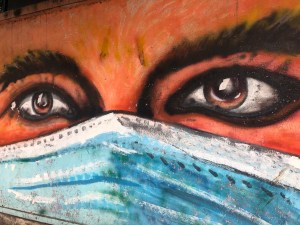
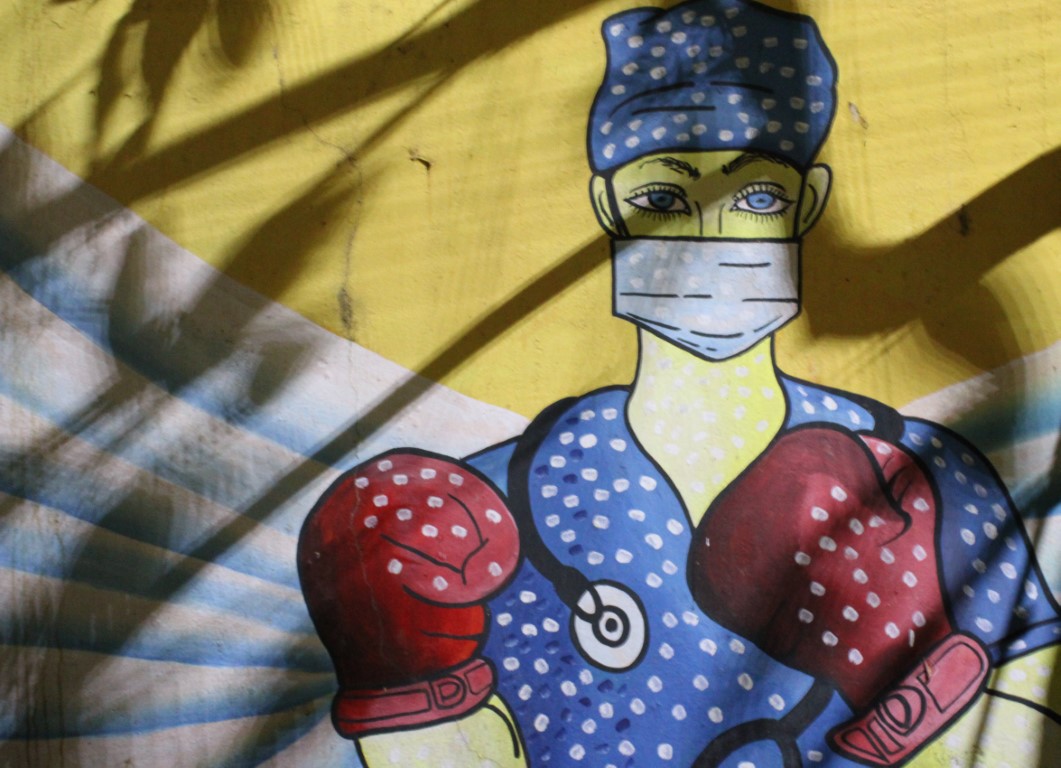
Pandemic street art
lingers on the walls —
just like its grounds

I Read the News Today, Oh Boy! [Free Verse]

I
A young man set his ex-fiancé on fire.
(Or, so the story goes.
[He claims she self-immolated.])

She succumbed to third-degree burns...
but not right away.
She lived long enough to know
the agony of third-degree burns. 

They'd met in college,
both studying to be engineers --
I mention that because
at the heart of the issue was caste.
It seems absurd enough
to murder a fiancé over
some imaginary mark of superiority,
but even more so when one considers
that they would have had the same qualification --
possibly similar jobs --
but for the boy's bigoted parents,
who insisted he call off the engagement,
and the boy, himself, 
who took things that extra murderous mile.

So, it wasn't even about who the couple were,
it was about what their grandfathers 
did for a living.

What a world.
 

II
The war is still burning. 
Among the latest questions are:

 Will Belarus be forced to join in the fighting?
&
If so, will having another set
of soldiers who are completely uninterested in the war -- 
other than as a trial to be survived, that is --
help or hurt Putin's position?

A related question is whether Putin
would rather watch the world burn 
than to lose face?

What a world.


III
The Pandemic said, "Psyche!"

This means America will roll the odometer
on COVID deaths.

We had things almost back to normal,
and then the virus caught its breath,
got it's footing,...
whatever viruses do.

What a world.

***

I think I'll check the news, again,
maybe sometime next year.

POEM: Calamity Came

We heard the sound, distant rumbling.
We watched the castles fall, crumbling.

The choice of running to the rubble,
or staying safe in our bubble.

But either way, someway it'd hurt
with either hands or head in dirt.

Some tragedies are too galactic,
and words just sing anticlimactic.

POEM: The Mazy Days of Plague-time [PoMo Day 27 – Rondeau Quatrain]

With mazy movement, I stagger through my days,
my stops and starts are dull and purposeless.
My stops and starts are glum and purposeless.
With mazy motion, I stagger through my days.

Earth 's circled sun since last I was unfazed,
but I can't say what has encircled us.
With mazy movement, I stagger through my days,
my stops and starts are sour and purposeless.

My life before seems like a febrile craze.
How goes the flow of time? It's merciless,
but leaves slim chunks of time for nervousness -- 
too staccato a rhythm for a true malaise. 

With mazy movement, I stagger through my days,
my stops and starts are grim and purposeless.
My stops and starts are dim and purposeless.
With mazy motion, I stagger through my days.

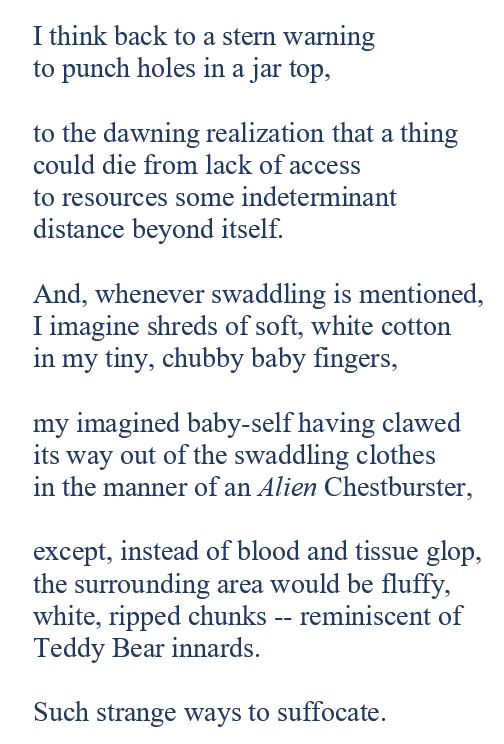
POEM: Pandemic Claustrophobia, or: Strange Ways to Suffocate

BOOK REVIEW: The Fall, Vol. 1 by Jared Muralt

The Fall, Volume 1The Fall, Volume 1 by Jared Muralt
My rating: 5 of 5 stars

Amazon.in page

Out: March 17, 2021


I’m really curious about how this book will do. On the one hand, the writer / artist does an incredible job of creating a visceral and gripping reading experience. On the other hand, I suspect the reaction will be a resounding: “too soon.” The story is essentially the worst-case scenario of our current, pandemic-dominated, world. What would happen if the fatalities became so disruptive that governance and economic production faltered and then collapsed? In the marketing materials, the publisher makes a comparison to Cormac McCarthy’s “The Road” and “The Fall” does share with that literary masterpiece the idea that there’s virtually nobody left that one wants to run into – i.e. everybody left is looking out for number one, and is, thus, untrustworthy. While that’s not strictly true, it’s true enough that one has to treat everyone with suspicion and with a finger on the trigger (literally or figuratively, as one’s state of armament allows.) Looking at the matter from the other direction, everyone left has done (or will end up doing) something of which they aren’t proud.

The story is built around a blue-collar family. The father and two children (a teenaged daughter and pre-teen boy) had one of the early variants of the flu, giving them adaptive immunity with a less lethal strain. The mother, a health-care worker, succumbs to the highly lethal evolved variant, leaving the three to survive in a rapidly escalating apocalyptic scenario.

At first, the family tries to survive in the city, but the father discovers that there is no food left and there are dangerous elements about. The trio then heads to stay with relatives in the countryside, not without running into challenges. They end up in a town that is allowing “tourists” to stay (with all the fatalities, housing is the only necessity that’s not lacking,) but there is not enough food or medicine for everyone. The characters are repeatedly pressed up against the kinds of challenging scenarios one might expect in a post-apocalyptic winter wonderland. Most pressingly, the father suffers an infection that seems like it may have him on his deathbed.

This is an intense read. As I say, I’m not sure everybody’s ready for it. If you have anxiety about where we are presently, I wouldn’t recommend it as it might take you to dire places that you wouldn’t have imagined yourself. That said, for readers of horror, dark stories, dystopian and post-apocalyptic wasteland stories, it’s a strong entry.

View all my reviews

BOOK REVIEW: Spillover by David Quammen

Spillover: Animal Infections and the Next Human PandemicSpillover: Animal Infections and the Next Human Pandemic by David Quammen
My rating: 5 of 5 stars

Amazon.in page


SPILLOVER is a fascinating and in-depth exploration of zoonoses – i.e. diseases that can jump from various animal species into humans. This continues to be a germane topic in the face of our current zoonotic pandemic – COVID-19. The book came out in 2012 / 2013, but has seen a groundswell of interest because it’s the most well-known popular work on this subject. One will read a few sentences in the book that seem prescient, but the author and the many experts he consults would be the first to state that this is no act of mystical precognition. Rather, a zoonotic pandemic seems to be an inevitability given humanity’s huge and growing population and the nature of our interactions with the rest of the animal kingdom. Of course, no one could say precisely when or what pathogen would lead to “the next big one,” of which – it so happens – we are currently amid. Though coronaviruses do come up as potential candidates, but so do others (e.g. certain strains of influenza.)

The book is organized differently than most. It’s cut up into bite sized chunks, with 115 chapters that are usually not more than a few pages each. However, chapters aren’t the relevant unit of interest so much as the book’s nine parts, each of which takes on a particular zoonosis, or class thereof. Because zoonoses are such a huge topic, the author focuses on a few that are of particular interest for varied reasons, including: the challenge of tracking the disease’s origins, the potential to be the next big one, the global influence of some diseases, as well as other reasons a particular zoonosis generates an interesting story.

The first part explores one of the lesser known zoonoses (except for in locales where outbreaks have occurred, e.g. Australia,) Hendra virus. While a common species of bat (the flying fox) is the reservoir for Hendra, what makes the story gripping for humans is that humans contract the disease through the intermediary of horses. While interaction with exotic wildlife is the the mode throughout the book, the fact that, here, transmission occurs from one of humanity’s closest animal friends increases the closeness-to-home effect.

Part two shifts into one of the most dramatic and well-known of the zoonoses, Ebola virus. Ebola is familiar from Richard Preston’s book “Hot Zone,” though Quammen does explain how Preston sensationalized and overstated the physical effects of the disease. [Presumably what Preston did was take the most vicious looking case and describe it through as dramatic of analogies as possible, such that it became unrecognizable from the typical case.] At any rate, it’s a disease that grabs one by the fear center because – while it doesn’t spread readily – it’s highly lethal and is unarguably an unpleasant way to go.

Part three delves into malaria and P. falciparum, the bug that causes it. Malaria has profoundly shaped human existence in the tropics. A vector-borne disease carried and passed by mosquitos, Malaria is widespread throughout much of the world and continues to generate debilitating effects. Many concepts are drilled into one while reading this book, and one worth mentioning here is the differentiation of reservoirs and vectors. A lot of the stories in this book revolve around scientists’ searches for reservoirs – the species where the pathogen resides in waiting. It’s often much more difficult to uncover a reservoir species than it is a vector (vectors invariably coming into direct contact with humans, whereas reservoirs can be far removed from humans.)

Part four investigates Severe Acute Respiratory Syndrome (SARS.) This is one of the most relevant sections because SARS is a corona virus — like COVID-19 — and it served as a harbinger of a corona virus pandemic. SARS is also at least vaguely familiar to most people as it was a relatively recent epidemic.

The next two sections zoom out a bit and, instead of diving down into one zoonosis, they each consider a range of bacterial and viral zoonoses, respectively. Part five discusses Q fever, Lyme disease, Psittacosis, and other bacterial diseases that enter humans by way of other animals. Part six explores a range of viral diseases and – in the process – gives a bit of a lesson as to why viruses present such a risk as well as how different viruses work. This section covers rabies and Nipah virus.

Part seven tells the story of the search for the Marburg virus origin and reservoir. Marburg is similar to Ebola, but the story of the epidemiological search for it makes for intriguing reading. Part eight discusses HIV-AIDS and its simian predecessor, SIDS. What made this fascinating to me was that I learned that HIV has been around (at least) since the first decade of the twentieth century. If you’re like me, you associate the origin of AIDS with the 1980’s. However, with so many people regularly dying from so many different conditions in central Africa, it wasn’t obvious that those killers were getting an added help from a virus that crippled immune systems. It also took scientist a while to realize that SIDS was resulting in the death of chimpanzees. (It’s possible for a reservoir to be unaffected by a disease, and this is what they first thought to be the case.)

The final part is a wrap up that zooms out to look at the nature of episodes of ecological imbalance and “outbreaks” of species. In this case, “outbreak” is used to describe any explosion of population growth of a species. While the section opens with a species of caterpillars [forest tent caterpillars] that would occasionally flare up, killing off trees on a large scale, it discusses human population growth as an outbreak that – like all others – will inevitably end one way or another. This section also discusses influenza (which isn’t a major topic earlier in the book,) presumably because it had been the lead candidate at the time for the “next big one.” And “the next big one” is a related overarching theme in this section.

The book is annotated and has an extensive bibliography. There are few graphics, but there are maps that are helpful for those who aren’t familiar with the areas where many of these disease outbreaks originated (e.g. central Africa.)

I found this book to be intriguing. It teaches the reader some basics of epidemiology as it goes about telling the story of the spread of these diseases. [e.g. It will help one distinguish virulence and transmissibility – terms that are often used by neophytes interchangeably, but which are distinct in important ways.] However, the focus is always on the story and, therefore, it keeps these lessons interesting throughout. I’d highly recommend this book for those who are interested in the pandemic, zoonoses, or the challenges of combating disease.

View all my reviews