2014 Reads: The Most Captivating and Profound Books I Read in the Past Year

Zen in Motion: Lessons from a Master Archer on Breath, Posture, and the Path of IntuitionShantaramYogic Management Of Common DiseasesThe Strain Volume 1The Elephant Whisperer

Your Brain on YogaKalari MargamThe Heart of Yoga: Developing a Personal PracticeThe Hindu-Yogi Science Of Breath

VALISThe Essential Guide to Being Hungarian: 50 Facts and Facets of NationhoodThe AlchemistThe Golden Sayings of EpictetusMake Room! Make Room!
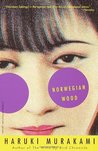
Sorry I Ruined Your OrgyThe Coroner's LunchNorwegian WoodThe Bhagavad Gita

I read 80-some books in 2014. A few stood out above the rest. I’d put the best of the litter in two categories: the captivating and the profound. This is a more appropriate division than fiction and nonfiction. The captivating books were the ones that I couldn’t put down because they were intriguing and intense. The profound books were the ones containing ideas that changed my approach to life. Very few–if any–of these books came out in 2014, so if you’re looking for the best books of the year you might want to look here or here.

The Captivating

1.) The Elephant Whisperer   [A wildlife preserve owner takes in an elephant herd, and learns about how the mighty animals think, feel, and communicate.]

2.) The Beach  [A traveler in search of a fabled perfect beach finds it, and ultimately wishes he hadn’t.]

3.) Shantaram [An ex-con on the lam hides in Bombay and experiences life as an ex-pat, a slumdog, a prisoner, a medic to Mujaheddin, and a gangster.]

4.) Gone Girl  [A wife goes missing, and the husband becomes the prime suspect–but nothing is as it first appears.]

5.) The Fault in Our Stars  [An ill-fated romance blossoms between two teenage cancer patients.]

6.) Norwegian Wood  [A young man’s life is shaped by his love for the girlfriend of a suicidal former best friend, and other relationships with unusual women.]

7.) History of the World in 6 Glasses  [The title says it all. How beer, wine, spirits, coffee, tea, and coca-cola shaped the world.]

8.) Dawn [A woman awakes in the custody of aliens to find that an unwanted leadership role is being thrust upon her as the Earth is to be repopulated.]

9.) Veronika Decides to Die  [A suicidal young woman is told that she has only days to live, and finds a new lease on life.]

10.) The Novice  [An old story about a young monk who stays virtuous in the face of multiple betrayals, as told by the famous Vietnamese Zen Buddhist monk, Thich Nhat Hanh.]


The Profound

1.) The Rise of Superman   [How extreme athletes are using a mental state called the Flow to achieve phenomenal feats.]

2.) Warrior Pose  [How yoga saved the life of a cancer-riddled war correspondent with a broken spine and an addiction to painkillers.]

3.) The Way of Chuang Tzu [Thomas Merton Edition- A series of Taoist stories as told by the prolific Trappist monk.]

4.) The Tao of Jeet Kune Do  [Bruce Lee’s guide to the tactics and techniques of his martial art, Jeet Kune Do.]

5.) The Introvert Advantage  [An explanation of the widely misunderstood state of introversion, and how introverts can optimize their lives in the face of their introverted nature.]

6.) The Art of Peace  [The philosophy of Morihei Ueshiba, the founder of the martial art of Aikido.]

7.) The Wild Life of Our Bodies   [We our not alone. The human body is an ecosystem, and killing off the other species that reside within us can have dire results. And a dire warning to clean freaks.]

8.) Mind Over Medicine  [A medical doctor reviews the literature 0n the body’s tremendous capacity to heal itself under the right conditions, and a discussion of how those conditions might be achieved.]

9.) The Heart of Yoga  [A guide to building a personal yoga practice by T.K.V. Desikachar, son and student of the legendary guru T. Krishnamacharya.]

10.) The Science of Yoga  [What modern science has to say about the benefits and risks of yoga.]


Bernie Gourley’s favorite books »


Share book reviews and ratings with Bernie, and even join a book club on Goodreads.

BOOK REVIEW: Shantaram by Gregory David Roberts

ShantaramShantaram by Gregory David Roberts

My rating: 5 of 5 stars

Amazon page

Shantaram is a journey through the life of a convict on the lam, a slum dweller, a prisoner in a crowded Indian jail, a de facto combat medic in the Soviet-Afghan War, and a Bombay gangster. The book is a novel, but mixes in autobiographical elements—at least in broad brush strokes. The author, Gregory David Roberts, was—as with his lead character–an escaped convict who fled his homeland of Australia to find anonymity among the Bombay (now Mumbai) masses. Roberts had taken up armed robbery of banks and institutions to support a heroine habit. However, it’s not clear to what degree the details described in the book echo reality. Roberts is adamant that the other characters in the book are completely fictional, but at least some members of this cast were recognizable as real people—some of whom disagree with the accounting of events in the book.

Most of the book is set in Bombay in the 1980s, and for many the book serves as portrait of the good, the bad, and the ugly of that city. The book picks up with the lead character’s arrival in Bombay, where the gregarious convict soon makes equally vibrant friends. There’s very little backstory, except for one chapter that details the protagonist’s escape from prison. There are occasional mentions of his heroin addiction and crimes peppered throughout the book—often delivered in doleful or apologetic moments. Also, he occasionally mentions the family that is missing in Australia—particularly a daughter—usually when the close nature of Indian familial relationships remind him of what he’s missing. This vague background makes sense as this was supposed to be book two in a quartet. Another book is supposed to be coming out called The Mountain Shadow, that I suspect would be the third book of this quartet.

The book excels at creating characters that are multidimensional in the extreme, but who one still finds engaging. The protagonist and several major characters should be unbelievable, given the degree to which they mix virtue and vice, cynicism and idealism. However, maybe they reflect human nature more than we’d like to admit.

Consider the protagonist. He is called “Shantaram” by the family of his best friend in Bombay. Shantaram means “man of peace,” and that’s supposedly what those characters saw in him, but he’s also a man of violence—by his own admission. He’s stabbed, beaten, and shot at other people, and continues to do so. It’s not just the lead character who is like this. It’s the same for his love interest, his gangster friends, his Mujahedeen friends, and his fellow prisoners. Many of them are anti-heroes, and others vacillate between hero and villain. “Doing the wrong thing for the right reason,” is a recurring theme throughout the book.

It should be noted that the anti-hero characters are also the source of loathing for those who hate the book—and there are those who hate it. It’s not just the frequent and raw violence from the “man of God’s peace,” but how the book glorifies gangsters—at least some gangsters.

There was one feature of the book that made this acceptable to me, and that’s that the character knows he’s flawed. As with any veiled autobiographical book, there’s probably some dancing events around to make the characters look more reasonable and likable than they really were. However, Shantaram does admit his mistakes and flaws. One can see how an element of self-loathing plays into these people’s behavior. The virtuous half of Shantaram can be seen as a desire for redemption.

One of the best encapsulations of his self-loathing is when Shantaram gets a promotion in the Bombay mafia, and he tries to recruit a couple of his friends from the slum. He is shocked to find that they would rather stay slum-dwellers who eke out an existence than to make good money breaking the law—even if only as document couriers (the documents being fake passports and the like.) [To be honest but non-PC, if you think Roberts glorifies gangsters, you should see how he glorifies slum-dwellers.] Shantaram also envies a man who refuses assistance to get his sentence reduced after the virtuous slum-dweller killed a horrible person in the heat of passion. In both of these cases, he has a “who must I be?” moment. Maybe that’s why we believe that this ex-junkie mobster would set up a free clinic in the slum or help his friends without question, he’s in a constant search for redemption. It could be said that the engine of this book is the search for redemption, but it’s a Promethean task because Shantaram keeps accruing karmic penalties in his tight-rope walk between good and evil—or maybe a damaged moral compass.

The book weighs in at almost a thousand pages, but it does a good job of keeping one reading. There many exhilarating and tragic events to keep one turning pages such as a fight against a cholera outbreak in the slum, torture in a Bombay prison, taking fire in the mountains of Afghanistan, the deaths of close friends, and fighting turf wars between factions of the Bombay mafia. However, the glue that binds all those climactic points together is the tension created by the various relationships from the expat community to the slums to the Mumbai mob.

Love it or loathe it, Shantaram is a powerful book. I define “powerful” as attracting love and hate at the extreme. This isn’t a book one feels indifferent about. I’d recommend it for a general audience.

View all my reviews

BOOK REVIEW: The Alchemist by Paulo Coelho

The AlchemistThe Alchemist by Paulo Coelho

My rating: 3 of 5 stars

Amazon page

This is a short and simple book. Its premise can be summed up as “follow your dreams and all will work out.” It’s about a shepherd boy from Andalusia in southern Spain who yearns to travel. He sells his flock and sets out to do just that. Over the course of the book, he crosses North Africa from Gibraltar to the pyramids of Egypt and back. Along the way he faces many setbacks and barriers, but his willingness to adopt a positive attitude and roll up his sleeves and get to work allows him to overcome these obstacles. As he travels, mysterious guides and mentors–most notably the title-roled Alchemist–show up along the way to induce him to keep going rather than giving up.

As with The Coroner’s Lunch, which I reviewed a couple of reviews back, there’s a supernatural component to this book that seems superfluous. First, the supernatural element doesn’t add much to the story. Second, to my mind, if you are trying to sell the notion that you can make your dreams come true (in this self-helpy sort of way), having your character live in a world of magic detracts from that message. The take away for the reader may be, “Sure, the shepherd boy could do it, he lives in a world in which people can turn lead into gold. In my world, bound by laws of thermodynamics and whatnot, things are not so simple.”

You will note that my middling rating is anomalous. Having skimmed through reviews of this book, I found they were overwhelmingly divided between 5 star and 1 star reviews. It’s rare for one to see the same book being cast both in the best and worst book role by various readers. However, that seems to be the case for this book. Some people adore this book and consider it life-changing. Others think it’s oversimplified tripe for granola-munching potheads and/or six-year olds. I suspect that Coelho is quite pleased. I know—as a writer—if you can’t get someone to love your book, you want them to despise it. Mediocrity doesn’t put one in good stead for building readership. Hate is a passionate response; it means the book struck some kind of chord. Clunkers are remembered just like perfect melodies; it’s the so-so performances that vanish into the background—or the bargain bin.

Unlike the lovers and haters, I found this book to be just alright. It presents some good ideas, but not novel ideas, and it does so in a clear but not brilliant way. It wouldn’t hurt to read it as it’s very short and highly readable.

View all my reviews

BOOK REVIEW: The Coroner’s Lunch by Colin Cotterill

The Coroner's Lunch (Dr. Siri Paiboun, #1)The Coroner’s Lunch by Colin Cotterill

My rating: 4 of 5 stars

Amazon page

The Coroner’s Lunch uses a popular and intriguing technique of setting a crime novel in an unconventional landscape. Like Martin Cruz Smith’s Arkady Renko novels (most famously Gorky Park), James Church’s Inspector O novels (e.g. A Corpse in the Koryo), or Laura Joh Rowland’s Sano Ichirō samurai detective novels, Cotterill’s book places a protagonist staunchly devoted to the truth into a sea of ideologues who value appearances more than facts and who will do anything to maintain their precarious grasp on power.

This approach appeals for a couple of reasons. First, it maintains a line of tension in terms of the world against the protagonist on top of whatever other plot conflicts may exist (criminal against investigator.) It also allows us to recognize the virtues that we find appealing amid a people that we think are a world apart.

While crime fiction is plot driven, this particular variant requires strong character development. We must have a lead character that stands out against the bleak landscape of the authoritarian regime that employs him. However, at the same time, the character mustn’t stand out by being bold and defiant in the manner we might expect of a crime novel set in New York City. Such a character is unbelievable amid totalitarian regimes like the Soviet Union, North Korea, feudal Japan, or—in Cotterill’s case—Laos, circa 1975. We can’t believe such a character wouldn’t be killed by leaders who have people summarily executed on a regular basis. So the character must be clever, adroit at manipulating the system, and a quiet anti-ideologue.

Cotterill’s Dr. Siri Paiboun largely fits the mold, but is a little more irreverent than usual. The old doctor is drafted into being Laos’ national coroner because most of the educated class has fled the country–this despite the fact that Paiboun’s medical expertise is not in forensics. The ultimate source of his bold demeanor is that he is an old man, and he figures that there’s not much that they can do to him. If he were to be executed he wouldn’t lose much longevity over his natural lifespan, and if they sent him to camp, it wouldn’t be as foreboding as the places he has once been. Additionally, he has a highly placed friend, and—beyond that–they can’t replace him in short order. Making Paiboun disappear as Communist regimes were known to do is not an option. Still Siri is clever and does know how to ride the line without tipping across it.

The plot revolves around two crimes. The first is the death of the wife of a high-ranking Party official. The second is the discovery of three Vietnamese government agents in a lake in rural Laos. Both of these cases are high-profile and create incentives to keep truth from coming out.

One element of Cotterill’s novel that is outside the mold for this type of book involves supernatural activities. It seems that–like The Sixth Sense’s Macualay Culkin—Dr. Paiboun sees dead people. Perhaps this device was added to set the novel apart from others in the aforementioned class. For me, this approach seemed superfluous and disadvantageous. Siri’s “gift” kind of detracts from his strength of character because it’s not so much his brilliant mind that is solving murders as the victims giving him hints.

I will say that this supernatural element is introduced in a great way and that it could have been used throughout the novel to a much better effect. When the dead people first visit him, it’s in the form of a dream. At first we don’t know whether his subconscious worked out the solution or whether there is something supernatural going on. However, the author adds a manipulation of the material world so that we know this is supposed to have really happened and later this becomes abundantly clear. I think it would have been better to maintain the ambiguity. People reach solutions to difficult problems through sleep all the time, but we don’t live in a world in which the physical is manipulated supernaturally. Not that there is anything wrong with supernatural fiction (I read a lot of it.) However, crime fiction works best in a realistic world, as does historical fiction. This novel straddles those two genres, and throwing in supernatural events muddles the setting a bit.

Overall, I thought the book was well-written and the main character was humorous and intriguing. If you liked the kind of books I mentioned in the first paragraph, I believe you’ll like adding this to the mix.

View all my reviews

BOOK REVIEW: Norwegian Wood by Haruki Murakami

Norwegian WoodNorwegian Wood by Haruki Murakami

My rating: 5 of 5 stars

Amazon page

Norwegian Wood is about a quintessentially normal and likable guy named Toru Watanabe who has a thing for women who range between eccentric and completely off their rockers. The story is delivered as a flash back as an adult Watanabe mulls over his college days, during which all of these relationships took place.

At the center of his various relationships is his love for Naoko, who had been the girlfriend of Watanabe’s high school best friend until said friend committed suicide. Naoko is a beautiful girl in a fragile state–haunted by her former boyfriend’s suicide and probably a little unstable of her own nature. On the other hand, Watanabe begins a platonic relationship with another girl, Midori, who is sane, but a bit of a wild child and not devoid of her own neuroses. While, of the two, Midori is better for him, he cannot bring himself to take their relationship to the next level as long as Naoko is around—even though Naoko is institutionalized. A third woman, Hatsumi, is dating Watanabe’s college best friend, and she seems to represent the sweet, stable woman who Watanabe doesn’t seem to attract. Incidentally, Hatsumi eventually commits suicide. [Warning: this book is rife with suicide and probably has the highest rate of suicide of any novel I’ve ever read—fortunately it’s a relatively small cast of characters and so this amounts to only a few deaths.]

The character development and story are both excellent. Though I will say the character of Naoko is underdeveloped, but I suspect that is on purpose. I couldn’t tell whether Watanabi had reason to be so madly in love with her, or whether that was his curse. (I suspected the latter.) In contrast, Midori is tremendously likable, and– despite her kookiness–she is the kind of person almost anybody would be drawn to at least as a friend—though some might find it trying to be in an extended romantic relationship with her.

Murakami intersperses humor into this book with its overall somber tone. A lot of this is in the form of dialogue between Watanabe and Midori, or Watanabe and Reiko (Reiko is Naoko’s roommate at the institution and is an older woman for whom Watanabe holds a measure of affection as well.) (Among my favorite quotes is [paraphrasing], “I don’t like being alone. No one likes being alone. I just hate being disappointed.”) These flourishes of humor both add to the readability and the realism of the story.

I’d recommend this book for anyone who enjoys literary fiction. Not that it’s hard to digest literary fiction. It’s very readable, but if you need something beyond realism to hold your attention, this is probably not the book for you. Unlike some of Murakami’s speculative fiction, this work is quite centered in realism. [Though, it does have a fairly high body count.]

There was a movie adaptation made a few years back. I haven’t seen it, and so couldn’t tell how closely it follows the novel, but from the trailer suspect it’s as close as can be expected.


View all my reviews

BOOK REVIEW: The Moor’s Last Sigh by Salman Rushdie

The Moor's Last SighThe Moor’s Last Sigh by Salman Rushdie

My rating: 5 of 5 stars

Amazon page

The Moor’s Last Sigh tells the tale of three generations of an Indian family that built its fortune in the spice trade. This isn’t the type of book that would usually float to the top of my stack. I read it because I was traveling to Kochi (Cochin), and it came recommended because much of the first part of the book is set there. (The same recommendation might be received by someone traveling to Mumbai because the latter half of the book is set in that city; granted, there are a lot more stories set in Mumbai [Bombay] than Kochi.) Ultimately, I was pleasantly surprised by this book, despite its soap opera like tone.

The book does read like a soap opera, at least until it gets into the narrating character’s story. There are strong women characters in this male-dominated environment of an Indian family business, though they tend to fall into the categories of “petty bitch” or “prima donna” or both. In the first generation there is a matriarchal character who dominates the family by manipulation and cruelty. In the second generation, the female lead—a strong-spirited, independent artist—falls in love with a Jewish employee of the family. Those familiar with marriage as practiced by the Indian elite will recognize how this inter-sect wedding with an underling might result in no small grief. The resulting marriage produces two female children and a boy. The latter would be nothing but a source of bliss, but for a birth defect that results in a malformed arm. While his mother smothers him with love and attempts to display a progressive spirit that’s beyond biases against such infirmities, under the surface there is the need to come to grips with the fact that handicapped children aren’t supposed to happen in high-caste families. The man with the infirmity is the narrator and overall protagonist of the book. He—as seems inevitable—will eventually fall for a woman of which his mother does not approve.

Beyond the soap opera pettiness, there are genuine intrigues that unfold in the latter half of the book. However, the pettiness of narcissistic people is the root of the protagonist’s ultimate trial.

While Rushdie builds characters in the manner we expect of literary fiction, he doesn’t abandon story. There is a narrative arc that unfolds over the course of the novel. Surprises are revealed and twists unfold.

This is the first Rushdie novel I’ve read. I’ve always intended to read The Satanic Verses to see what all the hullaballoo was about, and the readability of this work makes me even more interested in following through. You know a writer has to be good to inspire a country to take out a hit on him.

I’d recommend this for more than just people visiting Kochi or Mumbai—though it will be particularly interesting for those who are. If you’re interested in the lifestyles of the rich and famous in India more generally, you’ll find this work enlightening. In general, it will appeal to those who like their literary fiction with a bit of a storyline—and if you like the low drama of bitchiness, all the more so.

View all my reviews

BOOK REVIEW: The Good Soldier Ŝvejk by Jaroslav Haŝek

The Good Soldier ŠvejkThe Good Soldier Švejk by Jaroslav Hašek

My rating: 4 of 5 stars

Amazon page

Haŝek’s novel is a satire of war and the absurdities that arise therein. It’s a novel in the vein of Heller’s Catch-22 and Vonnegut’s Slaughterhouse Five. It predates those novels, and is set around World War I–rather than those other novels’ World War II bases.

The novel begins at the outset of the First World War, and revolves around the title character, Ŝvejk (also spelled Schweik). Ŝvejk is an enigma. Believing that no man can be so stupid, authority figures are constantly suspecting him of being a saboteur or a goldbrick. It’s never made clear whether Ŝvejk is a brilliant con artist or the complete dolt he appears to be.

The story follows Ŝvejk from some ill-considered statements about the Archduke Franz Ferdinand that get him in trouble through to his unit’s advance on the front lines of the war. He leaves behind his job selling mangy dogs with forged pedigrees when he’s drawn back into the military (he’d previously served and been released as feeble-minded.) Along the way, he spends time as a chaplain’s assistant and a batman (a military officer’s servant, not the superhero)—that is, after he gets released from a lunatic asylum.

Ŝvejk is, at once, the best and worst of soldiers. He is honest to a fault, except when lying in the service of others—at which point his lies are inevitably humorously transparent. He isn’t a free-thinker and will follow orders—as best he can remember or understand them—to their, often absurd, bitter end. Of course, the flip side of this is that he doesn’t know how or when to speak, and while he’s not a free-thinker, nor is he much of a thinker–period.

The following quote sums up why Ŝvejk is the best and worst of soldiers: “Beg to report, sir. I don’t think because soldiers ain’t allowed to. Years and years ago, when I was in the Ninety-first Regiment, the captain always used to tell us: ‘Soldiers must’nt think. Their superior officers do all their thinking for them. As soon as a soldier begins to think, he’s no longer a soldier, but a lousy civilian.’” This is the mantra Ŝvejk lives by, and it serves no one well in the volatile and mercurial world of war.

Ŝvejk isn’t the only comedic character in the book. There’s a drunkard Catholic priest of Jewish ancestry for whom Ŝvejk serves as an assistant until the priest lost him in a card game. There’s another batman who’s constantly hungry, and eats anything he can get his hands on–even if it’s the private stock of the officer for whom he works. There’s a reserve officer, Lieutenant Dub, who is always trying to show how tough he is but is constantly foiled by Ŝvejk’s frankness and naiveté.

There’re also straight men such as Lieutenant Lukas—the man who wins Ŝvejk’s services from the chaplain, and who comes to rue the day he did. Lukas is a competent military officer with a good head on his shoulders. But Ŝvejk’s bumbling antics are constantly getting the Lieutenant in hot water, and he finds Ŝvejk to be the proverbial bad penny. A prime example of Lukas’s regret comes when Ŝvejk gets the Lieutenant a dog that he knows is stolen, but that turns out to be rightfully owned by a Colonel.

Another straight man is the Quartermaster who knows enough to ignore the first order to draw rations because the military never moves as quickly as the officers think it will. (Incidentally, the best piece of advice I ever got when working with bureaucratic organizations was to always ignore new directives that seemed asinine because eventually most will die on the vine.)

This book is humorous, if not hilarious. One of the funniest episodes is when Ŝvejk is cast in with the malingerers and has no idea what they are talking about as they discuss their strategies for staying out of the war. Another is when the officers devise a code based on an obscure book only to discover that it’s a two volume set and they’ve dispatched the wrong volume as the key.

Much of the humor comes in the form of Ŝvejk’s dialogue. He’s a gregarious chap who rambles on at the most inopportune times. Some classic Ŝvejk quotes include:
-“I’m feeble-minded, fair and square.” (when accused of being a cunning malingerer)
-“I’ve been cross-examined once and they chucked me out. And what I’m afraid of is that these other gentlemen who are here along with me are going to have a grudge against me because I’ve been called for cross-examination twice running and they’ve not been there at all yet this evening.” (upon being called back for a second round of interrogation)
-“Pigs might fly if they had wings.” (when accused of being a spy, and asked whether he’d have taken pictures if he’d had a camera)
-“I used to serve under a Colonel Flieder von Boomerang, or something like that, and he was just about half your height. He had a long beard, and it made him look like a monkey, and when he got ratty he used to jump so high that we called him India-rubber Daddy. Well, one day—“ (upon being accused of having no respect for his superiors)

One of the weaknesses of this novel is its rather abrupt ending. This is because Haŝek was only two-thirds of the way through with the novel when he died of tuberculosis. It’s not that there is no ending, but it reads like just another turn of events that Ŝvejk would eventually bumble his way out of. Of course, that’s likely because that’s what the author intended it to be.

As with Heller and Vonnegut, Haŝek’s novel benefits from his personal experience. He was drafted into the military and spent five years as a prisoner of war in the hands of the Russians. (A situation that somewhat mirrors the experience of his protagonist.)

If you like war satire, you should pick up The Good Soldier Ŝvejk.

View all my reviews

BOOK REVIEW: The Naive and the Sentimental Novelist by Orhan Pamuk

The Naive and the Sentimental NovelistThe Naive and the Sentimental Novelist by Orhan Pamuk

My rating: 5 of 5 stars

Amazon page

The Naïve and the Sentimental Novelist is Orhan Pamuk’s theory of the novel, and is based on a series of lectures given by the Turkish Nobel Laureate in 2009. It’s a brief work, consisting of less than 200 pages written across six chapters plus an epilogue. Pamuk explores just a handful of concepts, but he elaborates on each with examples from literature. Having said that, Pamuk has the novelist’s gift for strategic ambiguity, and there are some ideas–such as the “secret center of the novel”–for which the author leaves much for the reader to interpret.

In the first chapter, Pamuk explores what occurs in the mind of a reader as they consume a novel. He proposes nine mental activities that one engages in over the course of reading a novel. These activities range from the essence of reading, such as observing scene and narrative arc, to less essential acts such as self-congratulatory narcissism. A central theme is the novel as a visual medium in that the mind converts words into images and those images are what are experienced in reading. The final action is search for the novel’s “secret center,” an important element of Pamuk’s theory and the topic of the book’s final chapter.

The title subjects are also introduced in the first chapter, i.e. naïve and sentimental novelists. Pamuk borrows this concept from Schiller, who used it to describe poets. The naïve novelist writes spontaneously and with confidence that he or she is capturing reality in the work. The sentimental novelist is much more uneasy about the degree that his work will convey something true. While an oversimplification, this idea corresponds somewhat to the much more commonly known division of writers into outliners and non-outliners, i.e. some writers can’t get started until they’ve done extensive research and outlining, but others begin with—at most—a vague outline in their heads and let the words stream from deep within.

The second chapter discusses the reader’s inability to accept that the novel is complete fiction—and, conversely, what truths a novelist reveals in the process of writing a purely fictitious work. (It should be noted that while Pamuk refers throughout to the “novel,” he’s really referring to the “literary novel.” Much of what he has to say isn’t relevant for either commercial or genre fiction.) Pamuk points out that it’s not just gullible yokels who believe that what he’s writing is autobiographical. Sophisticated readers who work in the publishing industry have been known to think he is living the life of one of his characters. On the other hand, when an avid reader suggested that they knew Pamuk so well because they had read all his books, he found himself being embarrassed. This embarrassment wasn’t because he felt they had learned any details of his life, but that they had developed a psychological insight.

The next chapter is on character, plot, and time. As one would expect, character is the most important and substantially addressed topic. I say that not because it’s listed first, but because we are talking about literary fiction—a medium in which character is of the utmost importance and plotting is loose to optional. However, the portion of the chapter that I found most interesting was the question of time in novel. Time stretches, compresses, and can bounce non-linearly in a novel. The protagonist’s time is on display in the novel, and that can be done artfully or not.

The fourth chapter is the one that most deeply delves into the topic of novel as a visual media, one which is more closely related to painting that to the media to which the novel is more frequently compared. Here he divides novelists not into the naïve and the sentimental, but into visual versus verbal writers. Pamuk suggests that the novel is a series of frozen moments as opposed to a continuous running of time—and thus its connection to paintings. Of course, Pamuk was a painter before being a novelist, and thus may be more prone to see that connection than most

The penultimate chapter is a comparison of novels to museums. No two things might seem farther apart at first blush, but a museum is a themed collection of artifacts that hopefully serve to tell a story—story here being used not as fiction but as a narrative that could contain fact, fiction, or mythology. This discussion really continues on the theme of the visual aspect of the novel. It suggests that those artifacts that are seen or manipulated in a novel convey a great deal of what the author wants to get across and help to create a more real fictional world. Pamuk elaborates on the connection by using three points to connect museums and novels that are all related by pride.

The final chapter elucidates the “center” of the novel. This is a concept that Pamuk has written around since the beginning of the book without providing a clear conceptualization. The first line of the last chapter defines the center as: “…a profound opinion or insight about life, a deeply embedded point of mystery, whether real or imagined.” The idea of a center, we are told, separates literary fiction from genre / commercial fiction. Readers and authors of genre fiction may find themselves becoming miffed with Pamuk for saying that such works either don’t have a center or have one that’s painfully easily found. He does make explicit exceptions for works by Philip K. Dick and Stanislaw Lem, and one would expect that works of speculative fiction by the likes of Vonnegut, Murakami, and LeGuin would meet his approval as well. However, the presence of a tight story arc—one of the factors that makes work salable—is part of the reason genre fiction tends to have a readily discovered center. For Pamuk, the name of the game is writing a work that has a center that isn’t easily discovered, but neither is so deeply hidden as to remain forever beyond the grasp of most readers. He suggests the novel should be a puzzle, which is solved to reveal the center.

The epilogue includes some autobiographical insight and elaboration on what Pamuk was attempting to convey in this work.

I’d recommend this book for writers as well as serious readers of novels. Obviously, it’s well-written, but beyond that it offers insights that make the reader do some of the work—just what Pamuk proposes a novelist should do.

View all my reviews

TODAY’S RANDOM THOUGHT: Chasing MacGuffins

What's the "Rabbit's Foot?" Source: Paramount

“What’s the ‘Rabbit’s Foot?'” “I don’t know, but I’m going to shoot her in the head if you don’t give it to me.” Source: Paramount

Critics often bemoan the effectiveness of MacGuffins. A “MacGuffin” is an object so intrinsically valuable that people are willing to kill for it, die for it, or chase each other across the universe for it… and this is the important bit…without knowing precisely why said object is so valuable. In other words, it’s a plot device designed to propel plots forward that would have no reason to advance otherwise. Its exact characteristics are unimportant, and sometimes even its general characteristics remain unrevealed.

Prime examples from the cinema include “the case” from Pulp Fiction, the “Maltese Falcon” from the same-named movie, the “one ring” from Lord of the Rings, the sword “Destiny” from Crouching Tiger, Hidden Dragon, the “Rabbit’s Foot” from Mission Impossible III, the “Tesseract” from The Avengers, or “Genesis” from Star Trek II: The Wrath of Khan.

So, why would people kill, die, or chase after something that they didn’t understand? That’s what the aforementioned critics say, but I have my own theory as to why MacGuffins work well and frequently.  MacGuffins work because people are used to spending their lives chasing something that they don’t precisely understand. Call it bliss or legacy or a missing part of oneself. If one spends one’s life chasing after a key that may or may not achieve one’s desired goal, it would be hypocritical to not have sympathy for characters who do the same.

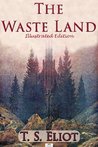
THE CLASSICS: The Waste Land by T.S. Eliot

The Waste Land (Illustrated Edition)The Waste Land by T.S. Eliot

My rating: 5 of 5 stars

Amazon page

It’s for good reason that this is considered one of the greatest poems of the 20th century. Eliot’s vivid verse paints a bleak landscape in language of beauty not seen in the poem’s imagery. It will come as no surprise that this work was penned during a dark time in the poet’s life, but it wasn’t just Eliot’s personal dark hour; for many, the wounds of World War I hadn’t yet scarred over.

This poem is divided into five sections, each with an artful title. The five sections of The Waste Land are: “The Burial of the Dead”, “A Game of Chess”, “The Fire Sermon”, “Death by Water”, and “What the Thunder Said.” Some consider The Waste Land to be a collection of five poems, but there is both language and theme that connects the various parts. For example, the following verse is contained in both the first and third chapter:

Unreal City,
Under the brown fog…

The poem contains many complex references to Arthurian legends and to a broad swath of literary canon. You can learn about that from individuals more erudite than I. I will suggest a simpler theme, and that is death—not just death, but death as an eraser of legacies and influence. Eliot refers to bone almost as much as he does death, and by the time one’s body is reduced to bones one’s influence on the land of the living is minimal—even for giants among men. When he’s not speaking of bones, he’s speaking of death of masses, also a form of anonymous death.

I will pick a few lines from each of the five sections to illustrate my point.


From “The Burial of the Dead”:
Unreal City,
Under the brown fog of a winter dawn
A crowd flowed over the London Bridge, so many,
I had not thought death had undone so many


From “A Game of Chess”:
I think we are in rat’s alley
Where the dead men lost their bones


From “The Fire Sermon”:
White bodies naked on the low damp ground
And bones cast in a little low dry garret
Rattled by the rat’s foot only, year to year.


From “Death by Water”:
A current under sea
Picked his bones in whispers


From “What the Thunder Said”:
After the agony in stony places
The shouting and the crying
Prison and palace and reverberation
Of thunder of spring over distant mountains
He who was living is long dead
We who were living are now dying
With little patience


I’m not saying that Eliot’s views on death and dying are great from a philosophical or psychological perspective—on the contrary, but as a work of poetry these words should be read by all.


Neither the version linked to in GoodReads nor on Amazon is the version I read. As far as I could tell by way of a hasty search, the Kindle edition I read no longer exists.

View all my reviews