10.) Here is Real Magic by Nate Stantiforth: A professional magician, disillusioned because he has lost the sense of wonderment that it’s his job to create, travels to India to look at magic anew.
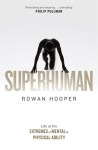
9.) Superhuman by Rowan Hooper: An evolutionary biologist examines how extreme specimens of humanity got to be that way. How come some people easily manage fluency in a couple dozen languages while some of us stumble on just our native tongue? Why is it that some people can run 100 miles non-stop when the average person’s body would start disintegrating before 20? What is the role of genetics and epigenetics versus practice and will?

8.) Anarcha Speaks by Dominique Christina: A collection of poems formed into the story of a slave woman used for medical experimentation by a man many have called “the father of modern gynecology.” The books is a rare mix of story, history, and poetry, but it isn’t a narrative poem in the usual sense of the term.
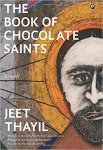
7.) The Book of Chocolate Saints by Jeet Thayil: A womanizing poet and painter living in New York returns to his native India for a final show of his work. Along the way, the reader is presented with a host of fascinating characters.

6.) The Penguin Book of Japanese Short Stories ed./trans. by Jay Rubin: This collection of Japanese short fiction includes works by Haruki Murakami, Natsume Soseki, Yukio Mishima, Banana Yoshimoto, and Akutagama Ryunosuke and covers a swath of the timeline from the days of the samurai to the meltdown at Fukushima Dai Ichi.

5.) Milkman by Anna Burns: A young woman tries to brush off the attentions of a mysterious character known as the Milkman, but is really in a fight to avoid becoming the center of attention generally.

4.) How to Change Your Mind by Michael Pollan: Pollan, best known for his works on food such as “The Omnivore’s Dilemma” and “In Defense of Food,” tells the story of a resurgence of interest in psychedelic substances such as psilocybe mushrooms, LSD, and Ayahuasca for medicinal use as well as for mental and spiritual development. Included are descriptions of his experiences with mushrooms, LSD, Ayahuasca, and even a pyschoactive substance milked from the glands of a toad.

3.) Circe by Madeline Miller: This book tells tales of Greek Mythology with a lesser-known goddess at the fore. Circe is a daughter of the powerful sun god, Helios, but is an underdog character herself, which makes her stories all the more gripping.

2.) A River in Darkness by Masaji Ishikawa: This is the story of a man who fled North Korea, leaving his family behind, during the famines of the 90’s. Ishikawa had a Japanese mother and a Korean father, and his father moved the family to rural North Korea in the late 1950’s under a “repatriation” program designed to gain workers for a war-torn North Korea while allowing Japan to offload some of the Koreans it’d forced to move to Japan as laborers during the Second World War.

1.) The Tattooist of Auschwitz by Heather Morris: A love story set in the Nazi death camp in Poland. Based on a true story.
Tag Archives: literature
BOOK REVIEW: Poems by Hermann Hesse
Poems by Hermann Hesse by Hermann Hesse
My rating: 5 of 5 stars
If you’re like me, you may not have realized that this German author, known for short philosophical novels such as “Siddhartha,” “Steppenwolf,” and “Demian,” was also a poet. This bilingual edition consists of a selection of 31 poems picked and translated by the Pulitzer Prize winning poet, James Wright. The poems are short form poems that range from less than a page to three pages, and thus even with the inclusion of the original German verse, the book is only 80 pages.
It’s hard to imagine a more skilled editor / translator than James Wright, who was considered one of the best American poets of his time. When I was reading up on Wright, I saw that major themes in his poems were “loneliness and alienation,” and those themes are certainly seen in this selection, though I cannot tell you if they’re representative of Hesse’s poetry over all or not. The philosophical outlook of Hesse’s fiction certainly shines through in places, as does the sparse, imagery-centric approach seen in Eastern (e.g. Zen) poetry – a style that tries to keep the poet out of it by presenting scene devoid of analysis or judgment.
Though it didn’t do me much good, owing to my inability to speak or even properly pronounce German, I like that the original poems in German are included. An Italian proverb compares poetry translations to women — i.e. the more beautiful, the less faithful. So, it’s always nice for those with bilingual fluency to be able to look at them side-by-side (which is how they are printed.) Sometimes even hearing the poem without understanding meaning can give one insight into the musicality of the verse.
I enjoyed this selection of poems, and while I can’t say how much is Hesse and how much Wright, either way they were well-composed and pleasant to read. I would highly recommend this selection for poetry readers.
BOOK REVIEW: Miss Burma by Charmaine Craig
Miss Burma by Charmaine Craig
My rating: 5 of 5 stars
This novel tells the story of a mixed-race family and their trials and tribulations in Burma / Myanmar from the colonial period (before the Second World War) through the early 1960’s when a civil war was in progress. The father / husband, Benny, is ethnically Indian, religiously Jewish, works for the British, but was born and spent his early childhood in Burma. He marries a Karen woman (i.e. of the Karen tribe.) The central (and titular) character is the couple’s first child, Louisa. Louisa is a beauty, and for various reasons – none of which reflect her own preferences – she ends up a beauty queen and national celebrity.
What is fascinating about this book is how the many levels of humanity – from the individual level (e.g.Louisa / Miss Burma) to the international level – play into each other. At an individual level, each member of the family finds his or her life intruded upon by the nation’s conflicts. Benny ends up a prisoner of war of the Japanese and then later a prisoner of the Burman ruling regime. He feels beholden to the Karens because of a combination of factors involving repaying of debt, familial obligation, and friendship. Louisa ends up in the pageant – in part — because of the question of whether the leaders and Burman citizens are really serious enough about unity to allow a non-Burman into that high-status role.
At a national level, there is a rapid succession of changing situations. First, the country needs to thwart the Japanese invasion. Next, they must throw off the British colonial yoke, and, finally, Burma must figure out what kind of nation (or nations) it will become. The Burman leader wants to consolidate the country, while many tribal groups, including the Karen, want independence. Benny’s family is tied up in this conflict, in part, because of their Karen connection, but also the fact that Benny was able to exploit the post-war economy to his advantage and became rich after the war. This makes him, and his family, both important and simultaneously loved and despised.
At the international level, America and other global powers have interests in keeping Burma from disintegrating into tribal sub-states. In the early post-war period, these interests are largely economic, and involve the preference to have a solitary trading partner for Burmese goods. However, later, as “domino theory” takes center stage in American foreign policy, the interest shifts to thwarting the spread of Communism. (“Domino theory” was the idea that if a non-Communist government fell, others would proceed in a chain reaction throughout the region. It was a little simplistic, but reflected the anxiety of the times and was a large part of the justification for the Vietnam War.)
I found this book gripping and fascinating. The international intrigue and family tensions both work together to make an intensely readable work. Without getting into the ending, I will say that it feels a little bit rushed and anti-climactic. However, the events of the book give it plenty of tension overall, and there is a logic to the place the book ends. It is emotionally powerful to see how this family is repeatedly torn apart and must come together again through great difficulties. We also see how obligation and sense of duty play themselves out, often trumping other considerations.
I would highly recommend this book for readers of fiction, particularly those with interests in historical fiction and works that offer insight into a nation and a culture.
BOOK REVIEW: 100 American Poems ed. by Selden Rodman
100 American Poems by Selden Rodman
My rating: 5 of 5 stars
I picked this book up in a used bookshop (the edition is copyrighted 1948) and was excited to get to reading some poems from my native land. However, I was a little off-put when I read this sentence in the editor’s introduction: “… Poe’s ‘The Raven’ and Whitman’s ‘O Captain! My Captain!’ are inferior and unrepresentative poems by any discriminating standard.”
I thought, “Oh, no. This is one of those editors who only likes works that are too cryptic and incomprehensible for the common man (or woman) to enjoy.” The type who’ll rave about Joyce’s “Ulysses,” but will mock Huxley’s “Brave New World” as lowbrow tripe. Surely, being beloved by massive numbers of readers counts for something.
Having read the book, I’m pleased that the editor took the attitude he did — not because it presented me with “better” poems, but because it offered more obscure poems than one would expect to see in most such collections. (And they weren’t particularly arduous or tiresome examples.) The book does include all the poets who one would expect to appear, e.g. Emerson, Longfellow, Poe, Whitman, Dickinson, Frost, Sandburg, William Carlos Williams, T.S. Eliot, and E.E. Cummings, but there are many lesser known (i.e. lesser remembered) poets as well. The 100 poems include works by about 60 different poets. And, while the big names tend to have more poems per poet, their selections almost invariably don’t include the best-known works of the given poet. Long story short, if you get a chance to pick up this collection, you’re likely to find some selections that are more obscure but none-the-less great.
As one can imagine from the fact that it includes examples from those twin pillars of American poetry – Dickinson and Whitman – one can expect both metered / rhymed poems as well as free verse. [More of the former in the early part and the latter among the latter pieces.] Poems that are longer than about three pages are generally excerpted. So, there’s a mix of short and intermediate length poems, but only excerpts of long ones. The only ancillary matter is the Introduction, which does give the reader an overview of not only what he / she will be reading, but also some general information on the flow of the American poetry from colonial times through the first half of the 20th century.
I enjoyed this book and would highly recommend it for readers interested in American poetry from the early 18th through the early 20th centuries.
BOOK REVIEW: The Autobiography of a Flea by Anonymous (Stanislas de Rhodes)
The Autobiography of a Flea by Stanislas de Rhodes
My rating: 5 of 5 stars
“The Autobiography of a Flea” is a historical work of erotica first published in the late 19th century anonymously, and later was attributed to Stanislas de Rhodes. Like the works of the Marquis de Sade, the book is simultaneously a socio-political commentary and philosophical novel. While the erotic elements tend to not be as extreme and perverse as Sade’s work, it shares in common a philosophy of society and a disdain for the clergy and the aristocracy / upper class (Sade’s work was earlier and straddled the French Revolution, and so things had changed on this front.) But, for example, in this book, two lascivious and hypocritical clergymen play key roles in the story that would not be unfamiliar to Sade’s readers.
The story starts with discussions (and wagers) regarding a competition that is coming up between women who work for the village’s main employer, a vintner. Whichever woman tramples the most grapes, wins a substantial prize. Our narrator is a libidinous, little flea who follows the sexual antics taking place in this French village. From the flea, we learn about the competition through discussion before, during, and after amore by two village couples. Two women who are likely to be front-runners make a salacious wager that involves the other’s husband. Each woman confesses the wager to her respective husband, but the husbands each have confidence in his wife to win, and so neither is concerned about the competition. Little do any of them know, the vintner has stacked the deck in favor of the fairest maiden in the village, who he intends to marry – despite the fact that he is old, feeble, and disgusting.
This fair (re: young and gorgeous) maiden has a suitor, and she is about to be intimate with him for the first time, when the village priest interrupts them. The priest then uses his knowledge to manipulate the young woman to his benefit. (Ultimately, he is joined by an English priest on sabbatical who involves himself with a couple village widows as well as in the priest’s nefarious plot.) The village priest simultaneously seeks to please the vintner (because the old man is the church’s leading patron), and at the same time he pursues his own pleasure. So, the young woman is forced into marriage, and into allowing consummation of said marriage — though the old vintner repeatedly shows himself not up to the task and is usually comically premature.
The author echoes a theme from Sade’s philosophy, which a society that is anarchic under its feeble institutions, i.e. in which the strong do whatever they please to the weak. The lead character, the maiden, is constantly humiliated and run roughshod over whenever she tries to move against the flow of this anarchy. Counting on the strong to behave virtuously only gets her punished and humiliated. It’s only when she starts moving with the flow so as to game the system by acknowledging and heeding this power disparity that she starts to see success in getting her way.
As with the Marquis de Sade’s work, this book could correctly be claimed to be excessively pessimistic and Hobbsean (philosopher and author of “The Leviathan” who believed people were brutish and self-interested.) I found it to be cleverer and less gratuitous than the works by Sade that I’ve read. Both the use of the narrating flea to give the reader a well-established point of view and the story — which exists (in contrast to many works in this genre, including Sade’s work “120 Days of Sodom.”) I’d recommend this book for readers of historical fiction and erotica (particularly if one enjoys — or can tolerate — the sado-masochistic dynamic.)
[Note: there are a couple versions of this book, but – as near as I can tell – the story is consistent between them. It’s the character names that vary. The book is set in France, and features one English clergyman (kindred spirit to the village priest.) However, the more common version of the book features more English-sounding names, but there is a version with more typically French names. e.g. the lead, Bella, is Laurette in the latter edition. I read the version with the more French sounding names, but read a plot summary of the other edition, and the story was the same in broad brush strokes at least.]
BOOK REVIEW: The Tattooist of Auschwitz by Heather Morris
The Tattooist of Auschwitz by Heather Morris
My rating: 5 of 5 stars
At its core, this is a love story set in the most unlikely of places, the Auschwitz Concentration Camp – which was in reality an extermination camp where Jews and others were executed as part of the Nazi Final Solution. Lale, the lead character, owing to his skill with languages and his survival instincts, was a prisoner chosen to be the assistant tattooist and in short order the tattooist’s replacement. As tattooist, Lale was responsible for writing numbers indelibly on the arms of the adult prisoners coming to the Auschwitz and Birkenau camps. This position offered him an unusual freedom of movement that allowed him to carry on a secretive relationship with one of the young women that he’d tattoo’d and become instantly smitten with. It also allowed him to carry out a small-scale relief mission in which he purchased food and medicine from a couple of sympathetic Poles. Still, this covert charitable work didn’t erase his guilt of believing he was participating in the atrocity by way of the tattoo-branding of his fellow prisoners. In a place where everyday was a test of survival, it goes without saying that both his love affair and his covert purchases created a heightened risk of being killed. The tension is perpetually high as one never knows whether Lale or those dear to him will survive from one scene to the next.
It’s testament to how tight and engaging the narrative arc is that I was under the impression that it was completely fictitious until I got to the back matter – which included an epilogue, an afterword, and a photo section that clarified that the book was based on interviews with the real-life tattooist, Lale Sokolov. The book is presented as a novel, and that’s how it reads throughout, but it’s in some measure a memoir. It’s hard to know how much is fictitious, but it seems reasonable to suspect that the author took some liberties – otherwise it would presumably have been presented as a history / biography.
I found this to be one of the most intense and gripping books I’ve read this year, and I’d highly recommend it for all readers.
BOOK REVIEW: The Illustrated Man by Ray Bradbury
The Illustrated Man by Ray Bradbury
My rating: 5 of 5 stars
This is a collection of 18 science fiction short stories by Ray Bradbury, featuring: space travel, androids, time travel, and alien invasions. However, many of the stories use science-fiction – space travel most extensively — to investigate down-to-earth subjects such as: religion, marital relationships, war, and race relations. The fact that the collection deals in everyday subject matter allows it to retain its relevancy. The sci-fi is definitely dated, from the fact that “Martian” is used as a synonym for alien to the Cold War themes, but the stories are still worth reading because they are well-crafted and continue to be thought-provoking.
The stories of this collection are integrated by the titular story. The Illustrated Man is a character who had his body covered in tattoos to continue his employment with the carnival, but the witch who tattooed him made shape-shifting images that told stories. The story of “The Illustrated Man” is the last in the collection, but there’s a prologue that sets it up. It’s not a novel-in-stories, however, as the stories aren’t connected — other than being collected into a universe of this character’s flesh. The end of several stories feature a quick reference to the Illustrated Man narrative arc, but generally there’s no other connective tissue to the stories.
Here is a brief overview of the stories:
“The Veldt”: spoiled kids are given access to a technology that goes one step beyond virtual reality to what might be called mentally constructed reality. They create an African savanna, and things go awry.
“Kaleidoscope”: An accident causes astronauts to be scattered into space, not dying immediately, but knowing the limited resources of their spacesuits will not last long. This is among the more popular stories in the collection.
“The Other Foot”: A white man is forced to take refuge on a planet that minorities had long-ago been relocated to, because now a war has made the Earth uninhabitable. The story deals with the tension between those who are willing to welcome him and those who think he should be treated as they once were.
“The Highway”: A man living and working near a desolate stretch of highway meets a rare visitor who tells him that war is upon them. One of the Cold War end-of-the-world scenario stories.
“The Man”: The Captain of a spaceship is disappointed to find that none of the locals come to see them when they land. Little does he know, they were just visited by a Messianic figure the day before. The tension is between the non-believing, skeptical Captain and one of his men who is a true believer. A commentary on faith and belief.
“The Long Rain”: Space explorers are demoralized by the unceasing rain on a planet they are exploring, a rain that threatens to send them into madness.
“The Rocket Man”: The son of a space traveler wants to follow in his father’s footsteps, but doesn’t know how hazardous a life it is.
“The Last Night of the World”: This story asks one to contemplate what if one knew it was the last night before doomsday. Another Cold War-era sci-fi piece that hinges on atomic apocalypse.
“The Exiles”: A crew of space explorers is falling to inexplicable illness. This story has a great deal of literary allusion with Ambrose Bierce, Edgar Allan Poe, and Charles Dickens each playing a part. Like Bradbury’s most famous novel, the story considers the issue of censorship.
“No Particular Night or Morning”: This story considers the question of how one knows anything is true. It does so through the lens of a spaceship crewman afflicted with solipsistic delusions – or so his crew-mates assume.
“The Fox and the Forest”: In this time travel story, a couple has escaped a dystopian future into Mexico, circa 1938, but the authorities of their time don’t intend to let them get away.
“The Visitor”: The story of a man with powerful psychic abilities who is coveted by competing factions.
“The Concrete Mixer”: A Martian pacifist is forced to participate in an invasion of Earth, only to find that it is an ill-advised endeavor for reasons entirely different from he’d thought. The story revolves around the centrality of materialism and consumerism in American culture.
“Marionettes, Inc.”: One man gets a look-alike android to cope with a wife who hates him, and another gets one to contend with a wife who is smotheringly needy.
“The City”: Explorers find that the abandoned city they’ve been sent to explore isn’t as free of sentience as they’d thought.
“Zero Hour”: Alien invaders find an unexpected ally in the impressionable youth.
“The Rocket”: A man wants his family to see the stars, but lacks the resources to make the dream come true. So, he gets creative.
“The Illustrated Man”: As referenced above, this story tells the tale of carnival tattoo’d man whose body-art mysteriously tells stories through its images, with special focus on two special designs.
I’ve never found a Bradbury work I didn’t like, and this one is no exception. The writing is beautiful. The story-telling is skillful, and, even when the sci-fi details are dated, there are themes that remain relevant. I’d highly recommend this collection for readers of sci-fi, particularly those who like classic sci-fi.
BOOK REVIEW: The Ministry of Utmost Happiness by Arundhati Roy
The Ministry of Utmost Happiness by Arundhati Roy
My rating: 5 of 5 stars
This is a well-crafted and engaging novel, but it’s not about the utmost of happiness. That may be apparent to most readers by the juxtaposition of bureaucracy and happiness, which seems to fit together like “the cross-fit box of pleasure” or “the playground of misery.” Perhaps, a line from one of the characters in the first one-third of the book offers insight into the book’s true perspective on happiness. That first bit of the book revolves around the life of a hijra (i.e. intersex and transgender people — in her case hermaphroditic.) At any rate, one of the other hijra tells the main character that the reason that god invented hijra is to see what happens with people who can only be miserable [I’m paraphrasing.] Ostensibly, this character means that people who have no choice but to live and create sub-communities at the periphery of society, and who never feel completely at home in their skins can’t be truly happy.
While the first one-third of the book features this hijra, Anjum, the latter two-thirds explores a quartet of characters who were friends in college. At the center of this group is Tilo, a female who is the object of the affection of the other three — all men. One of the others is a diplomat who becomes a raging alcoholic. The reader is led to believe the alcoholism is more because of the stress of what he’s exposed to on the job than because of an addictive personality. He is also Tilo’s landlord for a time. One is a well-known reporter and the son of a high-ranking diplomat. He will be married to Tilo for a time. The last, Musa, is an architect who ends up becoming an insurgent in Kashmir. While Tilo holds all three men in warm regard, it’s only the latter that she truly loves. Most of the story revolves around events that happen in Kashmir when Tilo goes to see Musa during a particularly heart-rending time in the modern history of that place.
The book brings these two character arcs, Anjum’s and Tilo’s, together as the result of an abandoned baby that Tilo snatches, presumably in an ill-considered attempt to right the worst of the wrongs she learned about in Kashmir. Anjum, whose desire to be a mother we see from an experience with a child she’d earlier come into the charge of, becomes a partner in Tilo’s venture.
The book is largely about how people go about living after being exposed to the worst life has to offer. Besides Tilo and Musa’s experience of tragedy in Kashmir, Anjum is caught up in riots in Gujarat in the wake of the Godhra train burning, and we learn that the abandon baby’s story is tied into the Maoist insurgency of the Northeastern states.
This book hooked me. I found it thought-provoking as well as gripping. I would highly recommend it for readers of fiction.
BOOK REVIEW: The Sonnets of William Shakespeare by Wm. Shakespeare
The Sonnets of William Shakespeare by William Shakespeare
My rating: 5 of 5 stars
This book consists of 154 sonnets that were published in a quarto dated 1609. It’s not all of the sonnets written by Shakespeare because there were a few stashed in his plays. It’s also not the entire contents of that 1609 quarto, which also included a long-form narrative poem entitled “The Lover’s Complaint.” However, these are the poems typically included in collections of Shakespearean sonnets.
For those unfamiliar with the sonnet, it’s a 14-line poem that’s metered and rhymed. In English language sonnets (and Shakespeare’s, in particular) that metering is iambic pentameter (five feet of alternating unstressed and stressed syllables.) Shakespeare’s sonnets follow a rhyme scheme that is often named for him: ABAB CDCD EFEF GG. (It’s also called English Rhyme, and is differentiated from Petrarchan Rhyme which has an octave of ABBA ABBA and a sestet that can vary, e.g. CDCDCD.) As with all rules of poetry, there is the occasional exceptions taken here and there.
Love, beauty, and death are common recurring themes in the sonnets, but there are occasional forays into tangential topics like lust, infidelity, and immortality through poetry. There are also humorous twists on the expected approach. The most famous Shakespearean sonnet is probably 18 “Shall I compare thee to a summer’s day?”, but we see in another popular contender, Sonnet 130 (“My mistress’ eyes are nothing like the sun;”), Shakespeare mocking hyperbole. Of course, he’s not just mocking hyperbole; he’s also saying that he can still love his lover despite the fact that she isn’t in all ways more beautiful than the most pleasing elements of nature (and might even have halitosis.)
There’s no division or formal organization of the sonnets. However, scholars do divide them up in various schemes. One simple way that they are divvied up is to put the first 126 in a category in which Shakespeare addresses a young man. The first 17 sonnets are a subgroup in which the poet attempts to convince the young man to be fertile and multiply. Sonnets 127 – 154 are sometimes called the “Dark Lady” (a.k.a. “Black Mistress”) sequence as they frequently refer to a brunette woman (i.e. the woman whose lips are not as red as coral in Sonnet 130.) One can see the difference in tone extremely contrasted in the two poems mentioned in the preceding paragraph – Sonnets 18 and 130.
Besides the aforementioned sonnets, a few others stand out as personal favorites:
– 55 “Not marble, nor the gilded monuments”
– 27 “Weary with toil, I haste me to my bed,”
– 1 “From fairest creatures we desire increase,”
– 65 “Since brass, nor stone, nor earth, nor boundless sea,”
But you should read them and find your own favorites. It’s Shakespeare, of course they are highly recommended.
BOOK REVIEW: Notes from Underground by Fyodor Dostoevsky
Notes from Underground by Fyodor Dostoyevsky
My rating: 4 of 5 stars
This novella is divided into two uneven parts. The first part consists of eleven chapters of floating head philosophizing by an old man about all manner of topics loosely connected by a cynical outlook. The most prominent topic is consciousness and how it’s a curse upon mankind – for the more one has of it the more one is trapped in a dead-end life. (Presumably what Dostoevsky meant by “the underground.”) One really has to be interested in philosophy to get through the first part, which is about 1/3rd of the book, because there is no story and nothing in particular to make one interested in the monologuing old man’s life or thoughts. However, it’s considered the first existentialist novel, and is considered important on that grounds, and the philosophy is thought-provoking now and again.
It’s in the second part that the book gets interesting. In this part, we get a flashback to the narrator’s life as a young man and the events that presumably shaped the cynical philosophy that he’d rambled on about in the first part.
One can subdivide the second part into three subsections that each get more extensive and more interesting in turn. In the first section, the narrator tells about how he became irritated that there was an alpha male military officer who would walk boldly down the sidewalk and everyone would get out of his way. The narrator is ashamed that he consistently got out of the man’s way, himself. Since there was no rule that this man was owed the right-of-way, the narrator devises a plan to play chicken with the man. This may seem like a silly and sad little story, but it gives insight into the man’s state of mind. There are shades of “Fight Club” in this book, as the narrator feels emasculated by society and modernity. He’s a coward, but a proud coward who believes the world is ruled by fools, while men of intellect – such as himself – are trapped in the underground. He also has a masochistic ambivalence about pain and suffering.
The second and third sections flow together from a solitary event. The narrator runs into an old acquaintance from school, Zverkov, and invites himself to Zverkov’s going-away party dinner. However, neither Zverkov nor his chums particularly care for the narrator. There is a tension not only because they are of a higher status, but because the narrator has a chip on his shoulder about it. The narrator feels himself the superior man, and his self-invitation to the party is in a way another act of playing a game of chicken with those who are de facto superiors. His low-income post, combined with his feelings of superiority, compels him to assert himself to no good end.
When Zverkov and his pals slip away, in part to continue their festivities and in part to get away from the narrator, the narrator pursues them to the brothel they’ve taken their boy’s-night-out to. This is where the third part begins when the narrator ends up sleeping with Liza, a young prostitute. After the deed, the narrator rambles on about how she should get out while the getting is good, engaging in moralistic diatribe. Before leaving, he gives her his address card. Over the next several days, he swings between fears that she’ll actually show up to his shabby abode and fears that she won’t. His feelings for Liza bounce between whipping post and object of affection. And, being a classic unreliable narrator, the reader is left to guess as to the weight of those competing feelings.
Once one gets into the second part, this book becomes intriguing. The lead character would, at best, be classified and anti-hero. There’s nothing likable about him, but still one wonders how events will unfold. The first part offers the occasional bit of food-for-thought, but isn’t a compelling read for those who didn’t major in Philosophy. Even most Philosophy majors will find it needlessly cynical – if interesting. Still, it’s worth reading, and, hey, it’s really short.
