FIVE WISE LINES [July 2025]

There is no revenge so complete as forgiveness.

Josh billings

Everything in the universe is a jug
filled to the brim with wisdom and beauty.

Rumi, Masnavi

Poetry is what gets lost in translation.

Robert frost

“Travel and tell no one, live a true love story and tell no one,
live happily and tell no one, people ruin beautiful things.”

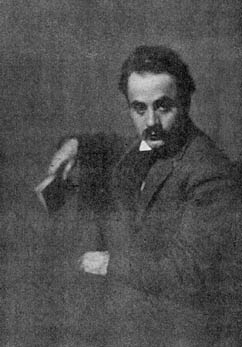
Kahlil gibran

Not all those who wander are lost.

J.r.r. Tolkien, The lord of the rings

Five Great Yarns from Kahlil Gibran’s The Madman

The MadmanThe Madman by Kahlil Gibran
My rating: 5 of 5 stars

Project Gutenberg Page

The Madman is a collection of poems and short fiction (often micro-fiction) of a philosophical nature. The protagonist claims he became a madman when a thief broke into his house and stole his masks, the masks that people wear to fit into society and appear “normal.” Beyond the thread created by this mad character, the entries meander along, each with its own moral and with little discernible overarching plot.

There are many clever stories in this collection, offering food-for-thought on religion, philosophy, and psychology. I’ll discuss five of my favorites:

“The Sleepwalkers” A mother and daughter are both sleepwalkers. When they are somnambulating, they speak to each other in horribly cruel terms, but when they wake up, they display (at least a veneer of) love and affection. Besides demonstrating the nature of the aforementioned masks, the loss of which gets one designated “crazy,” this story encourages the reader to discern the differences between conscious and subconscious mental activity.

“War” This one presents an analogy for war in which a thief breaks into the wrong building, walks into a machine, pokes his own eye out, and then takes the building owner to court seeking “justice” for his lost eye. The craftsman / shop-owner says he can’t lose an eye because he won’t be able to do his work, but he knows a neighboring craftsman who could have his eye removed without great loss of productivity. This story builds upon the well-known “An eye for an eye…” Bible verse with the added absurdity of violence being doled out randomly and without concern for whether the victim had anything to do with the events in question.

“The Wise King” A disgruntled witch poisons a city well with a substance that makes drinkers insane. The King avoids the well water and is spared insanity. However, the townspeople begin to plot against the king because, in their insanity, they believe him (as one who acts differently) to be insane. The king eventually drinks the well water in order to come back into synch with his subjects. This entry speaks to the arbitrary nature of classification of sane and insane, an idea that has been discussed in modern times by mental health experts such as R.D. Laing.

“The Two Cages” A bird is caged next to a lion. The bird’s confidence provides the central lesson, knowing they’re both imprisoned separately, the bird refers to the lion as “fellow prisoner.” The power dynamic has changed from that of the jungle. Perhaps, the bird has even happily exchanged its freedom — either for safety or to tear the lion down a little.

“The Eye” In this story, the other sense organs mock the eye after it comments upon how grand a mountain is. The ear can’t hear the mountain and the skin can’t feel the mountain. Therefore, the other senses assume that the eye is either lying or is delusional. This tale speaks to the risk of denying something based on one’s own limited perception.

This book was originally published in 1918 and is in the public domain (most places.) It’s definitely worth the short time investment required to read it.

View all my reviews

Around the World in 5 Works of Poetry

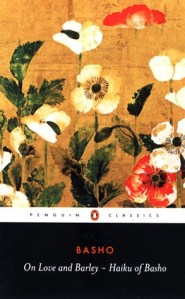
5.) On Love and Barley by Matsuo Basho [Japanese]: One doesn’t get better haiku [and other traditional Japanese poetry forms] than Basho.


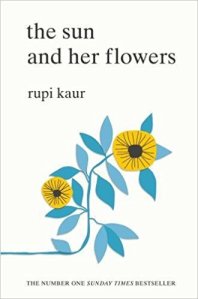
4.) The Sun and Her Flowers by Rupi Kaur [Indian-Canadian]: This isn’t the expected fair for an “around the world” post as it’s not blatantly infused with setting / geography, but culture does factor in prominently.


3.) Leaves of Grass by Walt Whitman [American]: Not only does Whitman explore the many dimensions of America, he also references other cultures and locales. [There was a fascination with the East brewing in Whitman’s day.]


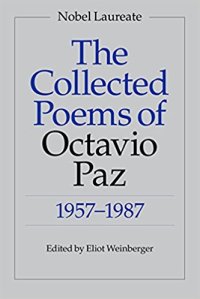
2.) Octavio Paz / Selected Poems by Octavio Paz [Mexican]: Paz was a diplomat as well as a Nobel Laureate, and his poems include many references to India (where he was posted) as well as Mexico.


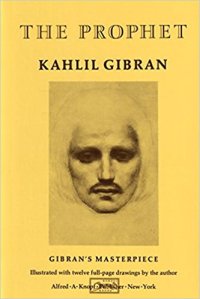
1.) The Prophet by Kahlil Gibran [Lebanese-American]: Featuring an intriguing melange of advice in poetic form.


NOTE: It’s not as global a list as I’d like. I’d love to hear what works others might include in the list. I don’t think poetry gets translated as much as fiction and so it’s a bit of a challenge. It’s much easier to find examples of novels & short story collections from far-flung corners of the world.

BOOK REVIEW: The Prophet by Kahlil Gibran

The ProphetThe Prophet by Khalil Gibran
My rating: 5 of 5 stars

Amazon page


This is a combination of a narrative poem and a collection of morality poems. The story of the narrative poem is that a wise man (i.e. the Prophet), Almustafa, is about to sail away from his recent — but temporary — home on Orphalese, and he’s asked to speak on a range of topics so the people of Orphalese can gather his wisdom before he goes.

In 26 chapters, the prophet expounds on each topic upon which he is questioned. Topics include relationships, possessions, laws, religion, teaching, and death. The wisdom presented is practical, profound, and reflects a mystic sentiment (i.e. the idea that the divine is within us rather than something separate.) This is an extremely quotable volume. Among his responses, the Prophet says that one should not be too controlling in relationships, that one should not live life under the dictates of fear, that it’s not for one to determine what is moral for another, and that one should not engage in morality or worship for show.

I’ll keep my review short as the book is tiny and certainly worth your time. I’d recommend this book for all readers. I think it has some insight to offer just about anyone.

[Note: Some spell the author’s first name “Kahlil” and others “Khalil.” I picked one at random.]

View all my reviews

10 Great Quotes from “The Prophet” by Kahlil Gibran

10.) “But let there be spaces in your togetherness.

“And let the winds of the heavens dance between you.”

-on Marriage


9.) “He who wears his morality but as his best garment were better naked.”

-on Religion


8.) “And you would accept the seasons of your heart, even as you have always accepted the seasons that pass over your fields.”
-on Pain


7.) “What of the ox who loves his yoke and deems the elk and deer of the forest stray and vagrant things?

“What of the old serpent who cannot shed his skin and calls all others naked and shameless?”

-on Laws


6.) “If he is indeed wise he does not bid you enter the house of his wisdom, but rather leads you to the threshold of your own mind.”

-on Teaching


5.) “For if you should enter the temple for no other purpose than asking you shall not receive.”

-on Prayer


4.) “And if it is a fear you would dispel, the seat of that fear is in your heart and not in the hand of the feared.”

-on Freedom


3.) “For what are your possessions but things you keep and guard for fear you may need them tomorrow?”

-on Giving


2.) “Only then shall you know that the erect and the fallen are but one man standing in the twilight between the night of his pygmy self and the day of his god self.”

-on Crime and Punishment


1.) “Or have you only comfort, and the lust for comfort, that stealthy thing that enters the house as guest, and then becomes a host, and then a master.”

-on Houses