BOOKS: “How to Fight Tough” by Jack Dempsey

How to Fight ToughHow to Fight Tough by Jack Dempsey
My rating: 5 of 5 stars

Read online at Archive.org

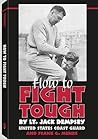
This book was put out by the Coast Guard during World War II as a commando fighting manual. The lead on the project was heavyweight boxing champion Jack Dempsey, aided by a small team of others — all with varied bona fides in Combatives.

This is a fun book to read. It’s loaded with 1940’s slang, over-the-top reminders to fight tough and mean, and jokes that — while dated — still amuse with their quirky language. Seriously, the voice in my head was playing in Trans-Atlantic dialect (1940’s radio announcer voice) or as James Cagney playing a gangster the whole time I was reading this book.

That said, while the text was campy, the actual techniques are solid. The book consists of eighteen lessons that are built on well-established grappling and submission techniques such as hadaka jime (rear naked choke.) Also, while there is often only one (or — at most — a few) photos per technique, they seemed to put some effort into doing them conscientiously. (And they are almost full-page shots, so one can actually see a bit of detail.) The techniques include: unarmed v. various unarmed attacks, unarmed v. knife, unarmed v. gun (holstered, and front and rear approaches,) and unarmed v. bayonet.

I’d highly recommend reading this book. It’s a quick and amusing read with some useful techniques inside.

View all my reviews

Five Wise Lines (March 2024)

We are pattern seekers, believers in a coherent world, in which regularities appear not by accident but as a result of mechanical causality or someone’s intention.

Daniel kahneman; Thinking, Fast and slow

If you win, do not boast of your victory; if you lose, do not be discouraged. When it is safe, do not become careless; when it is dangerous, do not fear. Simply continue down the path ahead.

Kanō Jigorō; Founder of Jūdō

A writer makes new life in the void, knocks on silence to make a sound, binds space and time on a sheet of silk and pours out a river from an inch-sized heart.

Lu Ji; Wen Fu (261 – 303)

The worst kind of Virtue never stops striving for Virtue, and so never achieves Virtue.

Laozi

Moonlight floods the whole sky from horizon to horizon. // How much it can fill your room depends on its windows.

Rumi

BOOKS: “Judo Unleashed!” by Neil Ohlenkamp

Judo Unleashed!: The Ultimate Training Bible for Judoka at All Levels (Revised and Expanded Edition)Judo Unleashed!: The Ultimate Training Bible for Judoka at All Levels by Neil Ohlenkamp
My rating: 5 of 5 stars

Amazon.in Page

Release Date: July 9, 2024

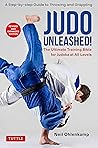
This is a new and revised edition of a book that has been on the market for many years. It provides an overview of the sport and martial art of judo, with particular emphasis on the competitive version of the art. It does discuss the self-defense philosophy and approach of judo in broad brushstrokes, but the techniques that are discussed (and shown) individually are the competition-legal ones. The book does take a no-nonsense approach and focuses on a straight-forward delivery of the most crucial information for a general reader.

The book’s organization is as one would expect of a martial arts guide: an introductory overview, a detailed breakdown of the techniques by type (i.e. throwing, grappling, groundwork,) and a brief closing (i.e. “where do we go from here”) section. Among the book’s useful features is that Ohlenkamp often tells the reader which judoka were particularly noted for their adeptness with a given technique as he presents said technique. This gives the reader wanting a little more insight the opportunity to do some internet research for video clips of that particular judoka doing the technique in question.

The book has a large number of color photos that are clear and present the gist of each technique in mid-action. It also has extensive appendices discussing rules and the formally accepted techniques of Kodokan Judo.

I found this book useful and would recommend it for those interested in judo, whether as a potential student or to compare and contrast it with other grappling sports / martial arts.

View all my reviews

PROMPT: Sports

Bloganuary writing prompt
What are your favorite sports to watch and play?

Combatives: i.e. Boxing, Wrestling (real, not acted,) Muay Thai, Judo, etc.

Chokehold [Lyric Poem]

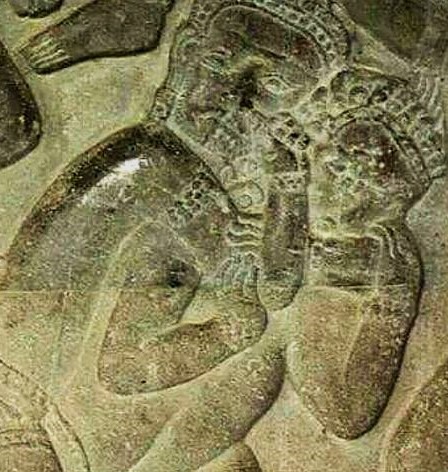
Source: Wikipedia; cropped & modified; Khmeri chokehold
dying by the second
   from a starving brain;
 each new panicked moment
   narrows down the frame.

now, my world is dwindling,
   shrinking to a dot:
 like TV's used to do
    when you shut them off.

Now, this poem is done.
   there's nothing past one pel --
 except for oblivion:
    no sight, no sound, no smell.

BOOK REVIEW: Training and Conditioning for MMA ed. by Dias / Oliveira / Brauer & Pashkin

Training and Conditioning for MMA: Programming of ChampionsTraining and Conditioning for MMA: Programming of Champions by Stéfane Beloni Correa Dielle Dias
My rating: 5 of 5 stars

Amazon.in Page

Release Date: September 15, 2022 [It may already be out in some formats and markets]

Get Speechify to make any book an audiobook

This book provides an overview of fitness building for Mixed Martial Arts athletes. It covers program design, athletic assessment, nutrition, exercises and conditioning practices, and injury prevention methods. On the positive side, it’s not only comprehensive, but – also – presents some of the best and latest methods in combative sports training based on sound scientific research. On the other hand, the book does assume a certain level of understanding of sports science, and it gets pretty deep in the weeds with respect to technical detail and to scientific and specialty jargon. If one doesn’t have such background, one may find some of the content (particularly the early chapters) a bit daunting. That said, it offers an excellent reference for those who are interested in methods and sports science not just for MMA, but for combative sports, in general.

The book uses color photographs throughout. I found the photos to be clear, well-sized, and well-lit. While there is definitely an attempt to keep the number of photos to a reasonable level, they do offer multiple angles where necessary and – generally – give enough pictures to make the action clear. There are also tables after each of the methods sections to give a handy summary of sets, reps, and scheduling suggestions for various exercises. In the early chapters, the ones that convey more technical content, there’re charts, graphs, and diagrams as needed. There’s an extensive bibliography, though it should be noted many if not most of the references are not in English. (The team of editors and contributors is large and international.)

This book offers an excellent reference for coaches, trainers, and athletes. While it does get quite technical, it’s great that it offers insight into cutting edge science and training methods.


View all my reviews

BOOK REVIEW: Judō: Skills and Techniques by Tony Reay

JudoJudo by Reay
My rating: 3 of 5 stars

Amazon page

Tony Reay wrote this book when he was both a 6th degree black belt and Development Officer for the British Judō Association. So his qualifications are beyond a doubt. The book is an overview of the sport of judō that covers techniques, etiquette, rules, warm-up exercises, grading approaches, and other specialty topics. It covers the gamut of issues related to the sport of judō, but without going into much detail. It would be a suitable book for a youngster who is considering whether they might want to get involved. I emphasize that it’s about “sport judō” because there are those who consider judō to be an approach to self-defense and others who think of it as a whole-life philosophy. This isn’t the book for those who want to learn more about judō as anything other than a competitive sport.

The eight chapters of the book cover: history, the grading structure, recreational judo, fitness, techniques, competition, the judō instructor, and judō as an art. However, most of the chapters are cursory. The bulk of the book is devoted to showing 69 of the art’s most fundamental techniques, including: 40 throws, 12 holds, 10 chokes, and 7 arm-locks. For each of these techniques there is a line drawing and a brief description. In a few cases there are black and white photos taken of the technique being performed in competition. This overview of techniques is mostly of value for learning names and accounting for what techniques one has (or hasn’t) learned. There’s not enough detail–either graphically or textually–to help a practitioner improve a technique that they’ve learned. (The latter isn’t a point of criticism, but rather to let people know what they are and aren’t getting in the book.) Still, there are tips scattered throughout the book that might help a practitioner improve their techniques in a general sort of way.

There is a glossary of Japanese terms commonly used in judō.

I found this book to be a fine overview of the sport of judō, and would recommend it for that purpose. While I’ve found other books on the art much more useful for my purposes, I think this is a fine book for someone looking to get into the sport from ground zero. I should point out that the book is from the mid-80’s, and so there will probably be details on rules, scoring, and grading that have changed, but the bulk of it will remain of value.

View all my reviews

BOOK REVIEW: The Secrets of Judo by Jiichi Watanabe and Lindy Avakian

The Secrets of Judo: A Text for Instructors and StudentsThe Secrets of Judo: A Text for Instructors and Students by Jiichi Watanabe
My rating: 5 of 5 stars

Amazon page

Every once in a while, one stumbles onto a book that one feels desperately needed writing but which one thought didn’t yet exist. In the case of The Secrets of Judo, the book has been around for almost 60 years. First off, a more telling title for this book would be “The Science of Judo” or “The Physics of Judo.” It’s not a book that deals in arcane knowledge, as its title might suggest, but rather applies science to the skills of throwing, pinning, and submitting seen in judo.

While there’s a brief discussion of the nervous system as it pertains to reaction times, the bulk of the book is classic mechanics applied to judo techniques. The first six chapters (which constitute a little over half the book) provide a background of the relevant principles of both physics (e.g. force, momentum, and center of gravity) and judo (e.g. kuzushi [unbalancing], seiryoken zenyo [maximum efficiency], and ukemi [breakfalls].) The last two chapters provide explanations of how forces are applied to achieve successful throws (ch. 7) and grappling techniques—i.e. pins, chokes, and locks (ch. 8.)

I found this book to be invaluable and would recommend it for anyone who’s interested in grappling arts generally (whether judo or not) or even the science of human movement. The writing is clear. There are some mathematical equations, but just the algebraic formulas seen in basic physics. The graphics (mostly line drawings with a few photos) are useful, especially the drawings of the sequences of techniques which have letter labeled arrows to clarify the lines of force.

I should note that I read the original (1960) edition. Tuttle put out a 2011 edition that is probably what you will get–unless you stumble onto a copy in the used bookstore as I did. From a quick glance at the table of contents of the new edition, it doesn’t look like a major change and I suspect the new edition is at least as good.

View all my reviews

BOOK REVIEW: The Pyjama Game by Mark Law

The Pyjama Game: A Journey Into JudoThe Pyjama Game: A Journey Into Judo by Mark Law

My rating: 4 of 5 stars

Amazon page

Mark Law’s book contains two types of book in one volume, unified by the theme of judō. On the one hand, it’s a microhistory of the martial art and sport of judō–and, no, it’s not redundant to say the martial art and the sport because while these aspects overlap they aren’t identical. On the other hand, the book presents a personal account of Law’s experience as a judōka who began his practice at the ripe age of 50. The two elements of the book are interwoven together, and aren’t forced into distinct sections by the book’s organization. The history is obviously organized in a chronological fashion, but personal accounts are peppered throughout, and sometimes stories appear in history chapters.

As a history of judō, Law begins with the pre-history of the art in its ancestor martial art of jujutsu, he travels through the arts influence on off-shoots like Sambo and Brazilian Jujutsu, and he examines how the art has contributed to mixed martial arts—the 800 pound gorilla of present-day combative competitions. Particular emphasis is given to Kanō Jigorō’s role as founder of the art and the evolution of judō as an Olympic sport. Interestingly, besides founding Kodokan Judō, Kanō’s other claim to fame was in being the first Asian member of the International Olympic Committee (IOC). However, he never saw judō become an Olympic event, and—ironically–at least a few among those close to him doubted that Kanō would’ve been pleased with his art’s inclusion in the international games.

While Japan dominated judō when the sport first entered the domain of international competition, it wasn’t long before there were a number of other countries including the Netherlands, Russia, the United Kingdom, France, Cuba, and Korea that were producing first-rate judōka. Law devotes considerable discussion to the global blossoming of this sport, including entire chapters on some of the more prominent nations. The book discusses the double-edged sword that Japan faced. On one hand, the Japanese were heart-broken when other nations started beat them at their own game. On the other hand, it was clear that this had to happen for the sport to retain a global following. (Otherwise, the sport might have gone the way of baseball—being pulled out of the Olympics because only a handful of North American, Caribbean, and East Asian nations had any interest in it.

There are also chapters on women’s judō, a development that no doubt faced a good deal more misogyny than many sport’s bi-genderifications. There’s always been resistance to encouraging women’s participation in combative activities—even judō, a martial art whose dangerous edges were supposed to have been rounded off through rules, equipment (e.g. sprung flooring), weight classes, and close monitoring. Law discusses the hard fought evolution of the women’s side of the sport.

As a personal narrative, Law talks about the lessons he learned from training in judō and from testing for rank—an arduous process that requires beating other rank-pursuers in randori (free-form grappling, i.e. the grappling version of sparring.) Many of these lessons will be familiar to anyone who has practiced a martial art (e.g. while it’s more intimidating to fight someone who’s much more experienced in the art, it’s usually vastly more safe—both because senior players are more in control of their bodies and because they have less need to prove anything—i.e. they won’t injure an opponent to protect a fragile ego), but much of this discussion is specific to the culture and practice of judō.

If you’re interested in the history and development of judō, I’d recommend this book. I found the book to be at its most interesting when it addresses the history and globalization of the sport. However, those who haven’t practiced martial arts may find Law’s personal insight to be useful—particularly if you’re considering taking up judō and all the more if you intend to take it up past mid-life.

It should be noted that—judging by the identical table of contents and subtitle—this book was also released under the title Falling Hard: A Journey into Judo. The book does is annotated and provides references. Law is a journalist, and the niceties of that discipline are followed throughout.

View all my reviews

BOOK REVIEW: The Medical Care of the Judōka by Anthony J. Catanese

The Medical Care of the Judoka: A Guide for Athletes, Coaches and Referees to Common Medical Problems in JudoThe Medical Care of the Judoka: A Guide for Athletes, Coaches and Referees to Common Medical Problems in Judo by Anthony J. Catanese

My rating: 4 of 5 stars

Amazon page

I’d recommend this book for anyone who holds a position of responsibility in a dōjō or a combative sport gym, including: teachers, coaches, senior students, trainers, etc. It’s intended for those involved with sport judō, but because there aren’t a lot of sport or martial art-specific books of this nature this may be one of one’s best option to get this information. I haven’t stumbled upon other books like this, but performing a search did result in similar books either generic to martial arts or for other martial arts. However, all of the others that I saw were either old / out-of-date, only available in hardcopy (usually at great expense), or were not by physicians. This book is available on Kindle and is quite inexpensive.

While it’s geared toward sport judō, many of the injuries will be common across martial arts. This is truer of grappling-oriented martial arts, but things like mat infections, students with various chronic ailments, and participants being knocked unconscious. (The latter is covered extensively, but arguably being even more of a concern for strikers.)

The book is useful in two ways. First, it discusses first aid and treatment for common injuries in the martial arts. It’s not a first aid manual, and will not replace training. (In fact, the book assumes it’s talking to someone who’s in a position where they’ve had at least minimal training / experience.) However, it may provide useful information about what injuries one should make sure to be trained in when shopping first aid courses. It also gives one ideas about differences of opinion on certain approaches to treatment or the decision as to whether a given participant is safe to participate.

Second, the book discusses whether prospective students with common chronic ailments can safely participate, and under what circumstance. In many cases, this book goes about this by saying what the judō rulebook says. While this may not be a perfect guide for practitioners of other arts, it may give a reasonable idea about how serious one should take a given disease or infirmity.

The book consists of 20 chapters. Most of the chapters cover common injuries and ailments in judō, generally arranged by anatomical systems. However, there are also chapters covering nutrition/hydration, issues for athletes going abroad / older participants / and special needs athletes, drugs and doping considerations, injury rehabilitation issues, psychological challenges, and the traditional Japanese methods of resuscitation and first aid (kappo and katsu.)

In addition to the core chapters, there is some useful ancillary material. First, there are vignettes interspersed throughout the book that could be beneficial. These vignettes reflect the benefit of having an author who is a medical doctor, a long-time judōka, and an experienced match physician. The vignettes may be more likely to stick in one’s head than the blander presentation of information, and these sidebars often address unusual cases. Also, there are two glossaries—one that deals with martial art / sports terminology, and one for medical terminology.

While written by a physician, this book is not written exclusively for other doctors or medical experts. That is to say, it’s easily readable by a lay audience. Medical jargon, when used, is explained the first time in the text, so one doesn’t need to keep jumping to the glossary.

At least the Kindle version is graphics free. That would be problematic if it was a first aid manual, but that’s not this book’s purpose.

As I said in the beginning, if you have responsibilities for the well-being of martial arts students / athletes, you should read this book.

View all my reviews