READING REPORT: May 1, 2015

Becomingbatman

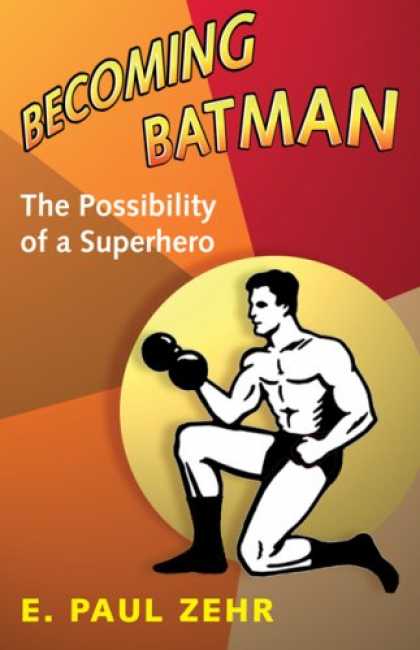
Most of my reading time this week was divided between two books, one of which was also a new purchase. The newly purchased book that I spent a lot of time with is E. Paul Zehr’s Becoming Batman. This book isn’t at all what one might expect from the title or the cover. If one were to notice that it’s put out by Johns Hopkins University Press, one might realize that it’s not a fanboy fantasy work. What it is is a book about the science of exercise and conditioning for athletes that uses “Batman” as a pedagogic tool to make more digestible scientific information like how our muscles grow or how we make our movement more efficient through practice. It’s a fascinating book if you are interested in science and martial arts (or movement arts more generally.)


Wired for StoryThe other book I’ve been tearing through is Wired for Story, which I wrote about last week. It’s a book that explains how human brains are wired to be intrigued by story, and how writers can put this information to good use.


Meeting the Dog Girls

The one book that I finished this week is Gay Terry’s Meeting the Dog Girls. This is a collection of short stories (some of which might be classified as flash fiction) that could be called tales of the weird or supernatural fiction. Most of the stories have a quirky sense of humor.


ZebrasUlcers_Sapolsky

I bought two other books this week, both of which have been on my reading list for a while. The first is Why Zebras Don’t Get Ulcers, by Robert Sapolsky.  As the title suggests, this book is about why humans are unique within the animal kingdom with respect to stress-induced illnesses. Stress reduction and mitigation have been an important question of inquiry for me as of late.


afterdark_murakami

The other book is Haruki Murakami’s After Dark. This will be the third or fourth book by Murakami I’ve read, and I enjoy his style. Ironically, this was the first book by Murakami that I noticed in the bookstore, but I never got around to reading it.

READING REPORT: March 13, 2015

Welcome to a special–not really–Friday the 13th edition Reading Report. Were I one to plan ahead, I might have read something horrifying for this week, but I’m afraid there’s nothing to inspire dread… well, I don’t really know what your dread threshold is, but unless you have phobias about good posture or classic literature, I think you’re safe.


I bought The New Rules of Posture this week, and spent a lot of my reading time with my nose in it. It’s one of those books that has one periodically getting up to try some movement or postural experiment, but I’m about 2/3rds of the way through nonetheless. It’s written by a dancer turned Rolfer, and offers good insights on the subjects of posture and breathing for those of us who are interested in evaluating and improving such things. The line drawings, many anatomical in nature, are helpful and the readability is high for a such a book. I suspect I’ll finish it in the upcoming week and will have a review up within a couple weeks.

NewRuleofPosture


I finished only one book this week, Why Do People Get Ill? I’ve mentioned this book in earlier reports, and will soon be doing a review, so I won’t spend much time on it now. It’s essentially about the roles that stress and the inability to articulate one’s feelings about illness play in catching a disease as well as its progression.

WhyDoPeopleGetIll_Leader&Corfield


As one can see, I’ve been on a body-mind nexus reading kick lately. I’m trying to educate myself about anatomy, physiology, and related biological sciences as a means to improve  the operation of body and mind. In addition to the featured titles above, some of the other books I’ve been reading during the past week include: Zen and the Brain (there was a fascinating chapter on indigenous opioids–i.e. morphine-like substances produced within the body–among this week’s chapters), The Trigger Point Therapy Workbook, and The Sensual Body.

Zen&Brain

TriggerPtTherapy

TheSensualBody


Moving beyond the body / mind books, I did do some reading that wasn’t research related. I’m about 40% through The Painted Word, having read the entries for the letters D, E, and (part of) F. My favorite word from the week was “dromomania” which means an intense passion for travel or wandering. As in, “I, Bernie Gourley, have a bad case of dromomania.”

Painted Word


The short story collection that I’m currently reading (I try not to neglect this medium) is Meeting the Dog Girls. I read about half-a-dozen stories this week (most of them are short, and a few of them–it could be argued–don’t really constitute stories), and I’m about 20% of the way through. Absurdism is a prevailing theme, though in some stories more than others. So far, I’m enjoying this collection. It’s mostly light and easily digestible reading, but has some intense moments.

Meeting the Dog Girls


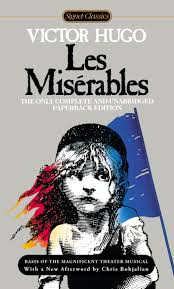
With respect to novels, I slipped away from Mo Yan’s Life and Death are Wearing Me Out, and resumed reading Victor Hugo’s Les Misérables–a book which I started a while back. I’ve got to admit that reading 19th century literature can be a struggle, and–at the risk of offending–Hugo could’ve used a modern-day editor. (I realize that an alternative interpretation is that modern-day people–myself included–could use an attention span.) I’m only about 10% in, but I got through a powerful moment during which the gendarmes bring Jean Valjean before the Bishop. If you’ve read it (or seen one of the movie or theatrical adaptations) you’ll know what I’m talking about.

LesMiserables


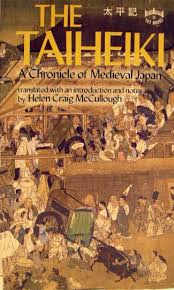
The only other book I spent any significant time was The Taiheiki, and if–like me–you think reading a translation of 19th century French literature can be a challenge, try reading a translation of 14th century Japanese literature. As I’ve mentioned, this book is research for the novel I’m working on. The challenge is the vast cast of characters. It’s a blend of history and fiction, and if you don’t know who was allied with whom during the war between Emperor Go-Daigo and the Hojo, it’s hard to figure out who you should be rooting for–unless it’s talking about the legendary warrior Kusunoki Masashige or one of the few other really well-known samurai.  (Kusunoki was the lord of a small and inconsequential province and his name would likely have been lost to history–despite being a brilliant General–had he not become Japan’s national paragon for the virtue of loyalty.)

Taiheiki

BOOK REVIEW: Yoga Body by Mark Singleton

Yoga Body: The Origins of Modern Posture PracticeYoga Body: The Origins of Modern Posture Practice by Mark Singleton

My rating: 3 of 5 stars

Amazon page

I was excited to stumble across this book because it proposed fresh insights into the history and development of posture-centric yoga. Singleton’s premise is that yoga as it’s practiced in studios around the world today (i.e. practices focused heavily on asana, or postures) has almost nothing to do with historic yogic traditions and is to a large extent European (or Western) fitness practices fed back to the world with a patina of Indian-ness instilled by a few Indian fitness teachers (e.g. T. Krishnamacharya and students.) This is a bold and stunning hypothesis. The problem is that Singleton leaves plenty of room to doubt his thesis. I’m not saying that I’m certain Singleton is wrong, but after reading the book I’m no more inclined to believe his hypothesis than when I first read the book blurb.

The book consists of nine chapters:
1.) A Brief Overview of Yoga in the Indian Tradition
2.) Fakirs, Yogins, Europeans
3.) Popular Portrayals of the Yogin
4.) India and the International Physical Culture Movement
5.) Modern Indian Physical Culture: Degeneracy and Experimentation
6.) Yoga as Physical Culture I: Strength and Vigor
7.) Yoga as Physical Culture II: Harmonial Gymnastics and Esoteric Dance
8.) The Medium and the Message: Visual Reproduction and the Asana Revival
9.) T. Krishnamacharya and the Mysore Asana Revival

One can see the flow of the book in this chapter listing. It begins by describing the ancient yogic traditions (e.g. Jnana yoga, Bhakti yoga, and Karma yoga.) Singleton then goes on to put immense weight on very few voices that were speaking globally about yoga in the late 19th century—largely European but notably including Swami Vivekananda. (This, by the way, is where I noticed the most glaring weaknesses of the book. There seems to be an assumption that what the most vocal people were saying during this time was the truth, the whole truth, and nothing but the truth.) One will note that the late 19th century is an arbitrary point to make the critical juncture for a study of yoga—this era’s sole importance seems to be in that that’s when Europeans started entering the scene (and documenting it in English and Western languages to a large extent.) I understand that there may have been a dearth of information previously; however, I’m also skeptical of equating the sum of truth with the sum of what is documented.

The book then shifts into the early 20th century when Singleton proposes the proto-postural yoga is beginning to coalesce with both Western and indigenous Indian influences. Singleton writes extensively about this period, and presents what he believes is the path by which postural practice evolved over a short time into modern yoga as we know it. The book ends in the mid-20th century with an extensive discussion of T. Krishnamacharya and his pack of brilliant students (i.e. B.K.S. Iyengar, Pattabhi Jois, T.V.K. Desikachar, and Indira Devi) who are responsible for a lot of how yoga is practiced today (for virtually all of modern yoga by Singleton’s reckoning.)

It should be noted that this book is put out by an academic press, Oxford University Press, and there’s all the front and post matter that one would expect of a scholarly press publication. This includes an introduction, notes, and a bibliography.

So, you might be wondering how I could have so much doubt about the veracity of the book’s central claim—a book written by a Cambridge educated scholar and published by Oxford University Press. It’s, after all, chocked full of facts that are designed to bolster Singleton’s argument. I’m certainly not suggesting that Singleton lied or presented false facts (however, I have–and will further–argue that he frames facts throughout the book to diminish those statements and facts that run counter to his argument while wholeheartedly accepting statements that validate his argument—even when the people whose statements he leaves unchallenged would seem to have their own agendas. I don’t know, perhaps T. Krishnamacharya was—as Singleton intimates though never explicitly accuses—lying when he claimed to have received his sequence and approach from a scripture he was taught by a Himalayan master. However, interestingly, he would be lying to minimize his role in the development of yoga rather than to increase his fame. This stands in contrast with the European authors who Singleton readily accepts who were seeking to build their bona fides as experts in the esoteric systems of India and the Himalaya, who arguably had a lot to gain from being seen as having a full understanding of these systems.)

The best way to understand the root of my skepticism is to tell a make-believe story. Imagine a race of aliens came down to Earth. For whatever reason, they want to understand (presumably among many other things) the Roman Catholic Church. One astute alien scholar notes that, after having reviewed not only the entire Bible but a vast canon of theologian discourse, there is scant mention of sitting or kneeling. However, when cameras came around, there came to be clear evidence of pews and kneelers in the church. The aliens conclude that Catholics had always stood during worship, but with the advent of the camera they began to sit and kneel. The aliens, having big and bulbous butts, conclude that the Catholics have become concerned that their own big, bulbous butts will be captured for posterity (pun intended) by the cameras and have, thus, opted to adopt postures that would more adequately provide cover. In the present day, sitting and kneeling are the bulk of what Catholics do with their bodies when [overtly] practicing their religion, and so it must be those postures–rather than abstract notions like achieving “grace” are now the most critical part of the practice. (Besides, the earliest photos of kneelers came from Protestant churches, so perhaps Anglicans taught Catholics how to kneel.)

If you haven’t figured it out, in my little scenario, the late 19th century Europeans who were writing the English language tracts that formed the heart of Singleton’s research material are the aliens with big, bulbous butts. I would propose that the Europeans aren’t viewing yoga completely objectively but through the lens of their own experience and desires. Furthermore, they are also only giving weight to what they see and hear (which may or may not be a full picture.) I would further argue that just like Catholics don’t devote much text to discussing sitting and kneeling in the documents of the Vatican library doesn’t mean there isn’t a long history of those practices. Postural practice is:

a.) not the critical end result that everyone is concerned with even if it takes up the bulk of one’s time in [overt] practice. It’s certainly true that there are a vast number of yoga practitioners whose only interest is in the fitness aspect of the practice. However, there are also many who spend most of their yoga reading time learning from Vedas and reading yogic philosophy even though the bulk of their practice time is asana.
b.) extremely difficult to convey via text but readily conveyed through demonstration and hands-on teaching. If you were a Catholic and wanted to teach someone kneeling, would you write them a three paragraph text description of the process, or would you just demonstrate how to kneel and correct any glaring (albeit unlikely) deficiencies in form.

At no point does Singleton get into the postural details of individual asana. He mentions another scholar that supposedly has done some of that work, but Singleton feels it’s not critical. However, it’s very hard to prove what he’s trying to prove without getting into that level of detail. Yes, there will be similarities between various systems of stretching because of the nature of the body. For example, European stretching systems had a forward bend that looks reminiscent of paschimottanasana (the body folds that way and stretching the hamstrings is one of the most important functions in any stretching regimen), and it shouldn’t be surprising or revealing if the first photograph of this posture was in a European gym (the fact that Scandinavians had cameras before Himalayan yogis isn’t a sound basis to conclude that Himalayan yogi’s learned to bend forward from Scandinavians.) A there are a lot of postures that two systems might reasonably independently discover, but one also can’t rule out that the Indian yogi taught the Europeans and not the other way around. (I know it’s hard to comprehend in the era of FaceBook, but failure to be documented does not equal failure to be true. The farther one goes into the past, the less of what happened is going to be documented, and some cultures are going to be more likely to document events than others. e.g. Would our aliens be right or wrong if they concluded that 85% of humans are females between the age of 12 and 24 years old because 85% of the selfies posted on the internet are among that group. )

Singleton’s book does have some graphics. They didn’t always help his case, however. I was struck by how few of the fine details of the European postures correspond to practice as we know them, while some of the very old paintings look almost exactly like present day asana. (If one accepts that the fact that they didn’t have the greatest grasp of capturing perspective back then isn’t indicative of how flat the postures and people were back then.) I’ll readily admit that I wouldn’t definitively count Singleton wrong on my subjective observation of the pictures, but it does leave me with a lot of room for doubt.

I suppose the next question is why I didn’t completely pan the book. Three stars isn’t a tragic rating. I thought the book contained a lot of good information and food for thought (even if it fell far short of proving its central hypothesis.) I particularly enjoyed the chapter on T. Krishnamacharya and his now-famous student body. I’ll also say that part of why I came away from the book with such a muddled perception of this history is that Singleton doesn’t hide facts that are damning to his case, but rather presents them and then tries to marginalize them. A prime example would be the Hatha Yoga Pridipika (HYP), a 15th century text that mentions a number of the asana considered classic yoga postures today (some of which form the core of a Hata practice)—though admittedly HYP emphasizes the importance of only four seated postures.

I can’t say that Singleton didn’t help give me pause to wonder about the truth of the received understanding of yoga’s evolution. I’ve practiced yoga in places as varied as India, the U.S., Thailand, and Hungary, and I found it shocking how similar the practice is around the world. This bodes well for the argument that yoga as it’s practiced today has coalesced recently. By way of contrast, there are many myths about how one martial art is the ancestor of another but the two systems often look nothing alike. (e.g. I’ve studied Kalaripayattu, which many believe was the ancestor art taken to China by Bodhidharma through Southeast Asia, but which today looks nothing like Kung fu or Muay Thai. Furthermore, Kung fu styles usually look quite unlike the Korean and Japanese martial arts that they are said to have inspired.) If the latter among these martial arts did come from the earlier, they evolved apart quickly. While the evolution into different martial art forms is quite possible, it raises the question of why yoga should be so similar internationally. A skilled yoga teacher would likely give a given student the same alignment adjustments for, say, Warrior I, regardless of whether the teacher was in Prague, Manila, Tokyo, or San Diego.

I can’t say that I’d endorse Singleton’s argument. It would take much more precise information for me to buy it (and it’s likely that said detailed historical information doesn’t exist.) However, if you’re interested in the history of yoga, you might want to check out this book. Your conclusions may differ from mine, but even if they don’t I suspect you’ll learn a thing or two of interest. Yoga Body was reasonably priced as a Kindle book when I bought it.

View all my reviews

BOOK REVIEW: Zen Mind, Strong Body by Al Kavadlo

Zen Mind, Strong Body: How To Cultivate Advanced Calisthenic Strength--Using The Power Of Zen Mind, Strong Body: How To Cultivate Advanced Calisthenic Strength–Using The Power Of “Beginner’s Mind” by Al Kavadlo

My rating: 3 of 5 stars

Amazon page

This book discusses issues related to a calisthenics-centric approach to fitness. The first thing that one should be aware of is that the book has no such unifying theme as would be suggested by the title. Really, this is a sort of “best of” collection of Al Kavadlo’s blog posts, but—of course—that makes for a really unsalable title. The title is a take-off on Shunryu Suzuki’s Zen Mind, Beginner’s Mind, which is quoted in the front matter. Don’t expect Zen or the mind to formally enter the picture in a major way. I will say that Kavadlo has a Zen approach in that he emphasizes simplicity and paying attention to what one is doing throughout (so many people try to drown out their workouts with music or entertainment.)

I had mixed feelings about this book. On the pro side, Kavadlo is clearly knowledgeable and has a sound and pragmatic approach to fitness. Not only is he not trying to sell you on supplements and fitness fads, he tries to discourage such profit-driven nonsense. You’ll get some good information and sound advice from reading this book. You’ll find out why Kavadlo eschews dietary supplements, how he prepared for a marathon and a triathlon, what advantages calisthenics hold over other strength building activities, and how to avoid injuries.

So what’s the problem with the book? The first problem is rooted in the fact that I paid full price for the book soon after it came out, and–at said price—it’s overpriced for what it is—a rehash of blog posts. It looks like Amazon has dropped the Kindle price. As I said above, I respect Kavadlo’s approach to fitness, and think that he offers some useful insights, but the question is whether you couldn’t get the same insights for less–I think you can. At half the price I paid for this book, I would have been much happier with it. Alternatively, if they had beefed it up a bit—particularly with useful graphics—I might have found it a good buy at the price I paid. The bottom line is it’s a thin book of blog quality material.

My second problem is that they waste too much space with pictures of Kavadlo standing around shirtless in front of random minor NYC landmarks. I understand that a cut, muscular body is the ultimate resume for a personal trainer. However, I suspect that even the ladies and gay men will at some point say, “Enough with the standing around shirtless photos, Al.” For us heterosexual males, the number of these shots is way over the top.

Now, I’m not saying that the number of photos is excessive. They could have used some of that photo space for instructional photos of how to better do the exercises, or to build up to the more challenging exercises. Kavadlo has an excellent YouTube channel, so I know it would be possible to get more photos of him actually doing exercises. (They do have some pics exercise pics, particularly in the sample workout section at the back.)
The book’s 26 chapters are arranged in four parts that deal with background information, calisthenics, cardiovascular workouts, and diet respectively. There is a section at the back that presents a series of sample workouts divided into beginner, intermediate, and advanced levels.

As for my recommendation, I’d say that if you are interested in fitness and see this book at a price of around $4, buy it. However, if it’s at $10, it’s overpriced for what it is. Of course, your views of a fair price may vary. (I should note that I purchased it in Kindle e-book format.)

View all my reviews

10 Easy Pieces of Fitness Wisdom: and Why “Fitness Secrets” are Bullshit

A few weeks ago I did a post entitled, 10 Easy Pieces of Wisdom: and Why “Secret Wisdom” is Bullshit. That article’s premise was that understanding what one needs to do to be wise is simple, but the process of doing it is inescapably arduous–often to the point of seeming Sisyphean. (For those who aren’t brushed up on their Greek Mythology, Sisyphus was the guy who was punished by having to roll a rock up to the top of the hill only to let it roll back down, and the repeating the process ad infinitum.) I’m not saying that it’s a Sisyphean task, just that it can feel that way and one has to press forward through that feeling.


This post has the same premise, but applied to fitness. Fitness and wisdom have more in common than you might first think–they are both about improvement of the self. Unfortunately, the commonality that’s relevant here is that both invite crowds who will try to convince you they have an end-run around hard work. One of my past martial arts teachers, who was also in law enforcement, said that “cons only work on people with larceny in their hearts.” So it is that the con-men that are trying to sell “enhanced formula supplements” or “a 15 minute per week workout” can only sell to the people who want something for nothing. (Clue: what you get for nothing is nothing worth having.)


Without further ado, here are the 10 easy pieces:


1.) Know Thyself. This is a two-parter:

First, don’t let your ego write checks your body can’t cash. Some students want to jet right into the most advanced exercises. That’s like a third grader taking trigonometry; it’s ultimately less than productive. These are the individuals who tear ligaments, and who you don’t see again for six months–if ever. For virtually everyone, advanced exercises–be it a muscle-up or a yogasana like Urdhva Dhanurasana (A wheel pose, chakrasana, that is entered from a standing back bend)–require a lot of time spent in capacity building via fundamental exercises.
 

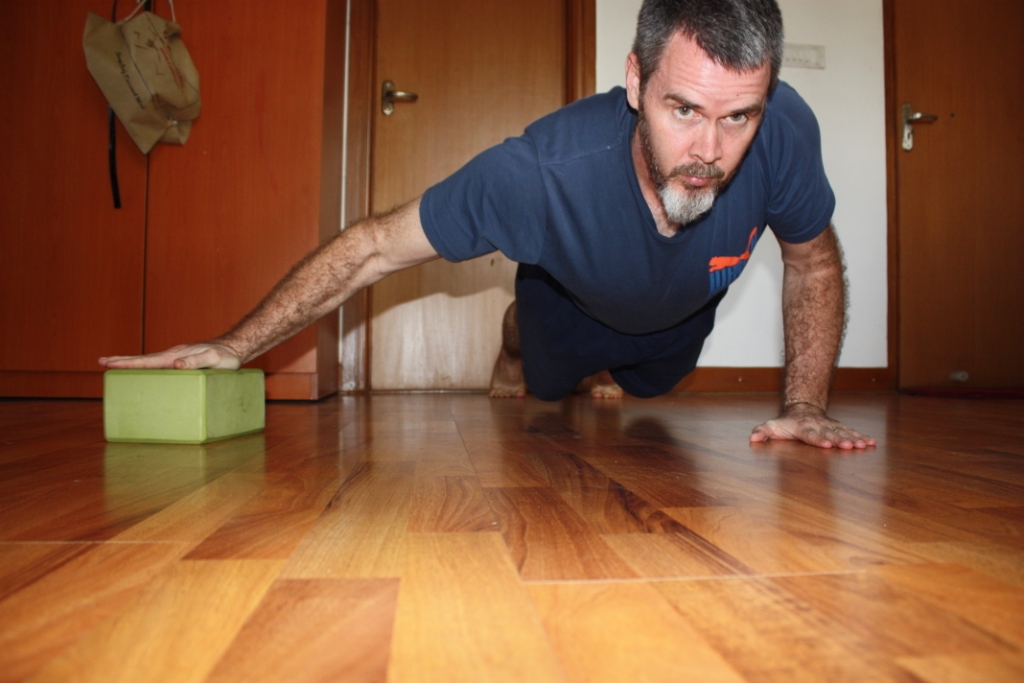
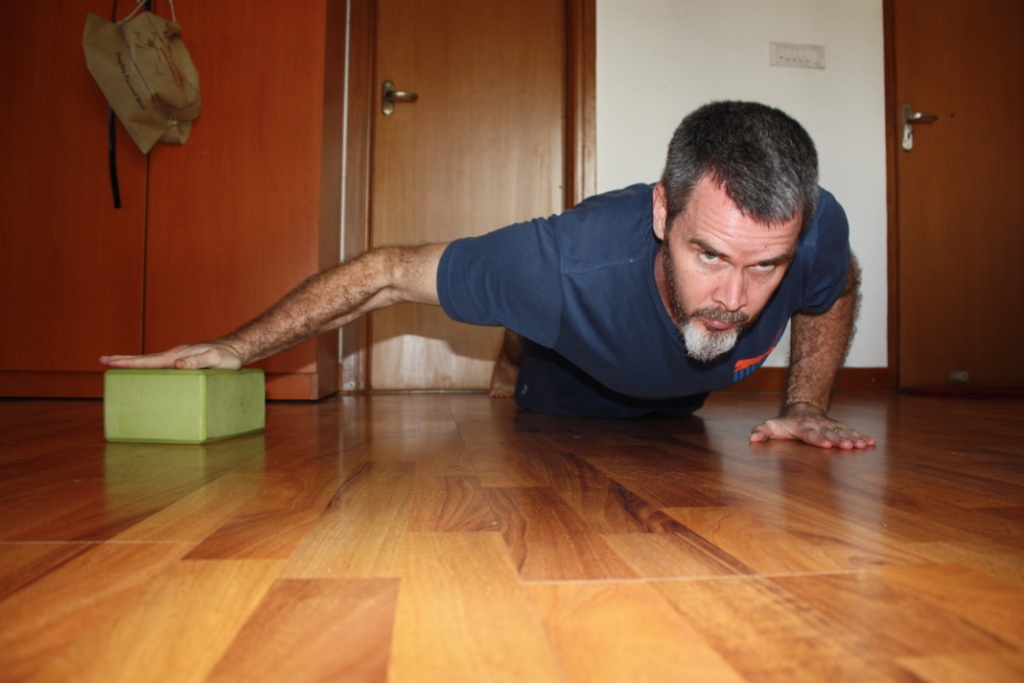
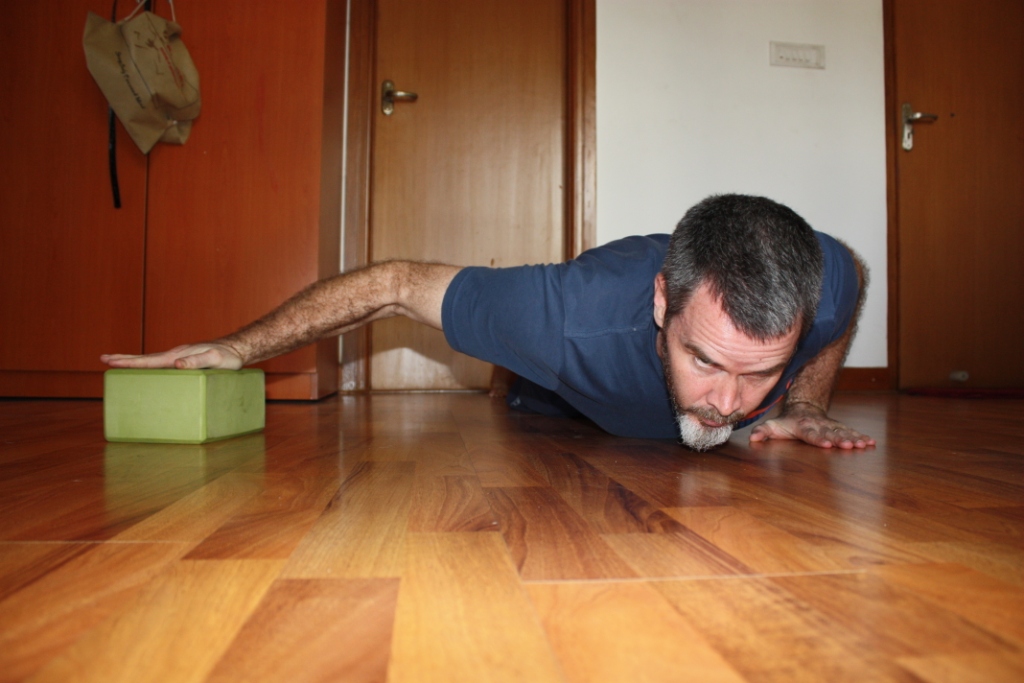
I’ll give an example, I saw someone on television yesterday doing the most horrendous single-armed push up. The only thing that kept this individual from damaging himself is that his range of motion was so tiny (he may have still injured himself.) His problem is that he heard that single-arm push-ups were cool, and he wanted to get straight to it. In reality, one needs to build into that exercise starting from a good solid standard push up, and then doing preppers (preparatory exercises) that gradually shift the load onto one arm. But maintaining form as well as one can. For example, putting one hand on a block off to the side, and gradually shifting it out to arm’s length.

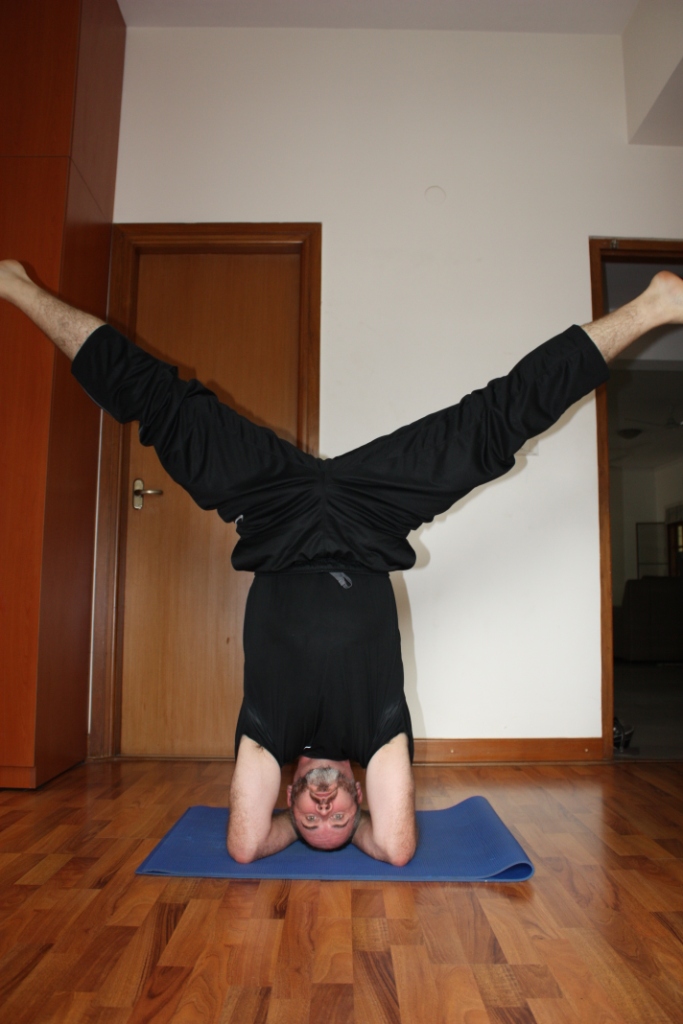
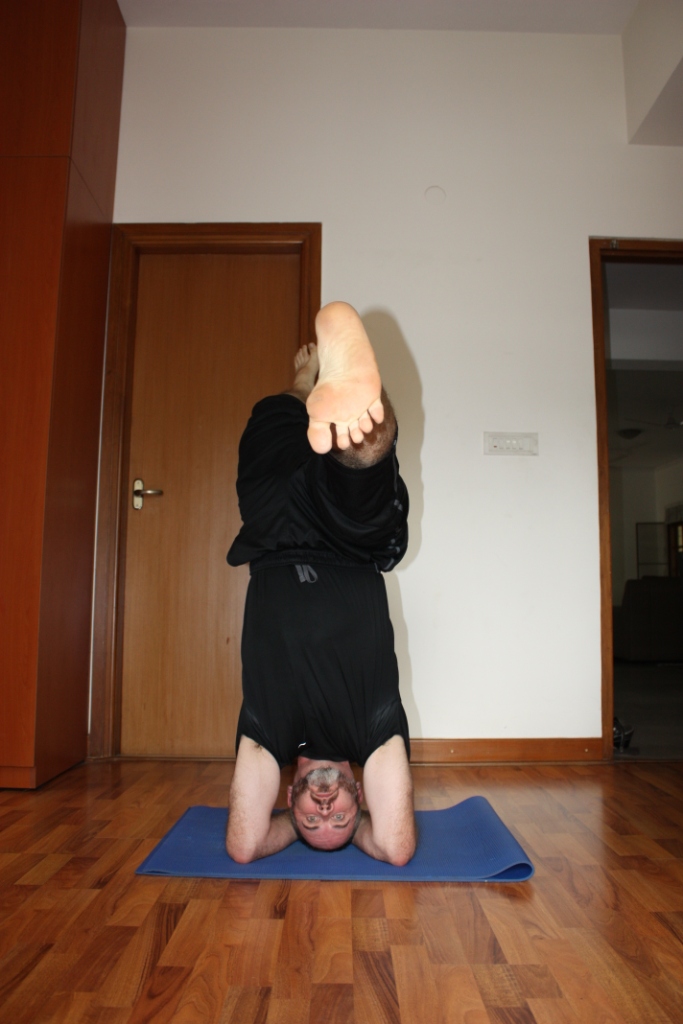
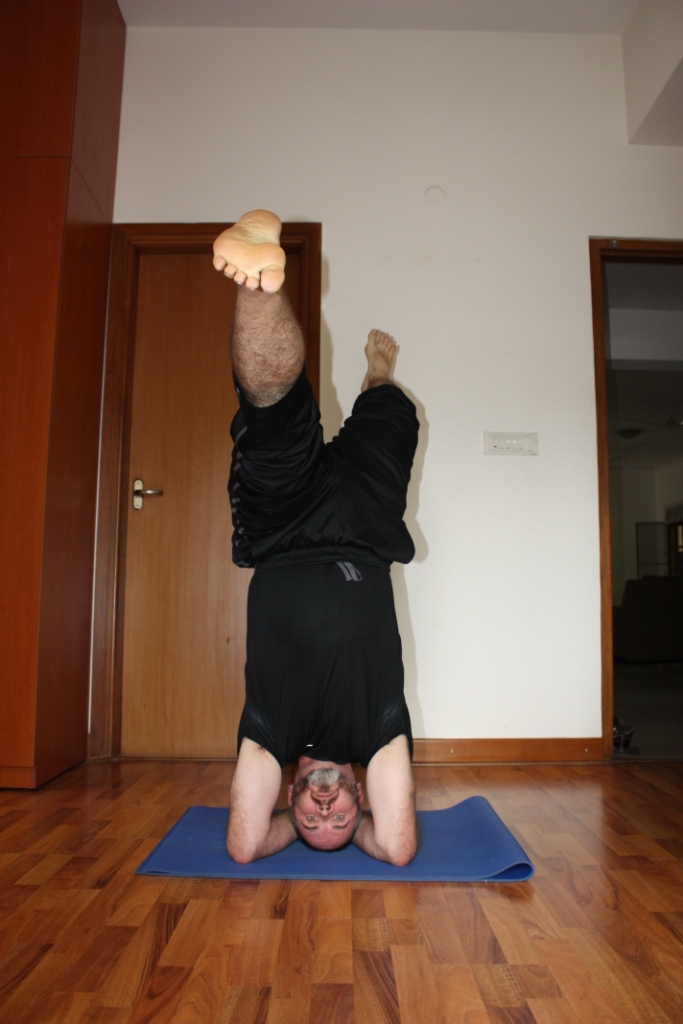
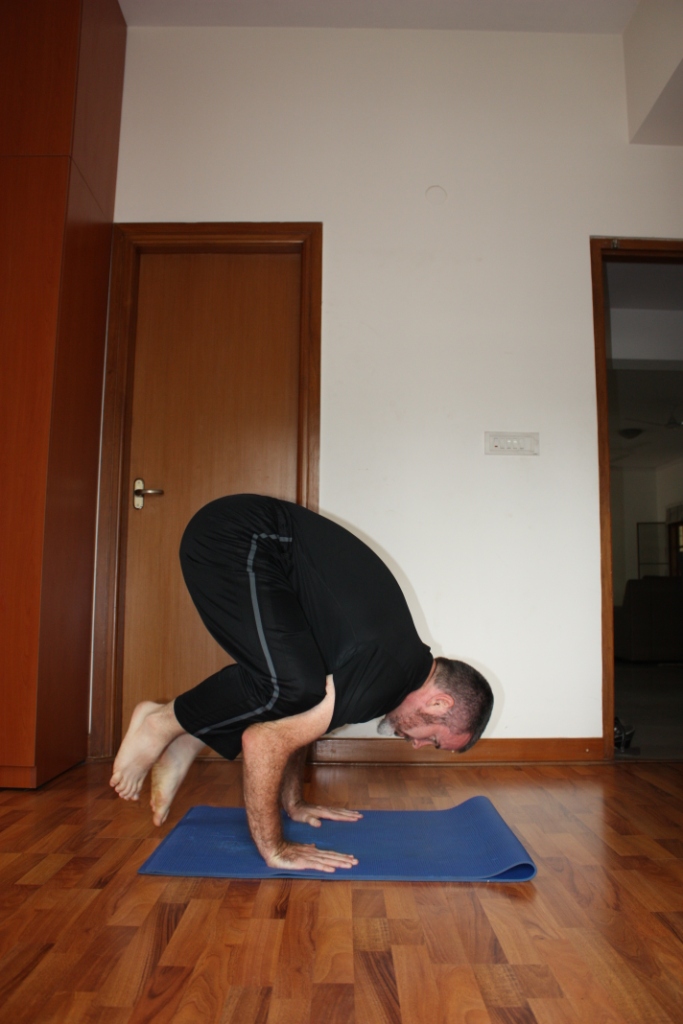
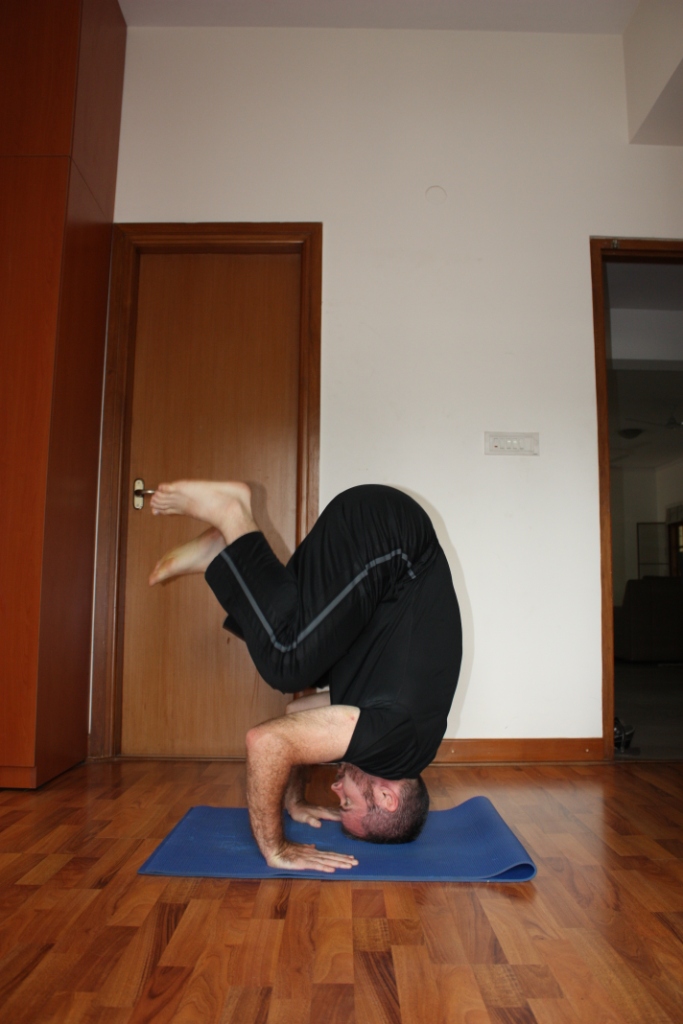
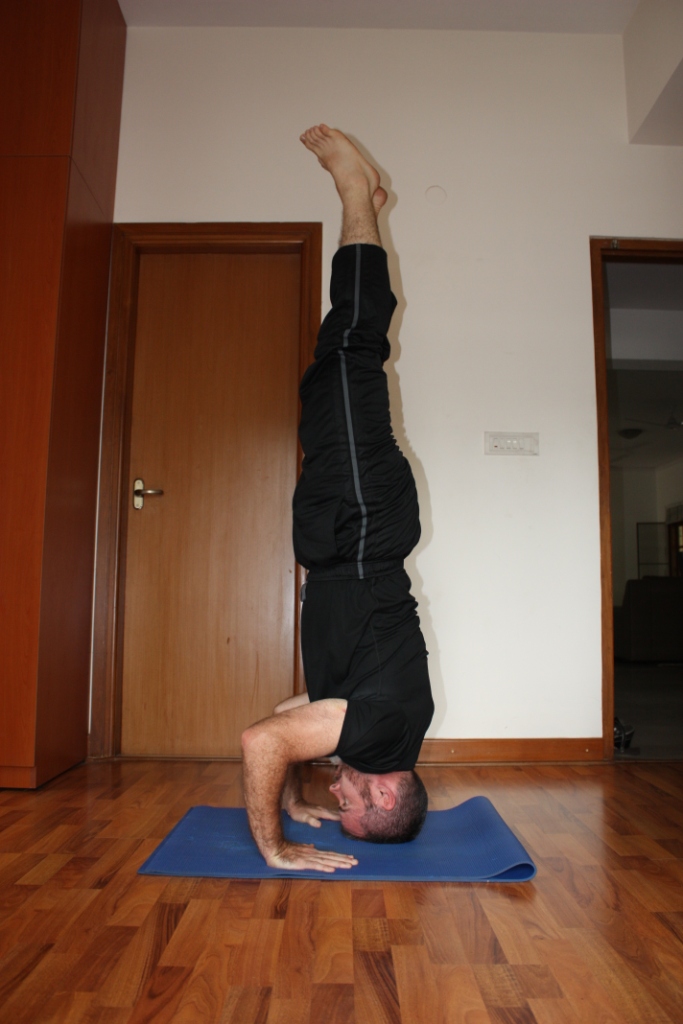
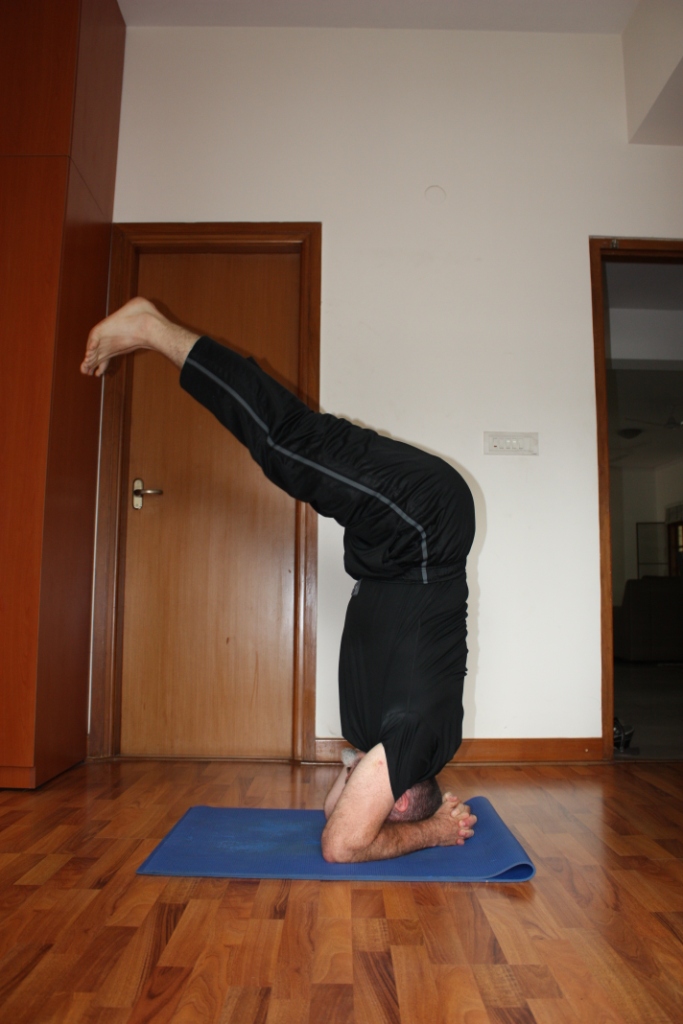
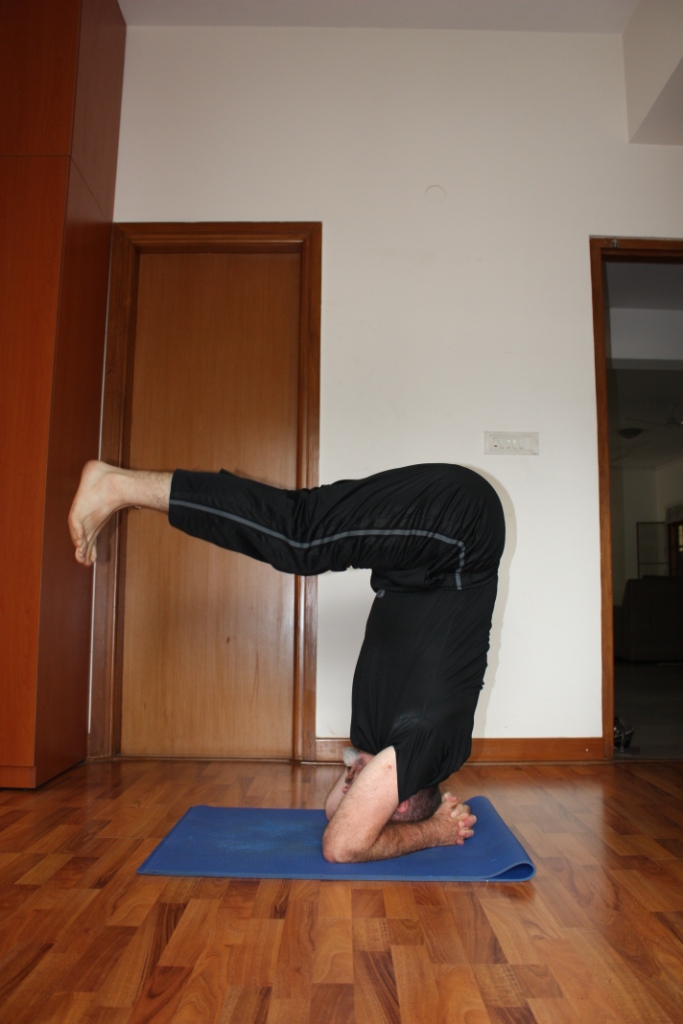
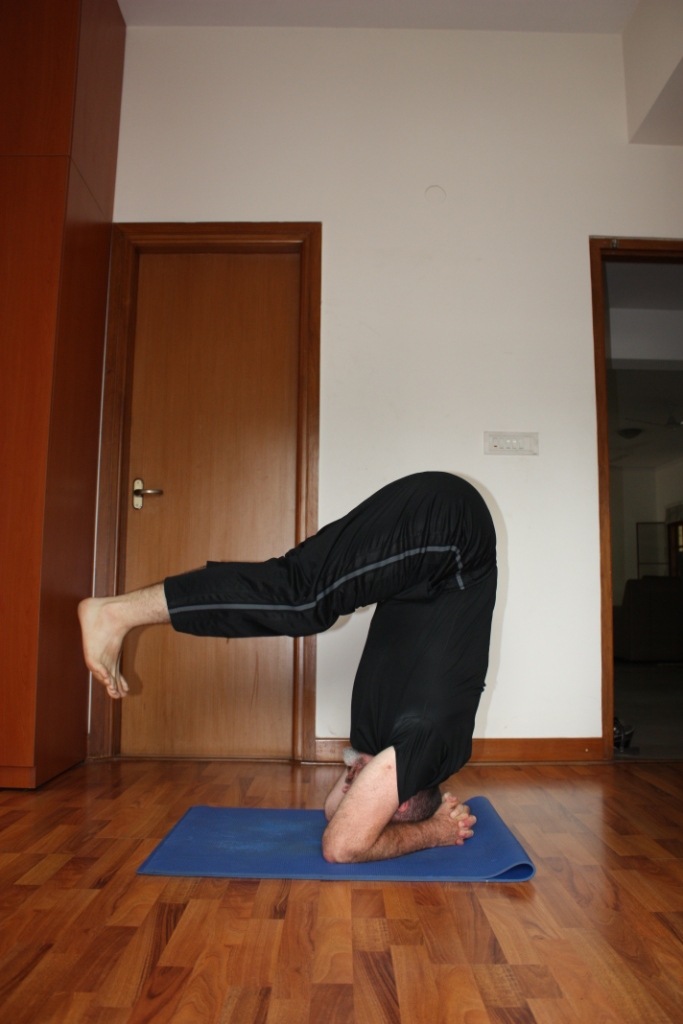
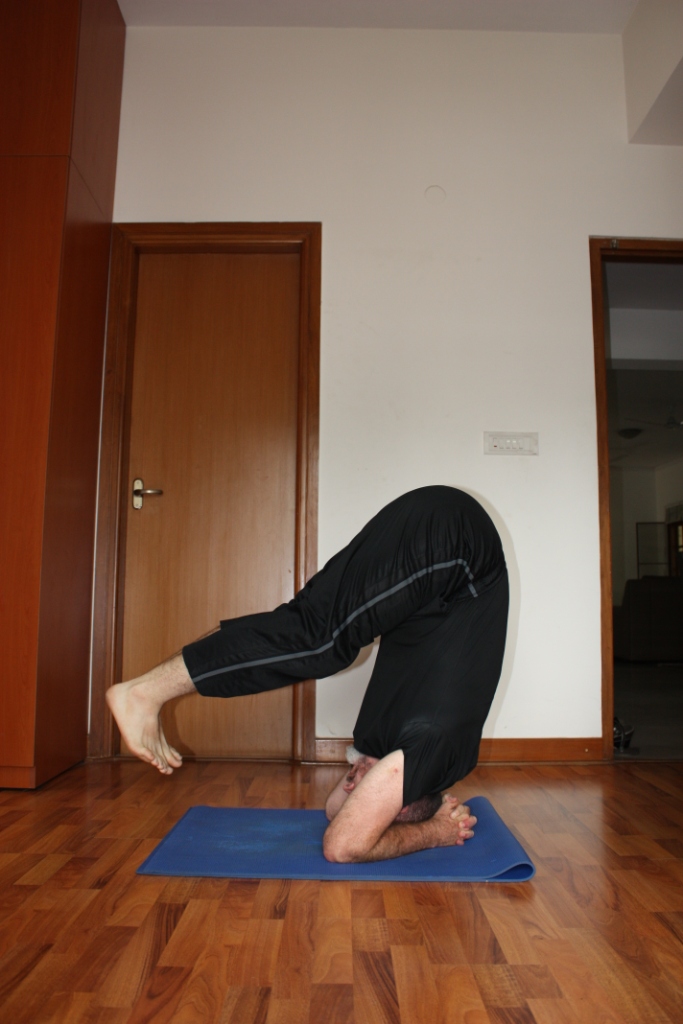
IMG_3217 IMG_3218 IMG_3219


Second, on the other hand, don’t half-ass everything because you mistake discomfort for agony. This confusion cause people to greatly underestimate their capabilities. While you may think your teacher or trainer is a Sadist (only rarely are they are, really), the fact is that they are trying to give you one of the greatest gifts you can ever receive, which is the realization that you are capable of far more than you think you are–if you’re willing to gut it out through the challenging parts.


2.) Diet is the 800 pound gorilla of cutting weight. The simplified mathematics of this that adding exercise (while critically important to fitness) only marginally adds to the calories burned part of the equation. (Believe it or not one burns a lot of one’s calories just through baseline activities–breathing, walking, sleeping, etc.) However, when you cut caloric intake that’s all reduction from the intake side of the equation. However….


3.) Don’t make your goal weight loss, but rather to have a healthy and more functional body. Weight loss tends to be about external validation. That is, one wants to appear more attractive to someone else (or everybody else.) That’s a sucker’s game. People won’t necessarily notice–depending upon how often they see you and how self-absorbed they are. If you shed pounds at a healthy rate, people around you all the time don’t necessarily notice a day-to-day change.
 

On the other hand, as one starts feeling healthier and develops movement capacity beyond your previous capability, that can’t be taken away by anyone.


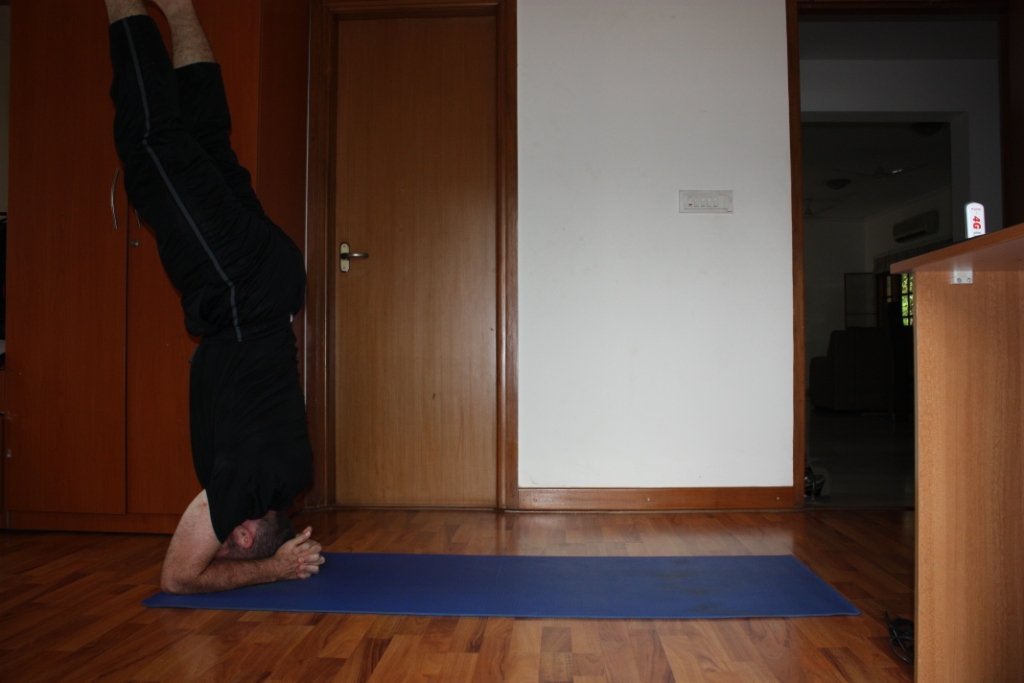
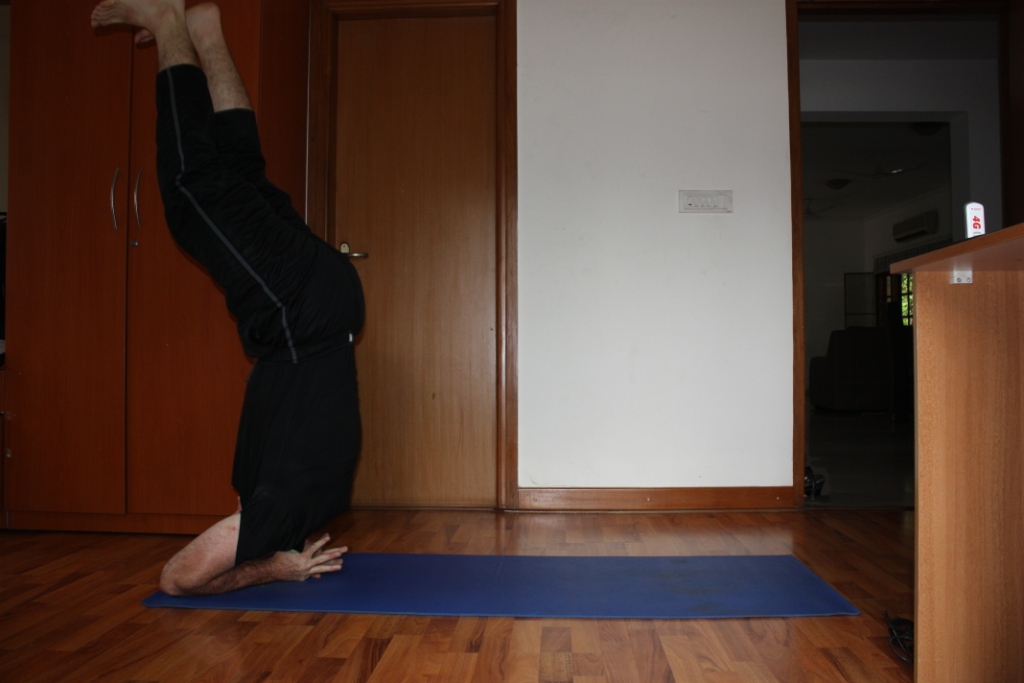
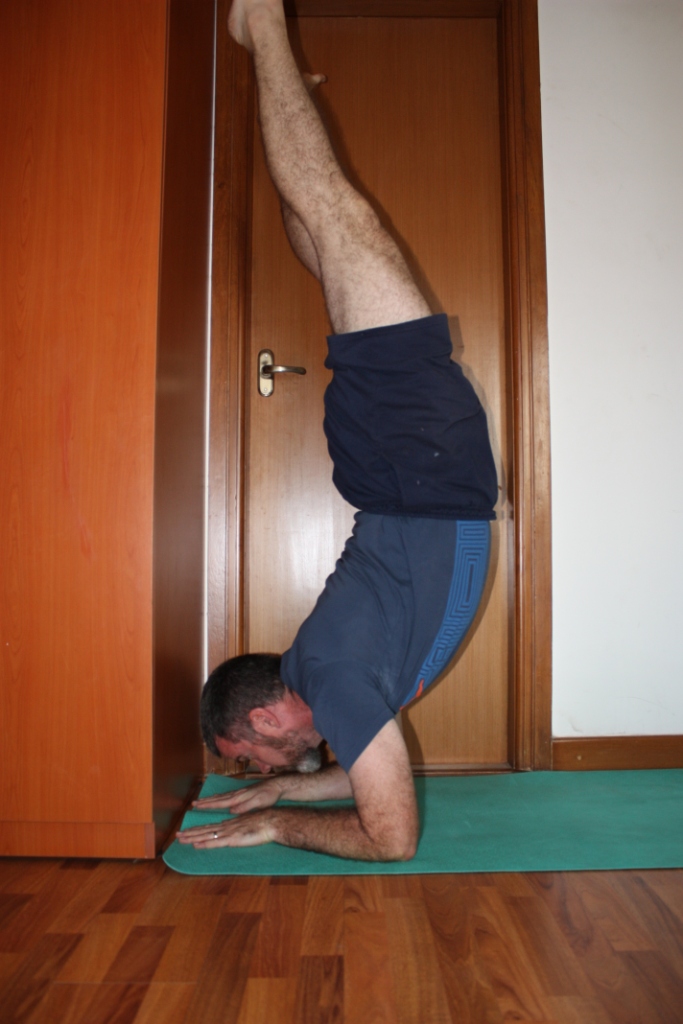
4.) When your body has been properly prepared through fundamentals, advanced maneuvers practically fall into place. I was taught a scorpion prepper  just a couple of weeks ago, and was surprised to find it was much easier than expected. I still have a lot of work to do to take it to the full pose. For example, I’m still using a wall so I don’t over-rotate in the arched back position,  but I bring my heels off the wall once I’m up. Next I’ll do away with the wall. Then it will be time to start bending my knees. My point is that  work on back stretches, core strengthening, and headstands made it relatively easy to get into the first stage.

IMG_3225


5.) Reveling in small victories can kill progress. The handstand provides a classic example. In the beginning, one starts kicking up against a wall. Even this can be a challenge in the beginning. However, as soon as it becomes doable, one should start gradually taking the training wheels off. This may begin as cautiously as pulling one leg away from the wall at a time. Then do away with the wall altogether. Then the suffering begins anew as one sheds the kick up in favor of a more controlled manner of ascent into the handstand.


6.) Don’t be quantitative.  A journalist once asked Muhammad Ali how many sit-ups he did in his training regimen. Ali said, “I have no idea. I don’t start counting until they start hurting.”

I’ve heard guys pleased with themselves because they do “sets of 100 push-ups.” This is often impressive only until you see the person actually do the exercise, and then–more often than not–you notice that they haven’t actually done one push-up. Rather, they’ve done a whole lot of mild elbow bends from a roughly plank-like position. It’s better to do 10 push-ups with a full-range of motion and controlled ascent and descent than to fool yourself with weak form.


7.) Don’t mindlessly workout. Shun the distraction of headphones, television, or cellphones . If you find working out to be so mind-numbingly boring that you need a distraction, you should re-evaluate the nature of your workouts. You should be “listening” to your body throughout the process. If your goal is to have a greater command over your body and its movement, e.g. you are a martial artist, dancer, yogi, etc., then this is particularly important.


First of all, with respect to boredom, boredom is the product of a weak mind. So you might consider working the mind out as well. Secondly, if you are truly bored, you should be upping your game.


While this may be one of my least popular points in this post, if you don’t believe me, ask Al Kavadlo.


8.) Rest is part of the process. It’s not stepping away from the process. As your body rests, your mind should be alert and taking stock of the effect of the practice on your body. Rest breaks aren’t zone out time. Also, part of having a healthy body is building a healthy parasympathic nervous system and immune system. Your body requires rest to heal, and it can heal and fight off infections tremendously effectively if you provide the right conditions.


9.) Exercises that consist of the motions you will need for your particular life are the most important.  The term “functional fitness” is ubiquitous these days, but I first read this advice in Bruce Lee’s Tao of Jeet Kune DoLee said that actions like punching, kicking, and grappling practice should make up the core of a martial artist’s workout. That doesn’t mean one should do away with general fitness activities. (Lee certainly didn’t.) Martial arts provide a prime example of an activity that requires a well-rounded form of fitness. That is, one needs core strength, good range of motion, cardiovascular endurance, and extremity strength and speed.


10.) Don’t agonize over failures. Move onward and, carefully, upward. If you aren’t (safely) failing to achieve an occasional goal, then you need to kick your way out of that box of comfort zone you’re trapped in.


BOOK REVIEW: The Key Muscles of Hatha Yoga by Ray Long

The Key Muscles of Hatha YogaThe Key Muscles of Hatha Yoga by Ray Long

My rating: 4 of 5 stars

Amazon page

This is a handy anatomy reference for yoga teachers and practitioners. The bulk of the book describes major muscles, or—when relevant—muscle groups. For each of the key muscles it gives the insertion, origin, innervation, agonists, synergists, and depicts the muscle in color drawings. The book also shows typical yoga postures in which the muscle is engaged or stretched. This gives one some idea of how the muscle is affected by changes in attitude and state of contraction.

True to the title, this isn’t a general anatomy and physiology book for yoga. It specifically deals with the muscular system. That being said, it does have some opening matter on the skeletal system, the various types of joints, and other fundamentals that one must understand to grasp how muscles create movement and change bodily alignment. It also has a few brief chapters at the end that deal with important issues like breathing and bandhas. However, if you’re looking for a book with substantial coverage of the anatomy and physiology of breath or nervous system activity, you’ll likely need to look elsewhere. The book also addresses the concept of chakra, which seems out-of-place in an otherwise scientific book, but it will be appreciated by those who view the body in that way and is easily enough ignored for those who want a strictly scientific presentation of material.

While the book is limited in its focus, it does a good job of giving a lot of information in a concise fashion. The graphics are easily interpreted and one can readily distinguish the muscles in question. I found the book to be well-organized and easy to use.

I’d recommend this book for any serious yoga practitioners, particularly teachers and those who need to be concerned about the minutiae of movement and alignment.

View all my reviews

Vinyāsa: A Few Thoughts

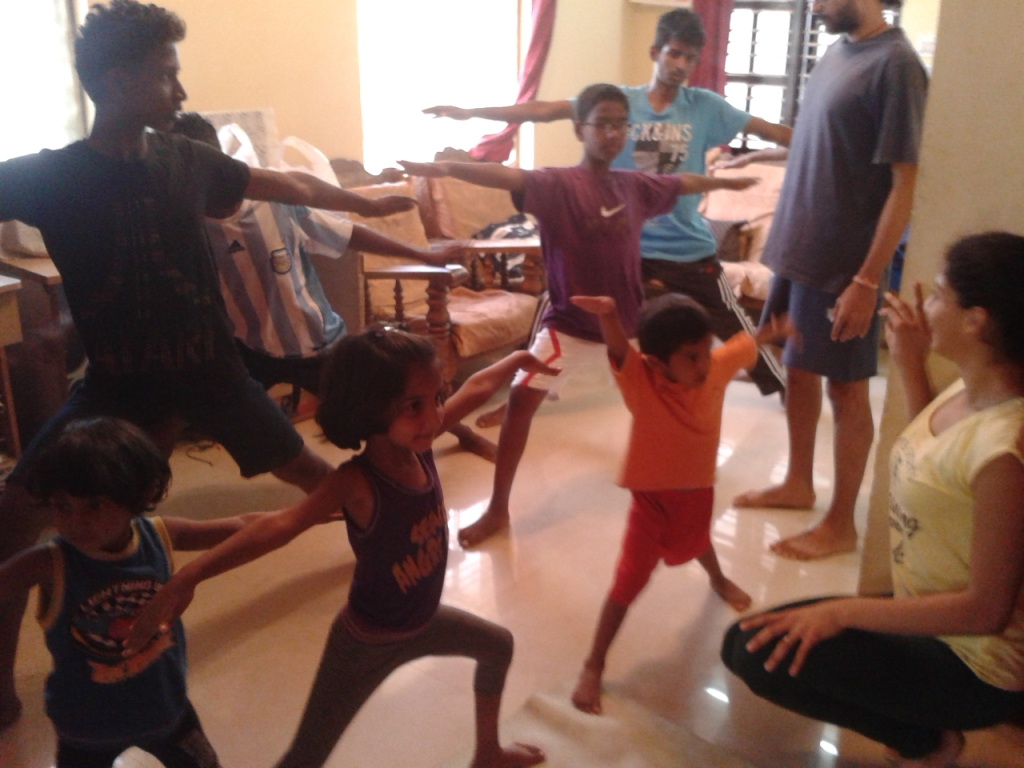
IMG_1254I attended a Vinyāsa Workshop this weekend at a1000Yoga in Bangalore. The workshop was taught by Bharath Shetty, who is the founder of the IndeaYoga Shala in Mysore, and who was a student of–among others–B.K.S. Iyengar.


The word vinyāsa has multiple meanings, but most commonly–and in this case–it refers to a style of yoga in which postures are linked together through transitional movements. (And, importantly, these transitioning movements establish a flow of breathing throughout the practice.)  Vinyāsa practices tend to be vigorous and challenging because one keeps moving when one isn’t holding a posture (i.e. there’s no down time), and the transitions require a lot of lifting oneself up, which necessitates a strong core and reasonably strong arms / shoulders.


Vinyāsa practices can have fixed-sequences (the same asana, or poses, are always done in the same order) or not have a fixed-sequence (the details of the practice will very from one session to the next.) There’s a great argument for the practice of a fixed-sequence. That is, one can get beyond focusing on crude alignment details and put one’s mind on fine details of breath, drishti (focal point), and keeping a slight tension in the perineum. Such facts can slip away when one is struggling to get the sequence and postural details down pat.


However, there’s a great counter-argument against fixed-sequence programs. The counter-argument goes like this, “If you get so bored out of your wits that you quit, you will also never get to the part where you focus on higher level details.” My advice would be “know thyself.” In other words, if you can keep to a fixed-sequence, you should. However, if your practice will peter out without constant fresh challenges, don’t force yourself into a fixed-sequence box. It’s better to take longer to get to a higher level of practice than to quit.


The most famous fixed-sequence vinyāsa style is the Ashtanga Vinyāsa system handed down by Sri K. Pattabhi Jois. (Note: some people call this system Ashtanga Yoga, and others don’t like that name because it implies that this system is heir apparent to Patanjali’s yoga as described in The Yoga Sutras.  [In other words, there’s an argument that that name was already taken.] Furthermore, Jois’s system isn’t really any more of an Ashtanga Yoga [in the Patanjalian sense] than any other Hatha yoga style because it focuses on only a few of the limbs (i.e. asana, pranayama, etc.) at least until one gets to very advanced stages of practice.


The most famous vinyāsa style without a fixed sequence is probably Power Yoga, although many people practice classic Hatha asana in a vinyāsa.  Power Yoga emphasizes core strength building, and was originally developed by Ashtanga vinyāsa practitioners to give one the workout of Ashtanga vinyāsa without its monotony.


This was my first experienced with a fix-sequence vinyāsa program other than Ashtanga Vinyāsa, so I didn’t know what to expect. This was the second workshop I’d attended by Bharath Shetty, so I knew that he was a skilled and knowledgeable teacher. However, I didn’t know what Indea Vinyasa, itself, would be like.


It turned out to be much like Ashtanga Vinyāsa. The general organization is identical. That is, there are two versions of Surya Namaskara, a standing sequence, a floor sequence, and a finishing sequence. Note: I’ve only been taught the first series of each of these systems, and so I can’t say how they vary at more advanced levels.


The Surya Namaskaras of Indea Vinyāsa mirror those of Ashtanga Vinyāsa, but they aren’t identical. The Indea Vinyāsa Surya Namaskara-A is slightly more involved, and includes an Utkatasana. The Indea Surya Namaskara-B, like Ashtanga Vinyāsa, features Warrior I, but doesn’t include Utkatasana (chair pose.)


The standing sequences of the two systems are identical. However, the floor sequence is very different. The Ashtanga Vinyāsa preliminary series (as mentioned above, both systems have multiple series) focuses heavily on forward bends, but the Indea Vinyāsa  preliminary series is more balanced between forward and back bends. The finishing sequence is also quite similar between the two styles.  The sarvangasana-halasana-karnapidasana-matsyasana sequence is the core of both finishing sequences.

VinyasaWorkshop

BOOK REVIEW: The Medical Care of the Judōka by Anthony J. Catanese

The Medical Care of the Judoka: A Guide for Athletes, Coaches and Referees to Common Medical Problems in JudoThe Medical Care of the Judoka: A Guide for Athletes, Coaches and Referees to Common Medical Problems in Judo by Anthony J. Catanese

My rating: 4 of 5 stars

Amazon page

I’d recommend this book for anyone who holds a position of responsibility in a dōjō or a combative sport gym, including: teachers, coaches, senior students, trainers, etc. It’s intended for those involved with sport judō, but because there aren’t a lot of sport or martial art-specific books of this nature this may be one of one’s best option to get this information. I haven’t stumbled upon other books like this, but performing a search did result in similar books either generic to martial arts or for other martial arts. However, all of the others that I saw were either old / out-of-date, only available in hardcopy (usually at great expense), or were not by physicians. This book is available on Kindle and is quite inexpensive.

While it’s geared toward sport judō, many of the injuries will be common across martial arts. This is truer of grappling-oriented martial arts, but things like mat infections, students with various chronic ailments, and participants being knocked unconscious. (The latter is covered extensively, but arguably being even more of a concern for strikers.)

The book is useful in two ways. First, it discusses first aid and treatment for common injuries in the martial arts. It’s not a first aid manual, and will not replace training. (In fact, the book assumes it’s talking to someone who’s in a position where they’ve had at least minimal training / experience.) However, it may provide useful information about what injuries one should make sure to be trained in when shopping first aid courses. It also gives one ideas about differences of opinion on certain approaches to treatment or the decision as to whether a given participant is safe to participate.

Second, the book discusses whether prospective students with common chronic ailments can safely participate, and under what circumstance. In many cases, this book goes about this by saying what the judō rulebook says. While this may not be a perfect guide for practitioners of other arts, it may give a reasonable idea about how serious one should take a given disease or infirmity.

The book consists of 20 chapters. Most of the chapters cover common injuries and ailments in judō, generally arranged by anatomical systems. However, there are also chapters covering nutrition/hydration, issues for athletes going abroad / older participants / and special needs athletes, drugs and doping considerations, injury rehabilitation issues, psychological challenges, and the traditional Japanese methods of resuscitation and first aid (kappo and katsu.)

In addition to the core chapters, there is some useful ancillary material. First, there are vignettes interspersed throughout the book that could be beneficial. These vignettes reflect the benefit of having an author who is a medical doctor, a long-time judōka, and an experienced match physician. The vignettes may be more likely to stick in one’s head than the blander presentation of information, and these sidebars often address unusual cases. Also, there are two glossaries—one that deals with martial art / sports terminology, and one for medical terminology.

While written by a physician, this book is not written exclusively for other doctors or medical experts. That is to say, it’s easily readable by a lay audience. Medical jargon, when used, is explained the first time in the text, so one doesn’t need to keep jumping to the glossary.

At least the Kindle version is graphics free. That would be problematic if it was a first aid manual, but that’s not this book’s purpose.

As I said in the beginning, if you have responsibilities for the well-being of martial arts students / athletes, you should read this book.

View all my reviews

Learning to Leap: Why?

IMG_1631Leaping maneuvers are ever-present in martial arts movies and in some martial arts (e.g. Indian Kalaripayattu and some forms of Kung fu). However, these acrobatic techniques are rarely seen–and are even less often successful–in combative encounters (neither in sport nor in the real world–excepting those sports that highly reward such maneuvers and create rules that make them feasible for entertainment value.)


Why leaping, spinning wildness is popular in movies is easy. We thrill to see extremely demanding action that draws ooohs and ahhhhs. It’s the same reason one wants to watch a parkour runner vault over a car (presuming it’s not one’s car), even when it would be infinitely more practical to walk around it. It’s why we want to see gymnasts tumbling and flipping through the air even though walking across the floor is both easier on the joints and less hazardous.


However, the question of why martial arts that aren’t purely for entertainment practice leaping maneuvers. Even a few of the quintessentially pragmatic Japanese martial arts, which follow the motto “eliminate the extraneous” have some leaping techniques. One of the schools I’ve studied, Kotō-ryū Koppōjutsu has a scroll devoted to leaping techniques, despite the fact that it’s otherwise a grounded system–both literally and figuratively. Muay Thai, which also values tried and true winning basics over snazziness, also has leaping knee strikes in its repertoire, though one doesn’t see them a lot in fights. It’s true that the arts that emphasize practicality but have leaping and spinning techniques tend to have a different approach to them. The Kotō-ryū Hichōjutsu (that school’s leaping techniques) emphasize eliminating big wind-ups, and going straight into the leap from a natural posture. This gives one less air, but is much less obvious. It’s particularly useful if you don’t really want air, but you just want to leap as much as you must.  But why leap at all?

Creating this kind of spring loading of the legs may not fly.

Creating this kind of spring loading of the legs may not fly.

This kind of windup would be anathema to schools.

This kind of windup would be anathema to some schools


There are a number answers to this question. First, while it’s hard to make aerial techniques work, when they work, they can be devastatingly effective. There are few ways to put more power into a strike than to literally put all of one’s body-weight in motion under the force of gravity. There’s understandably something unsatisfying about this explanation. I think it mostly has to do with the dearth of second chances in combative encounters. Few second chances make one want to have the highest likelihood of success on the first go.


Second, while tried-and-true, go-to techniques work because they are hard to defeat and /or they minimize one’s risk of a fight-ending counter, some techniques work because they catch the opponent off-guard. Such techniques work because the opponent can’t believe one is actually trying something so wild on them. However, failing to anticipate the unusual, the opponent hasn’t trained a response into themselves. This answer gets us somewhere in cases where either the situation is dire or one knows something about the opponent.


Third–and I would argue most importantly–these techniques produce explosively powerful legs that are beneficial to a martial artist even when he stays on the ground. In other words, maybe they are more important in the role of capacity building than they are as actual techniques to be emulated.

The split kick allows one to kick two opponents at once--as long as they aren't moving and are  perfectly spaced. However, it does require a multidimensional fitness that's beneficial for martial artists. (Which is why I can't do it well.)

The split kick allows one to kick two opponents at once–as long as they aren’t moving and are perfectly spaced. However, it does require a multidimensional fitness that’s beneficial for martial artists. (Which is why I can’t do it well.)


Finally, there’s one more reason that is important but was last because I didn’t even learn this lesson until I was reviewing the photos for this post, and that’s that these techniques require a whole new level of bodily awareness and control. I would generally be considered to have pretty good bodily awareness. I’ve been doing martial arts a long time, have practiced various kinds of yoga and chi gong, and have done my share of other physical training. Still, when I looked at my photos I found that I often had body parts jutting every which way. While one may argue that one doesn’t need that brand of bodily awareness if one is not using that kind of motion, I think that it probably helps with one’s awareness at high-speed in general and that many arts don’t adequately prepare one for keeping one’s body under control when there are those extra forces (e.g. centripetal & centrifugal, and gravity) acting upon it.

In my mind this looked completely different. I didn't have my arms out to the side like I was on a cross and my heel standing leg heel was still up near my buttock.

In my mind this looked completely different. I didn’t have my arms out to the side like I was on a cross and my heel standing leg heel was still up near my buttock.


One aspect of bodily awareness that is particularly important for these maneuvers is control of the eyes. In the arts I’ve studied, there has always been emphasis on the placement of the eyes. However, given all the little details one had to keep in mind, it was a reality easy aspect to half-ass. However, when one is leaping, and particularly if there is a spinning component, wandering eyes translates to crash and burn.

Entering the spin.

Entering the spin.

Mid spin / mid kick

Mid spin / mid kick. I have no idea why my right index finger is pointed down.


I’m not built for leaping. It’s not so much the leaping, but–in the immortal words of Tom Petty–“Coming down is the hardest thing.” I figured that getting to the level of Kalaripayattu training that involves a lot of leaping would be the end of that art for me. As I mentioned, there are some leaping techniques in the martial art I studied, but I was never particularly good at them. When I was young and had the proper body for it, I didn’t have the right mindset, and when I got older I was lacking the physical capacity for them. However, I’ve learned quite a bit about my body through the practice of these techniques, and I’m interested to see what level I can take it to.

IMG_1654


Rewiring the Brain about Pain: All That Isn’t Pleasure Isn’t Pain

IMG_0104

I see people staring at the railing on which they will stretch their hamstrings just like they would look at a side-by-side refrigerator unit that they have to move down a flight of stairs, psyching themselves up for the stretch. Or maybe they are weighing the question of whether they really need to stretch as one might ponder whether it would be better to get an engine overhaul or replace a car altogether. The point is that there seems to be an element of anxiety or dread associated with actions like stretching that aren’t necessarily pleasurable.


I have a theory about why this is the case.

First, people falsely equate discomfort with pain.

Second, the entire point of true pain is to tell one how not to move so as to avoid exacerbating an injury.

Third, this results in a desire to avoid pursuits that cause such physical discomfort.

Fourth, people create a self-fulfilling prophecy in which they tense muscles in the area of the stretch to counteract the aching stretch, but this just increases the discomfort level.


Your body has a clever little device called the myotatic reflex arc (MRA.) That’s when a muscle tenses to avoid injury because the muscle seems to be stretching too fast for comfort. However, that reflex is only relevant to dynamic movement and the fact that it’s a reflex arc means that the signals don’t go through the brain–thus–aren’t consciously controlled. The MRA is different from the tension one holds in a slow and controlled stretch. It’s fun to see people who’ve been encouraged to breath and relax into the stretch realizing that the stretch isn’t as bad as it seems.


Of course, many intense physical activities that cause discomfort may also result in a sufficient endorphin (natural painkillers) inflow and adrenaline / cortisol (stress hormones) outflow to result in net feelings of pleasure. While stretching results in endorphin release, the action of holding the muscle stretched may be too much for our natural painkillers to counteract, particularly when one is breathing easily and thus the body is not under the level of whole-body stress that might encourage the big endorphin dumps desired.


The problem is that one can’t achieve flexibility without pressing against one’s limits any more than one can make strength gains without lifting more or by employing more repetitions. If one just goes to the point at which one is no longer comfortable, you may be able to prevent losing flexibility, but you’re not going to make gains.


Another part of the problem is that people often go into stretching cold, and thus maximize their discomfort. Doing warm-ups and joint articulations before any kind of intense stretching is a good practice. These warm-ups should not test the fullest range of motion, but should move with sufficient quickness to get the muscles and the synovial fluid in the joints warmed up.


The problem with seeing stretching as painful is that it discourages it. Some individuals fail to stretch altogether, and others focus only on the major muscle groups (hamstrings and quads) and miss muscles that adduct, abduct, rotate, and generally stabilize and support the primary agonist or antagonist muscle pairing. The most common injury in the Japanese martial art that I study is a knee injury attributable in part to insufficiently flexible external rotators and abductors and the inability to keep the knee in line with the toes–thus putting too much torque on the joint and too much load on the ligaments.


Wrong: knee is not pointing over toes

Wrong: knee is not pointing over toes


Martial artists, in particular, need to avoid equating discomfort with pain. When discomfort becomes pain, pain becomes agony, and agony become intolerable. There are many factors that can determine the outcome of a combative event, including technical proficiency, physical fitness, and the ability to persevere. The last one may mean the ability to take a licking and keep on ticking as the Timex people used to say.


The good news is that it’s possible to rewire one’s brain to avoid equating the discomfort of stretching with pain.

Step 1: Get a yoga face. In the martial arts, we talk about having a warrior face, which is an expression that conveys one’s intensity and seriousness. For yoga and stretching one should ditch the agony face and replace it with a serene face. My personal recommendation is that you aim to emulate the faces on the Bayon at Angkor.

Yoga face as seen on the Bayon at Angkor

Yoga face as seen on the Bayon at Angkor


Step 2: Keep your mind on your breath, and away from the sensation of the stretch. There’s a reason yoga teachers harp on breath, it will help one reduce one’s overall tension.


Step 3: Stop using the word pain (in your own mind or when speaking out loud) to refer to the feeling of a stretched muscle. You may not be able to replace the word “pain” with something as euphemistic as “stretch bliss,” but try to avoid giving it a name with a negative connotation. It’s simply the sensation of a stretched muscle


Step 4: When you find yourself wearing an agony face and squeezing out the protective muscular tension, ease off the stretch until it’s comfortable. Then ease back into the stretch, keeping the surrounding muscles relaxed and the breath even and deep.  You can visualize expelling the tension with one’s exhalation if that helps.


Step 5: When you experience real pain, have no guilt about heeding it and giving that part of the body time to heal. Of course, this requires an ability to differentiate stretch sensation from true pain.


Now I’ll segue into a discussion of actual pain. When I was having a lot of problems with my lower back–eventually diagnosed as arthritis–I had a bizarro interaction with my healthcare provider. When I first went to the doctor, I faced this unsubtle wall of suspicion because back injuries are a common fraud device for persons addicted to painkillers. That’s because there are many forms of back injury that are hard to witness externally. However, when they x-rayed my back they could see clear indication that something was wrong. Then they were surprised when they tried to foist painkillers on me, and I wasn’t interested.


Here is how I look at painkillers. Imagine the “check-engine” light came on in your car, and you took the vehicle to the mechanic. The mechanic has your car for a brief time and comes back to you with a nominal bill. At first you are thrilled, and then you ask the inevitable question, “So what was the problem?” Your mechanic then says, “Oh, I have no idea, I just disconnected the light. That light won’t be giving you any more trouble.” Needless to say, you are decidedly less thrilled. You wanted the underlying problem fixed.


Don’t get me wrong, I’m not saying that there’s no place for pain-killing medication. If one has pain that is so severe that one cannot rest, one’s body won’t be able to heal itself properly.


However, if you pop painkillers to do away with bodily aches, you should reconsider. Those aches are what being alive feels like, and if they come from exercise or labor they should be welcomed and not be framed in a negative light. If they are an indication of a postural misalignment or some sort of systemic problem, you should look into fixing the underlying problem.


[To be fair to my aforementioned doctor, I think people aren’t conditioned to the notion that they are the key participant in their own healthcare and that fixing problems will often require hard work on their part. So a part of the problem in some places–most notably America–is that healthcare isn’t profitable unless they are pushing surgery or expensive medications. However, another part of the problem is that people just want to go to the doctor and have the expert fix them without requiring the personal effort of fixing postural deficiencies or cutting weight. I can understand why doctors are a bit fed up with suggesting people do the work only to get no response. I saw a statistic recently that only 1 in 8 people threatened with a lethal illness would make a behavioral change recommended by a doctor to reduce the threat of the ailment–e.g. stop smoking, stop drinking, cut weight, etc.]