“The River Runs Red” by Yue Fei [w/ Audio]

Enraged, I lean on the rail as rain ceases.
I look skyward, and sigh -- then roar.
My grand legacy has crumbled to dust:
A journey of thirty years and 8,000 li.

Young men, don't let regret come with gray hair!
The shame of Jingkang lingers -- a foul taste
We Generals must wash from our mouths.
Let's charge our chariots through Helan Pass
To feast on the flesh of our foes & drink their blood.
 Only then can we return home with honor.

In Chinese, the poem is entitled 滿江紅 (Man Jiang Hong,) “The Whole River, Red”:

怒髮衝冠,憑欄處,瀟瀟雨歇。
抬望眼,仰天長嘯,壯懷激烈。
三十功名塵與土,八千里路雲和月。
莫等閒白了少年頭,空悲切。
靖康恥,猶未雪;
臣子恨,何時滅?
駕長車踏破賀蘭山缺!
壯志飢餐胡虜肉,笑談渴飲匈奴血。
待從頭收拾舊山河,朝天闕。

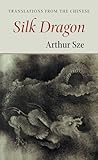
BOOKS: “Silk Dragon II” ed. & trans. by Arthur Sze

Silk Dragon: Translations from the Chinese (Kage-an Books)Silk Dragon: Translations from the Chinese by Arthur Sze
My rating: 5 of 5 stars

Amazon.in Page

Release Date: May 28, 2024

Let me begin with a note of clarification: The edition that I read was the “Silk Dragon II” collection, which is due out in May of 2024. I mention this because there is potential for confusion in that this book looks like a sequel (i.e. a completely new set of poems,) but really it is something between a new edition and a sequel. That is to say, while it has a substantial amount of new material, it is built on the original “Silk Dragon” volume. This edition adds eighteen new poem translations, most of which are from poets of the modern era (I mean that loosely, not technically, so 20th century onwards.) I’d recommend readers get this edition, but not both this and the original.

This collection includes a wide range of poems from ancient times through China’s various dynasties to the modern day. It includes translations that are extremely well-known, such as Li Bai’s “Drinking Alone with the Moon” and Liu Zongyuan’s “Snow on the River.” But it also includes many pieces that are likely to be new to most poetry readers, particularly given they will be reading translations (i.e. Non-specialists in Chinese poetry.) As mentioned, the bulk of the new poems are from recent decades and tend to be free verse. [Though there are four new classical poems, as well.]

I found the translations to be evocative and approachable. I am unable to comment on how well Sze captures the feel of the original, but I can say that the translations of poems I’m familiar with were at least on par with other translations that I’ve read. The translations don’t always display the sparseness one sees in classical Chinese poetry, but the challenge of conveying form and meaning and metaphor through translation is immense and, at some level, impossible.

I’d highly recommend this poetry collection for readers of poetry and translated literature.

View all my reviews

“Poet on a Mountaintop” by Shen Zhou [w/ Audio]

Art and Poem by Shen Zhou, a Ming Dynasty Artist
White clouds engird the mountain.
Stone steps climb to nothingness.
Alone, the poet leans on his staff,
 gazing into the expanse,
 and accompanies the stream:
  bamboo flute joining murmurs
  of unseen flowing water.

“Rouged Lips” by Qin Guan [w/ Audio]

Drunk, me and my boat float freely downriver.
Unfortunately, I can't stay amid the flowers.
Hazy waters sprawl; sun, countless mountains high.
Red blossoms shower downward.
I don't know how I got here.

“Sitting Alone on Jing Ting Mountain” by Li Bai [w/ Audio]

The flock flies high and vanishes.
The sole cloud drifts to oblivion.
Mountain and I exchange a gaze,
Until only Jing Ting remains.

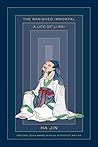
BOOKS: “The Banished Immortal” by Ha Jin

The Banished Immortal: A Life of Li Bai (Li Po)The Banished Immortal: A Life of Li Bai by Ha Jin
My rating: 5 of 5 stars

Amazon.in Page

Li Bai is considered to be one of China’s best poets of all time, writing during the Tang Dynasty (618-907 AD,) a time swole with poetic greats. However, it’s not just a prolific collection of extant masterpieces that make Li Bai worthy of a biography intended for a general audience. Li Bai was also a compelling character. He was, at once, a drunk and a genius; a swordsman of some skill and a card-carrying Daoist. It’s not just that he could edit drafts into brilliant poems, but he was said to be gifted at spontaneously spouting clever verse. He was constantly struggling to gain a post in government, but failed time and again. Even when his poetic renown became so great that he was given a post in the Imperial court, he was disappointed to find that it was largely ceremonial and that he would have no great impact on anything. He had a stunning fall from grace when he aligned with the wrong side during a civil war and was lucky to have been exiled rather than executed.

Ha Jin, a prominent present-day Chinese author best known for the novel Waiting, does an excellent job of exploring Li Bai’s life. What I particularly enjoyed is that Ha Jin (a poet himself) discusses how events in Li’s life spurred some of his great poems (which are often included in whole or in part.) Ha Jin is also careful to make clear when biographical accounts diverge, and there are many unknown or disputed details of Li’s life. In fact, there is a bit of a mythology around Li Bai, as one might guess from the title – which refers to a nickname bestowed upon the poet based on the belief that he was a Daoist immortal.

I’d highly recommend this book for readers of biography, those interested in Chinese history, or those who are intrigued by rebellious poetic souls.

View all my reviews

“Grass of the Ancient Plains” by Bai Juyi [w/ Audio]

Lush grass covers the plains.
  One year it withers; the next, it thrives.
Wildfires burn, but not to eradication.
   With Spring winds, it's rejuvenated.
Its aroma floats in to subdue derelict paths.
  Vivid green overtakes the ghost town.
I say farewell to departing friends
  as intense feeling swells within.
In Chinese [Simplified]:

离离原上草  一岁一枯荣
野火烧不尽  春风吹又生
远芳侵古道  晴翠接荒城
又送王孙去  萋萋满别情

River Snow by Liu Zongyuan [w/ Audio]

From one thousand mountains, birds have vanished.
Over ten-thousand paths, not one footprint.
A lone boat, an old man in coarse cloak and hat:
Just he, fishing in the cold, river snow.

Original Chinese:

千山鳥飛絕
萬徑人蹤滅
孤舟蓑笠翁
獨釣寒江雪

The Painting by Wang Wei [w/ Audio]

Afar, colorful mountains.
 Near, silent waters.
 Spring 's gone but flowers remain.
 People come but birds aren't startled.
Original:

遠看山有色
近聽水無聲
春去花還在
人來鳥不驚

Cold Sparrows by Yang Wanli [w/ Audio]

Hundreds of cold sparrows dive into the empty courtyard,
   cluster on plum branches and speak of sun after rain at dusk.
 They choose to gather en masse and kill me with noise.
 Suddenly startled, they disperse. Then, soundlessness.

NOTE: This translation from: Barnstone, Tony & Chou Ping. 2005. The Anchor Book of Chinese Poetry. New York: Random House. p.422.