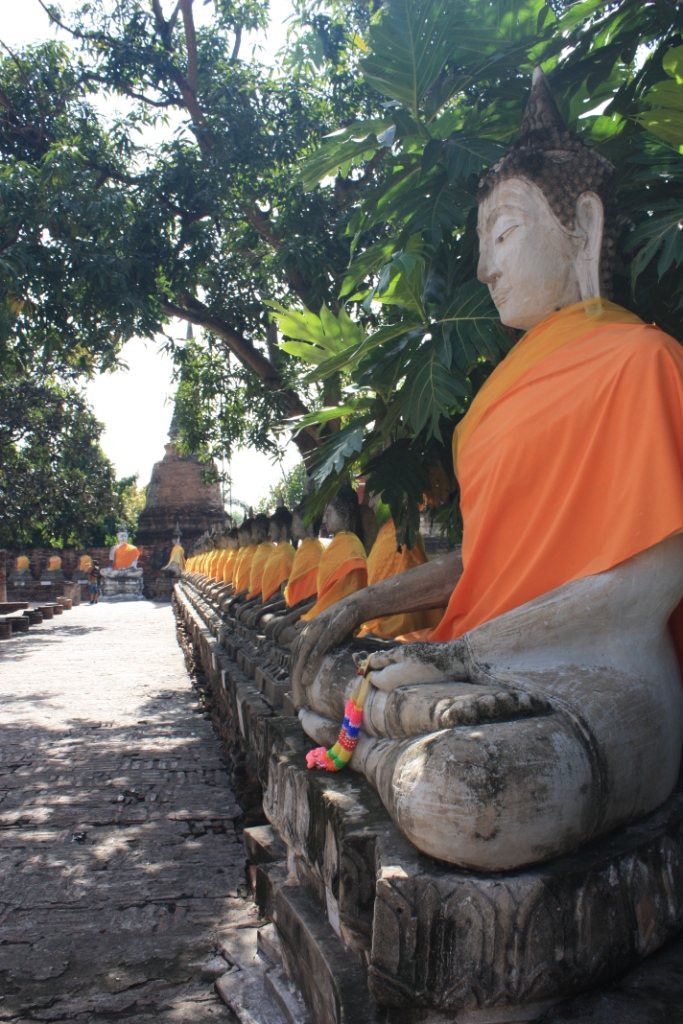
Taken in August of 2014 in Ayutthaya, Thailand.
These Buddhas line the perimeter of an important structure at the Wat Yai Chai Mongkol in Ayutthaya.

Taken in August of 2014 in Ayutthaya, Thailand.
These Buddhas line the perimeter of an important structure at the Wat Yai Chai Mongkol in Ayutthaya.
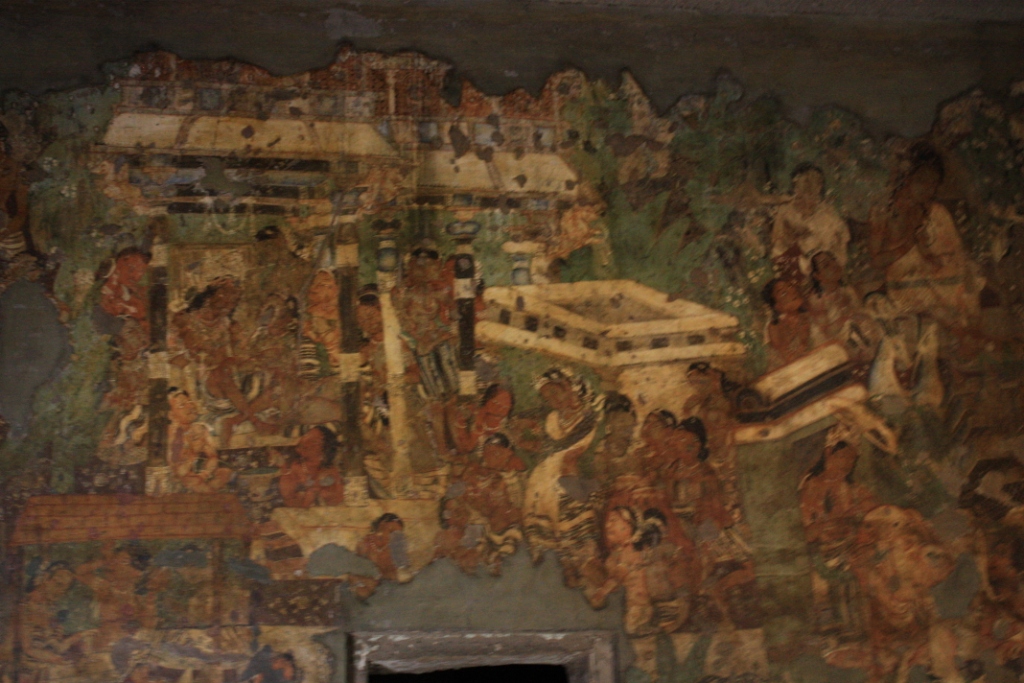
Taken on November 19, 2014 in Ajanta Caves
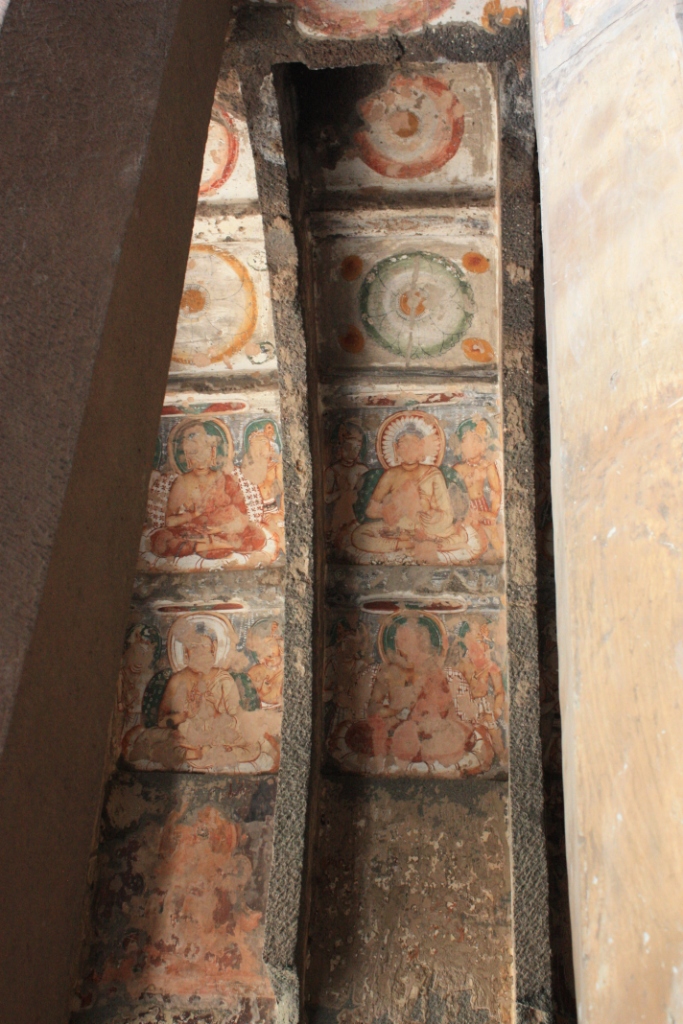
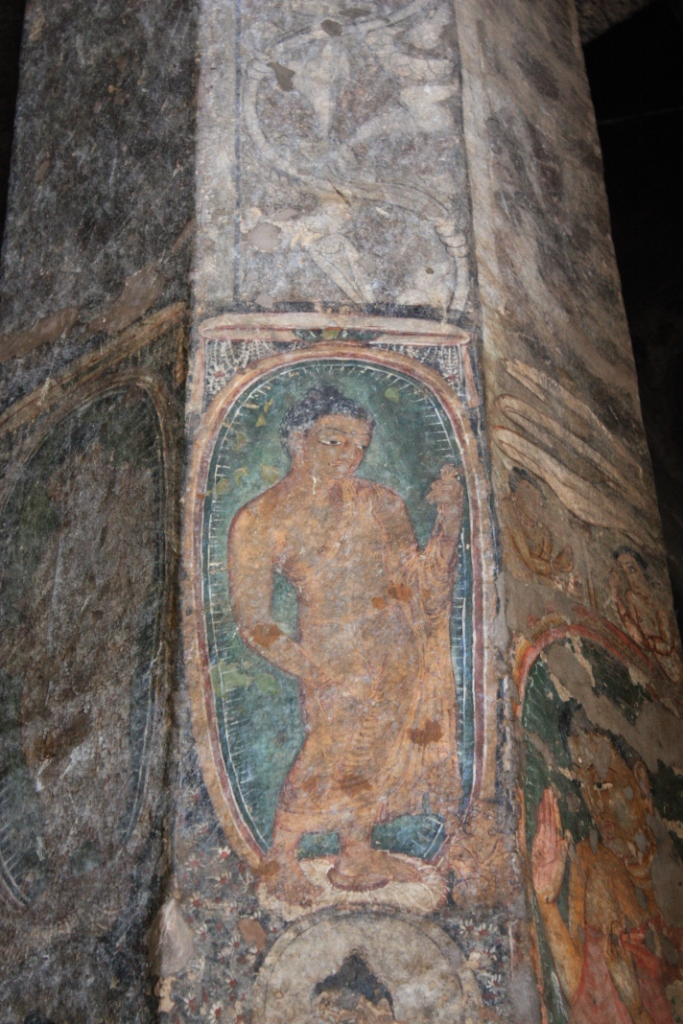
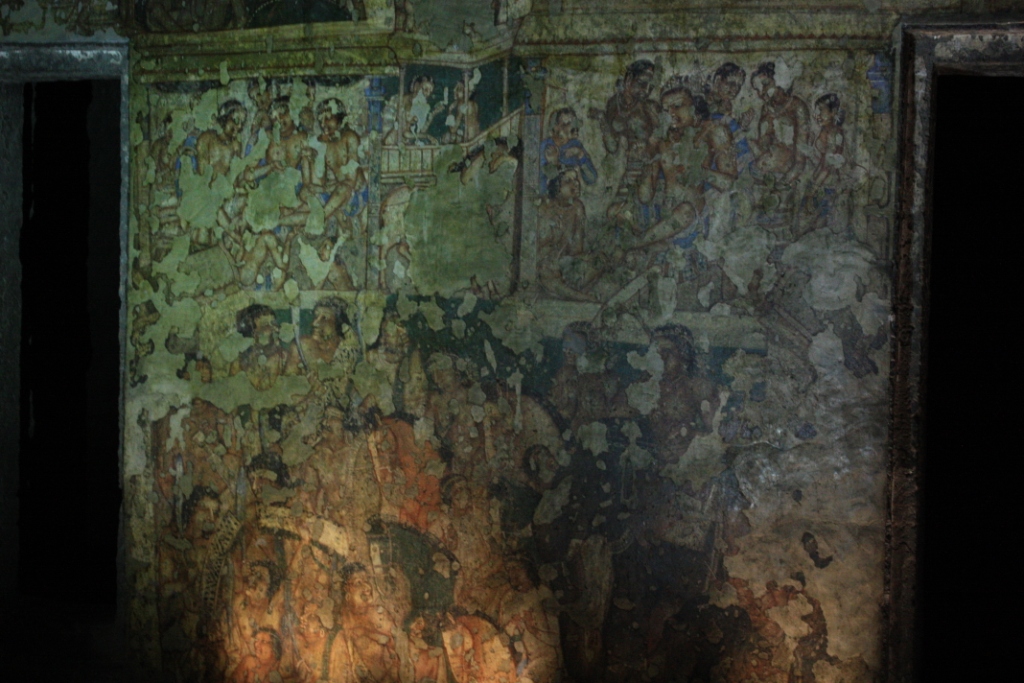
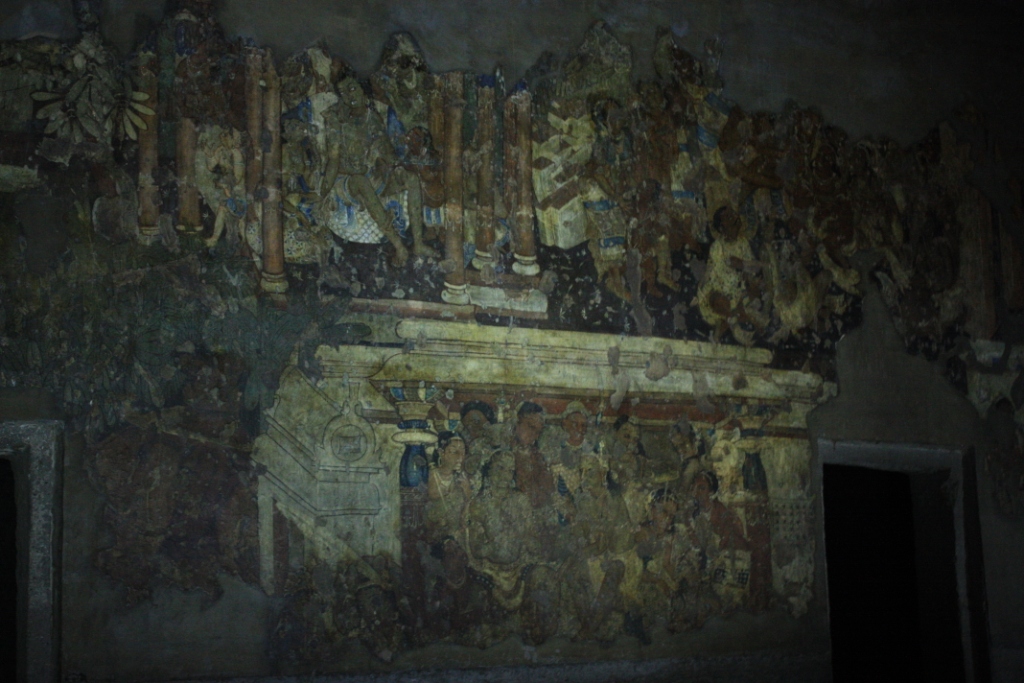 In the caves of Ajanta, many wall paintings have been preserved. As harsh light can damage these artworks, some of which have survived for centuries, flashes and outside lighting are prohibited. Therefore, it’s a challenge get decent photos, but here are a few attempts.
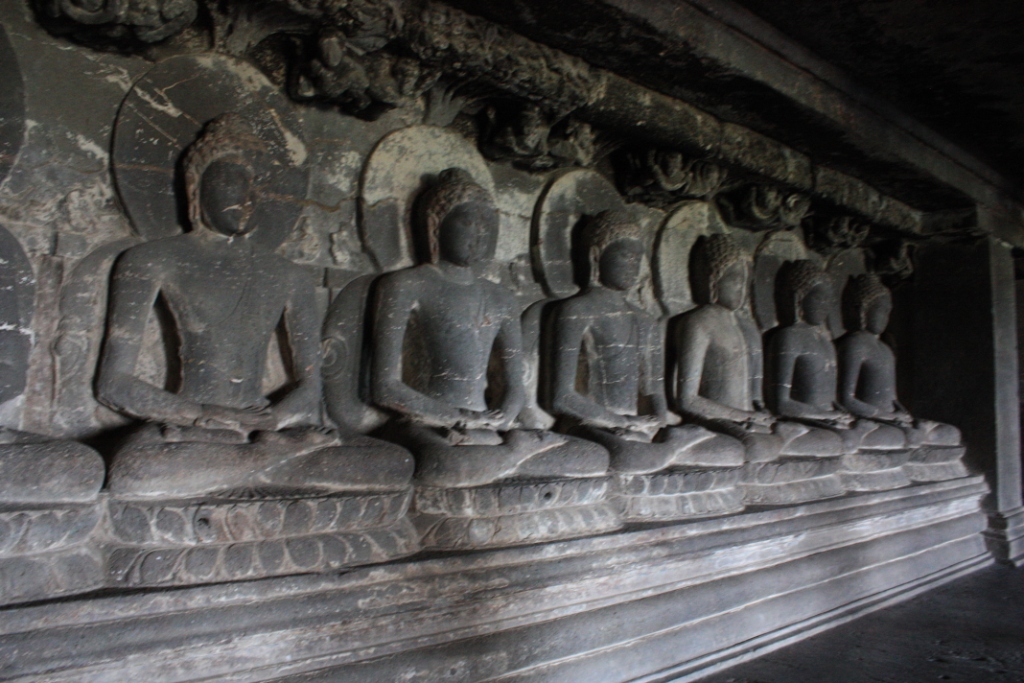
Taken in the Ellora Caves on November 20, 2014. Ellora has Buddhist, Hindu, and Jain caves–in that order.
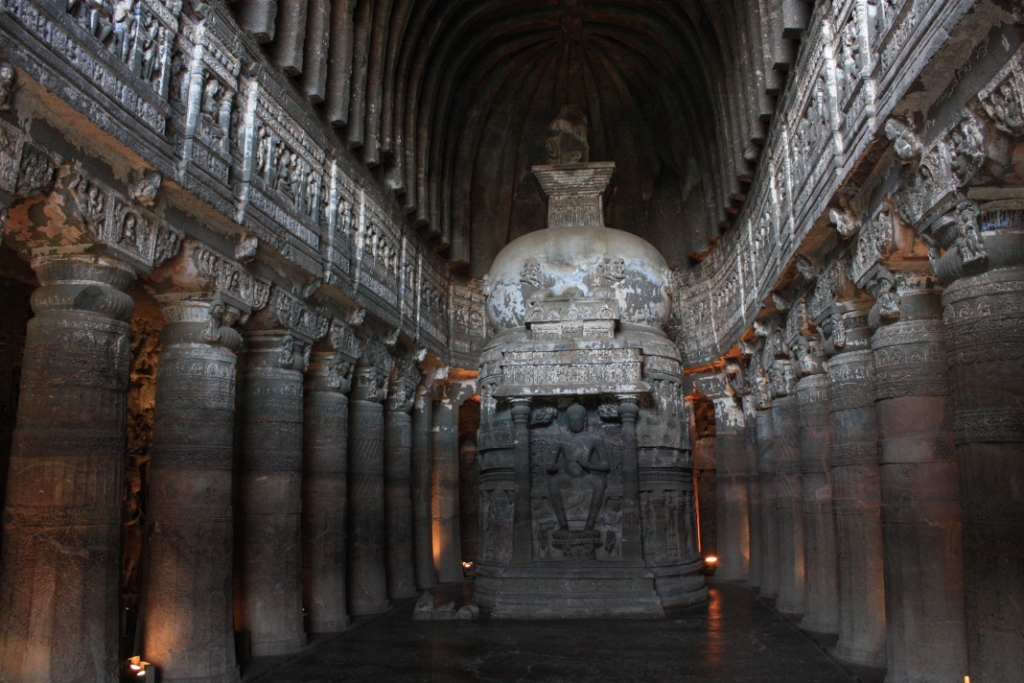
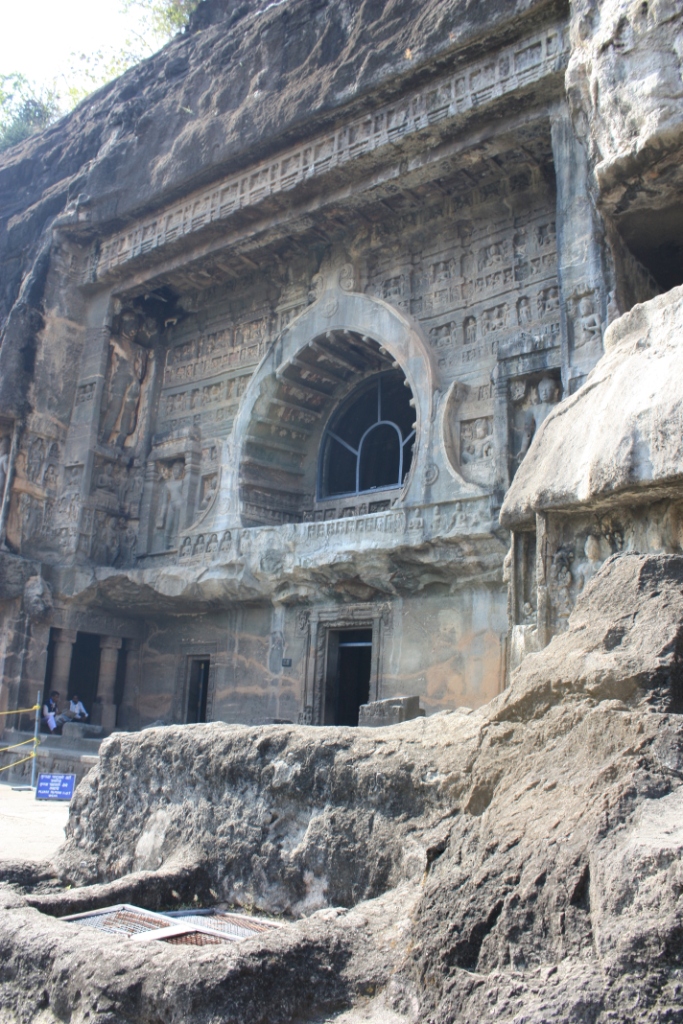
Taken on November 19, 2014
There are two types of caves at Ajanta; chaitya-grihas (a.k.a. sanctuary, prayer hall, or meditation hall) and sanghārāmas (a.k.a. vihāras or monasteries.) This is an example of the former, of which there are only a few. In fact, it (cave 26) is the most ornate of the Ajanta sanctuaries. Sanctuaries are distinguished by domed roofs and the presence of a stupa, which is a monument that is typically dome-shaped but need not be so flashy as this one–sometimes they are simply mounds. The sanctuaries also have fanlights (like a transom) that bring in more light than the monasteries.
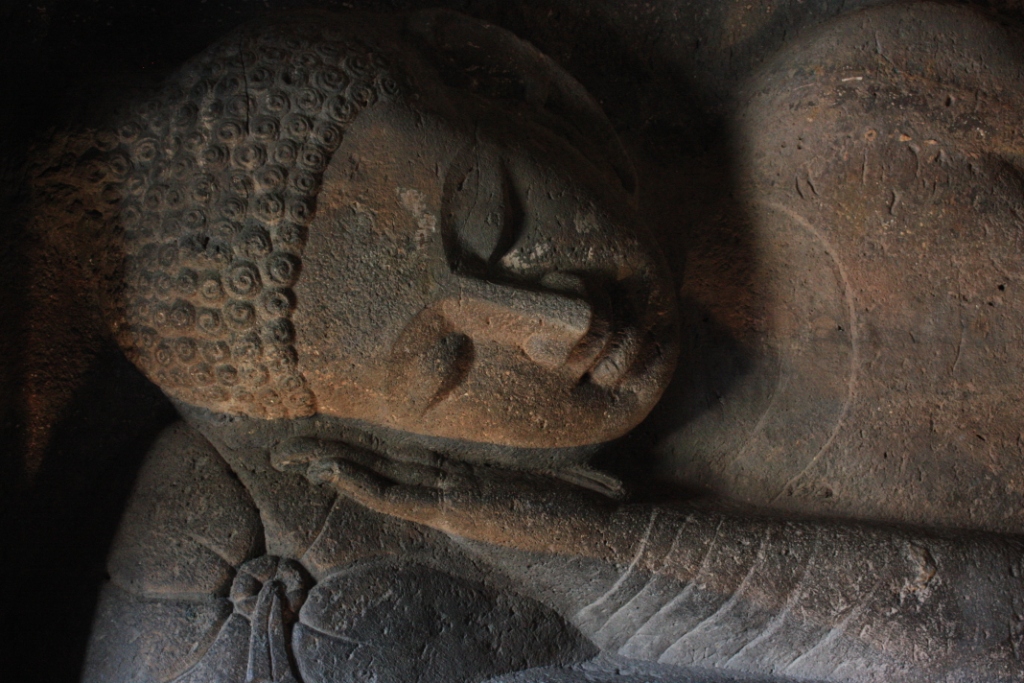
Cave 26 also houses the carving of the reclining Buddha that I’m presently using for my header image.
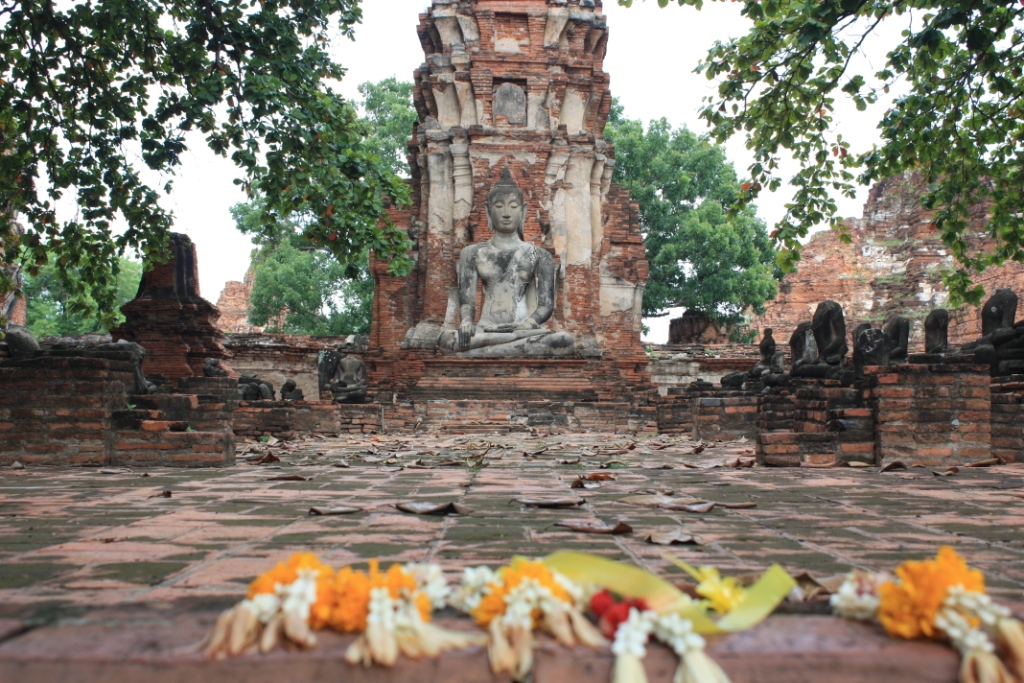
Taken in August of 2014 at Wat Mahathat in Ayutthaya
Taken near the famous head that is enveloped by a Strangler Fig on the grounds of Wat Mahathat temple. You may know this temple as one of the sites at with Jean Claude Van Damme’s Kickboxer movie was filmed, presented as a fictional location called Stone City.

Taken in October of 2012 in Ayutthaya, Thailand.
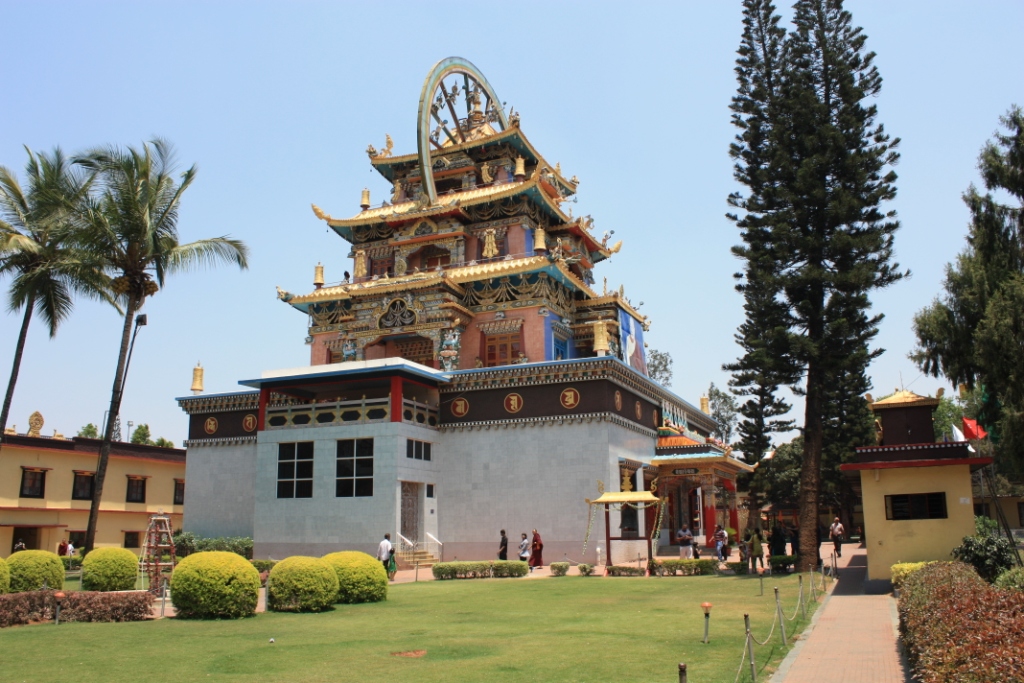
Taken in March of 2014 at Namdroling Monastery.
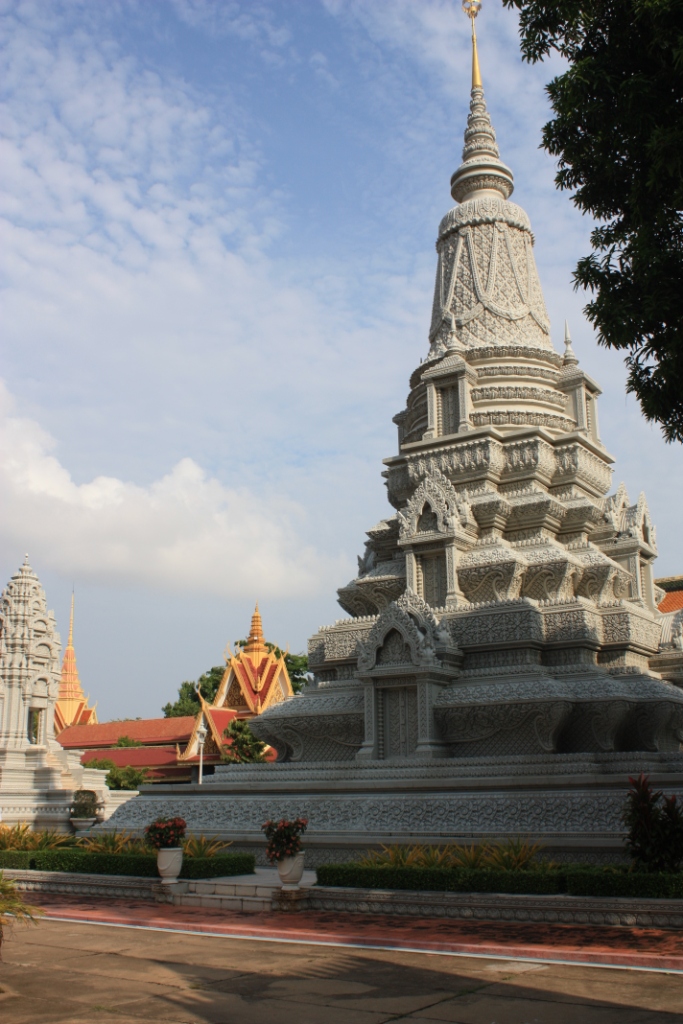
Taken in October of 2012 in Phnom Penh
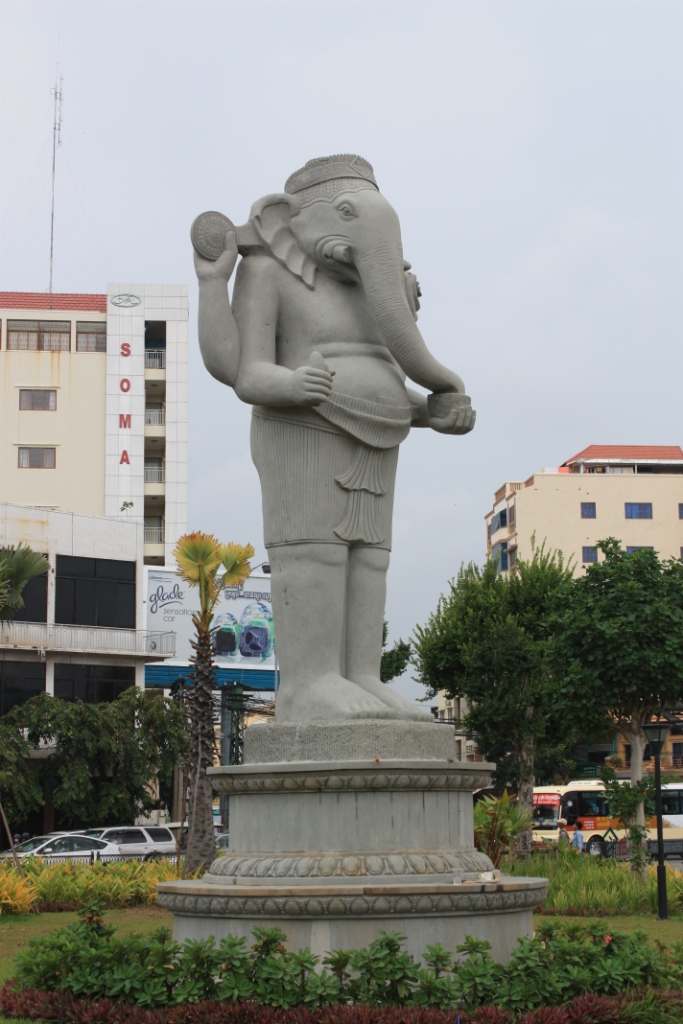
Taken in October of 2012 in Phnom Penh.
An estimated 95% of Cambodians are Buddhist, and Buddhism has been the dominant religion since the time of Jayavarman VII (i.e. the late 12th century.) This begs the question, why might one see a statue of a Hindu deity in a public space in Cambodia’s capital city?
If you’ve visited Angkor, you know that Hindu imagery abounds. This is because before Jayavarman, the Khmeris were Hindu. In a great early act of recycling, Vishnu sculptures became Buddha sculptures by decree. (In what is–as far as I know–a coincidence, many Hindus believe that Buddha [Siddhartha Gautama Buddha] was an avatar, or incarnation, of Vishnu.)
This still doesn’t explain why a relatively new sculpture of Ganesha would reside in present-day Phnom Penh (Phnom Penh is not as old as Angkor, and by the time it was founded Buddhism was dominant.) Just as contemporary taxi and auto-rickshaw (tuk-tuk) drivers in India display Ganesha in appeal to this “remover of obstacles,” 10th century maritime traders did the same. This desire to court the favor of the remover of obstacles has continued on into the modern-day.
It’s an interesting commentary on how cultures never interact without getting some of their chocolate into the other culture’s peanut butter and vice versa (for those who have no idea what I’m talking about, that’s a reference to an old Reese’s commercial and not some dark coded message.)
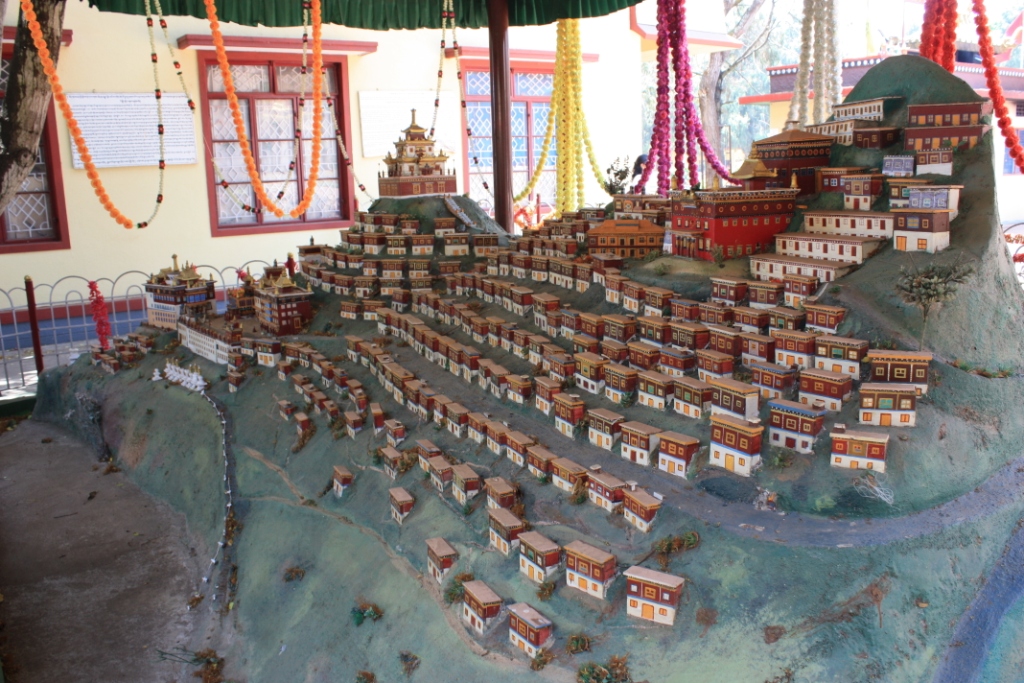
Taken in March of 2014 at the Namdroling Monastery
This model of the Palyul Monastery and its environs is located at Namdroling Monastery in Bylakuppe, India. Palyul is the parent monastery of Namdroling. It is one of the six major monasteries of the Nyingma branch of Tibetan Buddhism.


 Tiger Riding for Beginners