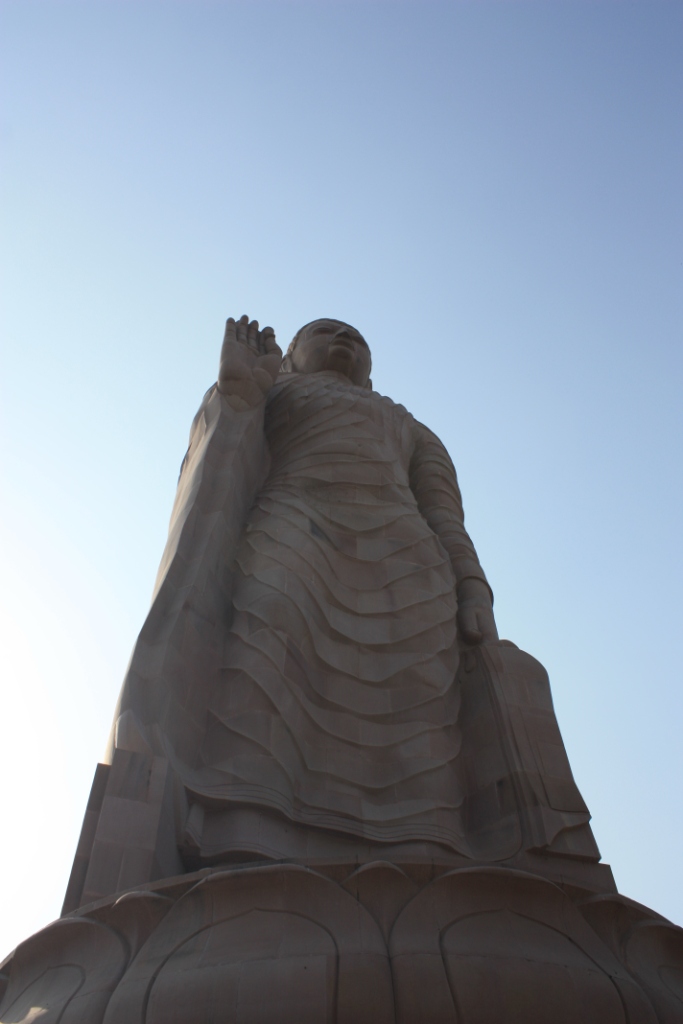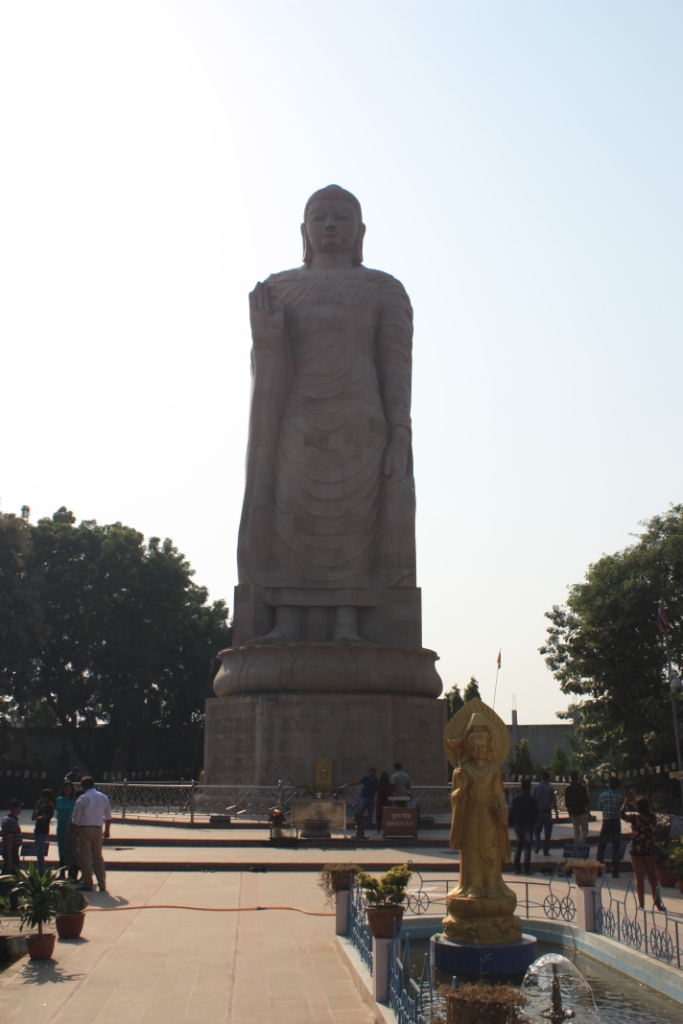
DAILY PHOTO: The Giant Buddha of Wat Thai, Sarnath

Taken on October 25, 2015 at Wat Thai in Sarnath

Taken on October 25, 2015 at Wat Thai in Sarnath


Being one of the four most major pilgrimage sites of Buddhism, Sarnath has a number of temples built by members of countries with large Buddhist populations. Among these countries is Thailand. (FYI: There is also a Chinese Temple, a Japanese Temple, and a Tibetan Temple.) While the guidebook advice is that these modern temples are skippable, an exception might be made for Wat Thai, which is both nearby to the [unskippable] Archaeology Museum and has a giant Buddha statue.

IMG_4077

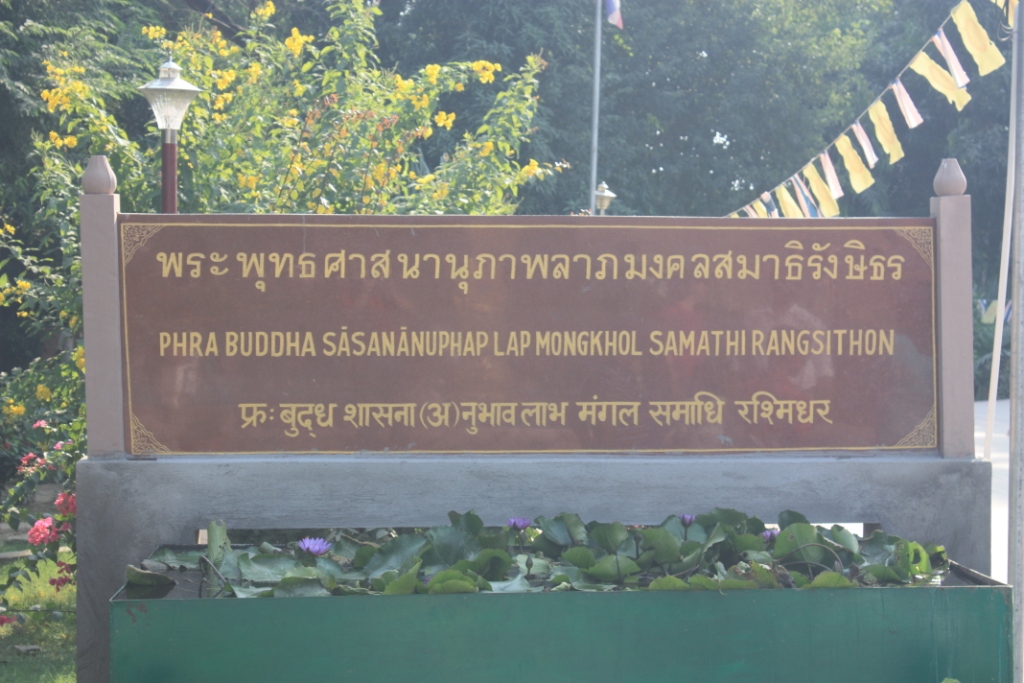
Here is the sign for the giant Buddha.

IMG_4075

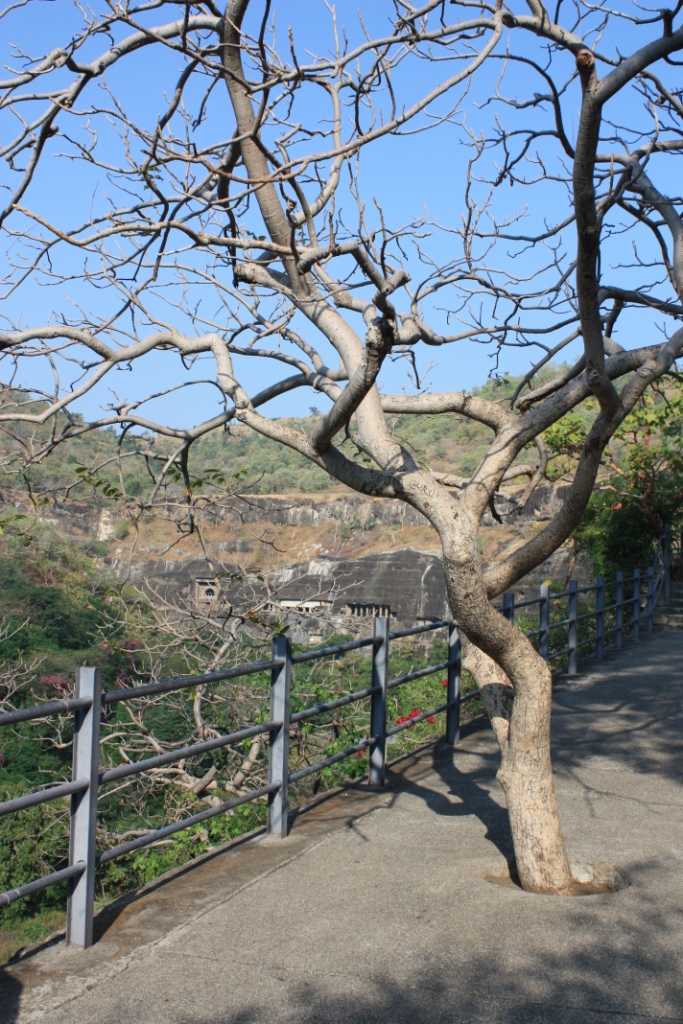
DAILY PHOTO: Twisted Tree on the Ajanta Path

Taken in November of 2014 at Ajanta.

Taken in November of 2014 at Ajanta.

DAILY PHOTO: Wat Mahathat Ruins

Taken in August of 2014 in Ayutthaya.

Taken in August of 2014 in Ayutthaya.

DAILY PHOTO: Tibetan Horns at the Ready

Taken in March 2013 at Namdroling Monastery in Bylakuppe, India

Taken in March 2013 at Namdroling Monastery in Bylakuppe, India

DAILY PHOTO: Stupa Row in Wat Po

Taken in September of 2014 at Wat Pho in Thailand

Taken in September of 2014 at Wat Pho in Thailand

DAILY PHOTO: Prayer Flags, With Fun Facts

Taken on June 16, 2015 in Manali

Taken on June 16, 2015 in Manali at Gadhan Thekchoking Gompa


Now heavily associated with Tibetan Buddhism, colorful prayer flags are believed to have originated with Bon–an indigenous religion of Tibet that predated Buddhism’s arrival.

Traditionally, the color progression from left to right is blue, white, red, green, and yellow (i.e. as seen in the top row), but variations can be seen.

Besides monasteries and temples, one will often see strings of flags out in natural settings on mountains.

The day and time of placement of the flags is considered carefully because it’s believed that if they are hung at inauspicious times they may bring bad fortune instead of the desired compassion and peace.

DAILY PHOTO: Woman Spinning Wheels at Kalachakra Temple

Taken on June 23, 2015 in McLeodganj

Taken on June 23, 2015 in McLeodganj

BOOK REVIEW: Crow with No Mouth: Ikkyu Translated by Stephen Berg

Crow With No Mouth : Ikkyu : Fifteenth Century Zen MasterCrow With No Mouth : Ikkyu : Fifteenth Century Zen Master by Ikkyu

My rating: 5 of 5 stars

Amazon page

Ikkyū Sōjun was the Howard Stern of Zen masters. Born in 1394, he lived through most of the 15th century. Ikkyū served as a temple’s abbot for less than two weeks before he quit in disgust, vowing to move into a red-light district—apparently he wanted to live among people he found more honest and less hypocritical. The Zen master despised the corruption and snobbery of monastic politics.

Crow with no Mouth is a collection of Ikkyū’s verse, which is largely in the Zen tradition–featuring natural subjects and simple wisdom in a sparse style. Of course, as per my comments in the preceding paragraph, there are a few poems on topics such as cunnilingus and debauchery—so it’s not what one would call a child-friendly collection (unless one enjoys explaining the sexual exploits of a lecherous monk to one’s child.) The more explicit poems may seem like a diversion from the Zen path, but perhaps not. Maybe Ikkyū offered them as a way to train the mind, to observe one’s reaction to shocking commentary as a means of changing one’s way of thinking.

A few of my favorite lines of a more traditional nature include:

-“you can’t make cherry blossoms by tearing off petals to plant; only spring does that”

-“sometimes all I am is dark emptiness; I can’t hide in the sleeves of my own robes”

-“it’s logical: if you’re not going anywhere any road is the right one”

-“the edges of the sword are life and death; no one knows which is which”

-“even in its scabbard my sword sees you”

-“a flower held up twirled between human fingers; a smile barely visible”

-“in war there’s no time to teach or learn Zen; carry a strong stick; bash your attackers”

Here are a few of those jarring lines that I mentioned above:

-“that stone Buddha deserves all the bird shit it gets”

-“all koans just lead you on but not the delicious pussy of the young girls I go down on”

-“ten fussy days running this temple all red tape; look me up if you want o in the bar whorehouse fish market”

-“my dying teacher could not wipe himself; unlike you disciples who use bamboo; I cleaned his lovely ass with my bare hands”

-“don’t hesitate get laid that’s wisdom; sitting around chanting, what crap”

-“who teaches truth? good/bad the wrong way; Crazy Cloud knows the taste of his own shit” [Crazy Cloud was Ikkyū’s name for himself.]

When he left the monastery, Ikkyū shredded the certificate that served as his monastic credential. Some of his students found it, and pieced it back together. That led to the following verse:

-“one of you saved my satori paper I know it piece by piece; you pasted it back together; now watch me burn it once and for all”

Ikkyū’s verse asks us to reevaluate what it means to be sacred or profane. The orthodox view would be that Ikkyū fell from the sacred life of a monk. However, Ikkyū tells us that one can degrade what is important by raising the wrong things to sacred status. Conversely, some of what we believe to be profane is just rooted in habitual and ill-reasoned ways of thinking.

I’d recommend this work for those who love the spare form of Japanese poetry, and who don’t mind a hard jolt to their psyche occasionally.

View all my reviews

DAILY PHOTO: Garlands for Buddha

Taken in August of 2014 at Wat Mahathat in Ayutthaya

Taken in August of 2014 at Wat Mahathat in Ayutthaya

DAILY PHOTO: Ornamental Pillar at Ajanta

Taken in November of 2014 at Ajanta Caves.

Taken in November of 2014 at Ajanta Caves.