BOOKS: “How to Fight Tough” by Jack Dempsey

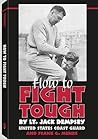
How to Fight ToughHow to Fight Tough by Jack Dempsey
My rating: 5 of 5 stars

Read online at Archive.org

This book was put out by the Coast Guard during World War II as a commando fighting manual. The lead on the project was heavyweight boxing champion Jack Dempsey, aided by a small team of others — all with varied bona fides in Combatives.

This is a fun book to read. It’s loaded with 1940’s slang, over-the-top reminders to fight tough and mean, and jokes that — while dated — still amuse with their quirky language. Seriously, the voice in my head was playing in Trans-Atlantic dialect (1940’s radio announcer voice) or as James Cagney playing a gangster the whole time I was reading this book.

That said, while the text was campy, the actual techniques are solid. The book consists of eighteen lessons that are built on well-established grappling and submission techniques such as hadaka jime (rear naked choke.) Also, while there is often only one (or — at most — a few) photos per technique, they seemed to put some effort into doing them conscientiously. (And they are almost full-page shots, so one can actually see a bit of detail.) The techniques include: unarmed v. various unarmed attacks, unarmed v. knife, unarmed v. gun (holstered, and front and rear approaches,) and unarmed v. bayonet.

I’d highly recommend reading this book. It’s a quick and amusing read with some useful techniques inside.

View all my reviews

PROMPT: Sports

Bloganuary writing prompt
What are your favorite sports to watch and play?

Combatives: i.e. Boxing, Wrestling (real, not acted,) Muay Thai, Judo, etc.

BOOK REVIEW: Wrath of the Dragon by John Little

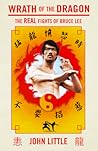
Wrath of the Dragon: The Real Fights of Bruce LeeWrath of the Dragon: The Real Fights of Bruce Lee by John Little
My rating: 5 of 5 stars

Amazon.in Page

Release Date: September 5, 2023

There are many Bruce Lee biographies out there, from general bios (such as Matthew Polly’s Bruce Lee: A Life) to those that are much more narrowly focused (e.g. Rick Wing’s Showdown in Oakland about Lee’s fight with Wong Jack Man.) This book is somewhere in between in that it is theme-focused (Lee’s fights and matches,) but it does offer insights from Lee’s childhood through to his death as they pertain to these fights and sparring experiences. The book explores all of the known real-world scraps and matches, as well as some of the more telling sparring sessions. Fights range from Lee’s adolescent skirmishes as a punk kid through the challenge matches with extras on the set of Enter the Dragon as an astute (if still quick-tempered) master. When I say that the book includes sparring sessions, I’m not talking about every time Lee sparred, but rather those exchanges that offered particular insight into Lee’s prowess, such as his last ever sparring session with his old Wing Chun teacher, Wong Shun-Leung (a senior student of Ip Man’s) as well as those with athletes at the top of their respective combative sports.

The point of the book is to challenge a belief — widespread at times — that Lee was a blow-hard offering banal quasi-mystical Eastern philosophy and martial insights that were based only on a few Wing Chun lessons from Ip Man. In contrast, the book paints a picture of a broadly experienced fighter who was obsessive about his betterment as a martial artist. Lee was an innovator and trained with great endurance and intensity. The book portrays Lee as a martial artist of such speed and athleticism that even World Champion competitors were left in awe.

While reading, one does have to question how objectively the information is being presented. After all, Little is definitely a bit of a fanboy and he’s clearly taking a stance on Lee’s prowess. Furthermore, the fact that (at one point, I’m not sure about presently) Little was the only one with full access to Lee’s archived notes suggests his message was sufficiently on point for Lee’s family to feel comfortable with him. That said, I felt there was enough admission of Lee’s weaknesses and mistakes as well as a willingness to present competing statements when details were in question that I believe this is an honest attempt to get the details right (within the unavoidable constraints of memories of events being decades in the past and being seen from multiple perspectives — psychologically as well as geographically.)

I found this book to be fascinating from cover to cover, and well worth reading. In addition to the stories of the fights, the author discusses the lessons that Lee learned along the way. Even in winning, Lee was sometimes dissatisfied with his own performance, and this drove him to adapt and to develop new training methods. I’d highly recommend this book for those interested in the martial arts or who love a good biography.

View all my reviews

BOOK REVIEW: Training and Conditioning for MMA ed. by Dias / Oliveira / Brauer & Pashkin

Training and Conditioning for MMA: Programming of ChampionsTraining and Conditioning for MMA: Programming of Champions by Stéfane Beloni Correa Dielle Dias
My rating: 5 of 5 stars

Amazon.in Page

Release Date: September 15, 2022 [It may already be out in some formats and markets]

Get Speechify to make any book an audiobook

This book provides an overview of fitness building for Mixed Martial Arts athletes. It covers program design, athletic assessment, nutrition, exercises and conditioning practices, and injury prevention methods. On the positive side, it’s not only comprehensive, but – also – presents some of the best and latest methods in combative sports training based on sound scientific research. On the other hand, the book does assume a certain level of understanding of sports science, and it gets pretty deep in the weeds with respect to technical detail and to scientific and specialty jargon. If one doesn’t have such background, one may find some of the content (particularly the early chapters) a bit daunting. That said, it offers an excellent reference for those who are interested in methods and sports science not just for MMA, but for combative sports, in general.

The book uses color photographs throughout. I found the photos to be clear, well-sized, and well-lit. While there is definitely an attempt to keep the number of photos to a reasonable level, they do offer multiple angles where necessary and – generally – give enough pictures to make the action clear. There are also tables after each of the methods sections to give a handy summary of sets, reps, and scheduling suggestions for various exercises. In the early chapters, the ones that convey more technical content, there’re charts, graphs, and diagrams as needed. There’s an extensive bibliography, though it should be noted many if not most of the references are not in English. (The team of editors and contributors is large and international.)

This book offers an excellent reference for coaches, trainers, and athletes. While it does get quite technical, it’s great that it offers insight into cutting edge science and training methods.


View all my reviews

BOOK REVIEW: Greatest Ever Boxing Workouts by Gary Todd

Greatest Ever Boxing Workouts - including Mike Tyson, Manny Pacquiao, Floyd Mayweather, Roberto DuranGreatest Ever Boxing Workouts – including Mike Tyson, Manny Pacquiao, Floyd Mayweather, Roberto Duran by Gary Todd
My rating: 3 of 5 stars

Amazon page


This will be a quick review as the book is simple and straightforward in its approach. The author interviewed 30+ boxers, and each chapter corresponds to a boxer. A few of these boxers are household names, e.g. Tyson, Duran, Pacquiao, and Mayweather, but others may or may not be known to those who aren’t fight fanatics.

Each chapter consists of three sections. The first and longest of each is an overview of that boxer’s career, but it’s the other two sections that are most relevant to the book’s title and theme. One of these sections is an interview that asks a series of 14 questions about how the respective boxer organized his training day, and the other is a description of the boxer’s workouts (typically there was more than one workout—i.e. sparring v non-sparring days.)

If you’re a big boxing fan, this book will be interesting to you particularly for some of the insights about the boxers. The author is clearly knowledgeable in that regard. If you are mostly interested in the book from a fitness perspective, and seek to learn about working out for combative sports, it’s of decidedly less value. It still has some fascinating information, but you’ll probably find it tedious and of limited usefulness. The question and answer section elicits answers from one word to a couple of sentences and the workouts are a page each. What is fascinating is how similar the day in the life of a boxer is, and, specifically, how standardized workouts are. What I mostly found intriguing was when someone stuck out as having a different mode of operating. For example, most started their days very early (often going back to sleep after road-work) but a few were clearly night owls. One can also see a little of how approaches have shifted between the earliest fighters and the ones active until recently.

There are plenty of photographs in the book, but they are the only graphics. There isn’t much else by way of ancillary matter. (i.e. there is a section of pictures of the author with various boxers, but that—of course—is primarily of interest to the author.)

In one sense the book is quite limited and tedious, but it’s also interesting to see how thirty different fighters answered the exact same pallet of questions. There is some insight into nutrition, sleep schedules, optimal time for workouts, etc. However, the book doesn’t drill deep.

If you’re a fight fan, fascinated by boxers and their careers, I’d recommend this book. For those who are buying it thinking they’ll get some insight into how to prepare as a boxer, I’d say said insight will be extremely limited. That said, the book isn’t much of a time investment, and so if you can get it cheap you may find it of some benefit.

View all my reviews

5 Thoughts on the Conscious Mind in Martial Arts Training

In recent years I’ve spent a lot of time trying to quiet the conscious mind in order to let the subconscious do what it does best. There’s a lot of terminology that’s used to describe the mind state in which one’s actions are effortless and one can adjust swiftly to unforeseen challenges: e.g. “in the zone,” the Flow, Zen mindset, and (in the Kotler and Wheal book I just reviewed) ecstasis. However, regardless of the name, one key to this state is a reduced activity of the part of the mind that’s self-critical and overly cautious, and that requires not letting the conscious mind do what it’s prone to do.


However, taking a course on mauythai advanced fundamentals recently has reminded me of the important roles the conscious mind plays in learning. The challenge is to use the conscious mind effectively–without letting it running amok.


The conscious mind is largely driven by anxiety about uncertainty. This makes the conscious mind a planner and worst-case scenario generator extraordinaire. (In meditation, I’ve begun to not only note what thought popped into my head before I dismiss said distraction, but I also have a classification scheme of kinds of thoughts, and “planning thoughts” are probably the most common type of thought to hijack my mind.) This planning / forecasting  proclivity can be beneficial if one is doing a job that requires such planning, anticipation of possible hazards, and the need to adjust to complex difficulties. However, it can also make one neurotic, overly risk-averse, and pessimistic.


So, here are my five thoughts on the conscious mind in martial arts training.


5.) Feed the right wolf:  There’s a well-known story about a Native American man telling his grandchild that inside each person there are two wolves at war, one good and one evil.

The child asks, “Which one wins?”

The old man replies, “The one you feed.”


This is a variation on the theme–not so much about good and evil as about positive and negative outlook. In martial arts training there are often competing emotional states. On one hand, there is often anxiety about either being injured or even about the embarrassment of being bested. (Surprisingly, it seems like the magnitude of the latter is often greater than the former.) On the other hand, there is an intense thrill that comes with making progress. For those who don’t understand how martial artists can put themselves through what they do, this is the part for which you’re probably not understanding the intensity of the high. When it clicks and you’re getting it right more often than you previously did, the feeling is transcendent.


So, when one sees either of these two feelings arising, choose the latter. If one notices the anxiety, remind oneself the promise of that awesome feeling of having it fall together.


4.) Scanning for lapses in form: The process of learning a martial art–like any movement art–is repetition of the movements until they become ingrained in one’s procedural memory. Early in the process, this feels clunky as one has to scan for imperfections in form with one’s super-intelligent but slow and cumbersome conscious mind. However, increasingly, the body begins to incorporate these movement patterns and they start to become second nature. The trick is to keep this in the moment and not let one’s thoughts linger on what one just got wrong, or any perceived ramifications of getting it wrong.


3.) Try visualization: This once would have been thought hippie guff, but now it’s entered the mainstream. Of course, the advice from #5 must be kept in mind. When I think of the technique of visualization, I’m reminded of a story that Dan Millman told about a girl that he was coaching in gymnastics. He came to check on her only to find her repeatedly cringing and grimacing. He asked what was going on, and she said she kept falling off the balance beam whenever she visualized her routine. It sounds silly, but attitude is a powerful thing, and I lot of people sabotage themselves in ways not much different from this. It’s your mind, you have the power to do the move perfectly every time, if you take the proper mindset.


2.) Conscious mind as governor of action and agent of trust: The subconscious mind can be feral. As one spars, one has to match speeds with one’s opposition so that learning can take place. While sparring looks reminiscent of fighting, the goal of sparring is learning, whereas the goal of fighting is winning (or–as a minimum in actual combat–not being destroyed.)


This is another role for the conscious mind. It can keep reminders to the fore to keep one’s movement appropriate to the occasion. It can inject an awareness that there’s a relationship of trust rather than warring competitiveness between. That one needn’t respond at the same magnitude that one would under attack.


1.) Dropping the Conscious Mind Out of the Equation: While the conscious mind is critical in the learning process, eventually one must do something that feels uncomfortable, which is shifting subconscious operations to the fore and quieting the conscious mind. Overthinking can be death in tests, competitions, not to mention, I’m told, actual combative situations. At some point you’ve got to have some trust in what you’ve trained to do up to that point. It might fail you, but not necessarily as spectacularly as if you let your conscious run amok, getting caught in a death spiral of self-criticism and futile guesswork.


Since I’ve been watching quite a few muaythai fights recently at the Rangsit Boxing Stadium, I’ve begun to wonder just how useful corner advice is. I know that people think it’s beneficial because it’s done in droves. Not only is the fighter’s trainer trying tell them what to do, but also his parents, his siblings, his granny, and a hundred random people who may or may not have put money on him. It would be interesting to see a scientific study of how fighters performed who tuned everything out between rounds versus those who tried to take in all the advice. I tried to look up whether any such study had been done, but a cursor Google search came up empty.
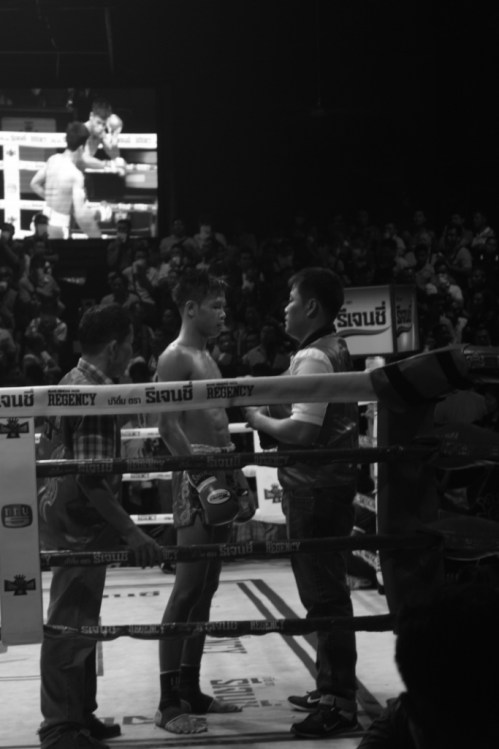
 

What comes of all the corner talk?

What comes of all the corner talk?

BOOK REVIEW: Boxing Fitness by Ian Oliver

Boxing Fitness: A Guide to Get Fighting Fit (Fitness Series)Boxing Fitness: A Guide to Get Fighting Fit by Ian Oliver
My rating: 4 of 5 stars

Amazon page

How does one skip rope, work the pads, or avoid nipple rash? If you think that boxing would be a fun way to get fit, this would probably be a useful book for you. Oliver shows a range of fitness practices—many specific to boxing, but others that are used in a number of sports and fitness activities—that will help one improve one’s fitness.

The reader will gain insight into bagwork, padwork, and boxing drills–from beginner to advanced. While the book’s emphasis isn’t on boxing technique, there’s a minimal discussion of the basics of footwork and punching designed to allow a reader to safely begin practice of bagwork and padwork. One also learns about roadwork, the basics of weightlifting as it’s useful for boxers, calisthenics, and other exercise routines that boxers use. It’s a small book and, therefore, doesn’t go into great detail on any particular subject. However, it does offer useful tips in a concise form.

There’s a chapter on equipment, but throughout the book the author gives advice on equipment as it’s relevant to the discussion at hand. The same is true of safety tips. There’s a chapter on injury and illness, but you’ll find insights into how to avoid injuries woven throughout.

I liked the approach of this book. While it shows one the age-old practices of fighters, it also describes more recent developments. In other words, it’s neither crusty and obsolete, nor does it try to re-invent every wheel in order to prove itself cutting edge. I also appreciated the author’s pragmatism—e.g. emphasizing the benefit of a strong core over that of six-pack building and suggesting dietary practices that are sound and simple rather than fads and fables.

Graphics include black and white photographs throughout a few diagrams. Most chapters have photographs, and they are generally sufficient to convey the necessary information without being overwhelming.

While this is a book of the basics, I found it to be a beneficial read and I appreciated the way it was arranged and the way information was conveyed. I’d recommend it for anyone interested in fitness for combative sports or who thinks boxing would be a good way for them to stay motivated to get fitter.

View all my reviews

The Most Dangerous Combative Sport? Study Shows Boxing Beats MMA for Brutality

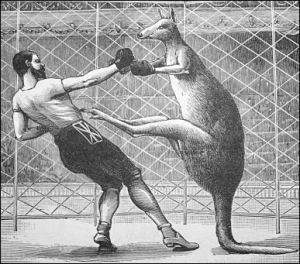
kangaroo_boxingA study by researchers at the University of Alberta found that while mixed martial arts (MMA) fighters are more likely to suffer minor injuries, boxers are more likely to suffer severe injuries like concussions or detached retinas. The study, to appear in the print edition of the Clinical Journal of Sports Medicine, involved 1181 mixed martial artists and 550 boxers who’d fought in Edmonton between 2003 and 2013. This was all fighters who fought professionally in that city in those two sports.

This finding seems counter-intuitive, given that so many more methods of delivering mayhem are allowed in MMA and the protection is less at least with respect to gloves.

Gloves may be an important factor. This isn’t a result from the aforementioned study, but it’s an idea put forth by MMA boosters. It goes like this, “Yes, the lightweight MMA glove offers less protection to the one being hit, but it also offers less protection to the hand of the one delivering the hit, and, ergo,  an MMA fighter is more likely to moderate his / her punches to avoid the (in this case ironically-named) ‘boxer’s break’ to the bones of said fighter’s hand.”

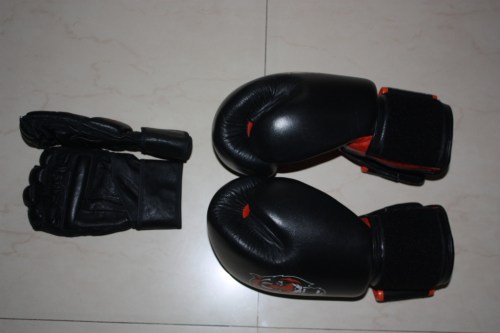
MMA style gloves on the left and 16oz. boxing gloves on the right

MMA style gloves on the left and 16oz. boxing gloves on the right (the same hand fits inside.)


I haven’t seen any rigorous scientific studies of whether the argument above has merit. There was a National Geographic Fight Science episode that made a comparison of gloves, but it was looking at a little different question. It studied how much force barehand, MMA glove, and boxing glove delivered to a heavy bag. Incidentally, it found minimal difference in force delivered between the two types of gloves, which at least might help to hush those who make a big deal about MMA’s “thin gloves.” However, this doesn’t tell us whether fighters put the same level of force into hitting a bony target when wearing the two types of gloves. Still a YouTube clip of the test is below for your information.


There are other explanations for why MMA fights might be less prone to cause concussions and severe head injuries. For example, there’s less time spent at an optimal distance to deliver strikes with maximal force. Once fighters are in close, there’s less room to get strikes up to speed. Once fighters are on the ground, putting a lot of body weight into a strike may be impossible. While submissions, whether chokes or joint locks, may seem brutal to the home viewing audience, it’s not clear that they result in major injuries to anything but the fighter’s self-esteem. (Though this might be an area that needs to be factored into studies.)

I’d like to see how muay thai compares to the two sports covered in the aforementioned study. I suspect it’s the only combative sport that might beat out these two. (All the nastiness of boxing, none of the close range grappling, plus elbows and shins to the side of the head.) Though, who knows?  Judoka do seem to land on their heads an unfortunate percentage of the time.

I’m curious about what you think about which combative sport is most damaging, and why?

FYI: The citation for the study mentioned above is:
Karpman, Shelby, et al. 2015. Combative Sports Injuries: An Edmonton Retrospective. Clinical Journal of Sports Medicine. To be published. Available on-line at: http://journals.lww.com/cjsportsmed/Abstract/publishahead/Combative_Sports_Injuries___An_Edmonton.99628.aspx. Last accessed: November 13, 2015

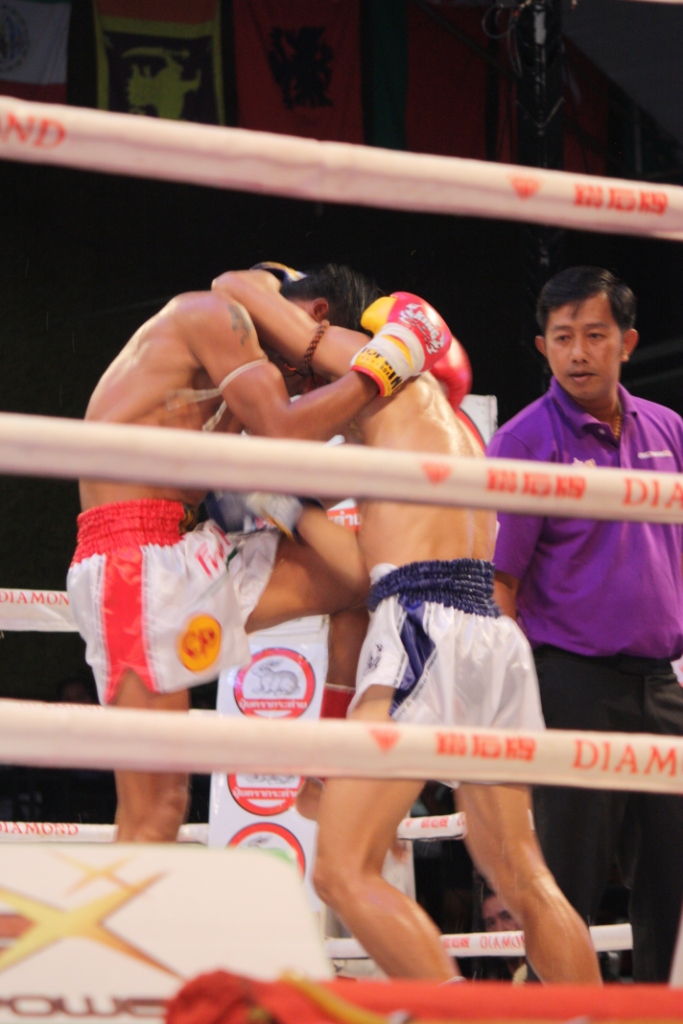
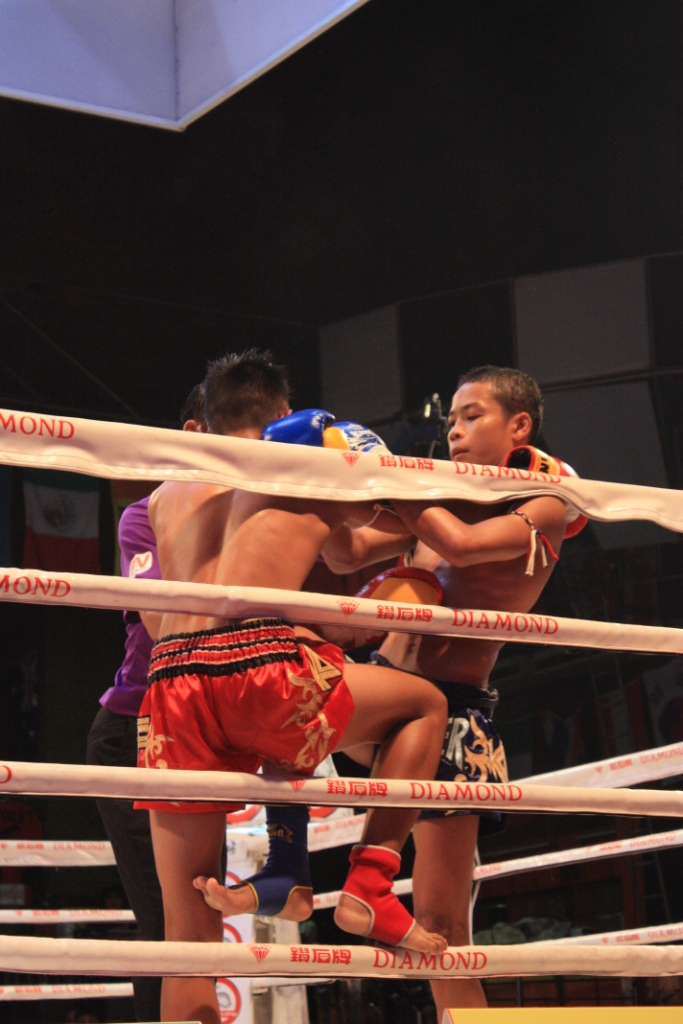
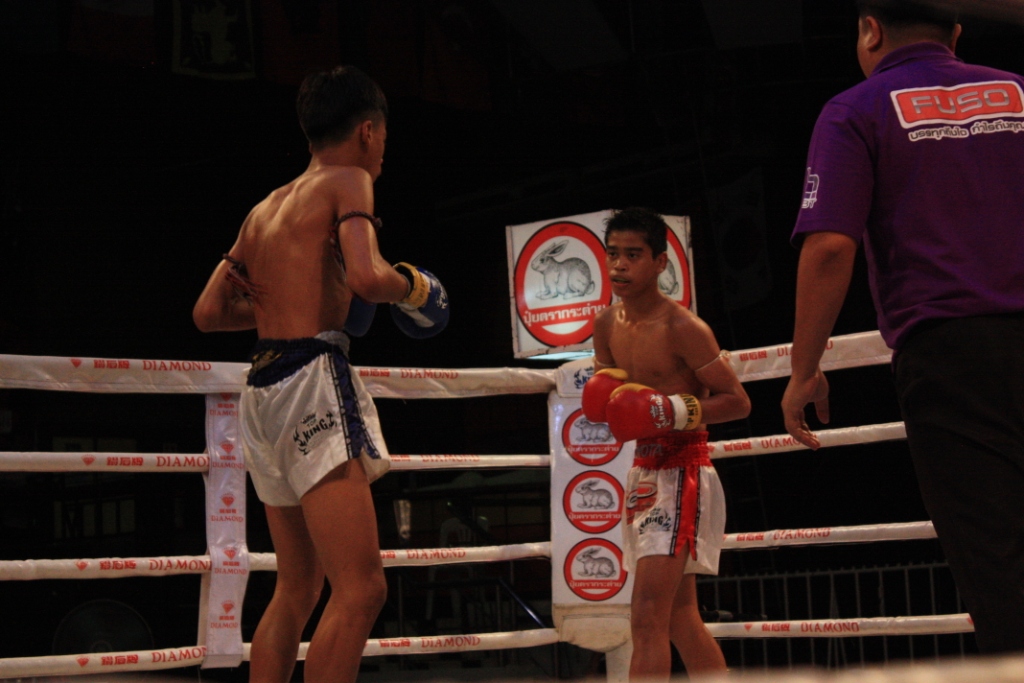
DAILY PHOTO: In the Clinch


Taken in August of 2014 at the Rangsit International Boxing Stadium

Taken in August of 2014 at the Rangsit International Boxing Stadium

IMG_1434 IMG_1542 IMG_1579