BOOKS: The Batman Who Laughs by Scott Snyder

The Batman Who LaughsThe Batman Who Laughs by Scott Snyder
My rating: 5 of 5 stars

Amazon.in Page

This volume plays on the spookiness of buffoonery that has made the Joker not only one the most well-known and effective villains of Batman’s rogues’ gallery but in all of comic books. However, while the Joker does play a role in this book, he’s not the villain. Instead, the book employs the popular comic book scenario of having the villain be a version of the hero, a version without moral compunctions or constraints. In this case, the central villain is a demented and mutated version of Batman with Jokeresque qualities, assisted by a Batman who is a bit more malevolent and vengeful, one who goes by the moniker Grim Knight.

How are there multiple versions of Batman? The multiverse, of course. That makes this a sci-fi heavy Batman story. If you like your Batman of the Matt Reeves / Robert Pattinson variety — i.e. in a plausible world, with fully human enemies, and with no freaky supernatural happenings, then this one may not be for you. That said, I don’t think the sci-fi elements detracted from the story, and they did allow for some compelling story elements. Snyder, wisely, avoids a problem that can readily plague sci-fi intense Batman stories, which is reference to (or cameos of) the god-tier DC heroes. (An occurrence that always begs the question, why wouldn’t Superman use his god-like powers to fix this debacle before heading to lunch.)

I enjoyed this story. I especially enjoyed that it wrapped up the narrative arc in a tidy package. It is often the case that comic book volumes end with a speedbump on the way to the next volume. This story felt like the central issue was resolved, while still leaving potential for future stories. I should point out that, with flashbacks and multiple Batmen, it does require one’s full attention while reading, lest one get lost between backstory and the present.

I’d highly recommend this volume for comic book readers.

View all my reviews

Japan Limerick

There was a rich businessman from Japan
 who'd always wanted to be his country's Batman.
  But his civil city
   was not Gotham-gritty,
 and the cape made him look like a madman.

BOOK REVIEW: Batman: The Complete Hush by Jeph Loeb

Batman: The Complete HushBatman: The Complete Hush by Jeph Loeb
My rating: 5 of 5 stars

Amazon.in Page

Over the course of this twelve-chapter story, Batman is pitted against much of his rogues’ gallery, but they’re puppets to a shadowy unknown, a secret villain: Hush. Batman has to do his best detective work, and still faces twist after turn in uncovering this enemy that knows him all too well, who knows all his pressure points. Batman has to battle Killer Croc, Poison Ivy, Harley Quinn, Joker, Scarecrow, and Clayface – and even [due to mind control] Superman and Catwoman, but nothing is as it seems. One might expect that a book this packed with enemies would face problems of pacing and poignancy, but the way the story is crafted (and the villains are effectively subordinated) it’s quite the opposite.

This was one of the smartest comics I’ve read. It’s a mystery that offers foreshadowing, but also false flags. There’s a sub-plot love story between Batman and Catwoman in which the relationship matures, but the question of whether one can ever really trust someone in that world remains ever in the background.

I thought this was one of the best comics I’ve read, and if you’re a Batman fan, it’s definitely a must-read.


View all my reviews

BOOK REVIEW: Justice League vs. Suicide Squad by J. Williamson / R. Williams / T. Seeley

Justice League vs. Suicide SquadJustice League vs. Suicide Squad by Joshua Williamson
My rating: 4 of 5 stars

Amazon.in Page

The premise of this comic book seems a bit ridiculous, like bears versus squirrels. It’s a perennial challenge for DC in writing the Justice League. When you have a team with mega-powered characters like Superman, Wonder Woman, and Green Lanterns, narrative tension is hard to generate. The writers pull some clever tricks via misdirects and character selection to make the story more compelling (and feasible,) but not without inconsistencies and inordinate convenience / serendipity.

This is a fine read if one is in search of some mindless entertainment and doesn’t want to think things through too much. It’s like TV or movie, but in book form: colorful, visually interesting, loaded with action, with the occasional amusing line, but – if one lets the inertia breakdown – there’s a lot of openings for thoughts like “Why didn’t so-and-so do _____?” “That felt easy,” or “Wait, what?”

Overall, I enjoyed this as pure escapism.


View all my reviews

BOOK REVIEW: Batman: Gotham by Gaslight by Brian Augustyn

Batman: Gotham by Gaslight The Deluxe EditionBatman: Gotham by Gaslight The Deluxe Edition by Brian Augustyn
My rating: 4 of 5 stars

Amazon.in Page

This volume collects five issues that [mostly] set Batman in a Victorian Era world. The issues do not present a serialized story arc, but rather four independent stories connected through world building.

The first two stories are the heart of the book, and the other two are of varying degrees of relevance and are used to round the volume out to book length. It should be pointed out that those first two issues make up about two-thirds of the book’s page count. The first, “Batman: Gotham by Gaslight,” imagines Jack the Ripper, having retired from London, moves to Gotham City, and Batman must end the serial killer’s reign of terror. The second, “Batman: Master of the Future,” depicts Gotham as it’s about to host a World’s Fair type event and is approached by a mysterious villain who warns them to cancel the event or face dire consequences. I thought the art and world-building were done nicely to create an interesting and unique conception of Batman. That said, neither story wowed me, and I particularly found the resolution of the Ripper story to be anti-climactic. [Though it was not so much a story problem as an insufficiently villainous Ripper — i.e. one who was a little too Scooby-Doo villain-like for my taste.] Usually, I would enjoy the dark, Ripper, line more, but – in this case – I think the Master of the Future edged it out. [The problem with that story had more to do with obscure motivations.]

The third issue is set in the Gotham by Gaslight domain, but is a much broader story, featuring a big team-up and a multiverse. It’s entitled, “Countdown Presents: The Search for Ray Palmer, Gotham by Gaslight, #1,” and – as that mammoth title suggests — the ensemble team is drawn to Victorian Gotham searching out a missing Ray Palmer. I liked this story even less than either of the first two. There was just too much going on in too tiny a space.

The final two issues are “Convergence: Shazam!, #1 and, #2.” Of these, #1 has nothing to do with the Gotham by Gaslight world, but it’s necessary to grasp #2 which does include both Batman and Victorian Gotham. Batman’s role in the second part is not inconsequential and we even see a little bit of his Victorian rogue’s gallery, but still the fit of this Shazam! comic in the collection is a bit questionable.

Being a fan of the Batman comics and not so much a fan of either DC team-ups or Shazam!, I liked the idea idea of the first two issues. That said, I wish more effort had been spent to make the climax and resolution satisfying, matching the level of the intriguing worldbuilding. Had those stories gripped me more, I don’t think I would have been dismayed by the other stories, chalking them up as bonus material.

I read the Deluxe Edition. It has some sketch art ancillary material, but not much else besides a story introduction by the author.

If you like stories in the Victorian Era, and are a super hero fan, you may find this intriguing — though you might also find it a bit disappointing, depending upon your tastes.


View all my reviews

BOOK REVIEW: Batman, Vol 1: Court of Owls by Scott Snyder

Batman, Vol. 1: The Court of OwlsBatman, Vol. 1: The Court of Owls by Scott Snyder
My rating: 5 of 5 stars

Amazon.in page


This collection (Batman #1-7 of The New 52) shows Batman’s discovery of a shadowy and age-old nemesis that has managed to cling to the darkness so well that it’s known only by a creepy nursery rhyme / folksong. The Court of Owls not only predates Batman’s father, Thomas Wayne, but we learn it goes back at least to the time of his [great-]great-grandfather, Alan Wayne, a railroad magnate largely responsible for Gotham’s look.

The story opens with a grizzly murder involving a large number of well-placed throwing knives, positioned to allow the victim to survive for some time. However, it’s Bruce Wayne’s meeting with Lincoln March, an apparently magnanimous man running for mayor, that brings things to a head. During the meeting, March is stabbed by a costumed villain claiming to be carrying out the sentence of the Court as he goes on to attempt to assassinate Wayne. While the Court of Owls connection is clear, Batman concludes that it’s just another villain using the symbolism of the nursery rhyme in the same way he uses the symbolism of the bat. However, as his investigation goes forward, that theory becomes less tenable.

I greatly enjoyed this collection. While we see Nightwing, Red Robin, and the current Robin, this story is very much a solo outing for Batman. The past and present sidekicks serve only to join Alfred in reminding Batman that he’s burning the candle at both ends, and to facilitate [skillfully delivered] exposition. While we see Batman as the pragmatic master detective and as the butt-kicking caped crusader, what I really enjoyed (and what set this edition apart for me) was a trippy, surreal piece of the story. There’s a section of the book that reminds me of Grant Morrison’s “Batman: Arkham Asylum – A Serious Place on Serious Earth.” While it draws on the Greek myth of Theseus and the Minotaur, it gets mind-bending as Batman finds himself trapped in a labyrinth and his only water source is provided by a conveniently-existing fountain in said labyrinth.

I’d say this is definitely among must-reads for fans of Batman. It sets up what will be an on-going battle, but it was an intriguing in its own right.

View all my reviews

BOOK REVIEW: Batman: A Death in the Family by Jim Starlin, et. al.

Batman: A Death in the FamilyBatman: A Death in the Family by Jim Starlin
My rating: 5 of 5 stars

Amazon page


This collection gathers comic books first published in the late 80’s, telling the story of the demise of Jason Todd (the second Robin) and the rise of the third Robin, Tim Drake. There is an intriguing interactive element to the story of Todd’s death as readers were allowed to vote on whether the character would be killed off or not by way of a phone hotline. The challenge for DC was that when readers did decide to ax Todd the publisher couldn’t tell whether the decision reflected a preference for a lone-wolf Batman, or whether they just didn’t like Todd.

The reason it might have been the latter is that Jason Todd was written as a much more sassy, impudent, and disobedient Robin than his predecessor, Dick Grayson (i.e. who’d shed sidekick status to become Nightwing.) Todd’s teenage insolence can be seen in this story when Batman puts him on probation after some rash action while crime-fighting. Having found a clue that puts him on the trail of his birth mother, Todd goes on a global walkabout searching for her. With comic book convenience, Todd’s pursuit of meeting his mother brings him back across the path of a Batman who is out to stop the Joker. When Robin is asked to maintain surveillance on the Joker while Batman sets off to interrupt a convoy of poisonous gas, the seeds of self-destruction are sown.

This isn’t a Gotham-centric Batman story, but reflects the geopolitics of the 1980’s. Batman and Robin reunite in the Middle East, and the story proceeds to the United Nations as the Dark Knight attempts to end the Joker’s reign of madness. When the Iranians make the Joker their Ambassador to the United Nations, Superman is brought in to make sure an enraged Batman doesn’t do something that will cause an international incident. Superman’s role is neither extensive nor, given his vast powers, particularly interesting.

When DC was putting together this collection, they apparently thought that leaving the story with a bitter, despondent, and angry Batman wasn’t the way forward, and so they include the story of how Tim Drake becomes the third Robin. (Even though it makes for an odd narrative kink and tone shift.) Drake is a boy Sherlock Holmes. Having deduced that Batman is Bruce Wayne and noticing that Batman has become more reckless in the wake of Todd’s / Robin’s death, Drake stalks Dick Grayson in an attempt to get him to return to being Batman’s sidekick. Grayson isn’t interested in the demotion, and the guilt-ridden Batman has no desire to partner up again, feeling that he got the last one killed.

I enjoyed this collection. The fact that it includes powerful consequences gives it some emotional resonance and narrative tension. (Of course, in comic book fashion, Todd doesn’t stay dead, but that doesn’t happen until long after this run.) I found the shift to the “Teen Titans” books (i.e. the part involving Drake and Dick Grayson) makes for an odd turn-about in the story. But it’s understandable as it’s a dark story line otherwise. (I would have preferred more on the front end to show why I should care that a rash and disrespectful twit got killed doing what he was told not to. Long time readers will have some sympathies for Todd [his execution by readers was of a narrow margin, after all], but just based on this book one may feel Todd got what was coming.)

This book presents a crucial moment in the Batman canon, and should be read by any one interested in the Dark Knight’s story.

View all my reviews

BOOK REVIEW: Becoming Batman by E. Paul Zehr

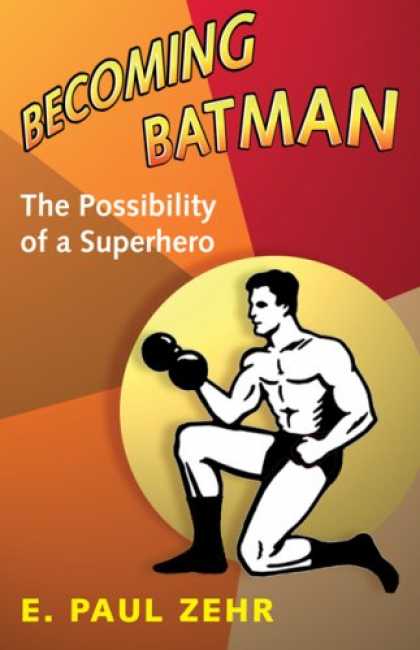
Becoming Batman: The Possibility of a SuperheroBecoming Batman: The Possibility of a Superhero by E. Paul Zehr

My rating: 5 of 5 stars

Amazon page

[Note: This book is about sport and exercise science, particularly as they pertain to the martial arts. If you’re a martial artist or are interested in fitness and movement arts at the extremes of human capacity, you’re in the right place. If you’re interested in the comics and an overview of topics including how many billions Bruce Wayne needs and what technologies Batman must master, those aren’t questions addressed in this book. Such readers may find the book delving into depths they aren’t interested in on biological science. There are articles on the web that deal with topics like the “Cost of being Batman.”]

Next summer an eagerly awaited movie entitled Batman v Superman: Dawn of Justice hits theaters. Who knows how much screen time will involve the fight between the titular characters, but the same battle has played out a number of times in the comics, and its appeal is clear. What are the limits of human capability given training, technology, and sufficient smarts? Can a man really defeat an alien that’s faster than a bullet and more powerful than a locomotive? A popular fanboy mantra is, “I like Batman, because I could be Batman. Batman has no superpowers.” So, yes, if you were a billionaire, genius, with the physique of a Greek god, and knew 127 martial arts, you too could be Batman. Or could you? That question is at the heart of Zehr’s book.

Becoming Batman is arranged into sixteen chapters divided among five parts. It begins logically with the question of whether Bruce Wayne needs to begin at any particular point to achieve success in transforming himself into Batman? (At the extreme, one probably can’t imagine Bruce Wayne becoming Batman if he was born with one leg a foot longer than the other and with a Quasimodo hump, but given a Bruce who is starting out “average,” what are his limitations.) In other words, how much does genetics come into play. In the first part, Zehr introduces a character, Bob Wayne, who doesn’t appear in the comics. Bob is Bruce’s twin, and is used throughout the book for comparison purposes, i.e. to convey what Bruce Wayne would look like if he didn’t train fanatically to be Batman. The question of how much of Batman is innate and how much is painstaking built by exercise and training is critical to determining how many of those fanboys really could be Batman.

There a series of chapters explaining the mechanism by which stressors result in a stronger, faster, more powerful, and more resilient Batman. The idea is that Mother Nature doesn’t over-engineer. The only way one gets stronger muscles is by overloading them, which triggers a process of rebuilding them bigger and better than before. Wolff’s Law defines the same concept for bones, i.e. bone density increases in response to increased loading. (Incidentally, the same is true of the mind. A more agile mind is achieved only by working it, and zoning out in front of the television results in a dumbening.)

The next section shifts from generic exercise science to questions of Batman’s martial arts training. What kind of martial arts (or arts) would Batman practice? There is an often quoted statement in the comics to the effect that Batman had mastered 127 martial arts. (This is ridiculous, but it does spur the intriguing question of how many systems does Batman need to learn to have a well-rounded skill-base without being a dabbler? Many will say one art—the right one–is enough, others will say that–given the varied cast of villains he must defeat–Batman needs a broader skill-set than any existing art provides.) More to the point, how many hours does one need to practice a technique to ingrain the movements into one (e.g. neurologically it takes repetition to optimize efficiency.) This is among the questions discussed in this book.

The fourth section deals with the ravages of being Batman, and how much any human could be expected to endure. In this section, one will learn about the cumulative toll of concussions, the likelihood of Batman avoiding broken bones and other injuries that would necessarily sideline his crime fighting, and the effect that working the night shift would have. (The latter might seem trivial in comparison to the former two topics, but—in fact—it’s not. It’s well established that night workers have higher incidence of some cancers and other ailments. Furthermore, as Bruce Wayne has to keep appearances up, it means not only fighting circadian rhythm issues, but also frequent sleep deprivation—the hazards of which are even clearer and occur in short order.)

There are a number of interesting topic that aren’t don’t pertain to the core question per se, but which are interesting for fans of the Batman canon and the character’s mythos. Famously, Batman doesn’t use guns or lethal force. This raises the question of how realistic it is to regularly fight hardened knaves and miscreants without killing them. One can only knock out so many of Gotham’s baddies before one doesn’t get up.

There’s a chapter about what a fight between Batman and Batgirl would be like. While strength would definitely be to Batman’s advantage, there are advantages that an equally skilled female fighter might bring to the fight? How would Batgirl (or Catwoman) need to fight to put those advantages to use? Finally, for those of us who are no longer spring chicks, there are chapters about how Batman could expect to age, and how long he could keep performing at a level at which he could defeat his enemies.

I enjoyed this book and found it both educational and interesting. It should be clear that Batman is just a teaching tool used to explore the limitations of the human body and its ability to endure a life of fighting. That said, references to the Batman comic books and movies makes for a readable text. Perhaps what I like most about this book is that most of the books that address these subjects are textbooks that are sold on the textbook pricing model (i.e. we have a limited but captive audience so let’s make them pay top dollar.) This is one of the few books that takes on these topics at the readability and pricing model of a popular science book.

I recommend it for those interested in the science of performance, martial arts, and injury.

View all my reviews

READING REPORT: May 1, 2015

Becomingbatman

Most of my reading time this week was divided between two books, one of which was also a new purchase. The newly purchased book that I spent a lot of time with is E. Paul Zehr’s Becoming Batman. This book isn’t at all what one might expect from the title or the cover. If one were to notice that it’s put out by Johns Hopkins University Press, one might realize that it’s not a fanboy fantasy work. What it is is a book about the science of exercise and conditioning for athletes that uses “Batman” as a pedagogic tool to make more digestible scientific information like how our muscles grow or how we make our movement more efficient through practice. It’s a fascinating book if you are interested in science and martial arts (or movement arts more generally.)


Wired for StoryThe other book I’ve been tearing through is Wired for Story, which I wrote about last week. It’s a book that explains how human brains are wired to be intrigued by story, and how writers can put this information to good use.


Meeting the Dog Girls

The one book that I finished this week is Gay Terry’s Meeting the Dog Girls. This is a collection of short stories (some of which might be classified as flash fiction) that could be called tales of the weird or supernatural fiction. Most of the stories have a quirky sense of humor.


ZebrasUlcers_Sapolsky

I bought two other books this week, both of which have been on my reading list for a while. The first is Why Zebras Don’t Get Ulcers, by Robert Sapolsky.  As the title suggests, this book is about why humans are unique within the animal kingdom with respect to stress-induced illnesses. Stress reduction and mitigation have been an important question of inquiry for me as of late.


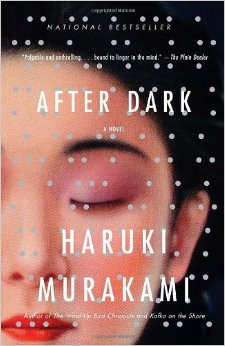
afterdark_murakami

The other book is Haruki Murakami’s After Dark. This will be the third or fourth book by Murakami I’ve read, and I enjoy his style. Ironically, this was the first book by Murakami that I noticed in the bookstore, but I never got around to reading it.

BOOK REVIEW: Batman: Arkham Asylum by Grant Morrison

Batman: Arkham Asylum - A Serious House on Serious EarthBatman: Arkham Asylum – A Serious House on Serious Earth by Grant Morrison

My rating: 4 of 5 stars

Amazon page

This is the third, and probably last, installment in my “Happy 75th Anniversary, Batman” series of reviews. Batman: Arkham Asylum is an attempt to convey a nightmare on the page, and it succeeds both graphically and narratively. It’s quite different from other Batman comics in style and content. It takes the dark nature of the Dark Knight’s mythology to the extreme.

There are two story-lines woven together in Batman: Arkham Asylum. The main line involves Batman entering an Arkham Asylum being run by the inmates. There he finds himself pitted against his foes: the Joker, Two-Face, Scarecrow, and others. The other is the 19th century tale of Amadeus Arkham’s descent into madness.

As is common in the Batman mythology, psychiatrists are portrayed as walking the razor’s edge between sanity and insanity. For those who don’t read comic books, this is most readily exemplified by the character of Dr. Crane / Scarecrow in the first film of the Nolan trilogy, Batman Begins. I’m not sure whether the point is to create enemies that are so strong they can bend doctors to their will, or if there is a general disdain for psychiatrists—as one might see a dislike of lawyers in other stories.

Among the nightmarish elements of this work is the fact that Batman’s face is never seen clearly. The Dark Knight is always a vaguely and/or surrealistically silhouetted. There’s a mix of sharpness and haziness in the graphics. The Joker gets his own crazy scrawl font. The graphics are as creepy and strange as can be. On my low-end Kindle, the work was in black and white, which worked well. I did look at the sample pages, and the color version uses a lot of sepia and crimson.

Batman: Arkham Asylum asks us to consider whether Bruce Wayne / Batman is sane or just a lunatic with a moral code.

View all my reviews