
Taken in October of 2016 in Haw Par Villa, Singapore



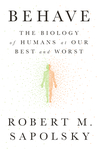 Behave: The Biology of Humans at Our Best and Worst by Robert M. Sapolsky
My rating: 4 of 5 stars
This book examines the role of biology in the best and worst of human behaviors – as well as presenting factors that compete with or complement biological explanations, as the author finds relevant. Sapolsky is neuroscientist (specifically, a neuroendocrinologist) with a unique perspective as his research cuts across species – involving not only human beings but also baboons. Sapolsky investigates why humans fight, cooperate, rape and forgive by comparing and contrasting human behavior with what is seen in the animal kingdom.
The first thing a potential reader must realize is that Sapolsky dives into the weeds more so than most scientists writing for a popular audience. This will be a plus if one’s grasp of science (biology, in particular) is strong. However, if the reader hasn’t read anything on biology since high school or freshman year of college, one is likely to find the names and descriptions of hormones and neurochemicals, brain sectors, and protein processes a bit daunting. The book has three appendices that offer primers on neuroscience, endocrinology, and proteins, respectively, to get readers up to speed on the basic science. Furthermore, Sapolsky is quick to point out what can be skipped by readers who don’t want so much detail. I don’t want to give the impression the book is boring. Sapolsky uses humor and story to good effect. It’s just that he gets into Latin names and physiological minutiae at a level that most of his counterparts don’t, and that some readers will find challenging.
While not formally divided so, the seventeen chapters of the book can readily be split in two parts. The first ten chapters discuss the types of behavior that Sapolsky is taking on, and then work back from what happens immediately before a behavior (i.e. one second before) through neuronal, hormonal, and other proximal causes to the far distant causes rooted in human evolution. The first half of these chapters take one to a point in the individual’s life at most months out from the behavior under consideration. Chapters six through eight go back to the individual’s youth, exploring the role of adolescence, infancy, and fetal development. Chapters nine and ten peer back before the birth of the individual to those who contributed indirectly to the individual’s vice or virtue, including the role of the broad run of human evolution. It should be pointed out that this first part is where the aforementioned technical depth is mostly observed.
The second part of the book changes the approach by taking a more topical approach. Said topics include: us/them discrimination, hierarchy (and the acceptance / rejection thereof), morality, empathy, metaphors and symbols that become integral to good and bad behavior, the biology of free will (or the lack thereof,) and consideration of the question of whether humanity is getting more peaceful (as Steven Pinker argues in his book “The Better Angels of Our Nature” [which is arguably one of the main competitors to Sapolsky’s book, though the focus is a little different.]) This second part gets much more into the social science perspective, and isn’t as scientifically dense as the first portion of the book.
I would recommend this book to anyone interested in the good, the bad, and the ugly of human behavior. With the exception of getting a little technical in spots, it’s quite readable and interestingly organized and presented. As one can’t help get into political and cultural norms in a book on human behavior, Sapolsky betrays his personal biases here and there, but is quick to admit when there is evidence against them (or no evidence at all, either way.) I felt he maintained a reasonable scientific objectiveness, but others may feel differently.

Taken in June of 2017 near Nairobi

of egg coffee and banh mi
to rocky islands in the sea
tiny, tidy market stalls
to the mammoth shopping malls
once a town in ruin and rubble
I saw not an ounce of past troubles
maybe a bullet-pocked citadel
though it be true that war is hell
it’s also a terrible liar
as if the world could be remade through blood and fire.

Taken in December of 2017 in Manila

Taken near the Shanti Stupa (Peace Pagoda) of Pokhara, Nepal in May of 2018
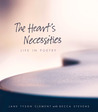 The Heart’s Necessities: Life in Poetry by Jane Tyson Clement
My rating: 4 of 5 stars
At its heart, this is a collection of the poems of Jane Tyson Clement, who lived from 1917 to 2000, but there’s more going on in the book than the poetry. As the subtitle, “A Life in Poetry,” hints, the poems range over the almost sixty-year writing career of this author and poet. Having a selection of verse that runs from Clement’s teenage years into her seventies, offers the reader an opportunity to watch the growth of this poet and to see how the dictates of life influenced the style and content of her poems. The poems cover a range of topics, including: relationships, art, and nature. I found the nature poems particularly evocative, but they are all skillfully composed and endearing. Also, it should be noted that the Prelude and commentaries were presented by a musician and songwriter, Becca Stevens, and her interest skews to the artistically oriented works. While I’ll discuss at length how these poems were spread across the life of a little known but skillful 20th century poet, I should point out that the poems don’t feel dated or obsolete. Dealing in fundamental issues of humanity, the selections have aged well.
The collection is divided into five chapters. There is a roughly chronological progression to the collection, but chronology isn’t strictly followed in favor of supporting each chapter’s theme. (Though the themes are informed by what was going on in the poet’s life during various points.) The first chapter presents poems written between 1935 and 1939 (age 18 to 22.) The second picks up in 1939 and while it ends on a poem from 1953, mostly covers a period to 1941. Chapter three includes selections from 1940 to 1953 (ages 23 to 36.) The penultimate chapter includes poems from 1954 and 1955. The last chapter is stretched out from 1955 to 1991 with much less temporal density to the poems than is seen in earlier chapters.
I said in the introductory paragraph that there was more going on than the poems. Here I’ll discuss what these ancillary additions were, ranging from what I found to be most to least beneficial to the work overall. First, there are photographs throughout the book that are warm, heavily oriented toward nautical-coastal themes, and which create a retro vibe appropriate to a book on the life of a twentieth century poet. Besides the coastal and nautical photographs, there are many that revolve around music, including photos of Stevens but also more artsy still-lifes.
Second, each chapter begins with a brief biographical statement of where Tyson Clement was at during the period in question in terms of relationships, family, religious beliefs, where she was living, and what else was occupying her time besides poetry writing. It was interesting to see what was going on with the poet as she was composing the selected works.
Finally, there are commentaries interspersed amid the poems here and there, presented as though Becca Stevens is letting the reader into her head as she ruminates on some of the poems. At this point I’ll confess my own bias. I’m not a big fan of commentaries in poetry collections. There is a famous saying by E.B. White about humor that I think equally applies to poetry: “Analyzing humor is like dissecting a frog. Few people are interested and the frog dies of it.” I’m not saying that Stevens didn’t offer insight, particularly related to her life as a musical artist. She is certainly articulate and thoughtful. Still, I think commentary detracts from the poetry reading experience by overwriting what the reader takes from a piece with the commentator’s thoughts. But, your mileage may vary.
I would recommend this work for poetry readers. The poems are evocative and the language is beautiful. The poems are readable and have aged well.

Taken in December of 2015 in Bai Tu Long Bay

Taken in October of 2015 in Varanasi


