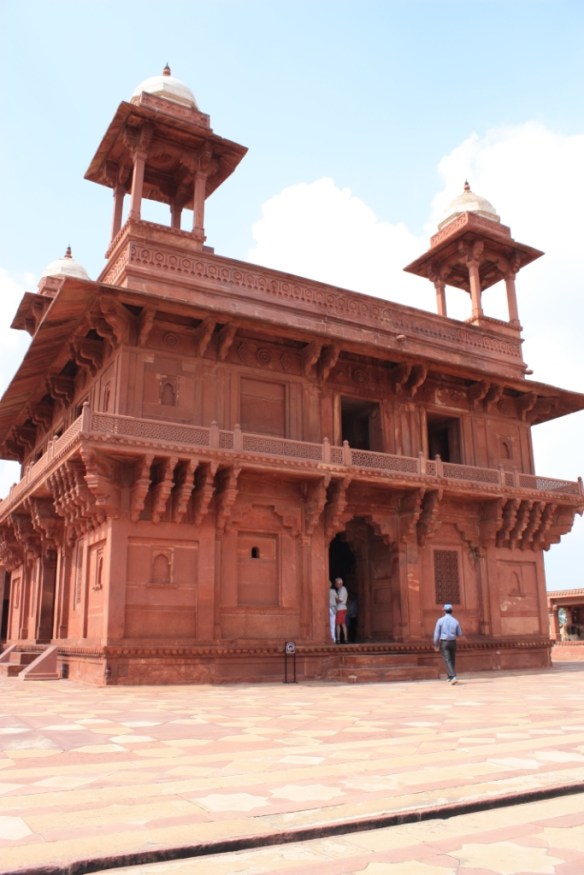
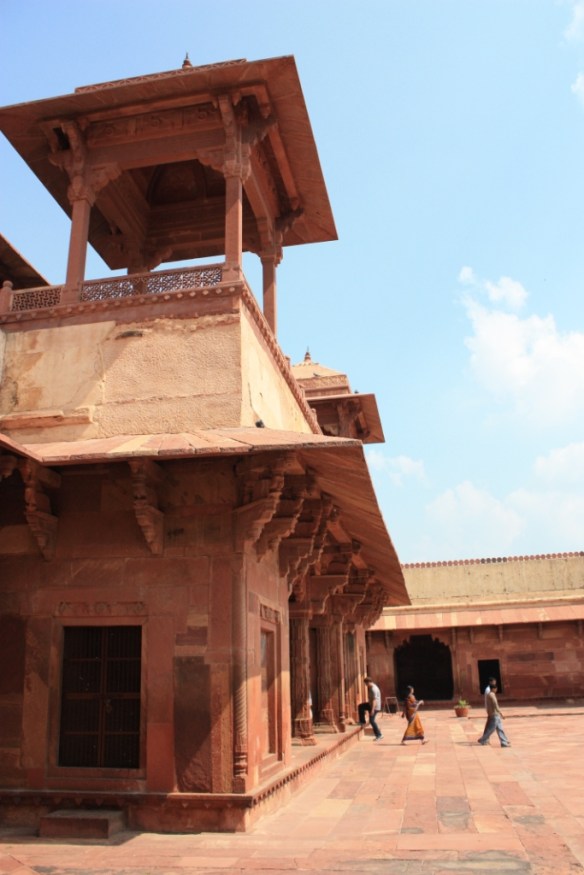
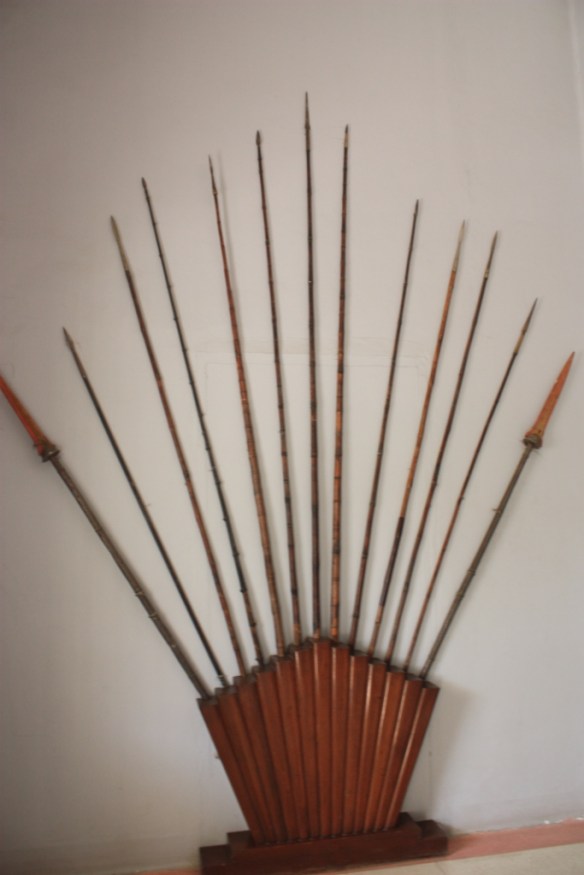
Taken on November of 2015 in Jodhpur



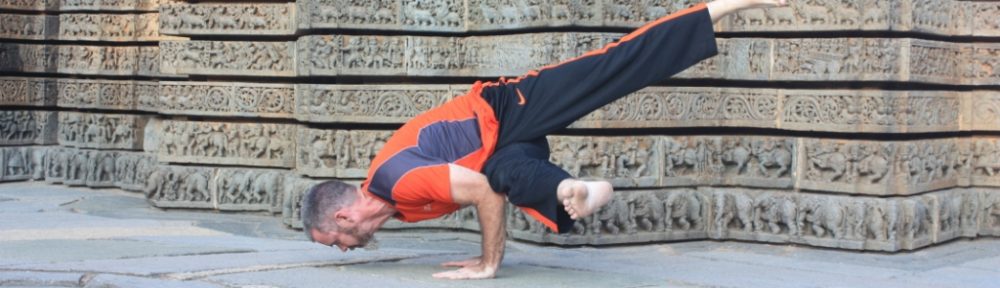

5.) Take a class / Join a group: While I’m partial to yoga and the martial arts, the class could be in any area that presents a challenge. However, there are a couple of advantages to the aforementioned two (to which I would add dance.)
First, these disciplines train one to be expressive with one’s body and to move more freely. This can do wonders for confidence. People store tension in their bodies without even realizing it. Many have postural problems that effect confidence and self-perception. A 2014 New Zealand study found that posture can have a strong effect on emotional state.
Second, no matter who one is, one will be challenged by new approaches to movement. The average person has great difficulty learning to use their body in new ways. One needs to drill in movements conscientiously to achieve competency. Our conscious mind, frequently gets in the way. Even the most athletic and coordinated people will need to work it, failing repeatedly until they succeed.
Why is the challenge so important? Many people go through life afraid to fail, but far too few fear never failing. Sounds idiotic. Nobody wants to fail. I have some hard news. If you’ve never failed, it’s not because you are unmitigatedly awesome in all things. It’s because you’re living in a box and cherry-picking life experiences that feel unthreatening.
If, like me, you’re an introvert, this approach offers the additional benefit of social interaction that is of a predictable / schedulable nature. One needs the interaction, but the problem comes when one has social interactions and / or sensory stimulation that go on too long and in an unpredictable fashion. Therefore, being able to schedule such time is a good way to go about being a more productive introvert.
4.) Writing / Visualization: These two approaches to mentally rehearsing allow one to keep one’s inner critic in check. The problem with simply day-dreaming it is that critic can chirp in without being that cognizant of it.

In visualization, one quiets the mind and can then non-judgmentally acknowledge and dismiss the negative thoughts. In writing–be it as a journal entry, poem, or a story–we may not notice the nagging voice of the inner critic on the first draft, but you can take note of it and undo it in rewrites.
3.) Travel / Living abroad: I should point out that not just any old travel will have the desired effect. Many people plan their travel with the objective of being comfortable at the fore. They eat at places that serve the same kind of food as at home. They stay in hotels with virtually all of the comforts of home, and sometimes many more. This is understandable because the traveler might just be seeking rest. However, if one is seeking the epiphany or enlightenment experiences talked of by backpackers and ashram-dwellers, that’s not something that comes from staying in resorts or eating at American fast food joint. Those kinds of brain changing experiences come when one is stripped from the familiar and has to surrender one’s attachments to the way one thinks the world should be. One’s perception of culture and worldview changes radically when immersed in a foreign environment.
2.) Game it / Roleplay: There’s a big movement to gamify all manner of everyday activities. In her book, “Reality is Broken,” scholar of game design Jane McGonigal describes a game called “Chore Wars” that incentivizes the doing of mundane household chores.
What is it about games that help one move beyond one’s limits? First of all, it incentivizes actions. And if you’ve ever noticed people playing games on their phone or FB for hours on end, you’ll note that it doesn’t take much reward to keep people plugging away—as long as the game is structured well.
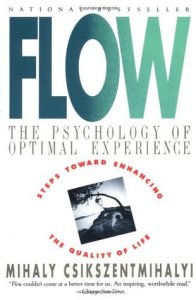
Second, good games provide a built-in process of “leveling up.” This means that the challenge keeps being intensified as our skill level advances. Those familiar with Csikszentmihalyi’s conception of “Flow” will recognize that matching skill level to challenge level is one of the most crucial elements in facilitating flow-state.
Roleplaying is a bit like the previously mentioned tools of visualization and gaming in that it’s a way to have a low-cost rehearsal. If one has someone with whom one can engage in such a roleplay, than one also has someone to help make you aware of your inner critic and its deleterious effects. And that brings us to the final tool:
1.) Have a spouse, partner, and or confidant: In “Why Zebras Don’t Get Ulcers” Robert Sapolsky tells a story of being interviewed by a magazine. He was asked what the number one thing that they could tell their readers about reducing stress. To which he replied that the most well-established factor in stress reduction is to have a spouse / life partner with whom to share one’s challenges. Unfortunately, this was a magazine for women business leaders, a significant portion of whom had given up on permanent relationships and families. They, therefore, asked him what else he had. Still it’s hard to overlook the anxiety-fighting effects of having someone around with whom to share one’s dread.
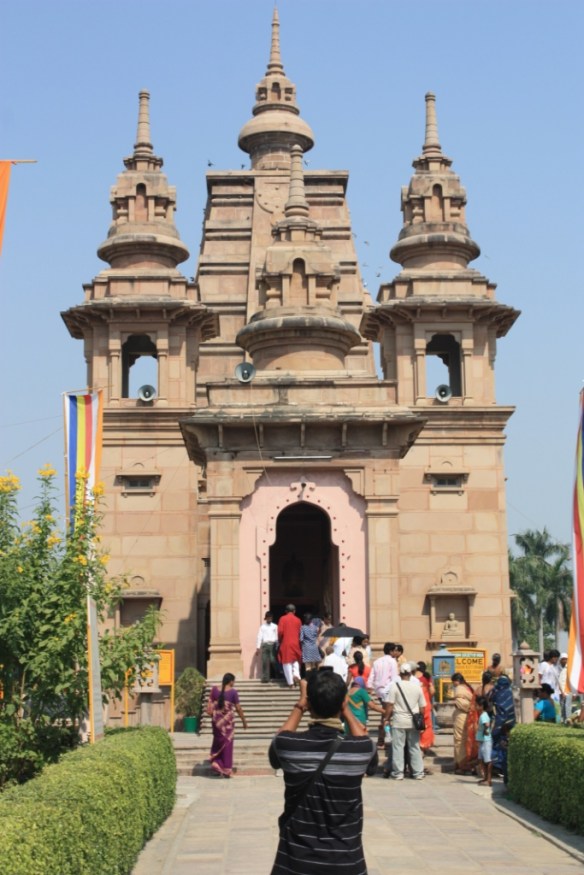
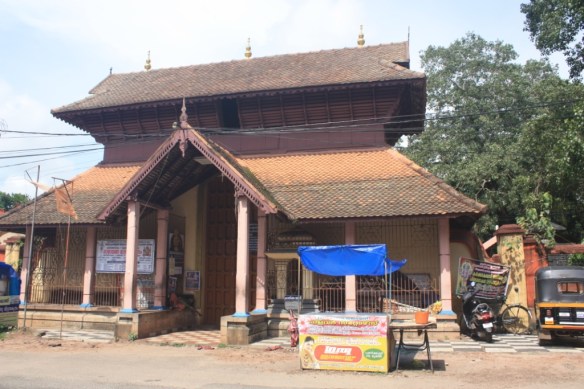
Taken in October of 2015 at Sarnath

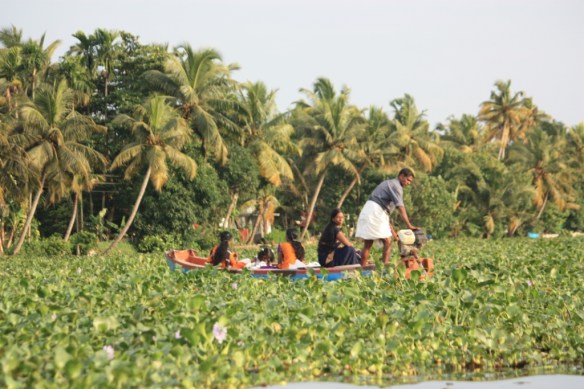
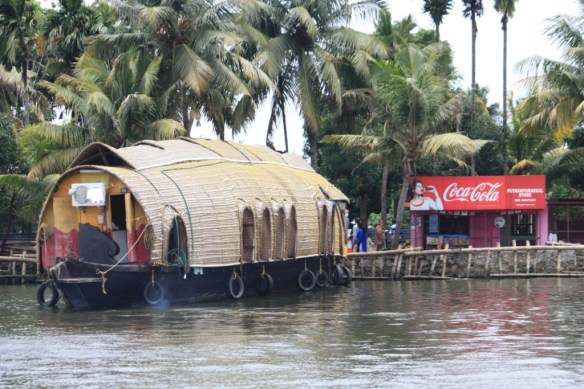
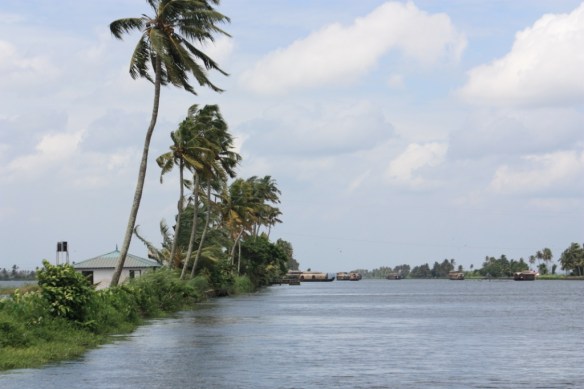
Taken on June 29, 2017 near Alappuzha in the Backwaters of Kerala

 Crossing the Heart of Africa: An Odyssey of Love and Adventure by Julian Smith
My rating: 5 of 5 stars
This book tells two tales in parallel, connected by one theme: travel for love. The author, Julian Smith, recounts the experience of Ewart Grogan, an English explorer whose life straddled the 19th and 20th centuries. Grogan traveled the length of Africa from South to North and recounted his experience in a book entitled “From Cape to Cairo.” The purpose of his grand endeavor was to prove his worth as man. Grogan was in love with a woman whose family was of higher station, and he believed that if he could only do what had never been done before, then the objections to his “marrying up” would dissolve.
The other story is Smith’s own attempt to retrace Grogan’s route across the length of the continent. While Smith doesn’t have to prove his worth, his motivations are more complex and tied up with his engagement to be married. Maybe Smith’s motivation is best summed up as a desire to prove to himself and / or his fiancé that he had sufficient commitment and fortitude to get him through rough times—a characteristic relevant to both marriage and crossing some of the world’s least developed countries.
Of his own admission, Smith’s journey was to be far less arduous than Grogan’s by virtue of the fact that he’d be traveling by taxis, motorcycles, buses, and ferries. Grogan and other 19th century explorers were subject to hazards far graver and more ever-present. For one thing, in Grogan’s day virtually everybody who spent any significant time in Africa got malaria. It wasn’t a question of if but when and how seriously. Even if you escaped malaria, there were myriad other tropical diseases to bring one to one’s knees. Next, there was the tribal environment in which one would travel through dozens of tribal territories, all of whose chiefs expected tribute and many of which were outright hostile. For Smith, rule of law was present in some form or fashion along most of his route, such that no one could just murder him and get off scot-free. There was also the risk of crew desertions that could cripple an expedition. Traveling parties had to carry huge amounts of goods from surveying equipment to gifts to medicines to food stuffs. Still, they had to obtain many of the party’s needs along the route. Among other things, this meant hunting animals that weren’t as docile as livestock. Anything less than an instant kill meant having to trudge into tall grass after a wounded creature that had a far greater killing capacity at close range.
This isn’t to say that Smith’s journey was adventure free. Anyone who has traveled in Africa knows that getting from place to place remains a slow and exhausting process. And many of the things that undermined Grogan’s trip also undermined Smith’s, e.g. the author suffered extended fever. But the most devastating factor for Smith’s travels was the fact that parts of Sudan were lawless and a brutal war was being fought. While Grogan barely managed to drag himself through the swampy landscape, Smith was unable to proceed overland because of the conflict. In telling of his travels, Smith discusses many of the dilemma’s that traveler’s face today (e.g. to give people money or not, how to contend with bureaucrats.) Among the travels that modern-day readers might be interested in is Smith’s visit to a gorilla sanctuary.
I enjoyed this mix of travelogue and history. The book gives one insight into the changing nature of the world and, particularly, what was once called the Dark Continent. [Note: while that may sound either racist or awash in a negativity bias, I’ve read that the reason it was called that was that when the 19th century explorers were traveling through much of the continent was unmapped, i.e. blacked out.]
I’d recommend this book for anyone who is interested in travel in Africa—past or present.