BOOK REVIEW: Descartes’ Error by Antonio Damasio

Descartes' Error: Emotion, Reason and the Human BrainDescartes’ Error: Emotion, Reason and the Human Brain by António R. Damásio
My rating: 5 of 5 stars

Amazon page


I’ve joked that there must be a law requiring any author writing a book on neuroscience for a popular audience to tell the story of Phineas Gage. This book is no exception. Its first couple chapters explore the case of Gage in detail. For those who don’t read much on this subject, Phineas Gage was a foreman for a construction company. By all accounts he was a reliable and solid individual, respected by his employees, trusted by his employer, and beloved by his family. Then one day a four-foot tamping rod was blown through his skull – literally, in one side and out the other. One might think that having a chunk of brain skewered out by a steel rod on a gunpowder-fueled ride through the skull would leave one – at best — a glassy-eyed, drooling, catatonic lump. Surely, a steel rod would wreak more havoc than the narrow needle used in lobotomies? However, what makes Gage’s story fascinating is that the injury resulted in no readily apparent disruption in cognitive function. Gage could still speak fluidly. He retained his memories. He could do math at the same level as before. However, this isn’t to say that the hole through his brain left him unchanged. The even temperament that made him an ideal employee and that endeared him to friends and family was gone. Gage became angry and unreliable.

So what is the relevance of the Gage story to Damasio’s book? Quite a lot, actually. Damasio’s book is about emotion, its influence on decision-making, and how bodily states create emotion. In parts two and three of this three-part book, after introducing the reader to the role of the brain in emotion via the cases of those with selective brain damage, Damasio lays out an argument for what he calls the “Somatic Marker Hypothesis” which says that bodily states are what create the sensations that we associate with emotion. The title-referenced error made by Descartes will be apparent to those familiar with Cartesian dualism. Descartes believed there was a dualism between mind and body – i.e. that there was this physical stuff that got us about from place to place, but there were these intangible thoughts and feelings that were matter-independent that were the makings of mind and which were really you (i.e. you think, therefore you are.) Damasio believes that you cannot separate what it feels like to be you from the body and all its hormones, neurotransmitters, vital statistics, neuronal firing, etc.

The book consists of eleven chapters divided into three parts. In the first part, the author lays out not only the case of Gage, but other examples of individuals who had injury or illness in the brain that disrupted emotion and its influence on decision-making. We learn that an unemotional being isn’t like Spock, but instead is paralyzed by indecision. It turns out that it’s emotion that give us a kick, particularly when he have no sound basis on which to make a rational judgement. The second part draws the connection between body and our emotional self, culminating in a description of the Somatic Marker Hypothesis. The final part describes how the Somatic Marker Hypothesis could be tested and where this line of study seems to be going. The book is annotated and has a bibliography as one would expect of a scholarly work – even one written for a popular audience. The book has a few graphics – graphs, charts, and diagrams, but not very many and of a clear and simple nature.

I’d highly recommend this book for anyone interested in the working of the mind. It’s a thought-provoking look at what it means to be an emotional being and challenges our preconceptions about feelings.

View all my reviews

5 Works of Nonfiction That May Be [at least in part] Fiction

NOTE: There are many famous examples of books presented as nonfiction that turned out to be partially or completely fabricated (e.g. Go Ask Alice, A Million Little Pieces, Three Cups of Tea, The Teachings of Don Juan, and Papillon are examples that spring to mind.) That’s not what I was going for when I started this list. Instead, I was thinking of examples of books that may well be true to the best of the author’s knowledge, but which may also be examples of false memory syndrome. I became interested in this while reading Julia Shaw’s The Memory Illusion, which discusses how faulty memory can be — to the point that people can be led into false memories of something as traumatic as committing crimes that never occurred. Meredith Maran wrote a book entitled My Lie: A True Story of False Memory about what she discovered were false memories of childhood sexual abuse. So, I’m not saying these books are fabrications, and — for all I know — some may be completely true. After all, some of the featured individuals think they were exploited by the MK Ultra mind-control shenanigans, and some of them may have been, but it’s also possible some weren’t.


5.) Secret Weapons by Cheryl and Lynn Hersha: The Hersha sisters say they were in a program that turned them into femme fatales.


4.) Psychic Warrior by David Morehouse: I read about Morehouse in Jon Ronson’s The Men Who Stare at Goats. Sadly, it’s not in question that the military maintained a program of psychics, nor that Morehouse was involved in said program. What is in question is the degree to which the program had successes.


3.) Communion by Whitley Strieber: This is the most famous alien abduction story. I don’t know what really happened, but I seriously doubt it’s what the author proposed.


2.) The Control of Candy Jones by Donald Bain: This is a more well-known case similar to that of the Hersha sisters in which a woman was said to be reprogrammed by a nefarious psychiatrist in a mind control program. Candy Jones was famous as a pin up girl. After she got married, her behavior changed radically, and her husband asked her to participate in sessions of hypnosis which are said to have turned up a buried second personality.


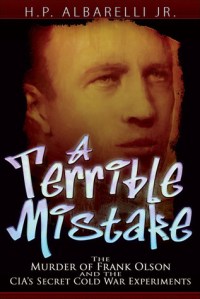
1.) A Terrible Mistake by H.P. Albarelli Jr: This is another example of a case in which there are certain remarkable facts that aren’t in dispute, but the degree to which the fine details are accurate is hard to judge. The fact is that Frank Olson was a biologist in the employ of the government, he was dosed with hallucinogenic substances, and thereafter he took a fatal plunge out of a hotel window. Whether he was murdered as a cover up or just had a bad trip has always been an open question.

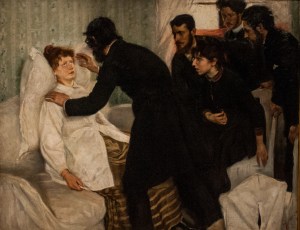
BOOK REVIEW: How to Hypnotise Anyone by The Rogue Hypnotist

How to Hypnotise Anyone - Confessions of a Rogue HypnotistHow to Hypnotise Anyone – Confessions of a Rogue Hypnotist by The Rogue Hypnotist
My rating: 4 of 5 stars

Amazon page


This is the first book in a popular eBook series on hypnosis. The series is written by an anonymous hypnotist and neuro-linguistic programming (NLP) practitioner from London. As the first book, it addresses the basics of hypnotic induction, including background about what a hypnotic trance is and how it’s achieved, as well as fundamentals of voice and word choice that can influence the hypnotist’s effectiveness. The book also introduces “convincers” and “deepeners,” practices that help get the subject in the right state of mind for hypnosis and which take them deeper into trance, respectively. [Though, the author argues that the former aren’t really necessary.]

This short book consists of 29 chapters and 5 appendices. The “chapters” are as short as a single paragraph and lay out the concepts, and the appendices are scripts for hypnotic induction or trance deepening. This is a short book, and some have complained that it reads more like a detailed outline than a book. While it’s true that it’s a “just the facts” kind of format, many will find that preferable, depending upon how one likes to take in information. As long as you’re not expecting a lot of narrative examples, you may find it’s just what you are seeking. It’s written in a conversational style as if the author were telling one the information in person.

Given the controversial title, a reasonable question to ask is whether the book is practical or a lot of pie-in-the-sky ramblings by someone who doesn’t know what they are talking about. What’s the controversy? While there are many hypnotists and would-be hypnotists who claim that they can induce a hypnotic trance in anyone, regardless of the individual or the situation, the science suggests that there is continuum of degrees of hypnotizability. The distribution along this continuum follows a bell curve. What’s this mean? Almost everyone can be hypnotized to some degree, but at one tail there are people who are extremely suggestible – however, at the other end there are people who just can’t be induced. Because there are so many Hollywood misconceptions (see: “Now You See Me”) and hypnosis related fantasy and fiction, it’s not surprising that there are a lot of wrong ideas out there. [I should point out that everyone probably achieves a trance state at some point organically, but some people seem unable to be induced into that state because of anxiety, resistance, or otherwise.] Having said all that, it seemed that the author knew of what he wrote and was quite open about the myths, misconceptions, and limitations.

Later titles in this series address such topics as the details of language for hypnosis, escaping cultural hypnosis, applications for anxiety reduction, uses for combating addiction, as well as the more bizarre and arcane side of the subject.

I’d recommend this book for anyone looking for a primer on hypnosis. I was not bothered by the sparse approach. It’s quick and readable, and seemed to offer well reasoned approach to hypnotism.

View all my reviews

BOOK REVIEW: Conversations on Consciousness ed. by Susan Blackmore

Conversations on Consciousness: What the Best Minds Think about the Brain, Free Will, and What It Means to Be HumanConversations on Consciousness: What the Best Minds Think about the Brain, Free Will, and What It Means to Be Human by Susan Blackmore
My rating: 4 of 5 stars

Amazon page


Blackmore gathers together interviews from a veritable who’s who of consciousness experts from neuroscience, philosophy, physiology, psychology, and physics. While the interviews are in part tailored to tap into the special insights of the given expert, a consistent series of questions is asked of each of the interviewees. Each expert is asked what they think is challenging about consciousness, what they think about the feasibility of philosopher’s zombies (a popular thought experiment about an individual who seems to behave like an ordinary human but who has no conscious experience), what they think about the existence of free will, what happens to consciousness after death, and what got them interested in the subject. This makes it easy for the reader to see not just differences in thinking across disciplines, but also different schools of thought within disciplines. There’s enough variety to make for intriguing reading. There is also a mix between individuals who have experience with meditation (e.g. the interviewer) and those who don’t, and so it’s interesting to compare views of those with such insight to those who study consciousness entirely abstractly.

I won’t list all the authors, but they include: David Chalmers (who famously coined the term the “hard problem” of consciousness, which is one of the most widely discussed ideas in the book), Francis Crick (of DNA fame who later shifted focus), Daniel Dennett (a well-known philosopher), V.S. Ramachandran (a neuroscientist famous for work on phantom limbs and behavioral neurology), and Roger Penrose (a physicist who believes that quantum mechanics may prove crucial to figuring out consciousness.)

It’s a straightforward book. There’s an Introduction by Blackmore and then the 20 or 21 interviews (one “chapter” is a married couple – Pat and Paul Churchland — whose insights are presented together.) The only back matter is a glossary, which is quite in-depth and which helps to clarify the many confusing concepts from various disciplines. There are a few cartoon drawings that lighten the tone, but serve no essential purpose.

I enjoyed this book and found it thought-provoking. It’s quite old at this point – having come out in 2005 – but since consciousness is so intractable, it’s not like any of the questions have been cleared up. (If it were a book on AI, I’d probably say it was worthless at this point, but not this book.) I’d recommend it for anyone looking to understand the lay of the land with regards thinking about consciousness.

View all my reviews

BOOK REVIEW: The Rape of the Mind by Joost A. M. Meerloo

The Rape of the Mind: The Psychology of Thought Control, Menticide, and BrainwashingThe Rape of the Mind: The Psychology of Thought Control, Menticide, and Brainwashing by Joost A.M. Meerloo
My rating: 4 of 5 stars

Amazon page


This book, first published in 1956, describes the various tactics used by Totalitarian states, and explores why some people stand up to them better than others. It discusses brainwashing, menticide (a term coined by the author), attaining false confessions, and the gamut of tactics of mental submission — be they active or passive in nature and whether they target individuals or the whole of society. The author, Joost Meerloo, was a Dutch psychiatrist who fled the Nazis, served as a Colonel and psychiatric expert in the Dutch military-in-exile during the Second World War, and then immigrated to the United States where he taught at Columbia University and continued his research on this subject.

The first question a reader might have is whether the book is worth reading, given that it was written so long ago and so many books have come since. In other words, does it hold up? It’s true that it’s a little bit of a mixed bag. On one hand, there’s occasional referencing of psychoanalytic notions that have fallen out of favor (e.g. Freudian ideas.) On the other hand, I found the section on technology as a means of indoctrination and mass manipulation to be even truer now than it was at the time. Meerloo was only thinking about radio and television, and couldn’t have imagined how technologies are being infused with lessons from neuroscience to make them, quite literally, addictive — or how even mass media is being tailored to appeal to various groups (granted this seems to be more demand driven, but its nefarious potential is apparent.)

I believe this book is a worthwhile read even more than sixty years later. The author had a lot of personal interaction with individuals affected by these tactics, and there is a great deal of insight. The value of the personal insight far outweighs the influence of any outmoded thinking. Further, I would say that the book is an interesting and informative read even if one isn’t interested in North Korea or any of the few other blatantly authoritarian nations still around today. If one is interested in questions such as why so many people can believe incorrect notions in the face of overwhelming evidence, this book provides food-for-thought on the topic. Even if one’s government is not authoritarian, in-groups may use some of these same tactics to influence members’s thinking.

While the book is famous for discussing the cases of the American soldiers brainwashed during the Korean War (i.e. the basis of the “Manchurian Candidate” novel and original movie [1962,]) Joost uses many examples from the Nazis — including a little of his personal experience — as well as Cold War stories (generally focusing on the Soviets, but touching upon the Totalitarian-style tactics of McCarthyism.) There are famous cases like Cardinal Mindszenty, but many lesser known cases with which the reader is unlikely to be familiar.

The book’s eighteen chapters are divided into four parts. Part I (chapters 1 through 4) expounds upon the tactics used to cause individuals to submit. Meerloo discusses how false confessions are elicited using techniques from Pavlov’s classical conditioning to drugs to manipulation by doctors to playing on the subject’s guilt. It should be pointed out that a central idea in this book is that it’s just a matter of time. It’s an idea that’s revisited later in the book when considering the ethics of sentencing for treason and when evaluating how to best train soldiers to hold out as prisoners of war. It’s true that some individuals are much more resistant to these techniques but no one holds out forever. One can become more robust to interrogation, but the idea is to do so in the hope that one can outlast the enemy.

Part II (ch. 5 to 9) discusses techniques for mass submission. This dives into how totalitarian leaders affect thinking by controlling semantics, the information available to the public, and by using fear through various methods including the surveillance state and show trials. One key concept is how having spies everywhere isn’t necessarily about gaining information so much as keeping the populace in fear so as to influence their behavior. It creates a steady state prisoner’s dilemma in which one never knows whether someone is going to roll over on one for his or her own benefit.

Part III (ch. 10 to 14) continues on the theme of mass compliance but with a focus on “unobtrusive coercion.” Running a totalitarian state isn’t all about torture, truth serum, and having spies everywhere. There is a soft power component to totalitarianism. This section explores this side of the coin with special attention to the roles of technology and bureaucracy. These chapters also consider how education and child development can be a tool of the dictator or authoritarian regime, and how indoctrination about concepts of treason and loyalty can be exploited by totalitarian governments.

Part IV (ch. 15 through 18) considers how individuals and societies can make themselves more robust against authoritarian tactics. This section delves into how members of democratic societies might best think about concepts of loyalty and treason in light of the fact that even the most stoic soldiers and spies can be weakened given enough time. There is one chapter that mirrors material in part III, except that instead of discussing how totalitarian systems use education to weaken and manipulate, this one suggests how education might be used to make a society of individuals less vulnerable to authoritarian arguments and tactics. This is also where Meerloo offers analysis of what traits tend to make one more robust to brainwashing and other totalitarian tactics and why.

There is no ancillary matter (i.e. graphics, appendices, notes, or bibliography) in the edition that I read. However, I can’t say that it was missed. The author uses many cases and anecdotes to make the book interesting to read, and much of it comes from the author’s personal knowledge.

I found this book intriguing, and would recommend it. As I mentioned earlier, one needn’t be exclusively interested in Nazi Germany, Stalinist Soviet Union, or countries like the DPRK (N. Korea) to find this book interesting. Sadly, the book has a lot to say of relevance to individuals in modern-day democracies.

View all my reviews

BOOK REVIEW: The Unthinkable by Amanda Ripley

The Unthinkable: Who Survives When Disaster Strikes - and WhyThe Unthinkable: Who Survives When Disaster Strikes – and Why by Amanda Ripley
My rating: 5 of 5 stars

Amazon page


Ripley investigates a range of disasters and tragedies – natural and man-made – with an eye toward her sub-titular question of who survives and why. Of course, in the process she answers the [often more interesting] converse question of who dies and why? By that I’m specifically referring to those who die while facing the same situations as survivors. i.e. Who dies having had the capacity to survive? Obviously, some people fail to survive because they face a fundamentally unsurvivable event (e.g. a plane explodes in mid-air with said person in it), but a surprising number die who could have walked to safety if they’d have managed to get moving – and some die because they play out a mental script that makes no sense contextually, e.g. trying to get a carry-on out of the overhead compartment as though one is at the gate at Heathrow Airport when in fact one is sinking into the ocean while the crashed airliner one is in is being buffeted by ocean waves.

Over the course of eight chapters, an introduction, a conclusion, and ancillary material, the author presents cases involving airplane crashes, tsunami, hurricanes, police shootings, hostage situations, fires, stampedes (of humans by humans), and even touches on the psychology of tragedies of a personal [rather than mass] nature (e.g. sexual assault.) A particular emphasis is given to events that the reader will likely be familiar such as 9/11 and Hurricane Katrina, but the book also opens up the reader to events they may have scarcely heard of from the many crushing deaths in Mecca during recent Hajj pilgrimages to the Halifax harbor incident of 1917. Along the way, the reader hears from survivors, heroes, and a wide-range of experts on subjects such as gunfights, risk perception, evacuation dynamics, the physics of crowds, evolutionary psychology, and emotional resilience.

After an introduction that sets the context for the book, the first chapter discusses one of the most salient features of whether ones lives or dies, delay. The case of the evacuation of the World Trade Center (WTC) on September 11, 2001 is used to examine why some people loiter about while others are johnny on the spot to hit the road. The WTC on 9/11 makes an interesting case because there were certainly people who died who could have survived if they’d had better knowledge or training. However, at the same time, it could have also been vastly worse if some of the people didn’t have the training they did (famously, a huge WTC tenant, Morgan Stanley, had a man in charge of emergency procedures, Rick Rescorla, whose persistent drills no doubt saved many lives [though he did not survive, himself.])

Chapter two discusses risk, and the weird way in which human beings perceive and respond to uncertainty. For example, the author describes Kahneman and Tversky’s Prospect Theory, which showed that a person responds to risk much differently if there’s a possibility of losing something rather than only of making gains. (Prior to work of these two social scientists, the prevailing view was that humans were rational actors, i.e. a $100 is a $100.) Prospect theory confirmed that anxiety mattered, and people didn’t just use their clockwork frontal cortex to calculate and compare expected values. (This may seem self-evident, but it began the process of up-ending the precise and predictable rational actor model from classical economics.)

Chapter three is entitled “fear” and it discusses that emotion and the various behaviors (and lack of behavior) that goes hand-in-hand with it, including: distortion of the experience of time, tunnel vision, and self-talk. (Panic and paralysis behaviors are each given their own chapter later in the book.) This chapter presented a fascinating discussion with a man who may have been involved in more shoot outs than any other police officer (the officer, no doubt, having a valuable perspective on how to respond in fearful situations.)

Chapter four is about the personality traits that link to resilience and the survivor personality. There is a fascinating discussion with an undercover agent in Israel, a man who faced a number of situations in which he had to coolly make a life-or-death decision in the way that most of us only experience in Hollywood movies. It should be pointed out that while we all admire such people when they save the day, the personality traits they display aren’t necessarily ones that we find desirable in daily life. Chapter five is entitled “groupthink” and it discusses the role that social dynamics play in survival, which is often considerable. Some survivors are people who would’ve perished if left to their own devices – i.e. if a more resilient stranger hadn’t taken them by the hand or shouted in their face.

The last three chapters discuss three relatively common behaviors that occur in the decisive moment of a tragedy. Chapter six discusses panic behavior. As it happens, there are some types of tragedies in which panic is almost unheard of and others in which it is nearly ubiquitous. Personality does play a role. Just as some people have personality traits that make them more resilient, others have traits that make them more likely to panic. However, researchers also found that there are characteristics – e.g. people feeling trapped but as if there’s a glimmer of hope of escape. [People who know they are unequivocally doomed are often surprisingly calm.] The chapter also offers some useful insights into how crowds kill people that may be useful for those who find themselves in massive crowds like those seen during pilgrimages or at any number of festivals in India (where human stampede deaths are disturbingly common.)

Chapter seven is about “paralysis” behavior. Readers may be familiar that there’s been a tendency of experts to add either one or two new “F’s” to the phrase “fight or flight” – such as “freeze” or “fright” – to describe other extremely common responses to severe sympathetic nervous system engagement. It’s common to dismiss such behavior as that of cowardly or milquetoast people, but the reality is more complex. On the evolutionary timescale, there was one tragedy that counted for an overwhelming percentage of such dire events — being in the jaws of an apex predator. It turns out that if a grizzly bear or lioness is atop you, freezing isn’t a bad strategy. You aren’t going to pop up and out run a tiger or defeat it in unarmed combat, your only hope may be to make it think you are a diseased carcass – i.e. shit yourself and lie limply. One has to train alternative behaviors; otherwise, the body does what is evolutionarily programmed into its genetic code.

The last chapter is on heroic acts and why some people engage in them when most people don’t. (Consider the people in the Titanic lifeboats who listened to people struggle and drown for fear that their [almost empty] boat would be swamped with clawing victims. Or, the case of Catherine Genovese who was screaming bloody murder for half-an-hour while being raped and stabbed to death while none of the 40-ish witnesses so much as called the cops.) As with the question of what makes a survivor, the answer to what makes a hero is a mixed bag. While we tend to idolize people who engage in heroic actions, the evidence suggests that the image of pure beneficence – lacking all self-interest – may be mythical. Many a hero is as much responding with a combination of subconscious mind and genetic programming as is the individual who burns to death 100 feet from an unlocked exit – just to vastly greater adoration.

I found this book to be fascinating. There are many books on this topic, but I think the author did an excellent job of choosing cases and experts to produce an interesting and informative read — even for a reader for whom this literature is not new.

View all my reviews

BOOK REVIEW: Running Flow Mihaly Csikszentmihalyi, et. al.

Running FlowRunning Flow by Mihaly Csikszentmihalyi
My rating: 5 of 5 stars

Amazon page


This book examines how Flow can be achieved by runners. Flow, in this usage, means a specific state of mind in which the activity at hand becomes effortless, self-criticism quiets, and one becomes pleasantly fixated on a task. It’s a term coined by the book’s lead author, Mihaly Csikszentmihalyi, based on his research into how some people were able to slip into a mental state in which even mundane activities could become an almost blissful obsession. This was part of a broader inquiry into how people can achieve a higher quality of life at work or at home.

The book is divided into two parts. The first four chapters lay out the concept of Flow in detail, and provide the necessary background for readers who may not be familiar with the concept. These chapters describe the role Flow can play in running, examine the components of Flow (i.e. necessary conditions and outcomes), and explain what personality traits are most conducive to achieving Flow.

The second part consists of five chapters, and it delves into how a runner can achieve Flow. Chapter five explores in detail three of the nine components that were introduced in chapter two, and tailors the explanation for runners. These three are the antecedents of Flow: clear goals, a match of challenge level and skill level, and immediate feedback. Chapters six and seven suggest the ways in which Flow can be facilitated in non-competitive and competitive runs, respectively. Chapter eight discusses the limits of flow. Because Flow is associated with feelings of effortless performance, some think of it as a sort of panacea for all that plagues their running. Furthermore, it’s not a state that easily happens and consistently returns; it’s often fickle and elusive. This chapter not only disabuses one of such notions, but also explains how failing to achieve Flow need not be the end of the world (or of one’s race.) The final chapter takes Flow beyond the concept of running and suggests what it’s pursuit can do for an individual more broadly.

The chapters use mini-case studies in which the authors describe the experience of professional runners in races and the effects of Flow on their performance and their experiences of races. There are numerous graphics. Many of these are color photos of the athletes who the authors spoke to, but there are also diagrams used to clarify key concepts. There is a glossary and references section as well.

I enjoyed this book. I’ve always thought of running as a task for which Flow would be hard to achieve because the matching of skill level to the amount of challenge is so crucial to achieving Flow and the movement pattern of running is so repetitive and monotonous. (The reason this matching is important is that if one’s skill level is far beyond the challenge, then one is bored, and if it’s the other way around, one is frustrated and overwhelmed – and neither boredom nor frustration facilitates Flow.) The book is a quick read that offers runners everything they need to make their mental experience of running more enjoyable and productive.

View all my reviews

5 Fascinating Nonfiction Books I Read in 2017

NOTE: I already did a post of the books published in 2017 that had the most profound effect on me. That post can be seen here. This one is about books I read in 2017, most of which weren’t published this year. The hyperlinks go to my GoodReads review of the respective book.


5.) Narconomics by Tom Wainwright: This is a look at how drug cartels have been drawing from the playbooks of successful multinational corporations to make their operations more efficient and profitable. It contains gripping journalism and–for an economics wonk such as myself–it hits the spot with regards to scholarly curiosity as well.


4.) The Man Who Wasn’t There by Anil Ananthaswamy: Neuroscience has been converging on a conclusion drawn by Buddhists long ago (though not necessarily sharing identical explanations /mechanisms) that the self is an illusion. Ananthaswamy considers the neuroscience of self by examining how nervous system ailments and injuries have challenged common explanations about what the self is based on what it feels to be a self. (e.g. Out-of-body experiences can be induced with electrodes. Some people deeply feel they are dead, or that they either have limbs that aren’t present or that limbs that are don’t belong to them.)


3.) The Way of the Iceman  by Wim Hof and Koen De Jong: Any book that can get one to start taking cold showers has to be pretty persuasive. Wim Hof is known for his cold endurance “stunts,” but his argument in this book is that anyone can do it and that there are health benefits to doing so. The authors report on the science of said benefits as well as offering a program to start one’s way on such a program.


2.) Trying Not to Try by Edward Slingerland: Slingerland brings a fresh look at the ancient Chinese concept of wu-wei (apparently pronounced “ooo-way.”) Wu-wei is variously translated as “actionless action” or “to do without doing,” and–while that may sound like meaningless bumper-sticker wisdom–it reflects a state of effortless action that requires an elusive but powerful state of mind.  Slingerland presents varied Taoist and Confucian approaches to the subject, but also relates the idea to modern ideas such as Mihaly Csikszentmihalyi’s “Flow.”


1.) How Enlightenment Changes Your Brain by Andrew Newberg and Mark Waldman: A neuroscientist and a positive psychologist team up to explain the common routes to the enlightened states of mind described in both Eastern religious / spiritual traditions and the mystic branches of Western religions (i.e. Jewish Kabbalah, mystic Christian sects, and Sufi Islam,) as well as their scientific underpinnings.

BOOK REVIEW: Trying Not to Try by Edward Slingerland

Trying Not to Try: The Art of Effortlessness and the Power of SpontaneityTrying Not to Try: The Art of Effortlessness and the Power of Spontaneity by Edward Slingerland
My rating: 5 of 5 stars

Amazon page


This book’s paradoxical title is perfect for its paradoxical subject matter, which is famously expressed in such quotes as, “When nothing is done, nothing is left undone” [ver. 48 of the Tao Te Ching.]  Slingerland lays down the ancient Chinese wisdom of wu-wei and de, but provides something novel by putting it in the context of the positive psychology and neuroscience of today. Wu-wei literally means “no doing,” but can be more meaningfully defined as “effortless action.” De (pronounced “duh”) is a charisma seen in people who have mastered the effortlessness and spontaneity of wu-wei.

While the book is built around the varied approaches of four Chinese philosophers—two Confucians (i.e. Confucius and Mencius) and two Taoists (i.e. Laozi and Zhuangzi)—the author relates this philosophy to the present-day thinking found in Daniel Kahneman’s “Thinking, Fast and Slow,” Mihaly Csikszentmihalyi’s conception of Flow, and the neuroscience of the subconscious.

The book consists of eight chapters. The introduction and the first two chapters outline the concepts of wu-wei and de using both Chinese and Western stories and examples to help clarify these arcane ideas and put them in the context of the social and spiritual spheres. Chapter 1 offers an extensive discussion of the operation of the brain as it relates to the discussion of effortlessness and spontaneity.

Chapters three through six make up the core of the book, and present the approach and thinking of Confucius, Laozi, Mencius, and Zhuangzi, respectively. This “boy-girl-boy-girl” Confucian-Taoist organization offers the reader sound insight into the varied approaches and allows one to see the evolution of thinking. Confucius gets the first cut, but his approach to effortlessness and spontaneity involves a great deal of effort and planning. It might seem that Laozi’s approach–which does away with effort and planning–might be more apropos, but it’s hard to imagine anything of benefit actually being spawned by such a loosy-goosy approach. The more nuanced approaches of Mencius and Zhuangzi offer additional insight, but do not eliminate the paradox. It’s this paradox that’s the subject of chapter seven.

The final chapter examines what the reader can take away–given that the paradox of wu-wei seems inescapable. The author proposes that, paradox or not, there is value in pursuit of effortlessness and spontaneity, and progress can be made by understanding and accepting said paradox.

The book has no graphics, but is annotated and has a bibliography–as well as an appendix table that summarizes the various approaches to wu-wei.

I enjoyed this book and found it fascinating. It’s highly readable, having humor and a wide range of examples from ancient myths to pop culture. The book offers a great value-added by considering the relevance of modern science and psychology to this ancient concept. I’d highly recommend this for individuals interested in Chinese / Eastern philosophy, as well as anyone hoping to bring a little more effortlessness and spontaneity into his or her life.

View all my reviews

BOOK REVIEW: The Men Who Stare at Goats by Jon Ronson

The Men Who Stare at GoatsThe Men Who Stare at Goats by Jon Ronson
My rating: 5 of 5 stars

Amazon page


Ronson investigates the US military intelligence community’s forays into extrasensory perception (ESP) and mind control. Those who’ve seen the movie loosely based on this book will be aware of the quirky-humorous tone it takes. (If the title wasn’t enough to convey that the author was aiming for quirky humor.) Ronson’s style, favoring punchy simple sentences, offers a kind of deadpan delivery that supports the tone of the book.

That said, the book also has a sad edge as it can be seen as a commentary on military officers who came back from the war in Vietnam damaged and grasping at straws as to how to prevent history from repeating itself. It’s as if what these men experienced made some eager to believe because they so wanted to believe they could win with the mind and avoid the carnage of war.

While the book’s sixteen chapters are not divided by the author, they can be roughly divided into three parts. The first is the pursuit of ESP starting in the late 1970’s. This includes remote viewing and the titular psychokinesis (i.e. starring goats to death.)

The middle section is the resurgence of these esoteric approaches in the late 90’s and, especially, after 9-11 (also speaking to how dire blows to the psyche lead to wild approaches.) Much of this section is about mind control rather than ESP. One may remember the news story of the “I Love You, You Love Me” song from Barney [i.e. the purple dinosaur] being played over and over again to break terror suspects. The question remaining unanswered is whether there was anything else going on besides torture by Barney song (i.e. subliminal messages or sonic / ultrasonic frequencies [as used in non-lethal weapon technology.])

The latter section deals with the famous case of a scientist who jumped from a hotel room window to his death. It was later admitted that the scientist had been the unwitting victim of hallucinogen experimentation as part of the famed MKUltra project, and his death was written off as a trip gone bad. Ronson presents the story of the scientist’s son, a man who firmly believes that the story copped to was neither the full story nor the true story.

This book is interesting and entertaining, despite the fact that many of the questions that Ronson sets out to answer remain unanswered and probably always will. While the author got several key people to talk to him, the projects discussed are highly classified and the possibility of disinformation is ever-present.

Ronson manages to walk a fine line throughout the book. He presents all this quirky and bizarre activity in a way that neither comes across as mocking nor even particularly skeptical. (His punchy delivery does hint at this intention on occasion.) He lets the reader do the mocking and be the skeptic. At times he comes across as a believer. That is, while many of the happenings of the book reflect bat-shit crazy behavior / decisions, he suggests that all but the most hardened skeptics would believe that some of the people involved had inexplicable gifts.

I’d recommend this book. If you’re interested in government sponsored esoteric activities like psi and mind control and related scandals / conspiracies, you’ll find it fascinating. On the other hand, even if you’re not, it’s still an entertaining read that provides a sort of commentary on the effects of war on the psyche.

View all my reviews