BOOK REVIEW: Great Short Poems ed. by Paul Negri

Great Short PoemsGreat Short Poems by Paul Negri
My rating: 5 of 5 stars

Amazon page


I like short poems, and not just because I’m attention-span challenged. Short poems have punch. They are condensed emotion, and it’s rare to be able to keep beautiful sound resonating throughout long verse. So, it’s not a surprise that I would enjoy this anthology of brief poems from over 80 poets ranging from the sixteenth through the twentieth centuries.

There are between one and four poems from most of the poets included. I’ll list some of the poems that are particularly popular, personal favorites, or some combination thereof.

– William Shakespeare: Sonnet 18 [Shall I Compare Thee to a Summer’s Day]
– Robert Herrick: “To the Virgins, to Make Much of Time”
– Anne Bradstreet: “To My Dear and Loving Husband”
– William Blake: “The Tiger” [often written “The Tyger”]
– Robert Burns: “A Red, Red Rose”
– Lord Byron: “So We’ll Go No More a-Roving” and “She Walks in Beauty”
– Percy Bysshe Shelley: “Ozymandias”
– Elizabeth Barrett Browning: “How Do I Love Thee? Let Me Count the Ways”
– Henry David Thoreau: “I Was Born Upon Thy Bank, River”
– Walt Whitman: “I Hear America Singing”
– Emily Dickinson: “I Heard A Fly Buzz When I Died”
– Emma Lazarus: “The New Colossus”
– Francis William Bourdillon: “The Night Has A Thousand Eyes”
– Ella Wheeler Wilcox: “Solitude” [Laugh and the World Laughs with You…]
– A.E. Housman: “When I Was One-and-Twenty”
– Gelett Burgess: “The Purple Cow”
– Stephen Crane: “In the Desert”
– Robert Frost: “Stopping by Woods on a Snowy Evening” and “The Road Not Taken”
– Carl Sandburg: “Fog”
– Wallace Stevens: “The Emperor of Ice Cream”
– William Carlos Williams: “The Red Wheelbarrow”
– Joyce Kilmer: “Trees” [I think that I may never see…]
– Edna St. Vincent Millay: “First Fig”
– Langston Hughes: “The Negro Speaks of Rivers”
– Dylan Thomas: “Do Not Go Gentle Into That Good Night”

If you like short verse, you’ll enjoy this Dover Thrift Edition. It’s all works in the public domain, so don’t expect to find present day poets in the anthology. Also, probably all of these poems are available on the web for free, but the price is minimal to get them collected together.

View all my reviews

POEM: Monster Tonic

monster tonic sells by the gallon
glugged, while grasped in a talon

it promises to topple empires
but what it builds is dirty liars
who pitch their forks into the fire
and listen to the awful sizzle
as the fat melts into a drizzle
after its prey’s fight long fizzled

oh, the foul. oh, the fair
it catches monsters by the hair
oh, the wild. oh, the free.
you can sip it in mid-winter tea

POEM: Mind Mob

my mind is a flash mob
living to kick and dance
to music’s wail & throb
IT plays a game of chance


when my mind is blown
IT does the blowing
when i’m in the flow
IT does the flowing


how cheap, IT is, they say
but rent ‘s not paid each 30 days
each time i roam the bill comes due
as i’m kicked back to end of queue

Batch of Haiku

water flows
under stark skies
to open seas

exiles flee
train eating track
one way

late monsoon
winter gray skies
thick & low

pink blooms
hold through the cold
dogged bind

silent rites
acted out now
later lost

breathe & sway
bath in forest air
samara rain

POEM: Portal Search

when I walk the city streets
i never look down at my feet
but my eyes do race and roam
seeking a secret route back home

i lost my way
one sunny day

and haven’t found the ragged, rustic door
that will drop me on that unmarked floor

where the elevators don’t stop

POEM: Little Words

there are little words
that cheep and squeak
and know not what secrets
that they keep


they think themselves
the lion’s roar
but they fly not,
falling to the floor


piling up into so much dust

BOOK REVIEW: Selected Early Poems by Robert Frost

Selected Early PoemsSelected Early Poems by Robert Frost
My rating: 5 of 5 stars

Amazon page


This is a collection of collections. It gathers the first three of Robert Frost’s books into one volume. “A Boy’s Will,” “North of Boston,” and “Mountain Interval” are all part of Frost’s early work and they came out in a relatively short span: 1913, 1914, and 1916, respectively. However, one can see definite shifts in the nature of the poems across these collections. The poems of the first collection feature many shorter poems that are rhymed and metered. The middle poems are longer, are largely unrhymed and of varied meter / unmetered, and are often written as extended dialogs that convey a story or a bit of tension from one. The last collection features Frost’s most famous poem, “The Road Not Taken,” and contains many poems that are similar to that one in that they have more of the lyric quality of “A Boy’s Will” but take the form of a short meditation.

The theme that cuts across these poems is rural New England life. Apple-picking, wall mending, visiting someone in a snowy scene– these are the kind of events that transpire in this work. Nature features in Frost’s poems, but is largely secondary to the human element—a setting not a subject.

I enjoyed this collection, and would highly recommend it for poetry readers.

View all my reviews

POEM: Sensation

i can feel my heartbeat
i shouldn’t feel my heart beat
but i’m sharply folded
when i stand and blossom
the warmth rushes through me
and the pins and needles
trickle through my body
subtle the sensation
time attuned sensation
now i know my heartbeat
subtle silent heartbeat

5 Books of 2017 that Influenced Me Greatly

It’s that year-in-review time of year. To clarify: these are the books published in 2017 that most profoundly influenced my thinking. I clarify because I’ll probably do a list of books that I read in 2017 but that were published in previous years.

5.) Norse Mythology by Neil Gaiman: Gaiman’s take on classic tales of Norse Mythology shows that one can bring great value with a fresh look at old art. However, beyond the “steal like an artist” sentiment of not getting locked into building something brand new, these stories show the Norse to be exceptional storytellers. All ancient cultures had a mythology, but not all of them were equal in producing stories that are timeless and work across cultures.


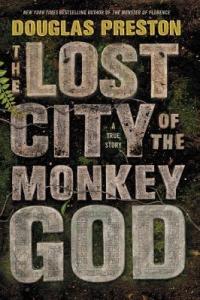
4.) The Lost City of the Monkey God by Douglas Preston: This book taught me two things: First, that there is still much to be discovered right on terra firma. We talk as though the only new vistas of knowledge are to be found in space or places like the Mariana Trench, but the days of terrestrial discovery are not past. Second, there is a lesson of common fates of humanity across time. A lot of this book is about a parasitic disease that infected several of the expeditionary team, as well as speculation about how the same disease might have influenced the civilization that abandoned the titularly referenced city.


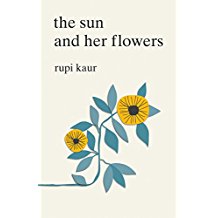
3.) The Sun and Her Flowers by Rupi Kaur: Kaur’s books combine poetry and art. Both are crude but heartfelt and evocative. Both of Kaur’s books have struck a chord with readers, and that resonance seems to be about the candid and bold nature of her art.


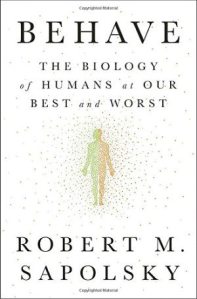
2.) Behave by Robert Sapolsky: Sapolsky tells readers that one can’t look at something as complex and bewildering as human behavior through the lens of any one academic discipline and get a complete and satisfying picture. Sapolsky considers the best and worst human behaviors through the lenses of biology, neuroscience, endocrinology, human evolution, and more.


1.) Stealing Fire by Steven Kotler & Jamie Wheal: The authors of this book examine the various ways people achieve what they call ecstasis. Ecstasis is a state of mind in which one loses one’s sense of self, and all the muddling factors that go with the self, such as self-criticism, fear of failure, and the feeling of working against everyone and everything else.

POEM: Holocaust Haiku

half a coffee
sits on an oak table
long cold


devil days
a line feeds the train
one way


madman rants
spittle flies in an arc
message lost