Bougainvillea [Senryū]

bougainvillea
tops the city walls;
xenophobia softened

Diabolus [Sestina]

I woke up seeing stars up in the sky,
a blanket brightly twinkling above.
But I could only guess just where I lie,
and knew no better from what place I fell.
And for a moment I was lost in stars,
and felt the vastness I'd been cast against.

What was it that I had rebelled against?
What got me tossed from beyond vaulted skies?
Was it that I tried counting all the stars?
Or that I turned my focus from above?
Can I return some day from whence I fell?
Or is it best to stay right where I lie?

You may think I tell myself perfect lies,
that I'm angry with those I've sinned against.
But I'm not sure my exile was a fall,
and I'm not sure I lived beyond the sky.
What of the freedom not seen far above?
What of the beauty seen amid the stars?

For now, I reside in the field of stars.
Where passersby told stories full of lies,
and I have no love for the far above.
It's just a place that I once raged against.
They preach earth and water and endless skies,
but not a thing is here that never fell.

It's all matter that spiraled as it fell
that formed this platform amid blazing stars.
A vacuum beyond mountain, sea, and sky.
But I remember that's the greatest lie -
the one that I had always railed against.
That meaning lie in words like "far above."

That word is laden with judgment: "above."
And where's the gravity by which I fell?
Can puny bodies be so pulled against
where exist so many colossal stars?
So many obstacles between us lie,
and so much nothing before reaching sky.

There's no "above," only a field of stars.
And no one fell; that's just a peoples' lie.
Nothing stands against me - no endless sky.

Exile [Common Meter]

I'm banished from the world I know,
and cast into darkness.
And I sit within a lonely 
room, accepting starkness.

The plain and empty walls and floors
have nothing left to say.
I'll venture any way I want,
but must remain a stray.

I'm not expecting sympathy.
I know that hour is gone.
I only want it to be known 
I've wandered all along.

Day Moon [Haiku]

the moon remains high,
unchased by the sunrise, but
gone by daydream's end

Apocalypse, Soon [Sonnet]

When time stopped behaving, I should have known
that war was coming - perhaps, something worse.
Those who saw themselves sinless grabbed their stones,
and started chanting bile -- their wicked curse.

The hopeless cried with wide eyes, but in vain
as they were huddled around burning fires.
The best of us opted to go insane,
and build crude armor from old belts and tires.

We'd flank a castle that did not exist
like Don Quixote, tilting at windmills. 
Better to charge a false monster and miss
than to have Folly chase one to the hills.

Who says it's worse to slouch to lunacy
than suffer the world's fury lucidly?

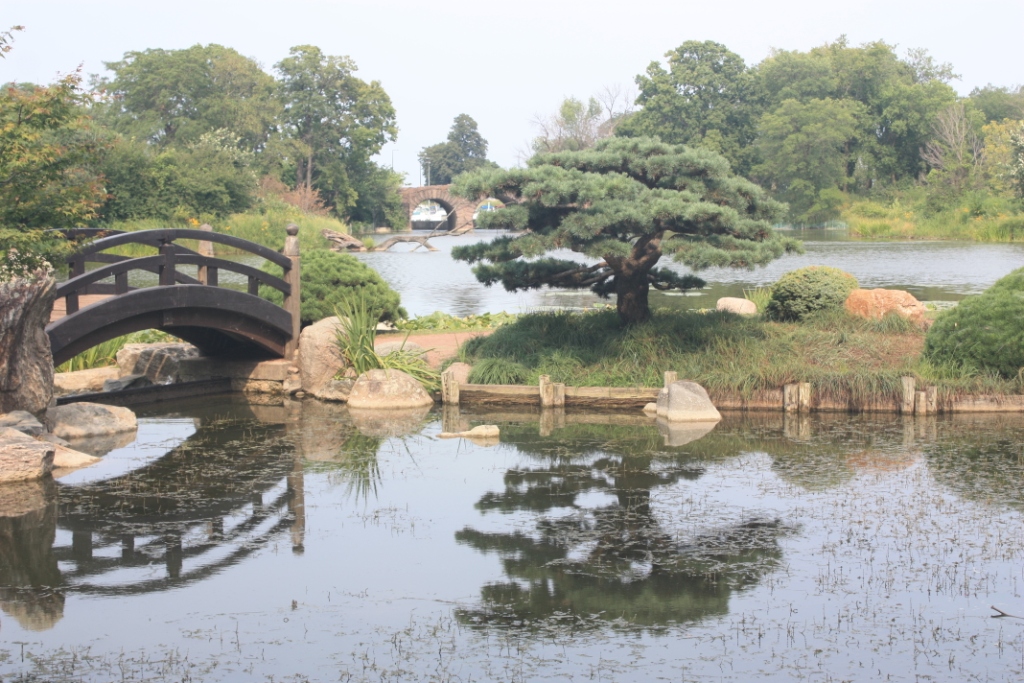
Bonsai [Haiku]

a potted bonsai --
twisted, knobbed, and deformed --
stony mountain mind

Kuala Lumpur Limerick

There was a durian seller from K.L.
asked to leave the market 'cause of the smell.
"Buyers 'll find you with ease
from the scent of bad cheese,"
said the contrite landlord in his farewell.

BOOK REVIEW: The Medea by Euripides [Trans. Gilbert Murray]

The Medea of EuripidesThe Medea of Euripides by Gilbert Murray
My rating: 5 of 5 stars

Amazon.in Page

Project Gutenberg

This tragedy follows up the myth of “The Golden Fleece.” That hero’s journey culminated in three trials which Jason (of Jason and the Argonauts) must complete in order to acquire the golden MacGuffin. Jason succeeds in large part because (arguably, entirely because) Medea, daughter of the fleece’s owner, i.e. King Aeetes, gives Jason some potions to make the trials a cinch. She does this in exchange for Jason’s everlasting love.

And, herein, lies the heart of this play’s conflict. Jason – like many heroes of Greek Mythology – is kind of a jerk. In flashing forward to the beginning of this play, we find Jason has traded Medea in for a younger and higher stature wife (i.e. a princess whose father doesn’t despise and disown her). [Note: Technically, Medea may not be married to Jason because of legalities, but she did bear him two boys.] To add insult to injury, Jason’s new father-in-law (King Creon) insists that Medea and her two boys be exiled, effective immediately.

What makes this play so fascinating is that we have sympathy for Medea’s plight, but then her inner monologue turns to the nuclear option she will employ – killing Jason’s new princess-wife and, more disconcertingly, her own children. Medea goes back and forth about her plan, showing reluctance to kill her boys, at least. So, the reader (viewer) ends up finding Jason loathsome because he steadfastly refuses to accept any blame for how poorly things have gone, but – on the other hand – he’s being more reasonable. (i.e. He talks kindly and isn’t murdering anyone.) It’s a fascinating reflection on the battle between rationality and passion.

I’d highly recommend this play. It’s a short and straightforward story, but it does present a great deal of food-for-thought.


View all my reviews

Retort to “Arise, fair sun…” [Poem]

Arise, fair sun, and kill the envious moon,

Romeo & juliet: act 2, scene 2

Oh, moon, slip cautiously across the night.
They whispered to the sun to murder you.
So, slink way down before the sun takes flight,
 'fore that proud body can make much ado.

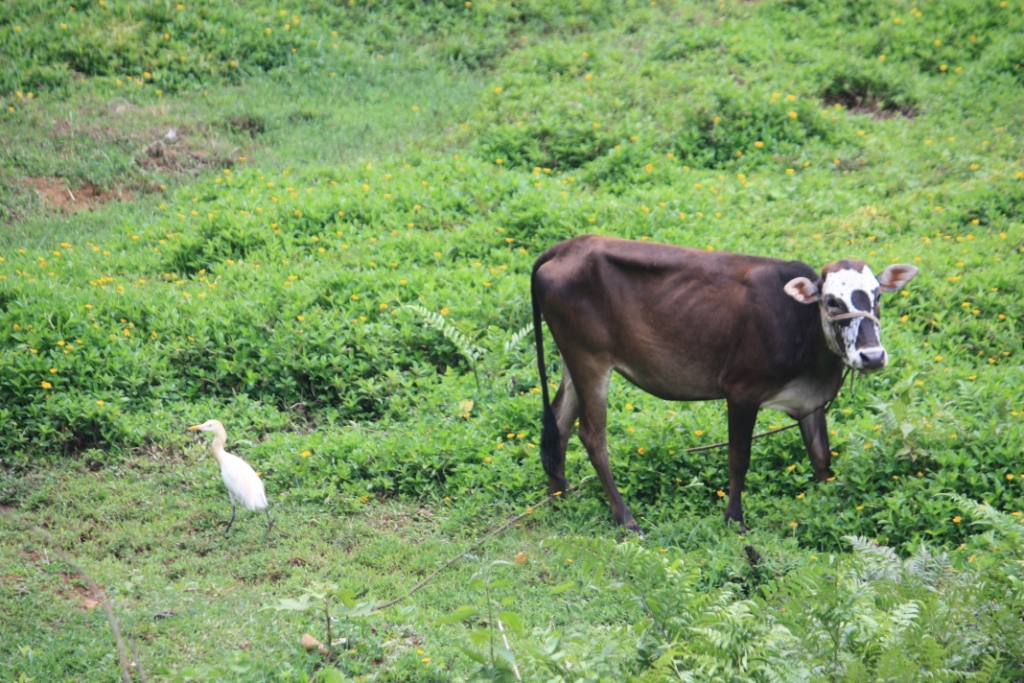
Trotting Bull [Haiku]

the bull starts to trot
down the middle of the road,
and the road clears