DAILY PHOTO: Blue Butterfly on a Green Leaf

Taken June 12, 2015 in Great Himalayan National Park (GHNP)

Taken June 12, 2015 in Great Himalayan National Park (GHNP)

DAILY PHOTO: Rushing Glacial Runoff

Taken on June 8, 2015 in Great Himalyan National Park (GHNP)

Taken on June 8, 2015 in Great Himalayan National Park (GHNP)

DAILY PHOTO: Snow Pockets

Taken on June 10, 2015 in Great Himalayan National Park

Taken on June 10, 2015 in Great Himalayan National Park

IMG_1339 IMG_1350

Most of the snow that we saw during our trek last month was well above us, but we did have one day in which we had to cross through pockets of snow many times as we rounded a mountain at about 4,000 meters.

IMG_1260

DAILY PHOTO: Lotus in the Mountains

Taken on June 11, 2015. Taken by my wife as I'm in the photo.

Taken on June 11, 2015. Taken by my wife as I’m in the photo.

IMG_1882

DAILY PHOTO: Grassy Ridgeline in the Himalayas

Taken on June 10, 2015 in Great Himalayan National Park (GHNP)

Taken on June 10, 2015 in Great Himalayan National Park (GHNP)

DAILY PHOTO: Garden Slugs of McLeodganj

Taken in McLeodganj on June 22, 2015

Taken in McLeodganj on June 22, 2015

IMG_2602

These critters were all over the roads in the McLeodganj / Dharamsala area (Kangra Valley in Himachal Pradesh.)

DAILY PHOTO: The Snowy Side of the Mountain

Taken June 10, 2015 in Great Himalayan National Park (GHNP).

Taken June 10, 2015 in Great Himalayan National Park (GHNP)

The beauty of mountains is that they show so many faces in such little space. We were on a sunny mountainside topped with tufts of dry grass. Then we crossed over a saddle-point on a ridgeline, and this was the new view.

DAILY PHOTO: Blooming Rhododendrons and Snow-Caps

Taken on June 10, 2015 in Great Himalayan National Park (GHNP)

Taken on June 10, 2015 in Great Himalayan National Park (GHNP)

IMG_1199

DAILY PHOTO: Trekkers on an Alpine Meadow

Taken on June 10, 2015 near Dhel in Great Himalayan National Park (GHNP)

Taken on June 10, 2015 near Dhel in Great Himalayan National Park (GHNP)

A Third Roti: A Story with an Elephantine Moral

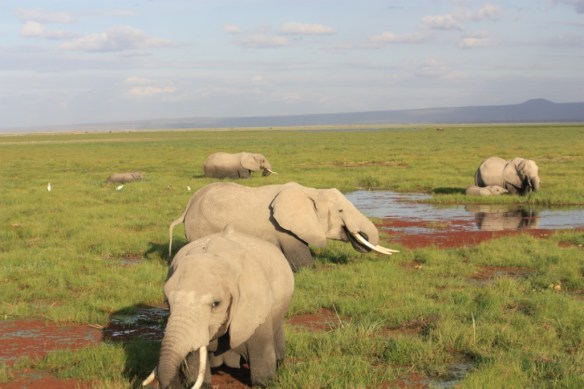
IMG_0047I went to a talk at the Rangoli Metro Arts Center last night entitled, Foresters’ Elephants. The talk was hosted by a group called “Friends of Elephants,” and the panel of speakers were all Conservation Officers in South India who were responsible for public lands home to Elephants.

The discussion offered some intriguing insight into state and local politics in India. But the best explanation of the night came from the Chief Conservator of Forests for Kodagu in a story that could be titled “A Third Roti.”

The Conservator explained that, as a junior forest officer, he’d been assigned to a remote station. His housing took the form of an old decrepit colonial era building. This house had a vermin infestation, and the hungry rodents would get bold as he and his wife slept and would nibble at their fingers and toes. Of course, this made for sleepless nights. To solve this disconcerting problem, the Conservator took to getting a third roti with his meals. [For my India-inexperienced readers, a roti is a circular flat bread that’s a common element of meals in many parts of India.] Putting the third roti out for the rodents negated the rat’s need to engage in the mutually terrifying act of nibbling on the forest officer or his wife.

I don’t know if the story is true, and–if it is–whether it’s truly the Conservator’s story. It doesn’t matter. What’s important is that it’s a great use of story to make a point. The point in this case is that a solution often needs to take into account the fundamental needs of the “adversary.” In other words, regulation and punishment can’t always provide the solution–especially when basic needs are not being met. One could try to scare the rodents away or one could set traps (potentially at risk to oneself), but if the rats are driven  by hunger they might find the risk worth taking. The problem that he was addressing was the need for wood for fires, fence posts, and other needs. This caused people to enter public forests, putting themselves at risk of running into wild elephants.

The idea of trying to find a third roti for problems really resonated as an approach to creative solutions.