BOOK REVIEW: A Confederacy of Dunces by John Kennedy Toole

A Confederacy of DuncesA Confederacy of Dunces by John Kennedy Toole
My rating: 5 of 5 stars

Amazon page


If you’ve heard of this book, but not read it, you’re probably aware of the troubled circumstance of its publication. Several years after having failed to be published, Toole committed suicide. The story of the book would have ended there, except Toole’s mother found the typescript and carted it around to people in the literary community. After much persistence and not taking no for an answer, she managed to get Walker Percy to read the manuscript, and the rest is posthumous Pulitzer Prize winning history.

It would be easy to dismiss the editors involved in rejecting this manuscript as grade-A lunkheads, or as the lead character (Ignatius J. Reilly) likes to verbally skewer his victims “Mongoloids.” However, one can see how said lunkheads would find this much-beloved novel risky. It’s a character-driven novel in which the lead character is obnoxious and unlovable in the extreme. Reilly is a pretentious and pedantic professorial type–verbally speaking– wrapped into the obese body of a man-child who is emotionally an ill-mannered five-year old with a bombastic vocabulary. Reilly has no impulse control, takes no responsibility, and is prone to tantrums, sympathy-seeking dramatic displays, and wanton lies. He’s the worst because he thinks he’s better than everyone despite the fact that in all ways except his acerbic tongue, he’s worse than everyone.

That said, the book—like its unsympathetic lead character—is hilarious through and through. What it lacks in a taught story arc and a theme / moral argument (the latter being why the editor at Simon and Schuster rejected the book after showing initial interest in it) it more than makes up in hilarity.

I should point out that when I say that this isn’t a plot-driven book, it doesn’t mean that it doesn’t have an interesting wrap-up at the end—which I will not discuss to avoid spoiling it. The plot revolves around events in the life of a lazy man-child forced to go to work. It’s not a journey of change, discovery, or adventure. While, in most cases, a character-driven story with an unmalleable lead would be a recipe for a book that flops, here it keeps one reading to the last page because it’s Ignatius’s failure to become a better man that ensures the book is funny to the end. Reilly is constantly making decisions that are both overly contemplated and yet ill-considered.

The book follows Ignatius Reilly through an event that results in a tremendous loss of money for Ignatius’s mother. This forces her to finally put her foot down and insist the man—who she still thinks of as her little boy—get a job. It should be noted that Ignatius’s mother’s eventual coming around to the monster her son has become is a major driving force in the story—though we can see a distinct lack of taking of responsibility that echoes that of Ignatius, himself. Ignatius gets a fine—if lowly, clerical–job at the slowly-dying Levy Pants Company, but gets fired after he encourages a worker protest that goes awry. He then gets a job as a hot-dog cart vendor—a job considered the lowest of the low by both his mother and New Orleans’ society-at-large. The latter is the job he has at the end when a final chain of events unfolds (not without tension and drama, I might add.)

On the theme issue, the Simon & Schuster editor was correct that the book isn’t really about anything except how to muddle through life as a lazy, cranky, emotionally-stunted, and overly-verbose doofus. (But he was oh-so wrong about that being a lethal deficit—according to the Pulitzer Prize committee as well as innumerable readers.)

I’d recommend this for any reader with a sense of humor. You won’t like Ignatius J. Reilly, but you’ll find his antics hilarious, and you’ll want to know what happens to him in the end even if he is irredeemable.

View all my reviews

POEMS: Haiku Frivolity

a moose and squirrel
loiter around the same tree
I find it suspect


“Nevermore Raven,
You’ve sullied your last bust, Sir!”
[Feathers everywhere]


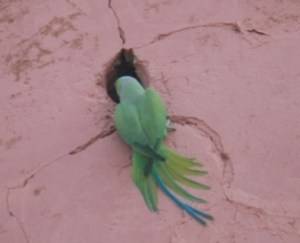
parrot’s bright green back
head stuck in a bore burrow
take it like a bird


a park: ducks floating,
who wins if there be bloodshed?
Donald or Daffy?


Donkey or robot?
Whose sadness rivals human:
Eeyore or Marvin?

5 Ways in Which Poets Are Mistaken for the Insane

“He’s right behind me, isn’t he?”


5.) Sound Seeking:
If anything  looks more insane than walking down the street talking to oneself out loud, it’s talking to oneself out loud in rhyme and alliteration in a disjoint fashion while counting off beats on one’s fingers.


4.) Emotion Evocation: If your writing comes across as a cry for help, you may be a deeply troubled individual. Or you may be a poet trying to induce a reader to feel.


3.) Clarity & Codes: Because there may be no literal meaning to your verse, the reader may suspect that you’re writing in code to your imaginary pink bunny rabbit. Faced with the humbling possibility that he or she may “just not get it,” most people prefer the alternative explanation that you’re a rambling lunatic.


2.) Playing the Odds: Let’s be honest, there have been a lot of poets who slipped into the abyss. Poe, Pushkin, Plath, Pound, and several poets whose last names didn’t begin with the letter “P,” were all afflicted by mental illness.


1.) Violent Reactions to being Interrupted:  A poem under development is a house of cards that needs only the subtlest gust of wind to be obliterated. Poems in the works are gauzy and fragile. So, as one is trying to wedge words together into a solid construct, one is occasionally interrupted. When this happens, one may instinctively pimp slap the interrupting individual like a Zen master trying to make the point that there is no point.

Aaaannd Buddha’d

“This is going on your permanent record, young man!”

“All is impermanent.”


“I want you to get up there and clean your room.”

“Desire is the root of all suffering.”


“There’s a big spider in the corner, kill it!”

“Nothing can harm you as much as your own thoughts.”


“My left sock has static cling.”

“You only lose what you cling to.”


“HELP! My sleeve got caught in this threshing machine.”

“No one saves us but ourselves. No one can and…[cringes]”


“I wonder where the Professor is, he’s usually not late.”

“When the student is ready, the teacher will appear.”


“I’m feeling like a jelly doughnut.”

“What we feel, we attract.”


“I’m thinking a jelly doughnut would be good, too.”

“What we think, we become.”


“I’m furious with you.”

“Holding onto anger is like drinking poison and expecting the other person to die.”


“Well, speak up. Explain yourself!”

“He who doesn’t understand one’s silence will probably not understand one’s words.”


“HELP! My sleeve got caught in this threshing machine.”

“Be patient. Everything comes to you in the… [cringes]”


“It’s time to take the trash out.”

“If anything is worth doing, do it with all YOUR heart.”


“No. I’m sorry, I can’t go to your Solar eclipse gala bash. I have to take my grandmother to chemotherapy.”

“Three things cannot be long hidden: the sun, the moon, and the truth.”

POEM: The Humorless Giraffe

So now, tell me, Mister Giraffe:

How come I never hear you laugh?

Are you too tall to hear the joke,

or are you just an uptight bloke?

Human humor is elation

vis-a-vis

circumvented expectation.

Since I never do misconstrue,

I never need let them know I knew.

POEM: Red Millipede

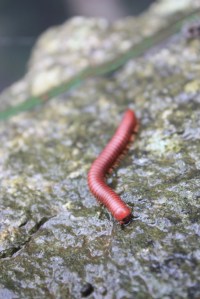
Hey, there, Mr. Millipede.

Shall I judge you by word or deed?

If by word, you’re big, stinky liar.

I counted 200 feet, not one higher.

“1000 feet” is pure exaggeration.

I say with no intended defamation.


By deed, now, that’s a different story.

You deserve all the accolades and glory.

I trip and stumble on just my two feet.

With 200, I’d never make it across the street.

How can your tiny brain keep feet moving?

Does each step need pre-approving?


[National Poetry Month: Poem #13]

POEM: Happily Obsolete

You’ll never see a guy

shake his fist at the sky

and let fly the impassioned cry,

“I just want to fix typewriters.”


Some dream of escaping life in the hoi polloi,

pretending to be a princess, wearing a tiara toy,

but no one applies for the post of “whipping boy.”

[To take the beatings for said mischievous princess.]


And should you flush your ring down the toilet bowl,

you’re on your own, bless your plague-fated soul,

cause you’ll not find a tosher to jump down the sewer hole.

[Unless your time machine is set for London, circa 1850.]


When I look back at the sea of me’s.

I grin with glee and I’m quite pleased,

feeling totally at ease…

Because they’re all happily obsolete.


[National Poetry Month: Poem #10]

POEM: Edits Awry

“Punch that word into proper position,”

the angry god of grammar cried.

It started surgically.

Teams tapped in pry bars,

popped out words,

and spackled in a space or a substitution.

Then they found rot,

and it’s all wrecking balls and dynamite from here.


[National Poetry Month: Poem #6]

POEM: Brain Burrower

I rue the hearing of that tune

like a sandworm from planet Dune

it burrowed from ear to brain

where its bouncy pop egg was laid

but when the alien overlords arrive

fresh out of intergalactic drive

sitting parked up in our Thermosphere

we’ll offer them a welcome beer

they’ll think us weak in being kind

until we lodge that f@#%ing tune in their hive-mind

watching them gyrate in a spastic dance

their minds melted in a Zombie trance

like lemmings they’ll plummet from the ship

with that infernal tune on all eight lips


[National Poetry Month: Poem #5]

POEM: Blender Manual

I read you like a person reads

his blender manual.

It’s a necessity–legally obligatory.


But meaningless because if a word falls

in a blender manual, does anyone read it?

No one cares until someone loses a thumb.

Words are nudged and danced

into perfect clarity in seven languages.

But it’s 100 pages for a three button machine.

“Frappe” must have a long and convoluted definition.


[Poem #2: National Poetry Month]