Rewiring the Brain about Pain: All That Isn’t Pleasure Isn’t Pain

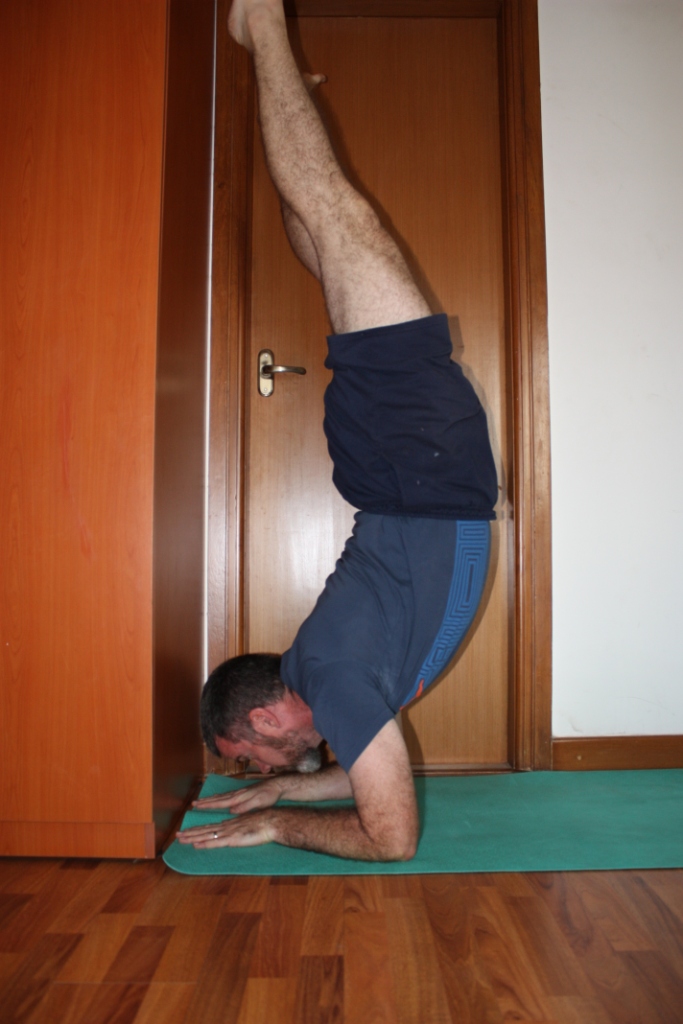
IMG_0104

I see people staring at the railing on which they will stretch their hamstrings just like they would look at a side-by-side refrigerator unit that they have to move down a flight of stairs, psyching themselves up for the stretch. Or maybe they are weighing the question of whether they really need to stretch as one might ponder whether it would be better to get an engine overhaul or replace a car altogether. The point is that there seems to be an element of anxiety or dread associated with actions like stretching that aren’t necessarily pleasurable.


I have a theory about why this is the case.

First, people falsely equate discomfort with pain.

Second, the entire point of true pain is to tell one how not to move so as to avoid exacerbating an injury.

Third, this results in a desire to avoid pursuits that cause such physical discomfort.

Fourth, people create a self-fulfilling prophecy in which they tense muscles in the area of the stretch to counteract the aching stretch, but this just increases the discomfort level.


Your body has a clever little device called the myotatic reflex arc (MRA.) That’s when a muscle tenses to avoid injury because the muscle seems to be stretching too fast for comfort. However, that reflex is only relevant to dynamic movement and the fact that it’s a reflex arc means that the signals don’t go through the brain–thus–aren’t consciously controlled. The MRA is different from the tension one holds in a slow and controlled stretch. It’s fun to see people who’ve been encouraged to breath and relax into the stretch realizing that the stretch isn’t as bad as it seems.


Of course, many intense physical activities that cause discomfort may also result in a sufficient endorphin (natural painkillers) inflow and adrenaline / cortisol (stress hormones) outflow to result in net feelings of pleasure. While stretching results in endorphin release, the action of holding the muscle stretched may be too much for our natural painkillers to counteract, particularly when one is breathing easily and thus the body is not under the level of whole-body stress that might encourage the big endorphin dumps desired.


The problem is that one can’t achieve flexibility without pressing against one’s limits any more than one can make strength gains without lifting more or by employing more repetitions. If one just goes to the point at which one is no longer comfortable, you may be able to prevent losing flexibility, but you’re not going to make gains.


Another part of the problem is that people often go into stretching cold, and thus maximize their discomfort. Doing warm-ups and joint articulations before any kind of intense stretching is a good practice. These warm-ups should not test the fullest range of motion, but should move with sufficient quickness to get the muscles and the synovial fluid in the joints warmed up.


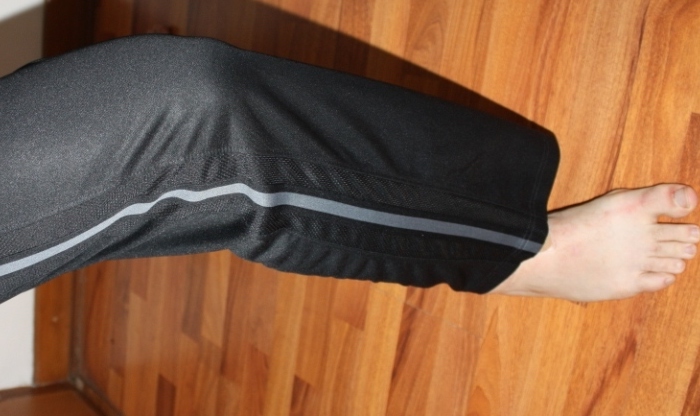
The problem with seeing stretching as painful is that it discourages it. Some individuals fail to stretch altogether, and others focus only on the major muscle groups (hamstrings and quads) and miss muscles that adduct, abduct, rotate, and generally stabilize and support the primary agonist or antagonist muscle pairing. The most common injury in the Japanese martial art that I study is a knee injury attributable in part to insufficiently flexible external rotators and abductors and the inability to keep the knee in line with the toes–thus putting too much torque on the joint and too much load on the ligaments.


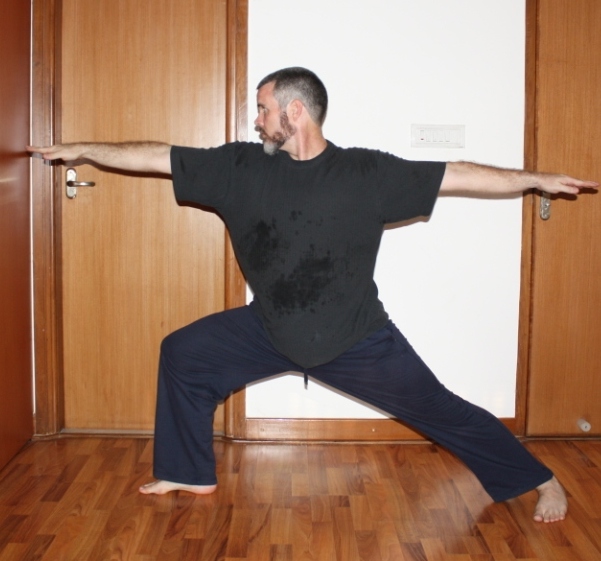
Wrong: knee is not pointing over toes

Wrong: knee is not pointing over toes


Martial artists, in particular, need to avoid equating discomfort with pain. When discomfort becomes pain, pain becomes agony, and agony become intolerable. There are many factors that can determine the outcome of a combative event, including technical proficiency, physical fitness, and the ability to persevere. The last one may mean the ability to take a licking and keep on ticking as the Timex people used to say.


The good news is that it’s possible to rewire one’s brain to avoid equating the discomfort of stretching with pain.

Step 1: Get a yoga face. In the martial arts, we talk about having a warrior face, which is an expression that conveys one’s intensity and seriousness. For yoga and stretching one should ditch the agony face and replace it with a serene face. My personal recommendation is that you aim to emulate the faces on the Bayon at Angkor.

Yoga face as seen on the Bayon at Angkor

Yoga face as seen on the Bayon at Angkor


Step 2: Keep your mind on your breath, and away from the sensation of the stretch. There’s a reason yoga teachers harp on breath, it will help one reduce one’s overall tension.


Step 3: Stop using the word pain (in your own mind or when speaking out loud) to refer to the feeling of a stretched muscle. You may not be able to replace the word “pain” with something as euphemistic as “stretch bliss,” but try to avoid giving it a name with a negative connotation. It’s simply the sensation of a stretched muscle


Step 4: When you find yourself wearing an agony face and squeezing out the protective muscular tension, ease off the stretch until it’s comfortable. Then ease back into the stretch, keeping the surrounding muscles relaxed and the breath even and deep.  You can visualize expelling the tension with one’s exhalation if that helps.


Step 5: When you experience real pain, have no guilt about heeding it and giving that part of the body time to heal. Of course, this requires an ability to differentiate stretch sensation from true pain.


Now I’ll segue into a discussion of actual pain. When I was having a lot of problems with my lower back–eventually diagnosed as arthritis–I had a bizarro interaction with my healthcare provider. When I first went to the doctor, I faced this unsubtle wall of suspicion because back injuries are a common fraud device for persons addicted to painkillers. That’s because there are many forms of back injury that are hard to witness externally. However, when they x-rayed my back they could see clear indication that something was wrong. Then they were surprised when they tried to foist painkillers on me, and I wasn’t interested.


Here is how I look at painkillers. Imagine the “check-engine” light came on in your car, and you took the vehicle to the mechanic. The mechanic has your car for a brief time and comes back to you with a nominal bill. At first you are thrilled, and then you ask the inevitable question, “So what was the problem?” Your mechanic then says, “Oh, I have no idea, I just disconnected the light. That light won’t be giving you any more trouble.” Needless to say, you are decidedly less thrilled. You wanted the underlying problem fixed.


Don’t get me wrong, I’m not saying that there’s no place for pain-killing medication. If one has pain that is so severe that one cannot rest, one’s body won’t be able to heal itself properly.


However, if you pop painkillers to do away with bodily aches, you should reconsider. Those aches are what being alive feels like, and if they come from exercise or labor they should be welcomed and not be framed in a negative light. If they are an indication of a postural misalignment or some sort of systemic problem, you should look into fixing the underlying problem.


[To be fair to my aforementioned doctor, I think people aren’t conditioned to the notion that they are the key participant in their own healthcare and that fixing problems will often require hard work on their part. So a part of the problem in some places–most notably America–is that healthcare isn’t profitable unless they are pushing surgery or expensive medications. However, another part of the problem is that people just want to go to the doctor and have the expert fix them without requiring the personal effort of fixing postural deficiencies or cutting weight. I can understand why doctors are a bit fed up with suggesting people do the work only to get no response. I saw a statistic recently that only 1 in 8 people threatened with a lethal illness would make a behavioral change recommended by a doctor to reduce the threat of the ailment–e.g. stop smoking, stop drinking, cut weight, etc.]


BOOK REVIEW: Yogic Management of Common Diseases by Dr. Swami Karmananda

Yogic Management Of Common DiseasesYogic Management Of Common Diseases by Satyananda Saraswati

My rating: 4 of 5 stars

Amazon page

The title of this book gives one a nutshell description. It’s a book that discusses what yoga practices are beneficial for various common ailments. These practices include not only asana (postures), but also pranayama (breathing exercises), shatkarma (cleansing practices), yoganidra (a relaxation technique), meditational practices, and dietary and other yogic lifestyle practices. The book also discusses both the medical and yogic explanations of various diseases, and provides enough background on the relevant anatomy and physiology to give a layperson an understanding of the basic causes of each disease (if known.)

The book covers about 37 classes of disease, and is arranged into seven parts by bodily system (head and neck, cardiovascular system, respiratory system, gastro-intestinal tract, joints and musculo-skeletal system, urogenital system, and a miscellaneous ailments section that deals with skin diseases and varicose veins.) Some chapters deal specifically with one disease, while others cover two or more related ailments (e.g. Bronchitis and Eosinophilia, Sinusitis and Hay Fever, or skin diseases.)

This book has a number of strengths. First, it’s grounded in a scientific view of these ailments and isn’t selling yoga as a panacea. As suggested above, the title was carefully chosen. It’s “Yogic Management of Common Diseases.” The word “Management” is a critical one. If you’re looking for a book about how yoga can single-handedly cure your Stage IV lung cancer, this isn’t the book for you. If you’re looking for a book on how yoga can help you live a better life if you have arthritis, diabetes, or are hernia prone—possibly in conjunction with medication or other medical treatments—this may be the book for you.

Second, the diseases covered seem to have been carefully chosen. The selection of common ailments is not just to appeal to a broad audience. Many of these ailments are caused by common lifestyle problems that offer relatively easy fixes. Other diseases may not offer any fix per se, and, therefore, the ability to live a high quality of life with the affliction may be valuable. Also, I know a number of the diseases covered are particularly promising candidates for a yogic solution / mitigation.

Having given the strong points, I will say there are a couple of weaknesses to the book as well. First, it’s not illustrated in any way. Given that there is a lot of discussion of biology and anatomy, there are places where a picture might be worth a thousand words. I will note that this isn’t a book for a yoga newbie. It uses Sanskrit names for practices without so much as a glossary. That said, yoga teachers and intermediate/advanced students will probably not find this much of a problem because they will have built an appropriate vocabulary or have the necessary reference close at hand. I didn’t deduct for the lack of explanation, because the book is clearly intended for established practitioners (the Introduction warns as much.)

The second weakness is that there’s no explanation of why the listed practices should work particularly well for the given disease. I think the book does a great job of explaining the nature of the disease for a non-expert reader. However, then it just lists practices by type (asana, pranayama, relaxation, diet, etc.) In some cases, the reader can easily make the connection, but in others it’s not so clear why one should do practice “X” for disease “Y.” I do realize that drawing these connections could be space-intensive and technical. The book is a nice slim 245 pages, and it could rapidly grow to an untenable length. However, I’m concerned that some of the recommendations might not be rooted in experience and observation.

I would recommend this book for yoga teachers and intermediate / advanced practitioners who are interested in yoga as a component of building a healthy body. If you are new to yoga, you will probably want to first familiarize yourself with many of the classic asana, pranayama, and shatkarma practices of yoga—otherwise you’ll have to look up terminology constantly.

It should be noted that this book is put out by the Bihar School (of Swami Satyananda Saraswati fame), and the same publisher has put out a number of books that delve much more deeply into specific ailments. (At least some of these are written by the same author, Dr. Swami Karmananda.) Also, let me say that while the school self-publishes through its Yoga Publications Trust, it puts out books on a large-scale, of high-quality, and they appear to be available globally through Amazon and the like. (Swami Satyananda Saraswati alone was extremely prolific and wrote the APMB, which is one of the seminal reference works on yoga.)

View all my reviews

BOOK REVIEW: Sleep: A Very Short Introduction by Lockley & Forester

Sleep: A Very Short IntroductionSleep: A Very Short Introduction by Steven W. Lockley

My rating: 4 of 5 stars

Amazon page

This is one book in a large series of books put out by the Oxford University Press. All of these “Very Short Introduction” books are brief summaries of the state of research on a given topic in the arts, sciences, or humanities. Based on this book, I’d say the series is geared toward a readership of educated non-specialists. I say “educated” because the book did get into some technical areas, and while it doesn’t presume any particular knowledge of the science of sleep, it does use a scientific vocabulary with occasional academic sentences (i.e. packed with precise detail and lacking concern about readability.) That said, I’d say the readability is higher than the journal articles from which the information for the book was drawn. I suspect I’ll read more from this series. They are cheap on Kindle, provide a concise injection of the basics for a wide range of topics, and are pleasantly readable if you’re used to reading academic literature.

This particular book is about sleep. While, on average, sleep takes up one-third of a person’s life, it’s a subject that is often taken for granted. Like water, one doesn’t really think about it until one isn’t getting enough. However, as the book discusses in detail, all sorts of problems are associated with sleep deprivation, insomnia, and parasomnias (i.e. sleep events like sleepwalking, night terrors, nightmares, bedwetting, sleep-eating, and groaning.)

The book is written in nine chapters covering: the history of sleep, sleep generation and regulation, a brain on sleep, reasons we sleep, variation in sleep throughout one’s life-cycle, the nature of poor sleep, the connection between sleep and health, and the effect of our shift to a round-the-clock society.

There are a number of fascinating questions addressed by this book including:
1.)What does sleep do for us?
2.)Have people always tended to sleep eight hours per night?
3.)Why are some people morning people and others night owls?
4.)Why does one feel drowsy after lunch, but not necessarily when it’s time to hit the sack?
5.)How long can one go without sleep?
6.)Do all animals sleep?
7.)How do sleep and hibernation differ?
8.)Why do teenagers and the elderly have such odd (but different) sleep habits?
9.)Why do people sleepwalk, sleep-eat, groan in their sleep, or have night terrors?
10.)What is the effect of long-term insomnia on health?
11.) What happens to sleep if one has no rising and setting sun cues?
12.)What is jetlag and how can one fight it?

I learned some interesting facts, such as:
1.) On average, women report more insomnia, but, paradoxically, tend to sleep better than men.
2.) Pre-industrial people slept for about 10 hours a night on average, it’s believed.
3.) Many parasomnias occur mostly during REM (Rapid Eye Movement) sleep.
4.)The government can deprive prisoners of sleep for 7.5 days without it being considered torture (then they have to allow a full 8 hours sleep before another 7.5 day period started.)
5.) Long-term insomnia has been linked to heart-disease.
6.)Shift workers have a 50% greater incidence of breast and prostate cancer than day-workers.
7.)Visiting teams win 46% of the time if they are in their home time zone, 44% if they are traveling ‘with their body clock,’ and only 37% if they are traveling against their body clock.

I found this book interesting and informative. However, there are many books on the subjects of sleep and dreams that are more catered to a popular audience. Such books delve into intriguing cases and don’t dig as deeply into the minutiae of the science of the subject. I’d recommend this book, but not for readers who get bogged down or bored with scientific and technical discussions. If you’re looking for a book that’s loaded with pithy facts and fascinating stories, you can find a book closer to the mark by journalists who focus on science writing and who’ve got more flare for creative writing.

View all my reviews

BOOK REVIEW: Yoga Mala by Sri K. Pattabhi Jois

Yoga Mala: The Seminal Treatise and Guide from the Living Master of Ashtanga YogaYoga Mala: The Seminal Treatise and Guide from the Living Master of Ashtanga Yoga by K. Pattabhi Jois

My rating: 4 of 5 stars

Amazon page

Yoga Mala is a guide to yoga by one of the most influential yogis of the modern era, Sri K. Pattabhi Jois. Sri Jois, who passed away in 2009, developed an approach to Hatha Yoga that is alternatively called Ashtanga Vinyasa or Ashtanga Yoga. Herein, I will use the term Ashtanga Vinyasa to represent Sri Jois’s style of yoga, which relies on a fixed sequence(s) conducted with vinyasa, i.e. flowing transitions that link postures. The reason I chose one term over the other is that the term “Ashtanga Yoga” long predates Jois and is a more generic name for the practice of all eight limbs of yoga as described in Patanjali’s Yoga Sutras.

Having mentioned the “eight limbs of yoga,” it should be noted that this book really only gets into half of them: yama (rules for interacting with others), niyama (rules for conducting oneself), asana (poses), and pranayama (breath exercises.) Furthermore, three-fourths of the book’s pages are devoted to asana. This is not unusual as many yogis consider it a waste of time delving into the higher level practices (pratyahara [sensory withdrawal], dharana [focus], dhyana [meditation], and samadhi [liberation] with individuals who haven’t yet made headway into the more fundamental practices.

After brief discussion of yama, niyama, and pranayama, Yoga Mala launches into description of the postures of the Ashtanga Vinyasa preliminary series. This begins with the two variants of the Surya Namaskara (Sun Salutations) practiced in Ashtanga Vinyasa and progresses through the poses of the standing, seated, and finishing sequences in the order in which they occur in the Preliminary Series. There are clear black and white photos of the optimal version of each asana. The written descriptions explain the entire set of vinyasa for that asana—i.e. the flowing transitions that connect one pose to the next. Most asana have a header paragraph that tells how many vinyasas are associated with the pose and which vinyasa constitutes the asana proper. This opener is followed by a “Method” section that lays out the vinyasa in detail, and—in many cases–a “Benefits” section that explains what the posture is said to do for one–and occasionally what major the contraindications are. (However, this is a poor reference for contraindications as it mostly only says what pregnant women shouldn’t do and doesn’t get into much detail beyond that.)

There are a couple of things that I think could have been improved—mostly formatting / editorial critiques. The first is that the text increasingly lags the photos so that one has to flip forward several pages to view the associated photos. Also, the author often refers to a movement through a position using the numbering system of an earlier set of vinyasa, and this necessitates a lot of flipping back and forth. For example, the instructions often say “then go to the 4th vinyasa of the first surya namaskara sequence” whereas if he said “then do chataranga dandasana [or low plank]) they would have saved words and obviated need for the back and forth.

Sri Jois was very devout man. For those of a similar mindset, you’ll likely find the book resonates. However, if you’re the kind of person who prefers explanations rooted in a logical or scientific approach, then you may find explanations a bit summarily invoked for your tastes. In other words, he’s prone to say, just do what the Vedas and your teacher tell you and everything will be rosy. I don’t know that this is a critique so much as fair warning. If you think that the Vedas were divinely written by infallible authors, then Jois’s approach may sound good to you. However, if you think that the Veda’s reflect the biases and limited knowledge of another era (just like our present writings reflect our current biases and limitations), you may find a few comments suspect. For example, Sri Jois makes a point of saying that the Vedas state that one can do a headstand for three hours straight without adverse effects. (To be fair, he does point out that you must do it properly and under the supervision of a teacher.)

If you practice Ashtanga Vinyasa, or intend to, this is a must-read book, but it’s a useful book for those who practice Hatha Yoga of other styles as well. It’s a good summary of classic asana, and you may find something in Sri Jois’ explanation of yama and niyama to be helpful to you on your personal path.

I should point out that those who aren’t sure whether they want to practice this form should be forewarned that Ashtanga Vinyasa is an intense practice. The vinyasas require a high level of core strength as well as upper body strength for Uth Pluthi (lifts) and vinyasa motions requiring that one load all one’s bodyweight onto one’s arms. Also, the fact that one is doing the “Preliminary Series” shouldn’t falsely lead one to believe that these are all the “easy” asana. That isn’t the case; there are a number of challenging poses both in terms of flexibility and strength requirements. If you haven’t done yoga before, I would only suggest Ashtanga Vinyasa for those who have a fairly high fitness level.

View all my reviews

Wat Po v. Chiang Mai Massage: A North / South Divide?

One of the sculptures in the Thai Yoga outcrop at Wat Po.

One of the sculptures in the Thai Yoga outcrop at Wat Po.

In September I attended the General Thai Massage and Foot Massage courses at Wat Po. The teacher from whom I first learned Thai Massage (a.k.a. Thai Yoga Bodywork or Nuad Bo Rarn) was trained in Chiang Mai by various teachers, and the style he teaches reflects that northern heritage. I was curious to see how the style of massage varied in the south from the northern approach that I had already learned. Would I be in uncharted waters? Or would the Wat Po course merely be a refresher of what I had already learned? These questions were on my mind as I began the course.


The answer turned out to be somewhere in between. The Wat Po approach wasn’t radically different from what I had already learned, but neither was it a carbon copy. One could clearly see the common origin of these styles. For yoga practitioners, a reasonable comparison would be to imagine you studied Bihar yoga, and then you sat in on an Ashtanga Vinyasa class. Most of the postures would be similar if not the exact same—e.g. a downward dog is a downward dog. However, the sequence is a little different, you may run into a posture or two that you hadn’t seen before, and there will be many little differences in points of emphasis and so on. The same could be said of two martial arts that have a recent common ancestor art. (However, I think martial arts evolve more rapidly than other systems of movement because there is a life and death urgency to adapt to local conditions, and so martial arts can diverge rapidly.)


I won’t get into every little difference in this post. For one thing, the first course I took was a 60 hour (10 day) course, and the Wat Po course was only half as long (5 day / 30 hours.) Therefore, some of the apparent differences might have more to do with the need to conform to time limitations than true stylistic differences. The Wat Po course was designed to impart a sequence that could be done in an hour-and-a-half bodywork session. The first course I took taught some material that was redundant in the belief that one could tailor one’s sequence to the recipient’s needs and / or the masseuse’s preferences.


As an example, at Wat Po we didn’t learn any massage of the chest or abdomen, but I was shown (in fact, I was recipient of) the Wat Po approach to abdominal massage and it was pretty much the same as I’d learned previously. In my earlier learning, the approach to energy lines was to stretch (longitudinally) the limb, then apply palm pressure, then work the line (typically with the thumbs), and then one would repeat the palm pressure and finish with a repeat of the stretch. At Wat Po, they went straight for the energy line (sen) and followed that with the palm pressure work. I have no way of knowing whether this difference was more due to timing or style.


Before getting into the differences, I will talk a little about similarities. The general approach was the same (e.g. the recipient is fully clothed in a light, comfortable garment(s)) and the massage is ideally given on a thin, dense mattress/pad on the floor–rather than on a table. The general principles of sequencing were the same. Namely, one began at the feet and worked in the direction of the head. Also, when working on a limb, one began at the distal end, worked toward the torso, and then back toward to the starting point. Also, energy line work was done before the stretches.  There were four positions in both styles: supine, side, seated, and prone, and—unlike many other forms of massage—the supine position was at the fore (i.e. neither style emphasized the prone position and back work over the supine in the way other varieties of massage often do.) Both styles of massage (as probably all massage) began with a brief introduction and questioning designed to make sure the individual didn’t have any contraindicated conditions. Both styles of Thai massage began with a moment of prayer or contemplation—this is similar to some styles and different from others and speaks to the traditional nature of Thai massage.


IMG_0031

The side and seated sequences were the most similar between the two styles.  I learned more in these sequences in the longer (Chiang Mai) course, but what was included in the Wat Po course was largely the same. Where the stretches were of the same type, they tended to be virtually identical. By that I mean to say that both styles had stretches that weren’t taught in the other style, but where that was not the case, the stretches were indistinguishable. For example, the pictured variant on sarpasana / bhujangasana [snake / cobra backbends] was done in the same manner in either style. (I learned more stretches in the first—Chiang Mai–course, because it was longer.)  Over all, the energy lines (sen) tended to be identical, but there weren’t always the same number of them, nor were the same ones always emphasized. There were some differences in the feet lines that I’ll get into below.


Now let’s get to the differences. Starting with some small differences, the manner of palm pressure work was different between the two systems. In the Wat Po style, there was always one fixed point that one hand locked in place while the other hand applied palm pressure. I had previously learned to use both hands in a rhythmically alternating series of palm pressure applications.


One little difference that I found interesting involved the technique of closing the little flap over the ears at the end of the face and head massage (both styles close off the ears.) I had been taught to very gently release pressure so as to avoid any kind of popping that might disturb the recipient. However, at Wat Po the instructor taught to vigorously pull the fingers away—resulting in a pop. My guess would be that the idea was to get the recipient’s attention so that one could transition them from the face massage (which notoriously puts people to sleep) to a wakeful state so they could follow instructions for the stretches that followed. (We were taught face massage as part of the seated sequence. Previously, I had learned that this was an option, but that it was easier to do the face massage from supine so you didn’t have to worry about the recipient falling asleep and possibly falling over literally.


A final little difference was how the blood stop was done for the lower extremities. At Wat Po, they did the leg blood stop with both legs straight, whereas I had previously learned this technique with an open groin, i.e. the knee pointed out. (Both ways work about the same, but I think it might be a little less awkward to do it with the groin open as one is not in as close of proximity to the recipient’s privates.) The blood stop for the arm was identical.


The energy lines are one of the most fundamental aspects of Thai massage, and one would expect little variation in them between styles. This proved largely, but not entirely, true. For example, the leg lines were the same (as one might expect because one cannot stray too far from some lines without getting onto bone.) Also the points at the top of the shoulder, around the neck, the base of the skull, and the scapulae were the generally the same–except more or fewer points might be employed from one style to the other.


The arm lines were almost the same. The line on the back of the arm was the same, and the line that goes up the middle of the inner arm was the same. However, there was a second inner line that ran in line with the little finger along the lower edge of the arm (presuming the arm is straight out from the shoulder as it is for massaging the inner arm in both styles.) The lines of the back that were used were different. In my (not very accurate) diagram, the lines 1 and 3 were emphasized in the Chiang Mai style, but 1 and 2 were the lines used in the Wat Po system.


Back diagram_CM


The greatest divergence in lines and points was in the area of the feet. The best example of this can be seen in the lines of the sole. In the Chiang Mai style I’d previously learned there were five lines that radiated from a point where the heel transitioned into the arch about midway across the foot and went toward the base of each toe. The Wat Po style had three lines that were more or less parallel in line with the big toe, middle toe, and the little toe.  See diagrams.


The Chiang Mai 5 lines of the sole.

The Chiang Mai 5 lines of the sole.

The Wat Po 3 lines of the sole.

The Wat Po 3 lines of the sole.


In summary, the difference between these two styles wasn’t that great. In many cases the techniques were exactly the same, in most they were marginally different, and only rarely were they completely different.  I don’t really have a preference between the two styles. I think which would be a better experience comes entirely down to the skill of the masseuse / masseur.

BOOK REVIEW: Your Brain on Yoga by Sat Bir Khalsa

Your Brain on YogaYour Brain on Yoga by Sat Bir Khalsa

My rating: 4 of 5 stars

Amazon page

This Harvard Medical School Guide presents the findings of many scientific studies on the benefits of yoga, and it does so in a manner suitable for the layman. The book is written by Dr. Sat Bir Khalsa, a long time practitioner of Kundalini Yoga and a neuroscience researcher at Harvard, and is co-authored by a science writer trained in journalism.

I became aware of Khalsa’s work when reading William Broad’s The Science of Yoga, a book that is complimentary of Dr. Khalsa and his studies—a favor which Khalsa doesn’t return as he rejects Broad’s work as being overly sensationalist. The book does talk about Khalsa’s research, such as a study with young musicians at Tanglewood that examined how the practice of yoga increased their equanimity. That said, this isn’t merely a summation of Dr. Khalsa’s work. It’s what in academia would be called a literature review, but “literature review” implies a far more dismal reading experience than one gets from this book. It does present anecdotes in a way that is useful for a layman’s book, but would not be well-respected in an academic setting. This work isn’t designed for medical colleagues but rather to be of benefit to run-of-the-mill yoga students and teachers.

This is a very short book at only about 50 pages. The book consists of five chapters after an introduction which sets the stage and gives some relevant background on Dr. Khalsa. Chapter one delves into the effect of stress on the body and mind, and how yoga (and meditation more generally) has been shown to help counter the effects of bad stress (not all stress is inherently bad, as is addressed in the chapter.) Chapter two examines the effect of yoga on the body and in countering a number of common ailments. The third chapter considers how yoga might actually help one to be smarter and more creative. Chapter four presents the results of studies of how yoga can counter depression and improve one’s mood. Chapter five is in a different vein, and might well have been included as an appendix. The last chapter gives an overview of the various types of yoga to assist readers new to yoga on what style might best meet their needs and disposition. This is a nice feature for those new to yoga, but also for veteran practitioners who’ve practiced one style and might not be aware of the wide range of styles out there. (A few of the styles mentioned are popular in India, but I don’t think are as well-known in the West.)

For such a thin book, this work covers a wide range of topics including–but not limited to–the effects of yoga on sleep, the immune system, neural plasticity, memory, math skills, and mood. A nice feature of the book is a series of brief exercises that one can practice to help reduce stress or achieve a desired goal. These practices are generally located at the end of chapters. Finally, while this book isn’t written primarily for doctors and other scientists, it’s endnoted so those interested in tracking down the studies the book references can readily do so.

I’m a big fan of applying a scientific approach to the study of ancient methods such as yoga. I would, therefore, recommend this book for yoga teachers and students who are interested how precisely these practices can assist them. It’s extremely short and easily digested. It’s in no way overbearing with medical jargon and is readily understood by anyone with a basic education in biological science.

View all my reviews

BOOK REVIEW: If You Meet the Buddha on the Road, Kill Him! by Sheldon Kopp

If You Meet the Buddha on the Road, Kill Him: The Pilgrimage Of Psychotherapy PatientsIf You Meet the Buddha on the Road, Kill Him: The Pilgrimage Of Psychotherapy Patients by Sheldon B. Kopp

My rating: 4 of 5 stars

Amazon page

If Kopp’s title seems gratuitously bellicose and totally inappropriate for a book about psychotherapy, you may not recognize that it’s a quote from the 9th century Zen (Chán) Buddhist master, Linji Yixuan. In reality, the quote isn’t bellicose and is quite apropos of Kopp’s message. Linji was just saying that if one collects sacred cows, one is unlikely to be liberated from delusion and find a quiet mind. Kopp’s primary point is that patients tend to deify their therapists, thinking of therapists as people who can “fix them.” In reality, the therapist is a flawed human who can only help guide the patient on a personal pilgrimage. However, when patients find out that the therapist isn’t a sage who can make them feel better as if by magic without any real change on the patient’s part, they become disillusioned and the wheels can roll off any progress they may have made.

Pilgrimage is the central metaphor of Kopp’s book. The psychologist uses an interesting approach, without which I doubt I would have read this book. He uses pilgrims of classic literature as models. The second, and by far the largest, part of the book lays out the various paradigms of pilgrim. The use of works like Gilgamesh, Macbeth, Don Quixote, Dante’s Inferno, Kafka’s The Castle, and Conrad’s Heart of Darkness makes for a work of interest to more than just psychotherapists. Kopp skillfully employs the wisdom of both the Eastern and Western worlds, often in pithy stories that have been around for centuries.

In addition to all the well-known tales that Kopp relies upon, the latter part of the book has some interesting personal stories from when Kopp was working as a therapist in a prison.

I think this book offers some intriguing food for thought regardless of whether one is either a psychotherapist or a psychotherapy patient.

View all my reviews

BOOK REVIEW: The Heart of Yoga by T.K.V. Desikachar

The Heart of Yoga: Developing a Personal PracticeThe Heart of Yoga: Developing a Personal Practice by T.K.V. Desikachar

My rating: 5 of 5 stars

Amazon page

This book’s author, T.K.V. Desikachar, was the son and student of T. Krishnamacharya. If you’re not a well-read and/or Indian yoga practitioner, there’s a good chance the latter name means nothing to you, and yet your practice has likely been influenced profoundly by him. He was the teacher of B.K.S. Iyengar, Pattabhi Jois, and Indira Devi. Iyengar, who recently passed away, popularized the use of props (blocks, straps, bolsters, etc.) as a means to achieve proper alignment until one’s flexibility was sufficient to achieve perfect alignment without assistance. Jois developed the vigorous and flowing Ashtanga Vinyasa style of yoga, which is the direct ancestor of Power Yoga—a popular style among fitness buffs in the West. Indira Devi was a Westerner actress who took an Indian name and was among the first teachers to introduce yoga to America and to adapt it to American needs. While Desikachar wrote the book, his father’s presence is seen throughout the book in photos and quotations.

After reading the book, it will not come as quite the surprise that T. Krishnamacharya was teacher to several of modern yoga’s most innovative teachers. A central concept of Krishnamacharya’s teaching philosophy was that yoga is a personal path that must be optimized to the individual. That’s what this book tries to do. Its aim is not to teach one yoga for all, but to help individuals tailor yoga to their own needs.

The Heart of Yoga is divided into four parts. The first two parts form the core of the book, and make up the bulk of its length. The first introduces yoga at a basic level and then goes on to impart practical lessons on asana (poses), pranayama (breathing exercises), and bandha (locks.) The second part instructs on the philosophical aspect of yoga, and how an individual can bring these concepts into their life. This includes ideas that are traditionally associated with Yogic philosophy as well as those of Samkhya (Yoga and Samkhya are two of the six orthodox schools of Indian philosophy, and are closely related.)

Part III of Desikachar’s book is his translation of Patanjali’s Yoga Sutras with commentary. Some will appreciate that the sutras are written in Sanskrit, a Romanized phonetical Sanskrit, and in English. In addition to this, Desikachar’s commentary not only elaborates on each sutra individually, but offers insight into how they are grouped and what meaning their organization conveys. For those who have read Yoga Sutras, you’ll know that they consist of 196 lines of instruction, each so laconic as to be cryptic. Commentary is essential, particularly if one is reading the translated sutras and doesn’t have the historical, cultural, or linguistic background to distill the meaning from these mega-concise aphorisms.

Part IV is called the Yoganjalisaram, which is a poem of 32 stanzas each consisting of three to six lines. “Poem” might be a misleading description. Each Sloka (i.e. like a stanza) is a lesson in yoga. It touches on diet, physical technique, philosophy, and religion.

In addition to what I thought were well-written, concise, and informative chapters, there are a number of ancillary features that are beneficial. There’s an appendix that describes some of the prominent historical texts that are commonly referred to throughout the book. Another appendix provides a series of asana sequences that are consistent with the teachings of Part I of the book. There is a glossary of terms that are used throughout the book. Up front there is an interview with T.K.V. Desikachar that deals mostly with his father’s approach to yoga. In addition to the many photos of Krishnamacharya, simple line drawings are put to good use to convey ideas where necessary.

I think what I found so appealing about this book is that the author has a pragmatic, down-to-earth, and open-minded approach to yoga. Some yoga books are way out there in the stratosphere, and their ethereal qualities don’t inspire confidence in me that the author knows of what he/she speaks. Others are doctrinaire about absolutist beliefs and values one “must” hold to be a true yogi or yogini. Desikachar is neither an ideologue nor flighty. He may have benefited from his education as an engineer. His lessons are presented simply and practically, so as to give confidence that he knows of what he speaks.

I’d recommend this book for any practitioners of yoga–be they beginner or advanced. It provides food for thought for bringing yoga into one’s life at a physical and psychological/philosophical level, and in a personal way.

View all my reviews

BOOK REVIEW: Warrior Pose by Brad Willis / Bhava Ram

Warrior Pose: How Yoga (Literally) Saved My LifeWarrior Pose: How Yoga (Literally) Saved My Life by Brad Willis

My rating: 5 of 5 stars

Amazon page

It may strike one as hokey that this book has one author, but two names on the byline. But, it’s apropos of an autobiography describing the fundamental transformation of a man.

Part I is the story of Brad Willis, a journalist on the rise. Willis goes from stumbling into a reporter job at one of the smallest markets in the country to being the Asia bureau foreign correspondent for NBC (National Broadcasting Corporation, one of the largest American television networks.) There’s no mention of yoga in this part of the book. It’s the story of a driven journalist covering major world events. Willis made a name for himself reporting from Soviet occupied Afghanistan in the 80’s. He tells harrowing tales of covering the drug war in Latin America, the Desert Storm Gulf War, and human trafficking in Thailand. He was also one of the few American journalists to visit North Korea. There was nowhere he wouldn’t go for the story, and he took serious risks along the way. His highly driven nature is the one point of consistency throughout the book. Willis is not a man to do anything half-assed, be it following a story or pursuing the yogic path.

Then Willis’s world was torn asunder by health problems, and this is the subject of the second part of the autobiography. First, a fall caused a hairline fracture in one his vertebrae that became crippling when Willis refused to take time off from work or to do anything for it. He couldn’t be diverted from his on-the-go foreign correspondent’s pace. Considering the dangerous places Willis traveled, it’s ironic that he initially broke his back on vacation at a Caribbean resort while closing a window during a storm. When the deterioration of his vertebrae made work untenable, he underwent a surgery that failed and left him “permanently disabled.”

Then Willis was diagnosed with a cancer in his throat that spread from his tonsils into lymph nodes. On top of the ailments themselves, Willis’s health rapidly declined because he became dependent on painkillers and other prescribed medications, and—against advisement—he began to drink alcohol in conjunction with these meds. Not only did he become hooked on the medications and alcohol, he became dependent on a back brace, a cane, and a lethargic lifestyle that kept the body from healing itself. Yoga is only briefly mentioned in passing in this part of the autobiography.

The third part is about Willis’s transformation into the yogi Bhava Ram, and his successful battle against cancer. After an intervention that resulted in drug rehab, he was referred to a pain center at Scripps that employed alternative therapies. (As an aside, the book is in part an indictment of a healthcare system in which this Pain Center both helped many people and was completely unsustainable because insurance companies could reject claims on the basis of the treatments being unconventional—but because it was staffed by medical professionals it was too expensive for most people to afford without insurance. Willis points out that there was never a rejection of any claim for any of the expensive medications or surgery that failed to helped him, but the Pain Center that put him on the road to good health went under due to failure to pay.) The Pain Center was the key to his turn around. After progressing with physical therapy, biofeedback, and—most uninsurable of all—Jin Shin Jyutsu, Willis is introduced to Yoga.

The final part charts Willis’s pursuit of yoga both through a series of teachers as well as any books that he can get his hands on. He voraciously reads up on the subject, and begins a sadhana (personal practice) that is marked by all the drive he had earlier given to his journalism career. The practice starts out rough. His muscles have atrophied, his spine curved, and he gained a tremendous amount of weight on a steak, potato, and beer diet mixed with a sedentary lifestyle. However, over the period of a couple of years, well beyond when he had been told he would be dead, he transforms his body and his mind through an intense daily practice and an adjustment of his world view.

I’d recommend this book for anyone. It will definitely be of interest to yoga practitioners—though don’t be surprised that yoga doesn’t come into play until the final quarter of the book. It could also benefit individuals with serious health problems as a way to reconsider how they approach health and treatment. Willis points out that falling into the role of victim was one of the main killers. He inherited a bad situation through an accidental fall and a case of cancer that he believed was attributable to his experience in Iraq (i.e. related to depleted uranium shells.) However, it was only when he stopped gorging on food, alcohol, and self-pity that he made a turnaround.

Even if I wasn’t interested in yoga and alternative approaches to healing, I would’ve found this to be an intensely engaging read. Willis’s journalism career gave him a unique insight into some of the major world events of the 1980s and 90’s. Willis builds lines of tension and sustains them. One wonders what will happen to his marriage to a woman who married one man (a confident and successful foreign correspondent in Hong Kong) and found herself in a marriage with another—first a lethargic addict and then a man who sunk himself hook-line-and-sinker into to the yogic lifestyle. One wonders whether his cancer remission will hold. One wonders whether he can keep clear of the pain meds and stick to the life of a yogi. I haven’t read a book that caught me this much by surprise in some time. I hadn’t heard of this book before I bought it, and didn’t have particularly high expectations (it was on sale on Kindle or I probably never would have picked it up), but I quickly became hooked.

View all my reviews

TODAY’S RANDOM THOUGHT: Yoga, Mirrors, & Proprioception

OLYMPUS DIGITAL CAMERAThis morning a yoga teacher I’ve studied with posted this article on her Facebook feed. It’s by an Indian yogini who moved to the U.S., and it offers five differences between the practice of yoga in India and in America.

It occurred to me that one additional difference that’s frequently commented upon is that mirrors are ubiquitous in American yoga studios, but a rarity in Indian studios.

There are many possible explanations of this point of divergence. Among the more cynical interpretations is that when yoga spread internationally it was never explained that there are no asana (postures) whose drishti (focal point of gaze) is the reflected “bootilicious”, yoga-panted backside of other students.

The explanation one is likely to hear, however, is that a student needs mirrors to be able to see whether his or her alignment is correct. Sounds logical? Actually, it’s lazy in the same way as saying, “I wanted to know what Lord of the Flies is about, so I rented the movie.” (Read the damn book.)

Yes, looking in the mirror will give one instantaneous feedback, but it won’t help one develop the bodily awareness that’s a huge part of the value of yoga. One should be seeking to enhance one’s proprioception. That’s a fancy way of saying, “know where your parts are.” Proprioception is defined as:  “the ability to sense the position, location, orientation, and movement of the body and its parts.” The body has a built-in ability to determine where one’s various parts are in space and whether said parts are straight or crooked. One may not realize this because one may have poor proprioception… because one looks in the mirror instead of closing one’s eyes and listening to what one’s body has to say.