5 Exercises to Wed Your Yoga and Calisthenic Practices

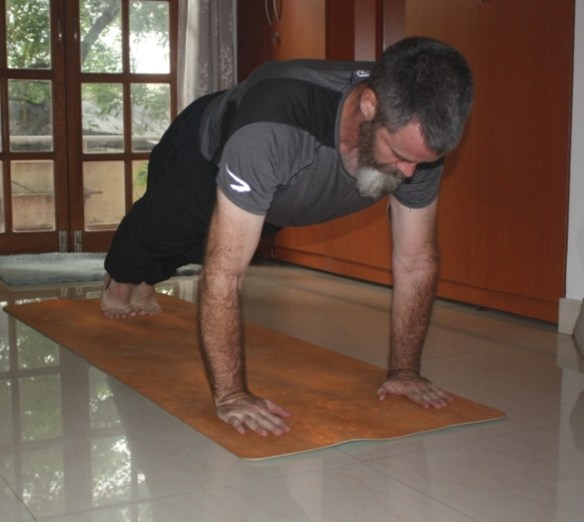
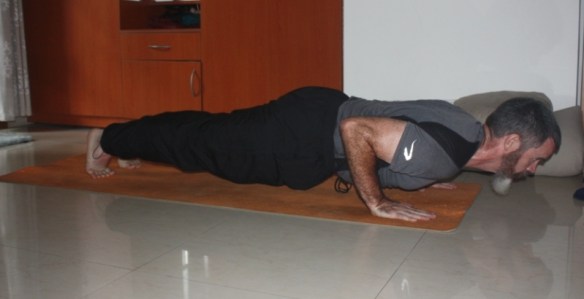
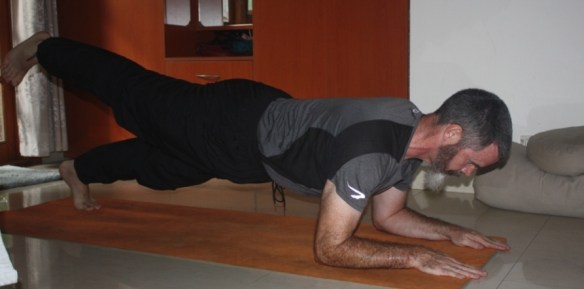
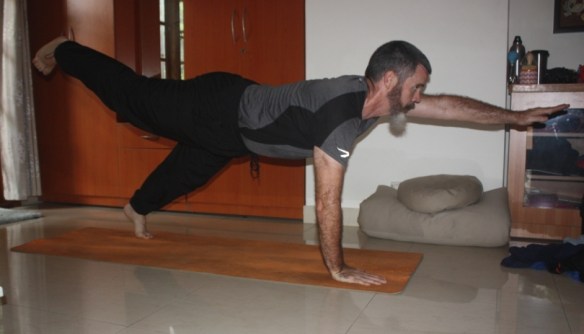
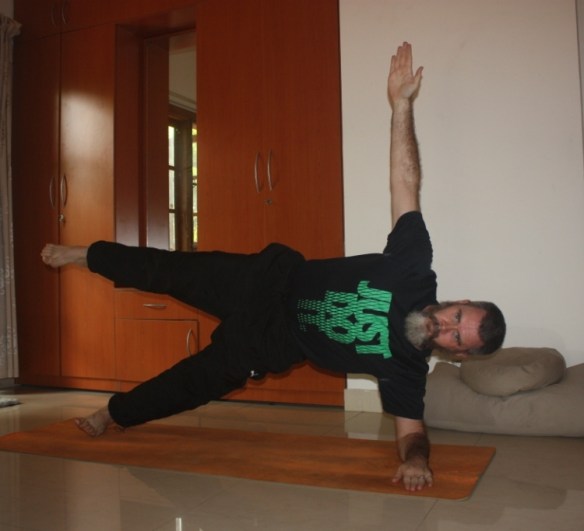
5.) Anything plank (a.k.a. adho mukha dandasana / santolanasana): Who knows how long planks have been a feature of yoga? Plank postures are a fixture in Hatha Yoga, playing a role in most versions of Surya Namaskara (sun salutations), and being used to both to build core strength and to prepare for arm balances.

Planks have also gained immense popularity with calisthenic practitioners. In my gym class days, sit-ups and crunches were the go to ab exercises. No more. Now many bodyweight fitness practitioners are ditching sit-ups and crunches altogether for a number of exercises deemed more effective–include many variations on the plank.

High plank (adho mukha dandasana)


Low plank (chaturanga dandasana)


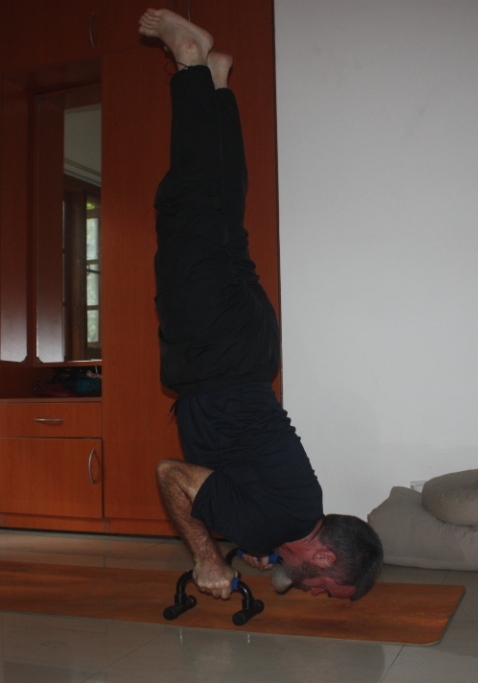
Forearm plank variation with leg up


High plank variation with alternating limbs extended


Side plank (vasisthasana)


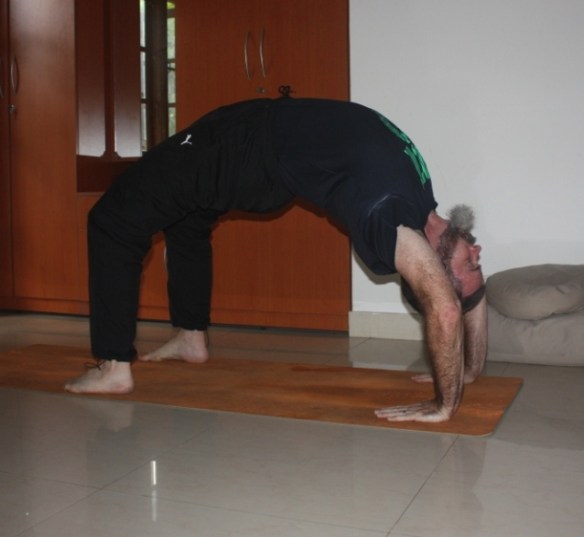
4.) Back bridge (a.k.a. Chakrasana): This is another yoga classic that’s being brought into calisthenics training in a big way. You may note a recurring theme in my selections for this post, exercises and postures (asana) that help to build shoulder joints that are strong, stable, and yet sufficiently flexible. This is a big challenge for bodyweight workout practitioners. One can get stability by bulking the muscles up, but if you don’t have the range of motion to achieve proper alignment, it’s not going to do one a lot of good.

The back bridge (chakrasana, or “wheel pose”)


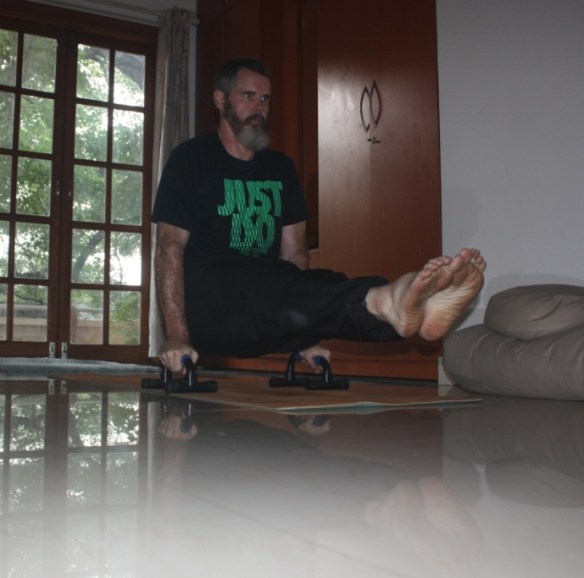
3.) L-sit (a.k.a. Bramcharyasana): Of course, the other recurring theme (besides building shoulder stability) is core strength. This exercise is both a yoga classic and is probably as old as gymnastics itself. Its Sanskrit name, Brahcharyasana, means celibate’s pose–but as far as I’m concerned that’s purely optional.

L-sit (Bramcharyasana)


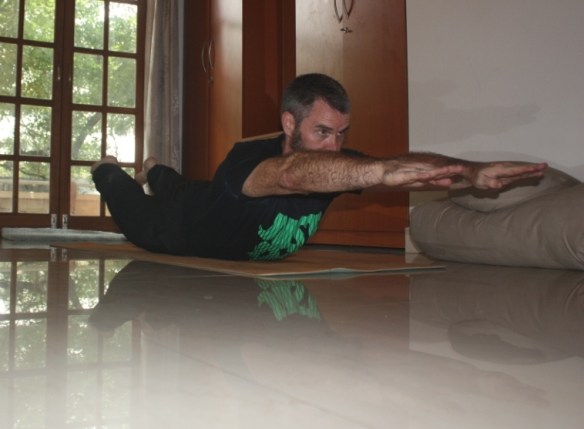
2.) “Supermans” (a.k.a. shalabasana [locust pose]): Another core exercise, but one that strengthens the back muscles.

“Supermans” (shalabasana)


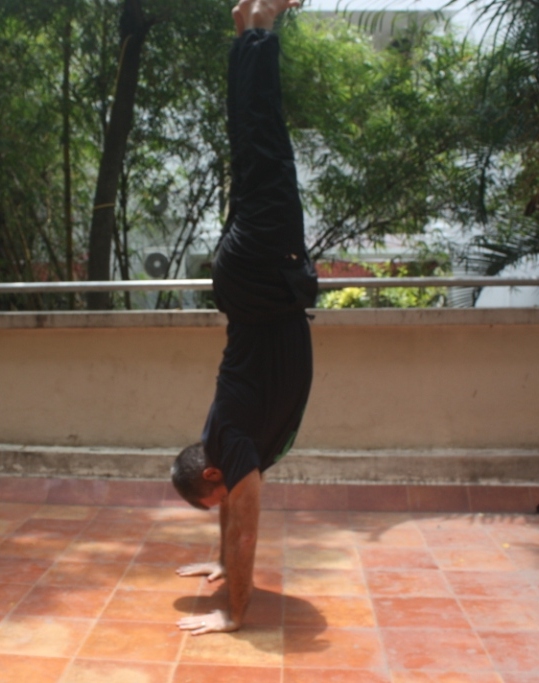
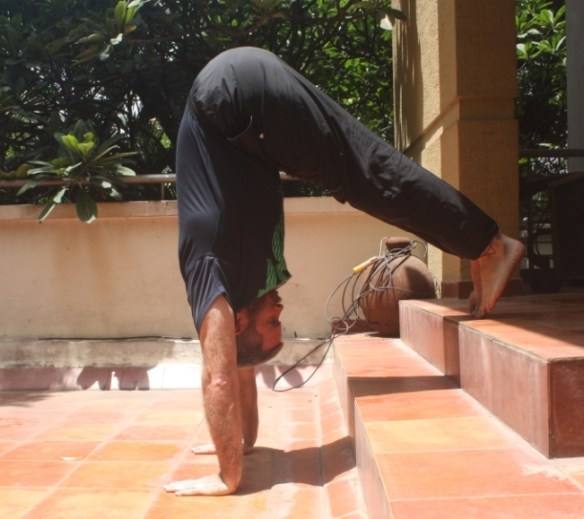
1.) Handstands and Handstand Preppers (a.k.a. adho mukha vrksasana): This practice isn’t just about looking impressive. As mentioned above, it’s hard to build shoulder joints that allow enough stability and range of motion to have the command of one’s body that one would like. Our shoulders are optimized to maximum mobility. That helped our ancestors to be awesome throwers of spears and rocks, but it makes it tough to support our weight in an inverted position. The handstand is a good way to build stability in the shoulders.

Handstand (adho mukha vrksasana)


If it’s too hard, use your legs to stabilize you (but still try to get that straight up-and-down arm position)


If it’s too easy, start doing push-ups

5 Interesting Respiratory Facts for Yoga Teachers


Pranayama (breath exercise) is a crucial part of yogic practice. While I may spend less time on the pranayama portion of my practice than the asana (postural) part on most days, I’ve come to view pranayama as at least as important. (i.e. It packs a lot of punch.) With that in mind, here are a few fun facts about respiration for you your consideration:


5.) Asthma Fact: People in richer countries are more likely to have asthma, but–within more wealthy countries–poor people are disproportionately effected. (Asthma is a condition in which lung tissue becomes inflamed, and thus it’s hard to breath.)

Source: Krucoff & Krucoff. 2000. Healing Moves. New York: Three Rivers Press. p. 288

Yogic Relevance: There’s at least some preliminary evidence that yoga practice can benefit asthma patients. Mekonnen, D. & Mossie. A. 2010. “Clinical Effects of Yoga on Asthmatic Patients: A Preliminary Clinical Trial.” Ethiopian Journal of Health Science. Vol. 20(2). pp. 107-112.


4.) Altitude Fact: At the summit of Everest, atmospheric pressure is about 30% of what it is at sea level.

Source: Coulter, H.D. 2001. Anatomy of Hatha Yoga. Allahabad: Himalayan Institute India. p. 96.

Yogic Relevance: The slow deep breathing you sometimes teach in pranayama courses could be a life-saver. Bilo G. et. al.  2012. “Effects of Slow Deep Breathing at High Altitude on Oxygen Saturation,” Pulmonary and Systemic Hemodynamics. PLoS ONE. Vol. 7(11): e49074. https://doi.org/10.1371/journal.pone.0049074.


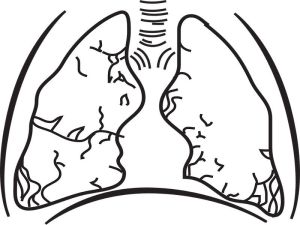
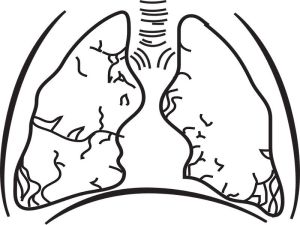
3.) Lung Fact: If one extracted, flattened, and laid side-by-side the 300 million alveoli of the average person’s lungs, they would cover an area greater than the average one bedroom apartment. (Alveoli are the little sacks at the end of the bronchioles where oxygen and carbon dioxide are exchanged.)

Source: Hymes. A. 2009. “Respiration and the Chest: The Mechanics of Breathing.” in Science of Breath: A Practical Guide by Swami Rama. Honesdale, PA: The Himalayan Institute Press.

Yogic Relevance: Vital capacity (total amount of air one can breath in and out of those little sacks) is increased through yogic practice. Karthik, P.S. et. al. 2014. “Effect of Pranayama and Suryanamaskar on Pulmonary Functions in Medical Students.” Journal of Clinical and Diagnostic Research. Vol. 8(2). pp. BC04 -BC06.

Note: there has been confusion about the degree to which yoga helps VO2 max (maximum oxygen utilization), at least in comparison to other forms of exercise, because there has been mixed results in the literature. The consensus seems to be the effect–if any–isn’t large compared to cardiovascular exercises. The strength of the pump (i.e. the heart) seems to have more to do with this particular measure than the lung’s holding capacity. While VO2 max is an important measure for athletes, the fact that it may not be improved by yoga doesn’t mean yoga doesn’t offer many fine benefits for athletes. As I recall, this is dealt with at length in Broad’s book (i.e.  Broad, W.J. 2012. The Science of Yoga: The Risks and Rewards. New York: Simon & Schuster.)


2.) Nose Fact: Rhinologists (doctors specializing in noses) figure that the nose has around 30 functions in the breathing process (e.g. moisturizing and warming air, catching foreign matter, directing airflow, and much more.)

Source: In the aforementioned Swami Rama book Science of Breath in a chapter entitled, “Following Your Nose: Nasal Function and Energy” by Rudolph Ballentine, MD.

Yogic Relevance: Alternate Nostril Breathing (Nadi Shodhana) is shown to tone the parasympathetic nervous system (PNS, i.e. the part of the autonomic nervous system involved in rest & digest functions.)  Sinha, A.N., et. al. 2013. “Assessment of the Effects of Pranayama / Alternate Nostril Breathing on the Parasympathetic Nervous System.” Journal of Clinical and Diagnostic Research. Vol. 7(5). pp. 821-823.


1.) Pace Fact: At about 5 breaths per minute, most people’s thinking is clearer than usual.

Source: Brown, R. & Gerbarg, P.2012. The Healing Power of Breath. Boston: Shambhala Publications.

Yogic Relevance: The breath is our most powerful tool for controlling the mind. Vindicated!

5 Neuroscience Fun Facts for Yogis & Yoginis

5.) IDEA: While our conscious mind feels like the sum of our mental world, in fact, it’s the tip of the iceberg of mental processes. Our decisions and actions are guided to a large degree by happenings below the waterline.

INTRIGUING EXAMPLE: In one study, interview subjects were randomly assigned to hold either iced or hot coffee. No attention was drawn to the coffee and it was set up as a mere accident of happenstance (the HR person directing the interviewees had her hands full.) The coffee was retrieved before the subjects made handshakes with interviewers. Unrelated to their verbal responses, those who had held the iced coffee were disproportionately described more in terms suggesting a cold personality (e.g. calculating, devious, etc.) and those who had held hot coffee were credited with a warmer personality.

RELEVANCE: Get your hands warm before you start making corrections.

REFERENCE: The coffee study is discussed by David J. Linden in his book Touch. However, there are many books on this topic, several that I’ve reviewed. In particular, I can recommend Eagleman’s Incognito and Mlodinow’s Subliminal.


4.) IDEA: Emotions play a crucial role in decision-making. We aren’t nearly so rationale and calculating as we think ourselves to be–particularly when there is uncertainty in the mix.

INTRIGUING EXAMPLE: Giovannni Frazzetto’s book describes cases of patients with lesions in their medial prefrontal cortexes who would deliberate ad nauseam and still couldn’t reach a decision.

RELEVANCE: This is why we don’t silence or stamp out emotions, but rather watch them dispassionately while avoiding a mental drift into a frenzy of illusion building.

REFERENCE: The Frazzetto book I referenced is: How We Feel, and it deals with anger, guilt, anxiety / fear, grief, empathy, joy, and love.  However, the patients described in his book were those of Antonio Damasio, and so you may want to check out Descartes’ Errorwhich I’ve heard good things about, but haven’t yet read.


3 .) IDEA: Experiences once thought to be supernatural, mystical, or fraudulent are increasingly being understood in scientific terms.

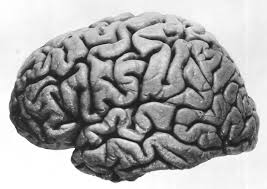
INTRIGUING EXAMPLE: For some, an Out-of-Body-Experience (OBE) is an impossible flight of fancy, while for others it’s a mystical / transcendent state beyond the physical realm. However, in recent years scientists have not only confirmed that people have these experiences, they’ve come a long way toward understanding such occurrences by actually inducing them via electrodes applied to the right angular gyrus. It seems that area of the brain is responsible for integrating sensory information from various senses, and its disruption creates an illusion of one’s consciousness floating outside the body.

RELEVANCE: As many have wisely advised, don’t spend a lot of time chasing siddhis–not only might it stunt your growth toward the ultimate goal, it might just be running after tricks of the mind.

REFERENCE: I highly recommend Anil Ananthaswamy’s The Man Who Wasn’t There. The book looks at the various ways in which “self” has been defined (one’s memories, one’s body, etc.) and it shows how neuroscience has learned a thing or two about the various dimensions of self, and how none of them fully defines an “I.” (i.e. The Buddhist conception of the self as illusion might turn out to be not far off the mark.)


2.) IDEA: Our brains can be rewired through practice and training. The property is called neuroplasticity, and it’s often described by the verse: “neurons that fire together, wire together.”

INTRIGUING EXAMPLE: You may have heard about  how London taxi cab drivers develop an enlarged hippocampus, which helps them meet the vast spatial memory needs required of the job. However, an even more fascinating example may be how some blind people have developed a capacity for echolocation–i.e. their mind registers changes as sound bounces off walls, curbs, and other obstacles.

RELEVANCE: One takes advantage of neuroplasticity when one works to be more kind and compassionate by recognizing and changing one’s behavior patterns.

REFERENCE: Fascinating reading on the topic can be gleaned from Kathleen Taylor’s book Brainwashing, but the most widely-cited book on the topic may be Norman Doidge’s The Brain That Changes Itself.


1.) IDEA: We have neural circuitry that predisposes us to spiritual belief and inclinations toward the sacred.

INTRIGUING EXAMPLE: The evidence suggests that it’s not so important who or what you believe in, but the more positive the message the better. People of religion have demonstrated both better and worse health outcomes–all else equal–and it seems linked to whether you have one of those smiting gods or a more compassionate one.

RELEVANCE: Belief and surrender–religious or secular–can play an important role in one’s personal development.

REFERENCE: Newberg and Waldman’s How Enlightenment Changes Your Brain deals with these issues in detail.

5 Physiological Fun Facts for Yoga Teachers and Practitioners


5.) FACT: People who lose weight often still feel heavy and commonly maintain the body language and movement characteristic of an overweight person.

REASON: A conflict exists between the body schema (which is largely up-to-date on the current state of the body, but is largely unconscious) and body image (which relates to how we feel about our bodies, can lag behind the state of the body, and of which we are conscious.)

RELEVANCE: It may take unconventional activities to help a student realign his or her body schema and body image. e.g. Wobble boards have been shown to be effective.

REFERENCE: “The Body Has a Mind of Its Own” by Blakeslee and Blakeslee


4.) FACT: The busiest skeletal muscles in the body are the extraocular muscles (i.e. more than 100,000 moves per day.)

REASON: We don’t see over a broad area as clearly as we think we do. The illusion that we can is created by rapid saccades by which the eye is constantly moving to take in sights from the point at which our sight is best. You can prove this to yourself by fixing your gaze forward, and then–from the side–draw a playing card at random so the face is towards your cheek while holding the card out to one’s side at shoulder height, and then–eyes still fixed forward–gradually move it in an arc at arm’s length towards one’s center-line until you can make out which card it is. You might think you’d be able to make it out at say a 30-degree angle from center-line, but you’ll find it’s almost directly in front of your eye when you can make it out. If if isn’t: a.) your eyes made a cheating saccade so quickly you didn’t notice it or, b.) you are an android and have eyes (and nervous system interface) that aren’t constructed on the same principles as the human system of vision.

RELEVANCE: One may want to brush up on eye yoga. Yes, there is such a thing.

REFERENCE: There’s a section on exercises for the eyes in Swami Saraswati’s “Asana Pranayama Mudra Bandha” (commonly called APMB.)


3.) FACT: The gut has its own nervous system (i.e. the enteric nervous system) that can interact with our body’s nervous system, and increasing evidence suggests that it’s not always mental stress that causes stomach aches, but sometimes problems in the gut result in mental / emotional turmoil.

REASON: There’s a lot that remains unknown at the moment, but a lot of research is going on in this area. It seems reasonable to guess that there’s probably an evolutionary advantage for the digestive tract to be able to express its dissatisfaction in a way that changes behavior (and emotions are all about behavior change.)

RELEVANCE: Unexplained depression or emotional outbursts may have unexpected origins.

REFERENCE: I can highly recommend “Gut” by Giulia Enders, but I’ve also heard great things about the more recent “I Contain Multitudes” by Ed Young, though I haven’t gotten around to reading it yet myself.


2.) FACT: The problems that can arise due to hyperventilation aren’t about oxygen levels, they are about too little carbon dioxide.

REASON: Lack of carbon dioxide can cause arteries and arterioles of the brain and spinal cord to constrict.

RELEVANCE: Introduce kapalbhati and bhastrika with caution.

REFERENCE: H. David Coulter’s “Anatomy of Hatha Yoga” chapter on breathing (Ch. 2) deals with the physiology of breathing in an excellent fashion.


1.) There are oh-so-many more than five senses in the human body. Within the realm of “felt sensation” alone there’s not only touch (one of the five senses we usually think of), but also: thermoception (sense of temperature), nociception (sensation of pain), proprioception (sense of the location and motion of our various body parts, and balance (which relies on vision and proprioception but also vestibular sensation.)

REASON: Without these sensations we couldn’t function as we do. I don’t have to tell experienced meditators how difficult it can be to simply stand up or walk when proprioception is dampened by the pins-and-needles from sitting cross-legged such that one doesn’t notice one’s drooping foot.

RELEVANCE: At some point one should begin to practice relying on proprioception more and visual confirmation less. (Proper drishti–focal points–rarely allow one to visually confirm one’s position.)

REFERENCE: Besides the book mentioned in #5, check out David J. Linden’s “Touch.” I’ve also begun reading a Harvard Medical School Guide entitled “Better Balance” that gives insight into how to improve the sense of balance–particularly if one serves senior citizen students.


BOOK REVIEW: Anatomy of Hatha Yoga by H. David Coulter

Anatomy of Hatha Yoga: A Manual for Students, Teachers, and PractitionersAnatomy of Hatha Yoga: A Manual for Students, Teachers, and Practitioners by H. David Coulter
My rating: 5 of 5 stars

Amazon page


There are many books on anatomy for yoga, and I’ve read my share, but this is my favorite.

What did I like about it? First, Coulter examines the anatomy and physiology of breathing in some detail, and that’s an important topic that is overlooked by many others. A lot of yoga anatomy books stick exclusively to the musculo-skeletal system. Second, this book doesn’t mix science and pseudo-scientific mythology. Sometimes books shift from talking about arteries and veins to nadis and chakras in a manner that can be confusing and counterproductive. Third, the book discusses how postures can be safely varied for individuals with limits, as well as discussing the most advanced expression of postures for more flexible or skilled students.

What’s the catch? There must be a downside? Well the book is dense and it’s a challenging read. It’s not that the writer uses too many technical terms. That isn’t the case at all. In fact, Coulter is careful not only about using anatomical terms, but also avoids reliance on Sanskrit names as well. It’s just that there is a lot of material that one must read painstakingly while visualizing and–in some cases—tactically probing around one’s body (or someone else’s–if they’ll let you.) I don’t know that there’s much that could be done about this, given the desire to convey the material that the book does—and it’s valuable information. The book has a large number of graphics that mostly consist of anatomical drawings and photographs of the various versions of the postures. It’s possible that more graphics could have been used to reduce the amount of descriptive text, but—on the other hand—reading it slowly and carefully is a useful and productive exercise. And, if you’re not reading it for your RYT-500, you can take your time and read it section by section, as time permits, over the course of more than a year as I did.

The ten chapters of the book are mostly divided up by classes of posture (asana.) Chapter 1 is about “movement and posture” and provides the necessary background that one will need to understand the later chapters. Chapter 2 is on breathing–both the musculature involved and the physiology of it. The rest of the chapters are on core exercises, standing postures, back bends, forward bends, twists, headstands, shoulder-stands, and meditative postures, respectively.

The book has a glossary, a short bibliography, and two indexes (one by anatomical parts and the other by practices/postures.) I normally don’t bother to mention indexes, but in this case it’s useful to know because the book’s organization is by type of posture, and so it’s not always straight forward where various muscles or tissues are being covered.

As I say, I found this book to be tremendously informative. I recommend it for yoga teachers as well as intermediate / advanced practitioners.

View all my reviews

BOOK REVIEW: The Way of the Iceman by Wim Hof and Koen De Jong

The Way of The Iceman: How The Wim Hof Method Creates Radiant Longterm Health--Using The Science and Secrets of Breath Control, Cold-Training and CommitmentThe Way of The Iceman: How The Wim Hof Method Creates Radiant Longterm Health–Using The Science and Secrets of Breath Control, Cold-Training and Commitment by Wim Hof
My rating: 5 of 5 stars

Amazon page


Wim Hof is often presented as a freak of nature. If you’re flipping through the science channels, you might see a segment that shows him subjecting himself to extremely cold temperatures with no ill effects. This book is an attempt by Hof, and co-author Koen De Jong, to counter the proposition that he’s some sort of mutant (or—worse–that his demonstrations are cons) by offering a method by which anyone can achieve the same feats. It should be noted that long before Hof and YouTube came on the scene, there were people [notably Taoist and Tibetan Buddhist monks] performing similar acts.

Hof’s method (called the “Wim Hof Method” or WHM herein and in this book) consists of three components: cold training, breath exercises, and commitment building. The book explores this three-legged stool from both the scientific and practical dimensions. There’s one chapter on each of these elements that describes what it does to the body and how it contributes to well-being, and later chapters both describe what scientific studies have found so far and outline the approach by which the reader can explore the WHM on their own.

There’s a lot of front matter in this book (two forwards, a prologue, and an introduction), but the book more-or-less consists of seven chapters. The first of these is a mini-bio of Hof. It describes a fascinating event in Hof’s youth in which he was exposed to cold, as well as his travels to India in an attempt to find a yoga teacher. [As is the case with most people who come to India seeking to find that quintessential guru—i.e. a half-naked, weather-beaten, and forehead paint-streaked classical guru—he found that he had to wade through a sea of charlatans and shysters while never finding the true masters who are likely hidden away in caves in the Himalayas. Note: this is not to say that one can’t find excellent yoga instruction in India but it’ll likely be by someone fully clothed and not someone smoking pot on a ghat in Varanasi.] This resulted in Hof taking an experimental approach in which he studied the effects of various activities on himself (and such experimentation is what he advocates for others as well.) It should be noted that Hof didn’t invent this method from scratch—e.g. the breath component is based on Tibetan Tummo meditation.

As mentioned, Chapters 2 through 4 explore the three components of the WHM, i.e. cold training, breath exercise, and commitment building, respectively. These chapters describe the science of how these three elements generally (as opposed to a later chapter that describes studies in more depth) act upon the body. The commitment section describes a number of arduous feats such as climbing Kilimanjaro in a T-shirt and shorts, but also describes the role of diet (with particular emphasis on the fast-5 diet which is similar to, but not precisely, what Hof came to practice organically.)

Chapter 5 dives more deeply into the science than does the preceding chapters, and focuses on the studies in which Hof has participated in his attempt to facilitate a better understanding of his method.

The penultimate chapter suggests what the WHM might do for people in various classes, including: healthy people, athletes, and people suffering from various physical and mental ailments. With respect to the latter, there is discussion of exemplary cases as well as the possible means by which the training might act.

The final chapter is a brief outline of how the WHM can be put into practice by readers. There is also a sample log by which practitioners can chart their experience.

There are a range of graphics including line diagrams and photographs. Most of the photographs are inspirational shots of Hof in action, but there are diagrams and other graphics used to convey scientific ideas. There’s a recommended reading page as well as a works cited page. Both lists are small and confined to a few key sources of information, with the latter being the more scholarly works. There is also a glossary that may prove handy for some readers.

This book is illuminating and many stand to benefit from it. I found the approach of the authors to be sound; it’s basically “see for yourself.” This book could easily have been a sales brochure, and in some ways it is, but the fact that it emphasizes the science and the suggestion that the reader try the practice lends credibility. I’d highly recommend this book for anyone who wants to expand and explore the limits of their capability.

View all my reviews

BOOK REVIEW: The Science of Breath by Swami Rama et. al.

Science of BreathScience of Breath by Swami Rama
My rating: 4 of 5 stars

Amazon page


This is an oldie, but a goody. The first edition came out in 1979, but as its intent is to provide an overview of the anatomy and physiology of breath for yoga practitioners, the fact that it doesn’t access the bleeding edge of respiratory science isn’t all that detrimental.

This short book consists of four chapters. Two chapters are by the famous yogi Swami Rama, and the other two are written by medical doctors. The first chapter is an introduction to breath from the yogic perspective. It both explains why it’s so important to understand and work with breath and introduces the mythic physiology (prana, nadi, chakra, etc.) that has historically been used to explain pranayama (breath exercises.)

The second chapter is written by Dr. Alan Hymes and it explains the mechanics of respiration. While Chapter 2 focuses on the anatomy of breathing, it begins with an explanation of cellular respiration to introduce the role of breath in powering muscles. There is a fine explanation of the operation of the diaphragm and the intercostal muscles in breathing.

Chapter 3 is written by Dr. Rudolph Ballentine, and it delves into the role of the nose and nasal cavities in respiration. Breathing through the nose is emphasized in both yoga and many other systems of breath training (e.g. the Buteyko and Wim Hof methods.) This is because the nasal cavities perform many useful functions such as moisturizing and warming air, capturing pollutants, and extract heating and moisture from exhaled breath. Besides exploring nasal anatomy and physiology, Dr. Ballentine describes jala neti shatkarma (nasal cleansing with salt water) and nadi shoudhana (alternate nostril breathing.)

The final chapter, written by Swami Rama, mostly describes various techniques of pranayama (breathing exercises) and related practices bandhas and mudras (locks and seals in which bodily parts are contracted or constricted.) However, the chapter begins with a mix of physiology and mythic physiology. That is, it explains some topics not addressed earlier–such as the interaction between the nervous and the cardiovascular systems as well as chakra.

My standing complaint about books that weave together science and pseudo-science is mitigated a bit herein. My problem with putting these ideas together is that it can be difficult for the reader to determine what concepts reflect reality and which offer models to help one visualize energy. However, except for the last chapter, this book does a good job of keeping these ideas separate. The chapters by the medical doctors present the science with minimal intrusion of unscientific concepts. Swami Rama does present science and mythology together, but not so much scrambled together in a confusing mish-mash.

Chapters 2 through 4 use a number of graphics to help present the material. In the middle chapters these largely consist of line drawings to convey the relevant anatomical features or physical actions. The last chapter adds photographs to demonstrate relevant postures. There is a page of recommended readings, but it’s more of an advertisement for other books put out by the Himalayan Institute than the recommendation of books on the science of breath.

I found this book to be educational. It packs a lot of useful information into a concise package and is readable to a layman. I’d recommend it for yoga practitioners and others who are engaged in breath work.

View all my reviews

BOOK REVIEW: Greatest Ever Boxing Workouts by Gary Todd

Greatest Ever Boxing Workouts - including Mike Tyson, Manny Pacquiao, Floyd Mayweather, Roberto DuranGreatest Ever Boxing Workouts – including Mike Tyson, Manny Pacquiao, Floyd Mayweather, Roberto Duran by Gary Todd
My rating: 3 of 5 stars

Amazon page


This will be a quick review as the book is simple and straightforward in its approach. The author interviewed 30+ boxers, and each chapter corresponds to a boxer. A few of these boxers are household names, e.g. Tyson, Duran, Pacquiao, and Mayweather, but others may or may not be known to those who aren’t fight fanatics.

Each chapter consists of three sections. The first and longest of each is an overview of that boxer’s career, but it’s the other two sections that are most relevant to the book’s title and theme. One of these sections is an interview that asks a series of 14 questions about how the respective boxer organized his training day, and the other is a description of the boxer’s workouts (typically there was more than one workout—i.e. sparring v non-sparring days.)

If you’re a big boxing fan, this book will be interesting to you particularly for some of the insights about the boxers. The author is clearly knowledgeable in that regard. If you are mostly interested in the book from a fitness perspective, and seek to learn about working out for combative sports, it’s of decidedly less value. It still has some fascinating information, but you’ll probably find it tedious and of limited usefulness. The question and answer section elicits answers from one word to a couple of sentences and the workouts are a page each. What is fascinating is how similar the day in the life of a boxer is, and, specifically, how standardized workouts are. What I mostly found intriguing was when someone stuck out as having a different mode of operating. For example, most started their days very early (often going back to sleep after road-work) but a few were clearly night owls. One can also see a little of how approaches have shifted between the earliest fighters and the ones active until recently.

There are plenty of photographs in the book, but they are the only graphics. There isn’t much else by way of ancillary matter. (i.e. there is a section of pictures of the author with various boxers, but that—of course—is primarily of interest to the author.)

In one sense the book is quite limited and tedious, but it’s also interesting to see how thirty different fighters answered the exact same pallet of questions. There is some insight into nutrition, sleep schedules, optimal time for workouts, etc. However, the book doesn’t drill deep.

If you’re a fight fan, fascinated by boxers and their careers, I’d recommend this book. For those who are buying it thinking they’ll get some insight into how to prepare as a boxer, I’d say said insight will be extremely limited. That said, the book isn’t much of a time investment, and so if you can get it cheap you may find it of some benefit.

View all my reviews

5 Hyphenated Yogas That Miss the Point of Yoga

The laissez-faire and easy-going yoga community has spawned some phenomenally ridiculous mergers. I have “yoga” as a term on Google News, and almost every week I get fed a new example. I’m not saying every new approach to yoga is bad, but there’s one disturbing trend–i.e. the distraction yoga.


In the title, I refer to “hyphenated yogas,” but what I’m really ranting about is “distraction yogas.” A distraction yoga is one in which an element is brought into the practice so that one doesn’t have to keep one’s mind on one’s breath, alignment, and / or mental state. (Because who wants to think about that shit when one can be thinking “Wow, that kitten sure is cute.” or–believe it or not–“This beer has hoppy undertones.”)


Now before I get accused of hating puppies or beer, let me point out that nothing could be further from the truth. What I’m ranting against is the notion that you can marry any two good things and make a great thing. If you don’t believe me, please allow me to dip my nachos in your banana split. See, there are plenty of things that are awesome independently that make abominations when forced together.


I’ll include links as I go, lest you think I made this stuff up for hilarity’s sake.


5.) Beer Yoga: This is one of the most recent and intriguing distraction yogas. I’m not saying that one needs to follow a strict Vedic approach to life to practice yoga, but–come on–could you stop drinking for a couple hours to pretend your body is a temple (or at least that it’s not sitting in a trailer park with the windows busted out.) Unless “calf slaughter-yoga” catches on, it’s hard to imagine a less yoga-like practice than consuming intoxicants during the practice of yoga. By the way, there’s also a marijuana yoga, but I’ll lump these together as intoxicant yogas.

beermug


4.) Goat Yoga: This is one of many “animal yogas.” Like the others, the point is to have cute creatures around. How it’s supposed to help one’s yoga, I can’t fathom. Actually, I can fathom the suggested logic, probably something to do with calming and engendering feelings of compassion and well-being. But, ultimately it’s distraction by cuteness. Note: you can also do yoga with cats, dogs, horses, and probably river otters.

goatyoga-461x346


3.) Karaoke Yoga: Talk about distraction–nothing better than pounding music and reading a prompter to keep one’s mind off that ache in one’s hamstring.

karaoke_yoga


2.) Rave Yoga / Club Yoga: This might be a cheat because it’s similar to the previous one on the list, and I’m trying to lump these together so as to not be too repetitive. However, it’s not exactly the same, and is the perfect example of a distraction yoga. (There’s also Harmonica yoga and other musical yogas, but I won’t double-dip anymore.)

bombay_yoga-2e16d0ba-fill-735x490


1.) Tantrum Yoga: It wasn’t easy to determine whether I’d include this one or not. On the one hand, it’s not a distraction yoga in the sense that the others are. On the other hand, it takes the award for being least yoga like on the grounds that it’s not about dispassionately witnessing one’s emotional state but rather feeding one’s negative emotions. Note that I don’t group laughter yoga into the same class. I’m not sure whether laughter yoga is beneficial (or to what degree it’s a yoga), but I know that many people benefit from it because it bolsters positive emotional states.

tantrum


Now, one may have noticed that there are many seemingly strange (hyphenated) yogas that I haven’t mentioned. I haven’t said a thing about surf board-yoga, stripper pole-yoga, or acro-yoga–and I specifically excluded Laughter Yoga from the wrath of my rant. That’s because this isn’t a rant about people being innovative or non-traditional, it’s about people missing the point of what yoga is supposed to be (i.e. a means to quiet the mind.) I don’t know whether I can see myself doing yoga on a surf board or a stripper pole, but I’m certain that one has to give it one’s full attention–it’s not about finding a distraction to make yoga more palatable to hipsters.

BOOK REVIEW: Light on Pranayama by B.K.S. Iyengar

Light on Pranayama: The Definitive Guide to the Art of BreathingLight on Pranayama: The Definitive Guide to the Art of Breathing by B.K.S. Iyengar
My rating: 4 of 5 stars

Amazon page


This is B.K.S. Iyengar’s A-Z guide to breath and breathing exercises (pranayama.) It’s meant to do for pranayama practice what “Light on Yoga” did for asana (postural) practice. That is, it presents all the classic techniques, offers variants to meet individual needs, and provides the background necessary to put pranayama into the context of a balanced yoga practice.

Let me begin by discussing the book’s organization, and this book is organized to the n-th degree. There are parts, sections, chapters, and even the paragraphs are numbered (though–near as I can tell–the latter serves no purpose for a typical reader and may be more for the help of the writer and his assistants. It does create a somewhat biblical scheme, so maybe it was assumed there would be a need to quote this guide “chapter and verse,” as they say in Bible study.)

The bulk of the book consists of the first of two parts, and Part I is divided into three sections. The first of those sections is “The Theory of Pranayama,” and it puts pranayama in the context of yoga’s entirety. If you’ve read other B.K.S. Iyengar titles, much in these nine chapters will be familiar (e.g. discussion of the eight limbs.) However, chapter 4 offers a nice description of the anatomy and physiology of respiration. There are many anatomical drawings and diagrams in it to help convey the complex information. There’s also additional information about the traditional Indian notions of breath encapsulated in the concepts of prana, nadis, and chakras.

Section II is entitled “The Art of Pranayama” and it covers those topics necessary regardless of what technique of breath exercise one is practicing. It includes seated postures, mudras, bandhas, inhalation, exhalation, retention, etc. This section, too, has nine chapters. The final section of Part I describes the various techniques of pranayama. The chapters of this section are arrayed in lists, and they systematically build from the basic technique towards more advanced variations (e.g. by inserting retentions.)

Part II covers meditation (dhyana) and the corpse pose (savasana.) With respect to the former, it suggests how one’s body, mind, and sense organs should be conducted in the act of meditation. In the case of the chapter on corpse pose (after cross-legged seating position, this being the most common position for practice) there’s an extensive look at the details of that pose.

There are a number of helpful features incorporated into the book. In addition to the drawings mentioned in Chapter 4, there are black-and-white photos throughout to clarify the textual instructions. There is also a glossary of Sanskrit terms and an Appendix of courses of pranayama (i.e. recommendations as to how to sequence breathing techniques for optimal results with guidance as to how many sets or repetitions of each to use.)

My major criticism is one I’ve offered about previous books from this author and others. There’s a muddle of science and mythology that makes it hard to know how much weight to give particular instructions. It may be that a given piece of advice (e.g. a contraindication) is based on repeated observations of the physical or mental effects, or on a sound understanding of anatomy & physiology. In which case, it makes sense to heed such advice. However, advice can also be based on myths and the desire to preserve a way of thinking about the human body which is wholly unsupported by evidence. In which case, if one has no dog in the fight to preserve egos, it makes sense to disregard said advice. I suspect the vast majority of statements of what to do (or not to) fall into the first category, but some may fall in the latter, and it’s not easy to tell which is which.

I would recommend this book for students and teachers of yoga. It’s a good reference for one’s pranayama practice.

View all my reviews