BOOK REVIEW: The Voice of the Silence by Helena Petrovna Blavatsky

The Voice of the Silence: Being Extracts from The Book of the Golden PreceptsThe Voice of the Silence: Being Extracts from The Book of the Golden Precepts by Helena Petrovna Blavatsky

My rating: 3 of 5 stars

Amazon page

According to Helena Blavatsky, the three “fragments” that make up The Voice of the Silence are her translations of three tracts from The Book of Golden Precepts, of which there are 90 and she had memorized 39. The Book of Golden Precepts is said to include both Buddhist and pre-Buddhists views on spirituality.

Blavatsky was one of the founding members of the Theosophical Society, an organization that proposed and advanced a certain brand of mysticism. Mystic traditions are those which believe that one must look inward to find the divine, i.e. to know god. The Theosophical approach isn’t without controversy. Blavatsky’s allusion to a secret path to wisdom and the suggestion that most of the world isn’t ready for the high level teachings sits in contradiction to a Siddhartha Buddha who was transparent. Buddhists have been known to claim that in as much as an idea is a teaching of the Buddha, it wasn’t secret, and in as much as a teaching was secret, it wasn’t the work of the Buddha. But there is disagreement. Some believe that what Blavatsky is presenting is high level Mahayana Buddhism, but others think that it’s a hodge-podge of Kabbala, esoteric Buddhism, and yogic teachings.

The first “fragment” is also titled “The Voice of the Silence.” This section suggests that there are three stages to one’s journey: ignorance, learning, and wisdom. It states that one must take care to not to be distracted from the path by sensual inclinations or by desire. The path described mirrors the advanced stages of Patanjali’s eight-limbs. In other words, she discusses a progression from pratyahara (not explicitly named, but described as the withdrawal of sensory input), dharana (concentration), dhyana (meditation), and Samadhi (liberation.)

The second part is entitled “The Two Paths.” Liberation and renunciation are the two paths in question. The central topic of this chapter is Karma, and the questions of action versus inaction that are also discussed in the Bhagavad-Gita.

The third part is “The Seven Portals.” These seven doors through which one must pass on the way to wisdom are essentially the same as the six paramita of Buddhism with an additional one, Virag, inserted between the third and fourth spot. The portals are Dana (generosity), Shila (a.k.a. Sila, or virtue), Kshanti (patience / perseverance), Virag (illusion conquered), Virya (energy), Dhyana (contemplation), and Prajna (wisdom).

A nice feature is a “glossary” at the end of each of the fragment that explains some of the terminology and concepts. While this is called a glossary, it’s not one in the usual sense, i.e. it’s not in alphabetical order and is not exclusively definitions. It would better be described as chapter notes. The idea is to convey the information that a lay reader may need, but which the author / translator doesn’t want to muddle the text with.

I think this book is worth a read. It’s short, and for a work written in the 19th century it’s quite readable—that doesn’t mean that the message is always clearly conveyed—whether on purpose or accident.

Note: While I read this on Kindle for a nominal price, it’s available on the web free of charge (see here.)

View all my reviews

BOOK REVIEW: Zen in Motion by Neil Claremon

Zen in Motion: Lessons from a Master Archer on Breath, Posture, and the Path of IntuitionZen in Motion: Lessons from a Master Archer on Breath, Posture, and the Path of Intuition by Neil Claremon

My rating: 4 of 5 stars

Amazon page

When one thinks of Zen, one thinks of stillness. Sensory and motor deprivation is what scientists call it. But stillness is a favored term among Zen Buddhists. Being someone who is fascinated by movement and activities at the body-mind intersect, this title immediately snagged my attention despite the narrow print on this thin book’s spine. The value of a Zen state of mind in the practice of movement arts is clear and well-established. Zen in Motion recounts the lessons of the author as a student of the Japanese style of mounted archery (kyūdō.) Claremon studied with a Japanese Kyūdō master residing in New Mexico.

It will be clear to many why mounted archers might take allegiance in Zen. Charging down a trail on a horse towards a small, round target, there’s no time for conscious thought in calculating pull and release. Furthermore, there’s stillness in motion (sounds like a koan) that must be maximized because the slightest imperfection in movement can send an arrow astray.

It should be noted that this is neither the first nor the only book written on the nexus of Zen and Kyūdō. (Though it’s the first one I’ve read in full.) Probably the most famous book on the subject is Eugen Herrigel’s Zen in the Art of Archery, but there’s also a more recent book by John Stevens, entitled Zen Bow, Zen Arrow that tells the story of Awa Kenzō (who was Herrigel’s teacher.) The logical question is what is the value-added of Claredon’s book. If we have two books by more famous authors on seemingly the same subject, why should one read this one? I believe Claremon carved out a good niche with this book that makes it sufficiently different from the books of those other authors.

What is Claremon’s niche? The body portion of the mind-body equation is at the forefront in this book. Claremon directs most of his energies to topics such as breathing, posture, grounding, walking, and balance. While I haven’t read Herrigel’s book completely, I did skim through it. Zen in the Art of Archery seems to focus more heavily on the mind portion of the equation—i.e. the philosophy / psychology of Zen, if you will. This may make it sound like Claremon’s book isn’t much about Zen, which is widely considered a mental pursuit. However, one must remember that postural alignment and breath are crucial in zazen, and that Kinhin, walking meditation, is a well-established practice in Zen Buddhism. Furthermore, I don’t want to imply that Claremon leaves out the mental piece altogether, just that the balance of the discussion is toward the physical. (Whereas, it seems like the balance of Herrigel’s discussion is in the realm of the mental—but Herrigel gets into physical topics as well.) Having said all that, an argument could be made that a more appropriate title might be “Ki (Chi) in Motion” as the author devotes a great deal of space to discussing life energy (Ki in Japanese or Chi in Chinese.)

Another valuable piece of Claremon’s work is that there is plenty of value to individuals who don’t practice archery, but who are interested in discovering how these lessons might apply to other movement arts. For example, I found the topic of the 10-point “Diamond Being” that is a central concept in the book to be quite thought-provoking. The 10 points that are roughly arranged in a diamond shape (vertical alignment of 3 nodes down the left side of body, 4 nodes down the body’s centerline, and 3 nodes on the right side, and all these nodes connected by edges (line segments)) and map to the human body. While much of what Claremon said about this construct was esoteric and not of much use to the scientific-minded reader (i.e. sending ki between the various nodes), the construct had value in thinking about postural alignment, for example. There is an entire chapter devoted to healing that, of course, has a value to non-archers as well as archers.

Some of the concepts that are mentioned can be thought of in terms of the modern-day construct of “Flow,” which is related to Zen states of mind and which has gained a following among modern practitioners of high-speed / high-risk sports.) For example, the idea of perceiving time at a slower rate, which is an established part of Flow states valued by skiers and skydivers, would be a valuable state of mind for shooting an arrow from a moving horse toward a small target. Another example is discussed on the chapter of the fear of falling. Whatever one calls the mental state, avoiding an adrenaline dump and the fear associated with it is critical.

The only graphics are drawings, but they seem adequate to the task.

I enjoyed this book. For me the book’s greatest weakness was a tendency to be ethereal and esoteric. While the author denied believing in magic, there was a fair amount of explanation that no scientifically-minded person could hang his hat on. To be fair, this may in part be because the science of some of these experience isn’t yet well-established. (I recently watched a clip from a Discovery Channel program called “Human Weapon” in which there were some Chi related activities that the technicians and experts said they couldn’t explain for all of their state-of-the-art equipment.) However, it could also be that false experiences were arrived at by the leading statements of a trusted teacher.

I’d recommend the book particularly for those who have interests in activities at the intersection of body and mind.

View all my reviews

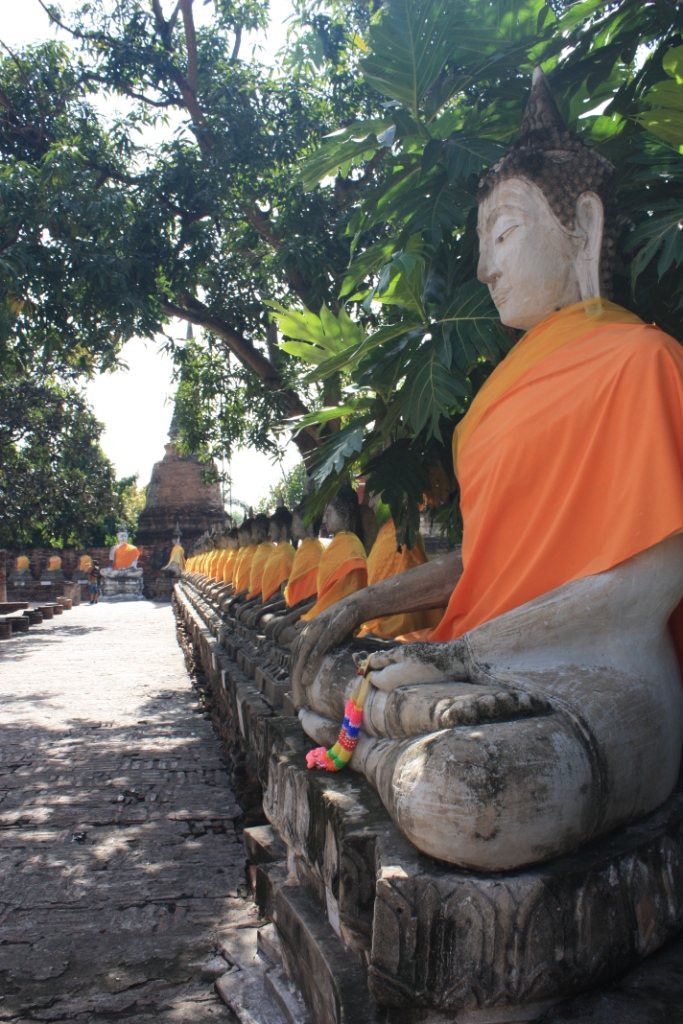
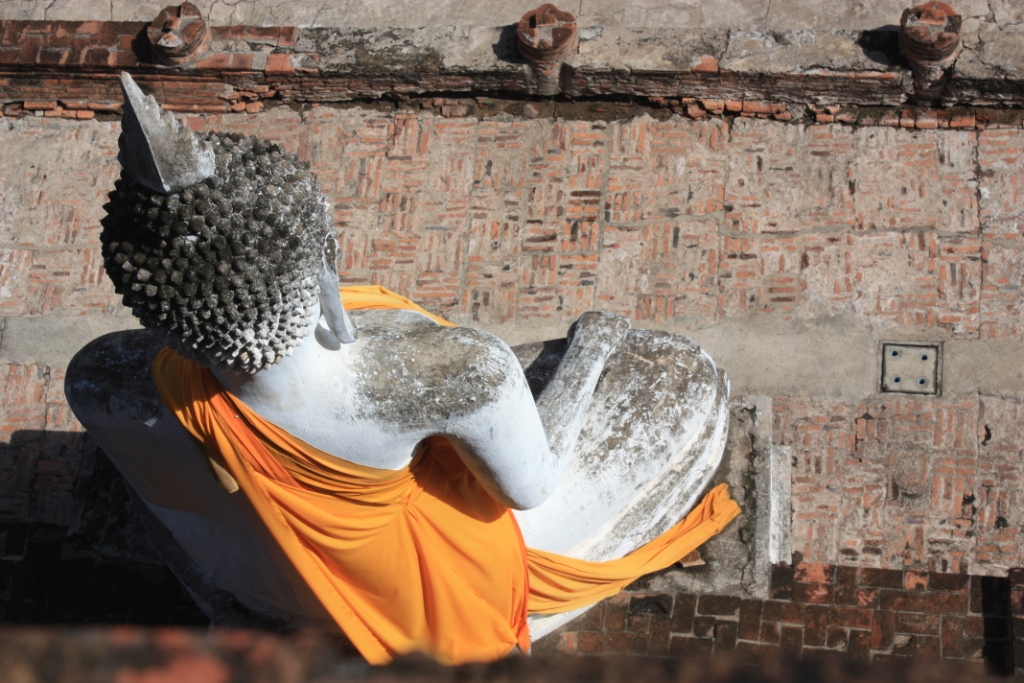
DAILY PHOTO: Buddhas in Saffron

Taken in August of 2014 in Ayutthaya, Thailand.

Taken in August of 2014 in Ayutthaya, Thailand.

These Buddhas line the perimeter of an important structure at the Wat Yai Chai Mongkol in Ayutthaya.

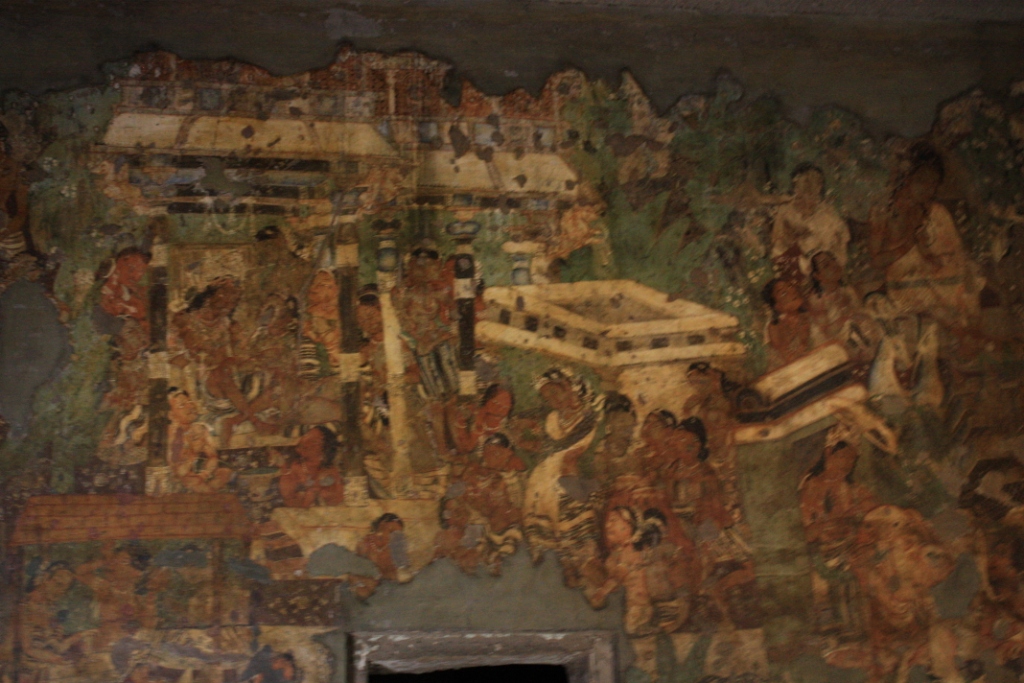
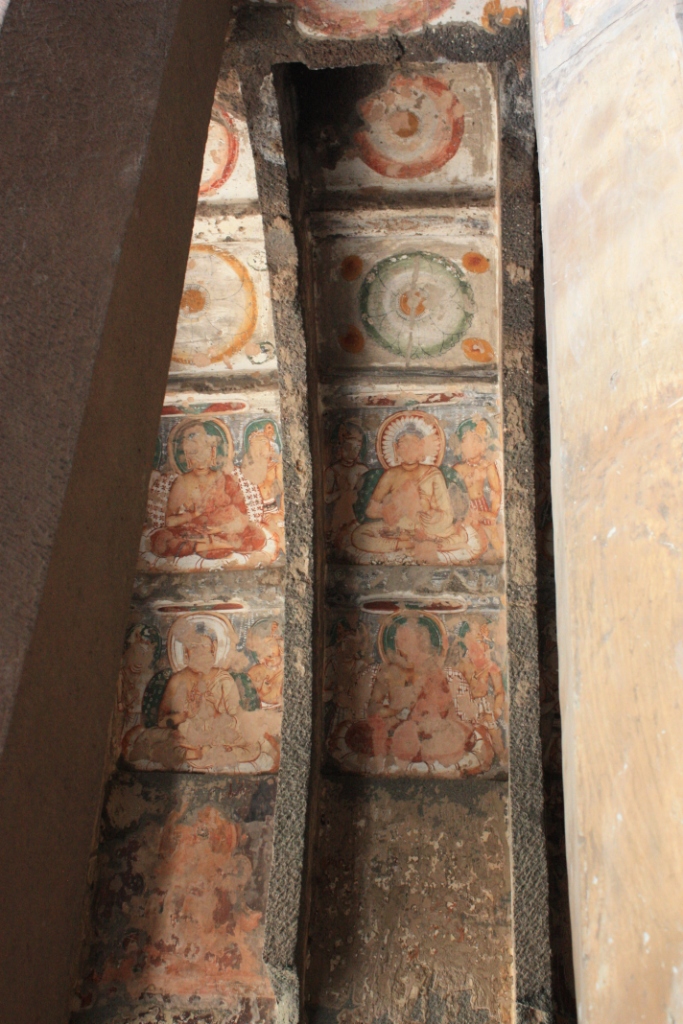
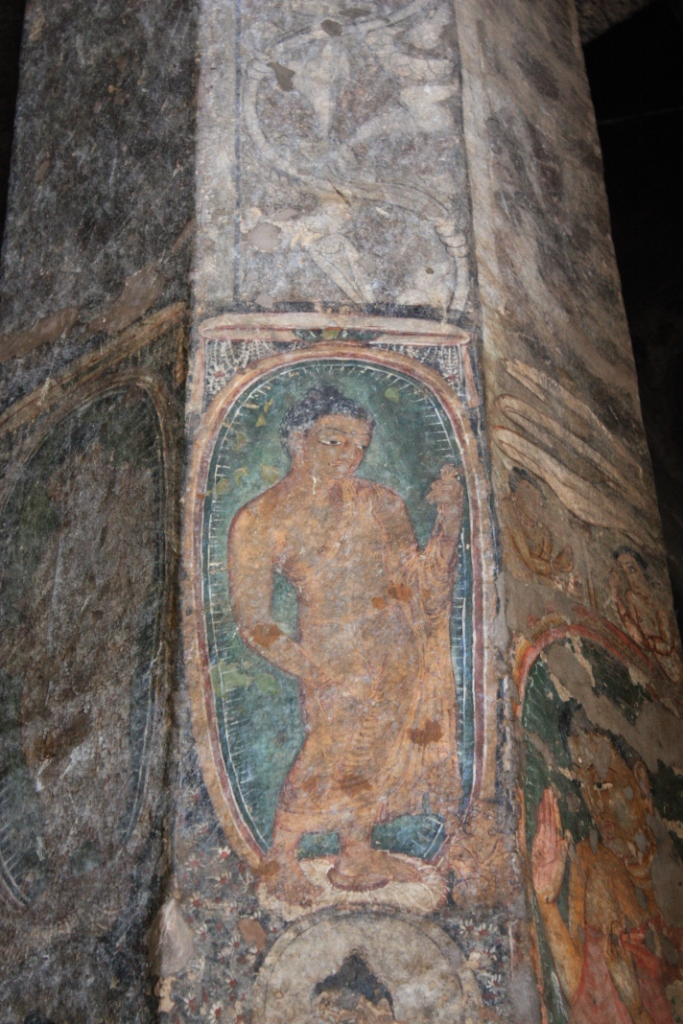
DAILY PHOTO: Ajanta Wall Murals

Taken on November 19, 2014 in Ajanta Caves

Taken on November 19, 2014 in Ajanta Caves

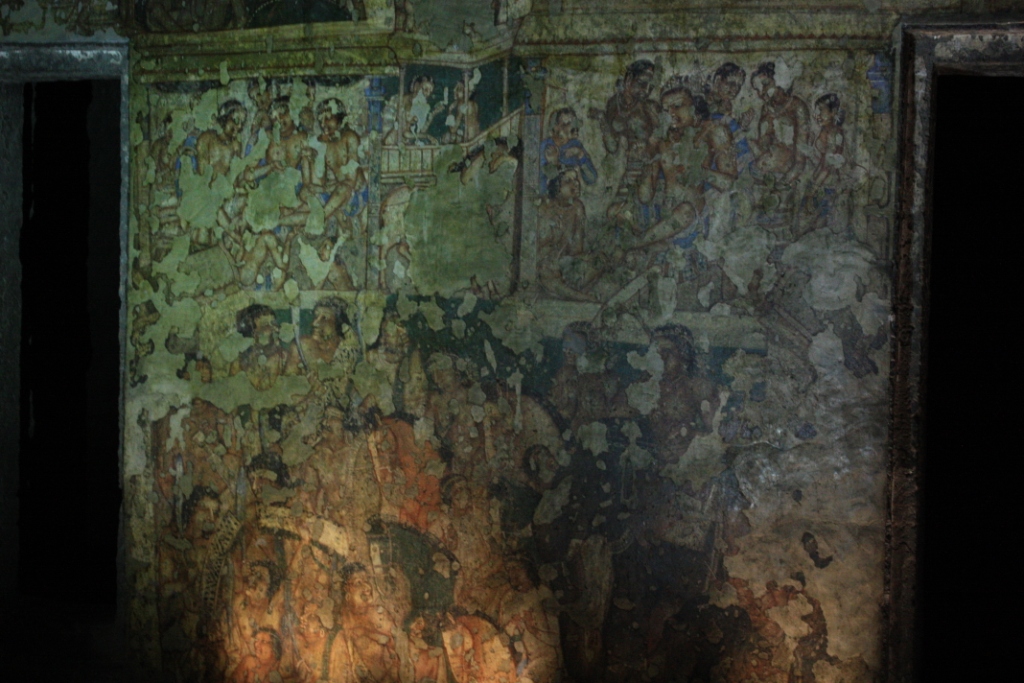
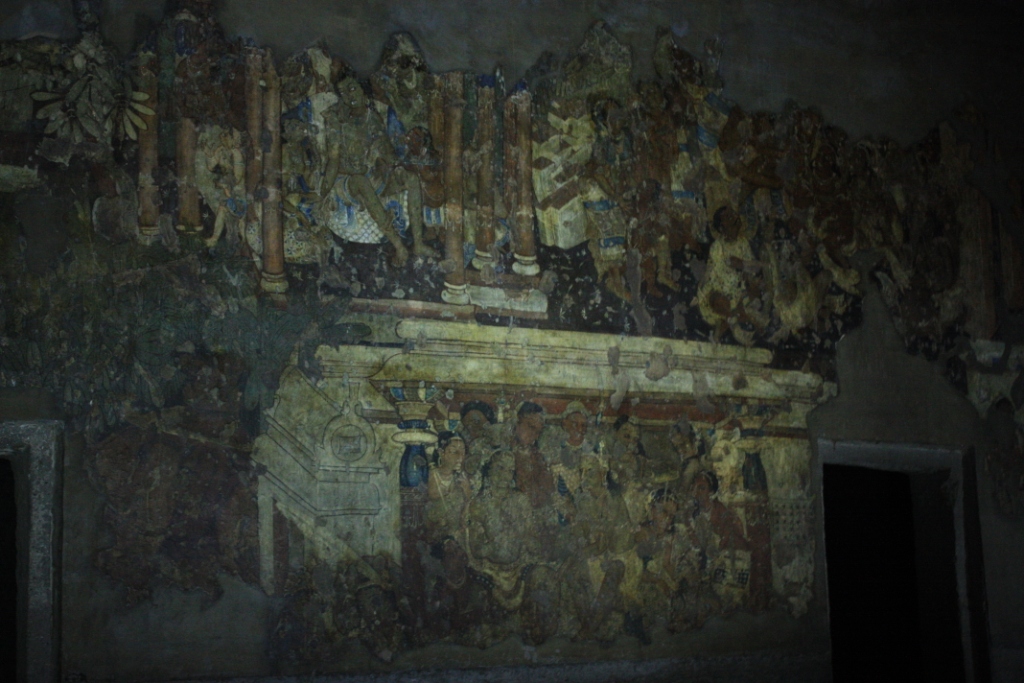
IMG_0421 IMG_0424IMG_0341 IMG_0324In the caves of Ajanta, many wall paintings have been preserved. As harsh light can damage these artworks, some of which have survived for centuries, flashes and outside lighting are prohibited. Therefore, it’s a challenge get decent photos, but here are a few attempts.

DAILY PHOTO: Seated Buddhas at Ellora

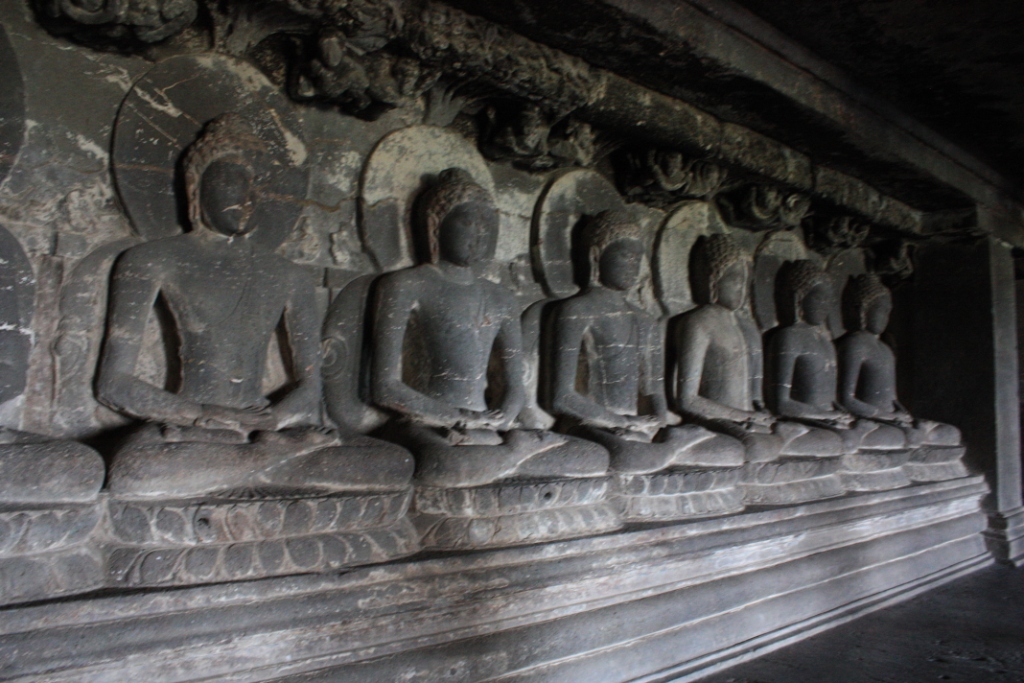
IMG_0881

Taken in the Ellora Caves on November 20, 2014. Ellora has Buddhist, Hindu, and Jain caves–in that order.

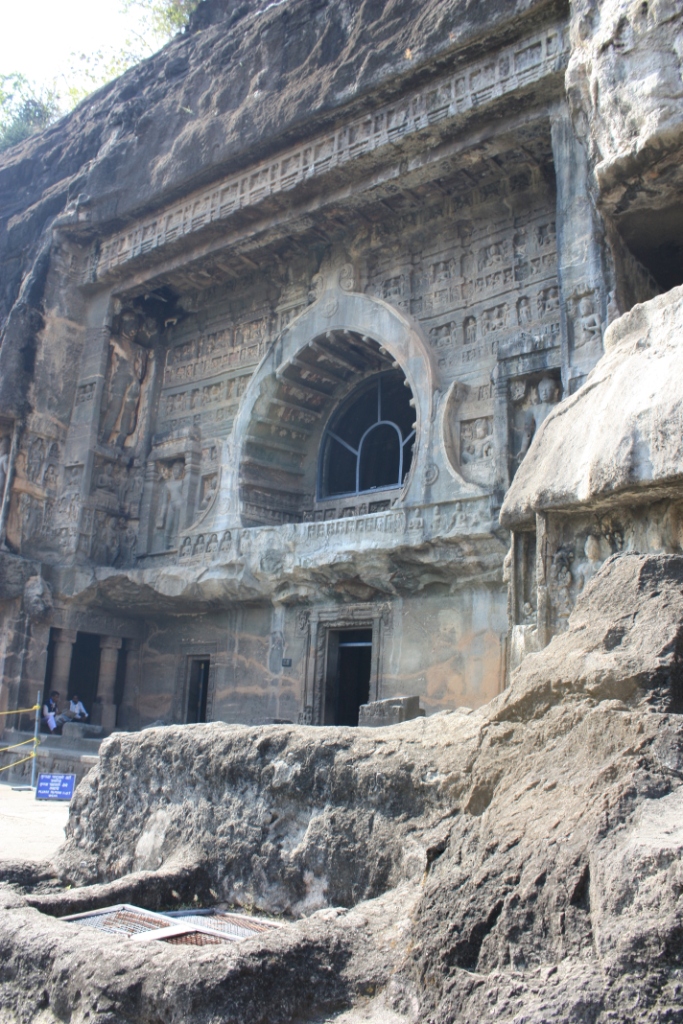
DAILY PHOTO: Ajanta Sanctuary

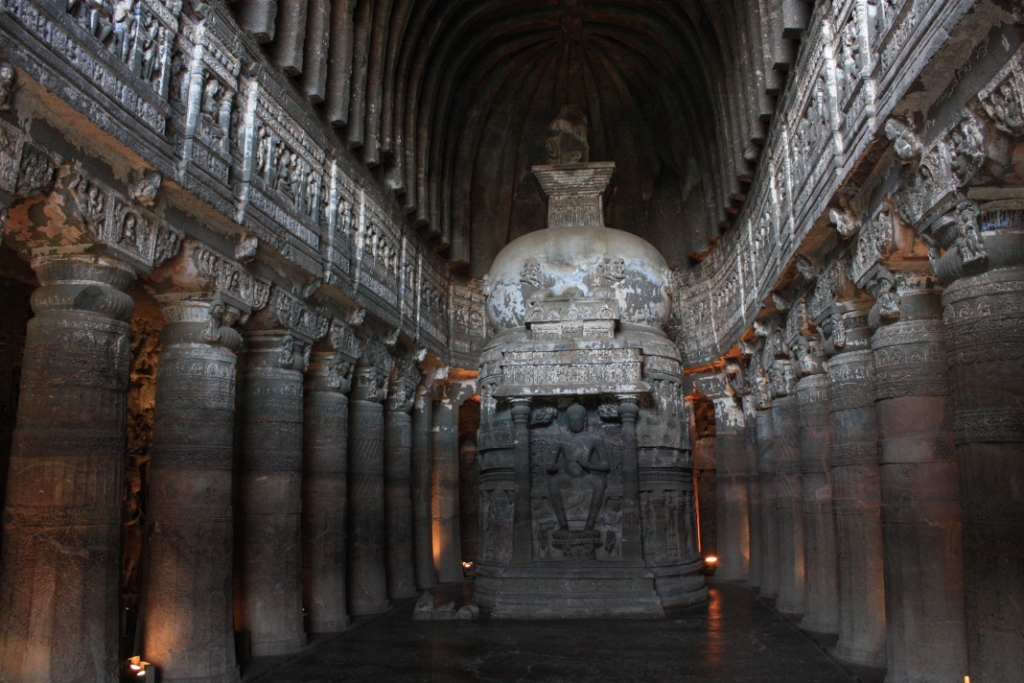
Taken on November 19, 2014

Taken on November 19, 2014

There are two types of caves at Ajanta; chaitya-grihas (a.k.a. sanctuary, prayer hall, or meditation hall) and sanghārāmas (a.k.a. vihāras or monasteries.) This is an example of the former, of which there are only a few. In fact, it (cave 26) is the most ornate of the Ajanta sanctuaries. Sanctuaries are distinguished by domed roofs and the presence of a stupa, which is a monument that is typically dome-shaped but need not be so flashy as this one–sometimes they are simply mounds. The sanctuaries also have fanlights (like a transom) that bring in more light than the monasteries.

IMG_0591

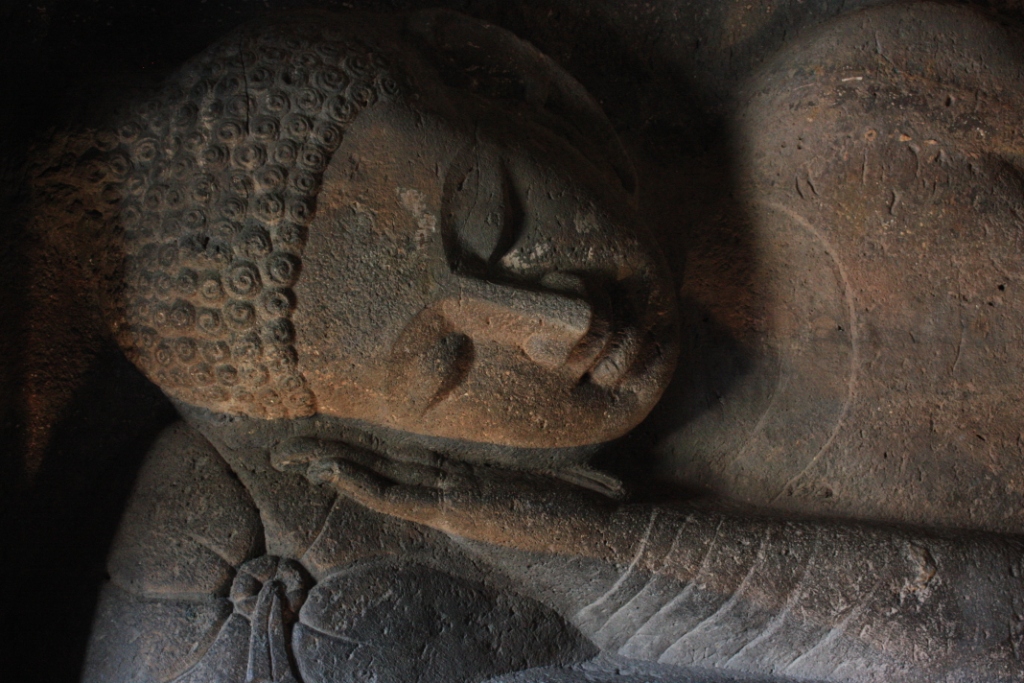
Cave 26 also houses the carving of the reclining Buddha that I’m presently using for my header image.

IMG_0605

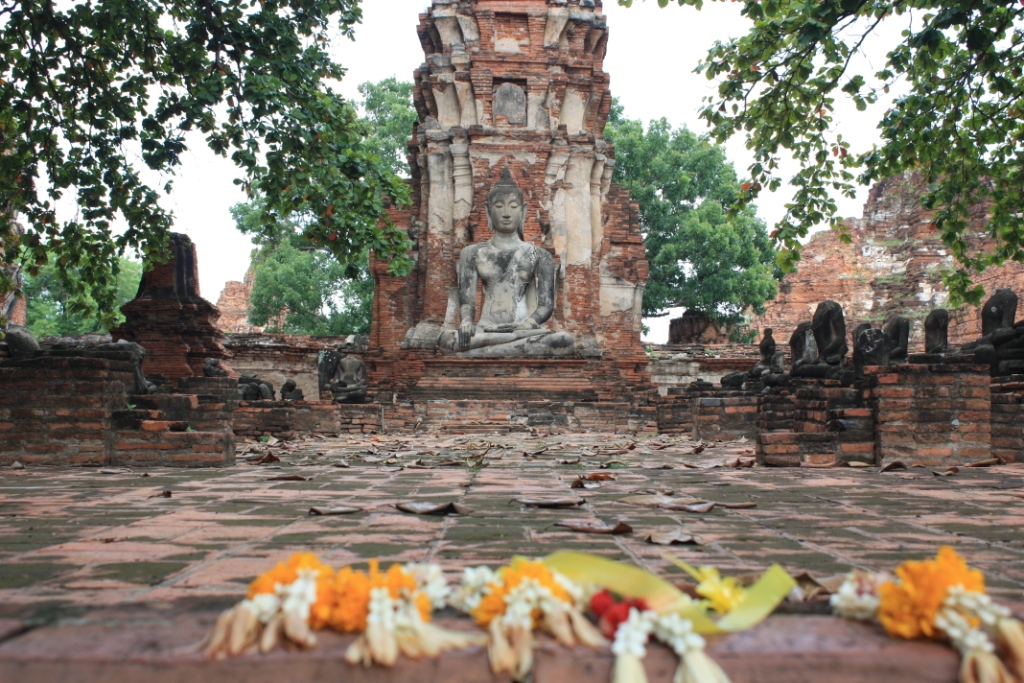
DAILY PHOTO: Garlands for Buddha

Taken in August of 2014 at Wat Mahathat in Ayutthaya

Taken in August of 2014 at Wat Mahathat in Ayutthaya

Taken near the famous head that is enveloped by a Strangler Fig on the grounds of Wat Mahathat temple. You may know this temple as one of the sites at with Jean Claude Van Damme’s Kickboxer movie was filmed, presented as a fictional location called Stone City.

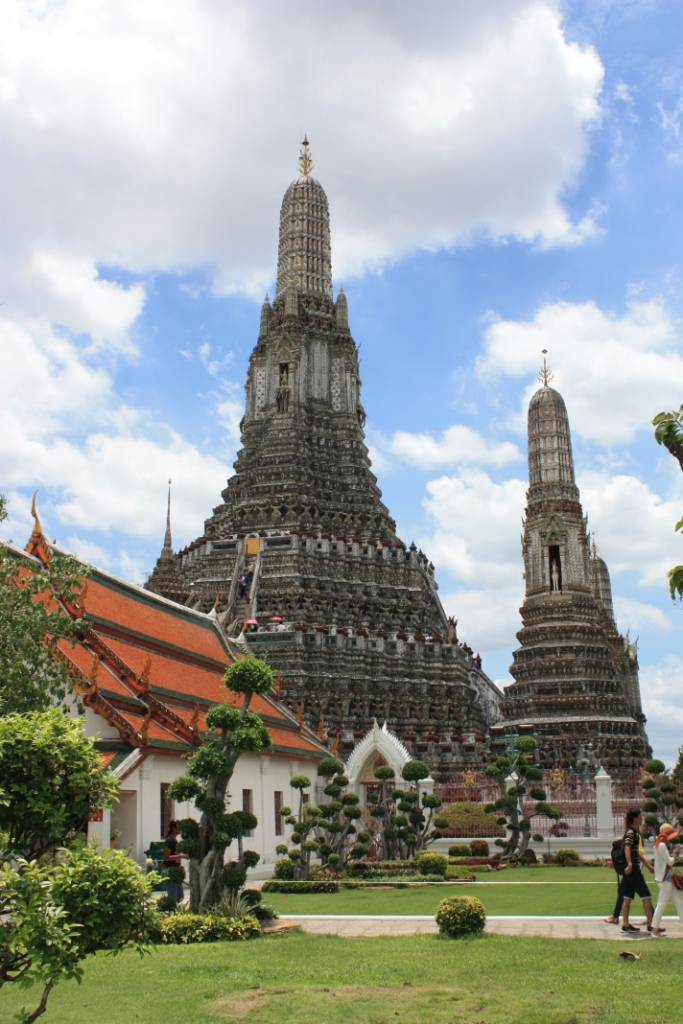
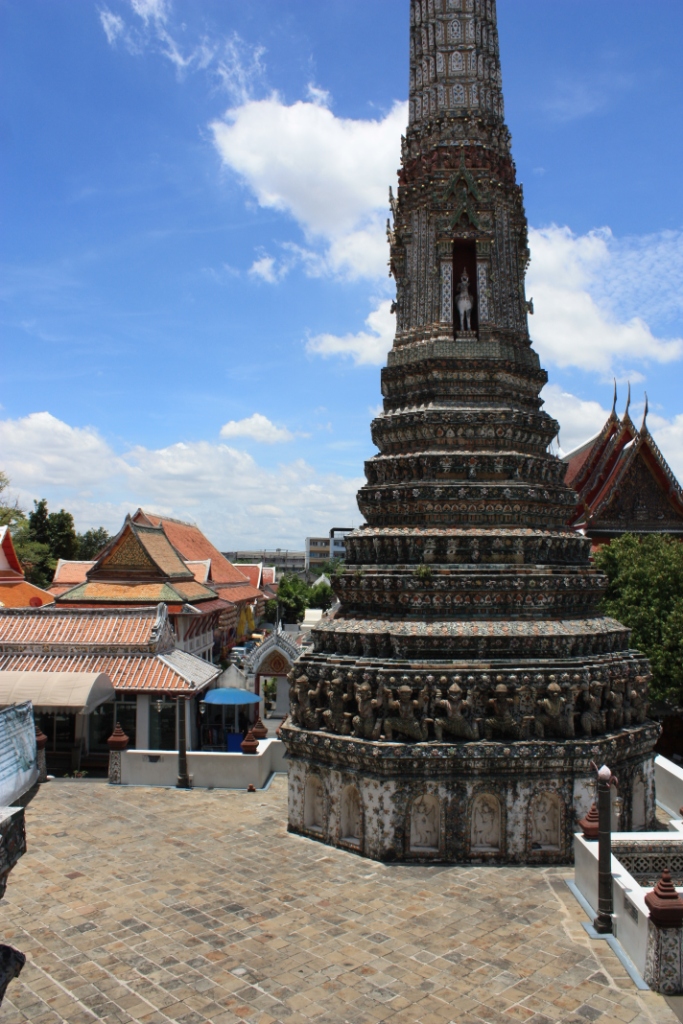
DAILY PHOTO: Wat Arun

Taken in September of 2014 in Bangkok

Taken in September of 2014 in Bangkok

DAILY PHOTO: Looking Over Buddha’s Shoulder

Taken in September of 2014 in Ayutthaya at Wat Yai Chaya Mongol

Taken in September of 2014 in Ayutthaya at Wat Yai Chaya Mongkol

DAILY PHOTO: Wat Arun

Taken in September of 2014 at Wat Arun in Bangkok.

Taken in September of 2014 at Wat Arun in Bangkok.