Taken in October of 2013 in Delhi (i.e. Jama Masjid minaret)


Taken in October of 2013 in Delhi (i.e. Jama Masjid minaret)

lost city
buried in
time
by
jungle
someday
your metropolis
will be
crumbled
&
overgrown
but we’ve
forgotten
how to
forget
all that is known
is locked away
&
shot into space
a call
to the heavens
but forgetting
is a laudable skill
&
therapeutic, too
sniffing mouse
waggles its sniffing nose
turns & retreats
cheep-cheep
baby bird calling
no answer
steaming coffee
lazy tendrils
curl idly
overcast
Prague skies above
faux winter

Taken in November of 2013 in Belur
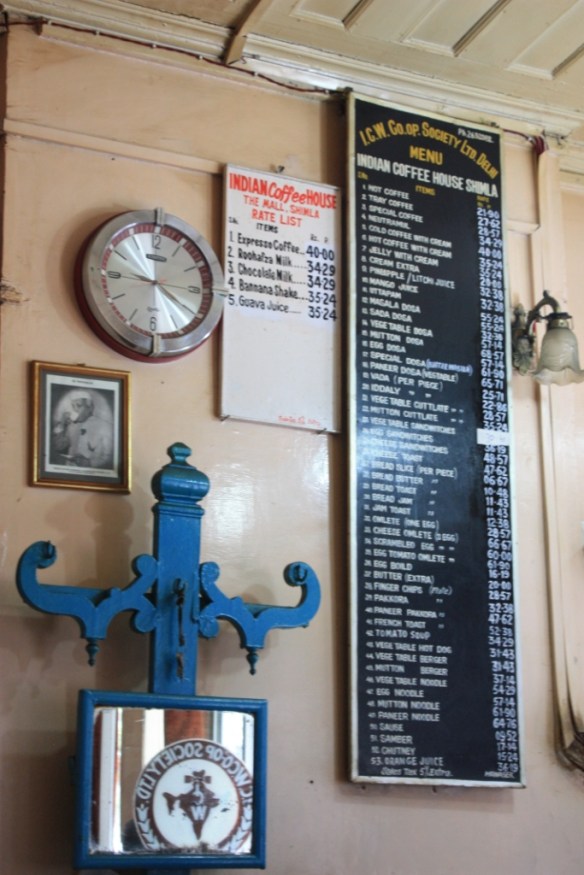
Taken in June of 2015 in Shimla

Taken in October of 2016 in the Buddha Tooth Relic Temple of Singapore
 A Midsummer Night’s Dream by William Shakespeare
My rating: 5 of 5 stars
Get Speechify to make any book an audiobook
The backdrop for this story involves two young men (Lysander and Demetrius) and two young women (Hermia and Helena.) Both men have the hots for Hermia, which leaves poor Helena unloved though she loves Demetrius. Hermia loves Lysander, which means Demetrius is unloved by the one he loves and has no love for the girl pursuing him. Enter the village elders—notably Hermia’s dad, Egeus, and the Duke of Athens, Theseus—who really muck up the works by insisting that Hermia marry Demetrius (whose family apparently has more cash than does Lysander’s.) This causes Lysander and Hermia to elope into the forest, where things really get freaky. Helena, courting Demetrius’s favor, tells him where the eloping couple went, and Demetrius gives chase while Helena chases Demetrius.
In the woods outside Athens, there lived ferries. Oberon, king of the fairies, has in his possession a Cupid-like potion that will make its victim fall madly in love with the next person he or she sees. Oberon orders this potion deployed in two ways pertinent to the story. Seeing Demetrius quarreling with Helena, he orders his subject, Puck, to deploy it on Demetrius. In a fashion typical of a Shakespearean comedy, the potion is misapplied.
The other use of the potion (a subplot of the story) is on the faerie queen, Titania. Oberon is upset with Titania over an Indian boy of whom they’ve come into parentage. Titania falls for a workman who is in the woods rehearsing a play that may be the worst play ever. Most disconcertingly, she falls in love with this man, called Bottom, as he’s wearing a donkey head for his role in the play. As this is a comedy, the two unholy loves that developed are eventually rectified, but not before some amusing happenings.
At its most basic level, the play is a commentary on the folly of mucking about in love–whether as matchmaking elder or a Cupid-like faerie. On another level, it’s a critique of an unrealistic pursuit of a perfect vision of love. In this way, the message isn’t unlike Shakespeare’s Sonnet 130 (i.e. “My mistress’ eyes are nothing like the sun.”) This is seen in Demetrius’s ultimate recognition that he’s being an idiot by chasing after Hermia, when Helena is so clearly devoted to him. In other words, in love as in life the notion famously attributed to Voltaire that “The perfect is the enemy of the good” applies. As an aside, we also learn what Shakespeare sees as some of the mistakes of playwrights and theater companies as the assembled crowd watches Bottom and his comrades put on a hideous production.
I’d highly recommend reading this work for everyone. It’s Shakespeare; needless to say, the language is beautiful and the story is intriguing.
 The Sounds of Poetry: A Brief Guide by Robert Pinsky
My rating: 4 of 5 stars
As the title suggests, this is a book about sound as a component of poetry. Besides the characteristics of noises made in reading poetry, the book details the various characteristics that shape the overall sound of a poem–such as the duration of a syllable and whether it’s stressed or unstressed. Having said that, a major theme of Pinsky’s work is that one shouldn’t be absolutist or rigid about these characteristics (e.g. stress versus unstressed) and should instead look at the relative traits (i.e. more or less stressed.) By adopting a more flexible view of the concepts like accent (stress), rhyme, similarity of sound, one opens up limitless options for poetry.
The book consists of five chapters. The front matter includes an introduction and a brief commentary on theory. The latter points out that there are no hard rules, but by paying attention to these concepts one can produce richer and more interesting sounding poems. Pinsky reviews the most common poetic terms (e.g. iamb, trochee, spondee, etc.) but also looks at how these are varied for effect in a way that is enjoyable to all but prosody hardliners.
The chapters are: 1.) Accent and duration; 2.) Syntax and line; 3.) Technical terms and vocal realities; 4.) Like and unlike sounds; 5) Blank verse and Free verse. (fyi: Blank verse is unrhymed verse that has a regular meter (most commonly iambic pentameter. Free verse is unrhymed verse with irregular meter.)
There are relatively few poems used as examples in this book. Some readers may find this a bit tedious and would prefer being exposed to more (and more varied) examples. However, other readers will enjoy drilling down into a few poems along several dimensions. That’s a matter of personal preference, but the reader should be aware of it.
The book is less than 150 pages even with the back matter, which includes recommended readings and glossary of names and terms. It’s a quick read.
I enjoyed this book. It’s not too technical, and can be followed by a reader whether they’ve had an extensive education into poetry or not. It’s not doctrinaire about prosody, which appeals to my personal preferences. It provoked some intriguing insights, such as the flexible approach to accent as well as poetry as an art that uses the body of reader as its medium—their respiratory systems, vocal chords, and related musculature how these sounds are produced.
I’d recommend the book for poets and readers of poetry who are serious about the endeavor.