
Unknown's avatar

About B Gourley

Bernie Gourley is a writer living in Bangalore, India. His poetry collection, Poems of the Introverted Yogi is now available on Amazon. He teaches yoga, with a specialization in pranayama, and holds a RYT500 certification. For most of his adult life, he practiced martial arts, including: Kobudo, Muay Thai, Kalaripayattu, and Taiji. He is a world traveler, having visited more than 40 countries around the globe.

BOOK REVIEW: Faust [Part I] by Johann Wolfgang von Goethe

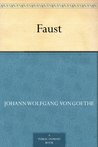
FaustFaust by Johann Wolfgang von Goethe
My rating: 5 of 5 stars

Amazon page


This review will cover the first part of the play in verse by Johann Wolfgang von Goethe. I start with that statement because there is some potential for confusion, because: 1.) there are many tellings of the Germanic legend loosely-based on Johann Georg Faust; 2.) there are two parts to Goethe’s play and some editions include both and others just one; 3.) Goethe’s play was apparently not written with the intention that it would be in two parts and so the proper title of this isn’t “Faust, Part I” but rather that became a common title, retroactively and after the author’s death. I’ve done my best to link to the same edition as I read (which seems to be sometimes erroneously listed as containing both parts one and two – when it is really just the first.) Part I is said to be more closely based on the myth than is the second.

The gist of the story is so well-known that it will be recognized even by those who’ve not read this play (or works like Marlowe’s “Doctor Faustus” [written well before Goethe’s play(s).]) The successful but bored Doctor Faust makes a deal with the devil in which Mephistopheles gets Faust’s soul if Faust can ever be made to feel truly satisfied. Goethe’s “Faust” opens with a wager between God and the Devil. The Devil believes he can corrupt God’s favorite (i.e. Dr. Faust) and turn him from a righteous path. Faust’s deal leads to a series of adventures that culminate in an ill-fated love relationship with a woman named Gretchen (a.k.a. Margarete.)

The story and its theme are straightforward. The idea is that there is a ceaseless yearning – be it for pleasure or understanding or whatnot – that is insatiable, and that giving into a desire to quench that yearning can lead even the best of humanity into tragedy.

The play is delivered in rhymed verse, and the translation by Bayard Taylor makes for pleasant reading.

I’d recommend this book for readers of classic literature. It’s an old tale, and is well conveyed in this translation of the play.

View all my reviews

BOOK REVIEW: Shakespeare: A Very Short Introduction by Germaine Greer

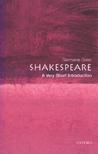
Shakespeare: A Very Short IntroductionShakespeare: A Very Short Introduction by Germaine Greer
My rating: 4 of 5 stars

Amazon page


This series (Very Short Introductions [VSI]) put out Oxford University Press [OUP] features several books about William Shakespeare and his works. Most of these “Introductions” deal with a subset of Shakespeare’s work, (e.g. the tragedies, the comedies, or his sonnets and other poems.) However, the book most likely to be confused with the one under review is “William Shakespeare: A Very Short Introduction” by Stanley Wells. Greer’s theme involves how Shakespeare’s philosophy and worldview are reflected in his plays (and to a small extent, his poetry.) While I haven’t yet read Wells’ book, it seems to take a history-centric approach, examining who Shakespeare was and the interaction between the the man and the times in which he lived on the work he produced.

The reason that I open with this distinction is that this is the kind of book that leaves some readers feeling duped. The title and inclusion in the VSI series might suggest to a reader that they are getting a basic overview of the the works of Shakespeare, leaving them surprised to find they are diving into arcane philosophical discussions. If the reader has a background and interest in both philosophy and the literature of Shakespeare, this may be just the book for which one is looking. However, if one is truly looking to be introduced to Shakespeare and his work, it is unlikely to be the book one is seeking. The biggest criticism is therefore about the title and placement of the book in this series, and not about it’s content, which is interesting and insightful.

The six chapters of Greer’s book begin with a brief biographical sketch of the man’s life and times. (This is where Greer’s work presumable overlaps most significantly with that of Wells.) The five remaining chapters each consider an aspect of the Shakespeare’s thinking and philosophy: poetics, ethics, politics, teleology, and sociology, respectively. There are extensive discussions of a few of the Shakespearean works as they pertain to the discipline under discussion, and snippets of text are used throughout to make points, but – again – the presumption is that that the reader has a basic familiarity with Shakespeare’s work.

There are graphics throughout the book, mostly portraits, playbills, and block prints from the era. There is a Further Reading section that is more than the usual bibliographical list, including descriptions of what is covered by the various books. Some will find this approach beneficial, and others may find it needlessly dense.

If one is looking for a book that considers how Shakespeare’s personal philosophy influenced his works, this is a good overview. However, if one hasn’t read Shakespeare’s works, or one has little understanding of philosophy, it’s probably not the book for which one is looking.

View all my reviews

POEM: Overwritten

the jungle writes over the acts of man
without rage or animus
but with infinite patience

growing one vine at a time
a cracked brick will be clay again in due time

grand palaces will become strange mounds
only the crease of a cornerstone,
hidden in the shadows,
to betray the grandiosity beneath

not even Alexander the Great escaped being overwritten

DAILY PHOTO: Wat Phra Si Sanphet, Ayutthaya

Taken in October of 2012 in Ayutthaya

DAILY PHOTO: Parroquia de San Bernardino de Siena

Taken in the summer of 2009

POEM: Pelican on a Piling

wings flare,

a nanosecond of hover,

and a deft drop onto the column —

the piling of a pier of years long past?

it waits with chin tucked to chest,

perhaps, to look down for fish,

or, perhaps, so that the fish in the water

can’t see the fish flapping in its pouch

or is that only in the cartoons?

long before I’d seen a pelican in person

they’d been popular on the cartoon shows

mind you, not as popular as the storks —

unitaskers who delivered animated babies

precariously — I might add — in loose linen bundles,

clenched into their pointy needle-beaks.

And I can’t remember how the storks landed

without impaling the baby with its pointy beak

or bouncing baby’s head off the ground.

Maybe, that’s why there are so many mentally defective cartoon characters:

e.g. Goofy, Ralph Wiggum, Patrick Star, Chris Griffin…

Not to mention the emotionally ill-adjusted ones:

e.g. Yosemite Sam, Eyore, Pepe LePew, Ariel,…

Because it’s all about sticking the landing.

DAILY PHOTO: Two Views of Tulum

Taken in the summer of 2009 at Tulum, Mexico

DAILY PHOTO: Iguana, Isla Contoy

Taken in the Summer of 2009 on Isla Contoy, Mexico


DAILY PHOTO: Yucatan Canopy from the Ek’ Balam Acropolis

Taken in the summer of 2009 atop the Ek’ Balam Acropolis

Haiku of Japan Travel


so much blood
soaked into this soil once
now daffodils


stone statue
goddess of compassion
looks through me


the bonsai
grotesque beauty
your secret?


Hachikou,
patience and passion —
a rare duo


wooden gate
too grand for such as me
where go I?