Unknown's avatar

About B Gourley

Bernie Gourley is a writer living in Bangalore, India. His poetry collection, Poems of the Introverted Yogi is now available on Amazon. He teaches yoga, with a specialization in pranayama, and holds a RYT500 certification. For most of his adult life, he practiced martial arts, including: Kobudo, Muay Thai, Kalaripayattu, and Taiji. He is a world traveler, having visited more than 40 countries around the globe.

BOOK REVIEW: Legends of the Martial Arts Masters by Susan Lynn Peterson

Legends of the Martial Arts MastersLegends of the Martial Arts Masters by Susan Lynn Peterson
My rating: 4 of 5 stars

Amazon page

This book consists of 21 short stories from the lives of martial arts masters: some modern, some historical, and some anonymous folktales with unknown origins. The majority of the stories are about Japanese or Okinawan martial artists, but Chinese, Thai, American, and Koreans are also represented.

These stories can be roughly grouped by theme (though they aren’t organized in that way in the book and some stories cut across more than one of the themes.) The first theme is peacefulness, non-violence, or minimization of violence. This idea is central to the stories featuring Tsukahara Bokuden and his school of “no sword,” Yasutsune Itosu who invites an attacker for tea, Hisamori Takenouchi who is taught the folly of war by an old man, and Gichin Funokoshi who gives robbers cake.

The second theme is the power of an immovable mindset. This can be seen in the story of the sumo wrestler Onami who had to overcome a stint of choking, the parable of the tea master who is challenged to a duel and is advised by a swordsmanship teacher to take up the sword with the mindset with which he takes up his tea utensils, and the tale of the unbreakable prisoner Gogen Yamaguchi. There are also stories about the ability to win by preventing the opponent from achieving this mindset. This was most famously achieved by Miyamoto Musashi (on several occasions,) but it’s also seen in the story about an archer who is unable to make a shot from a perilous position even though the shot wouldn’t be a hard one for him from stable ground.

The third theme is the importance of the student/teacher relationship and the value of a teacher’s wisdom. This can be seen in the stories about American Karate founder Robert Trias and his experience with the master who wanted to trade him Hsing-I lessons for his own boxing lessons, about Morihei Ueshiba’s demystification of mysteries that perplexed his students, and about Chatan Yara’s reversal of a would-be student’s tactic.

The final story theme deals with the virtue of being diligent in one’s training. These include the amazing feats of the likes of Sokon Matsumura (an Okinawan fighter who fought a bull), Nai Khanom Tom (a Muay Thai legend who defeated twelve of Burma’s best fighters in rapid succession), and Mas Oyama who sentenced himself to training exile for what most would consider a minute infraction. There are other tales in this category such as how Duk Ki Song and other Korean students practiced secretly under a martial arts prohibition or how Yim Wing Chun got out of an arranged marriage to a cad through her diligent training.

This is a short book (about 120 pages) and most stories are only 4 to 6 pages. If you are a long-time practitioner of martial arts, you’ll probably have heard some of these stories, but you’re also likely to come across something new. There are obscure tales intertwined with one so popular it’s been made into multiple movies (e.g. Mu-lan.)

It should be noted that this is more of a collection of morality tales than historical accounts. One shouldn’t take these stories as established history as opposed to mythology or folktales. To her credit, Peterson leaves tales like the parable of the tea master and the tale of the three sons anonymous. Famous martial artists, like Miyamoto Musashi, are often cast into these stories either because people read a fictional account that borrowed from folktales, to lend more power to the story, or because the facts have become muddled in retelling. However, for example, the chapter on the Bodhidharma is most likely wrong. (The consensus view among historians is that Bodhidharma didn’t introduce martial arts to the Shaolin temple as is popularly thought, and that the popular myth is the result of revisionist history.) That doesn’t mean the story doesn’t have virtue—it’s got great hang time for some reason.

I’d recommend this book for martial artists who are interested in the philosophy and ethos of the martial arts. It’s a quick and easy read.

View all my reviews

DAILY PHOTO: The Blue City

Taken on November 29, 2015 from Mehrangarh Fort

Taken on November 29, 2015 from Mehrangarh Fort

IMG_2657


Jodhpur is called “the blue city” for reasons that should be apparent from the photos above. Historically, this blue was associated with the households of Brahmin. Brahmin were the priestly caste, the highest of the four castes. Of course, the caste system was outlawed decades ago (not that its long tail doesn’t remain), and so now many of these blue houses are occupied by households that aren’t Brahmin.

DAILY PHOTO: Pushkar Ghat-side

Taken on November 28, 2015 in Pushkar

Taken on November 28, 2015 in Pushkar

DAILY PHOTO: Amber Fort from Elephant Back

Taken on November 27, 2015 at Jaipur

Taken on November 27, 2015 at Jaipur


Just back from Rajasthan with tons of photos from Jaipur, Jodhpur, and Pushkar.

BOOK REVIEW: When Buddhists Attack by Jeffery K. Mann

When Buddhists Attack: The Curious Relationship Between Zen and the Martial ArtsWhen Buddhists Attack: The Curious Relationship Between Zen and the Martial Arts by Jeffrey K. Mann
My rating: 4 of 5 stars

Amazon page

Mann’s book considers one of Asian history’s intriguing little questions: How is it that one of the most pacifistic of world religions, i.e. Buddhism, came to be integrally connected to some of the world’s most fearsome and devastatingly effective warriors? Specifically, the author looks at the connection of Zen Buddhism to warrior traditions like the samurai of Japan and—to a lesser extent—the Shaolin monks of China. It should be noted that while Zen was one of the most firmly established intersects of Buddhism and martial arts; it’s not the only one. Branches of Vajrayana (esoteric) Buddhism had their own warrior-monk traditions—which he mentions as well as Shugendō’s (combines Buddhist, Shinto, and Taoist elements) warrior connection. The book is heavily weighted toward the Japanese martial arts. This may be in part owing to the author’s particular background, but also because many of the works that establish this firm connection between Zen and martial arts are Japanese (e.g. works by Takuan Sōhō, Yagyū Munenori, and even Miyamoto Musashi.)

It’s worth noting that both Buddhists and modern martial artists have tried to downplay or outright deny the connection between these traditions. However, Mann suggests the connection is undeniable in the face of historical evidence, and that it even has a logic that belies the apparent contradiction. (Note: Presumably many Buddhists deny this connection because they want to distance themselves from the taint of violence, and many modern martial artists deny it so their religious students won’t ditch the art because it isn’t 100% secular [or based entirely in the student’s religious belief structure.])

The book consists of eight chapters as well as front matter and an Epilogue that explores the question of whether the Zen of samurai lore is truly Zen Buddhism. The first couple chapters give the reader an introduction to Buddhism and, specifically Zen. There are then chapters that show the linkage between Zen and the martial arts of East Asia. The book then considers the nature of the advantages offered by Zen to martial artists that made it so appealing to warriors like the samurai. It also considers the interpretation of violence that allows for the dichotomy under discussion, and explores the degree to which the connection between Zen Buddhism and martial arts is relevant in the modern era. The book is a mix of history, religious studies, philosophy, and the art and science of fighting systems. So if one’s interests are eclectic, there’s a lot to take away from this book. If you have narrow interests, you’ll want to make sure they include the aforementioned central question (i.e. Why pacifistic Buddhism has helped produce some of the world’s greatest fighting systems.)

The book is well-researched and documented. There are many interesting and informative stories throughout the book. For example, I’d never read about the 19th century jujutsu murders until this book. This is a fascinating case in which several experienced students of one particular school of jujutsu were found dead with the exact same wound. While the murderer wasn’t captured, investigators quickly discerned his (or her) method. That is, the killer knew the trained responses of this school and made a feint to draw a certain defense and then exploited a vulnerability the response presented. How is this story relevant? It speaks to the perceived advantages of Zen, which emphasizes avoiding habituation and residing in the moment.

I’d recommend this book for martial artists who are interested in the history and cultural context of their arts [and of the martial arts in general.] There’s a class of martial arts student who may want to avoid the book. If you’re a devout adherent of a Western religion who practices a traditional style of East Asian martial art and think that there isn’t an imprint of the local religion on that art, your delusions may be shattered by this book. Buddhists may find the discussion of the less absolutist interpretation of ahimsa (non-violence) to be illuminating (or—for all I know—infuriating.) It’s a short book, coming in at around 200 pages, but is end-noted and referenced in the manner of a scholarly work. It has a glossary and bibliography, but no graphics.

View all my reviews

DAILY PHOTO: Coracle in the Distance

Taken in November of 2013 at Hampi

Taken in November of 2013 at Hampi

BOOK REVIEW: A Million Shades of Gray by Cynthia Kadohata

A Million Shades of GrayA Million Shades of Gray by Cynthia Kadohata
My rating: 4 of 5 stars

Amazon page

This young adult (YA) novel is set in the Central Highlands of Vietnam during the last few years of the war. The lead character, Y’tin, is an adolescent whose life ambition is to be an elephant handler, a dream which he’s well on the way to achieving and which he’d be a shoo-in for if he didn’t live in war-torn times. His life is complicated by the fact that his father has worked for the American Special Forces (as a tracker), and the war is turning in the favor of the North.

When US forces withdraw and South Vietnamese forces are overrun, Y’tin escapes into the jungle with a couple of other boys and their elephants. Almost immediately a fault line freezes out Y’tin. The three boys had been close friends in the village, but under the stress of jungle life, the other two resent that Y’tin’s father worked for US Special Forces and that Y’tin, himself, had once gone on mission with the Americans. They believe that this is what has brought the war to their village. On the other hand, they recognize that Y’tin is more gifted in jungle craft than they, especially tracking, because of the education of his father.

Because of these skills, Y’tin is chosen to go back on a mission to reconnoiter their village, and he finds it’s been bombed out and nobody is to be seen. This leaves it unclear how many of the villagers escaped versus being executed by the North Vietnamese forces—but he does know many were killed. [Incidentally, the title comes from Y’tin’s view of the jungle after seeing the remnants of his village—i.e. instead of being a million shades of green, all he can see is gray.]

Besides telling the story of Y’tin’s adventures in surviving the war, the novel pivots on Y’tin’s role as a mahout—and ultimately as a protector of the elephants. Y’tin finds himself in a position in which his dream is no longer tenable, and he must decide whether take a heroic risk to save the elephants or hold on to his dream in the face of unfavorable odds.

The book is only a little over 200 pages arranged into 14 chapters, and—as would be expected of YA fiction—is readable. The book’s strength is in building a lead character who’s interesting by virtue of his mix of worldly naiveté and jungle [local] wisdom and giving him intense challenges and dilemmas. Weakness? The strict chronological progression results in a slow start in which the author spends a chapter establishing that the lead character loves elephants without anything interesting happening. However, if one gives the book til the second chapter, things start happening.

I’d recommend this book for readers of fiction, and particularly those interested in YA fiction and stories of war.

View all my reviews

DAILY PHOTO: Firewalker

Taken in May of 2015 in Kandy

Taken in May of 2015 in Kandy

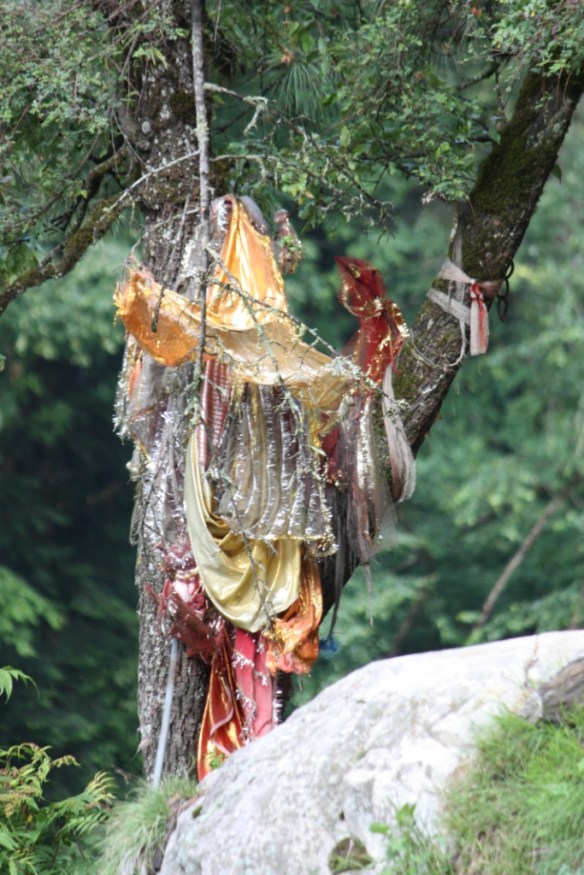
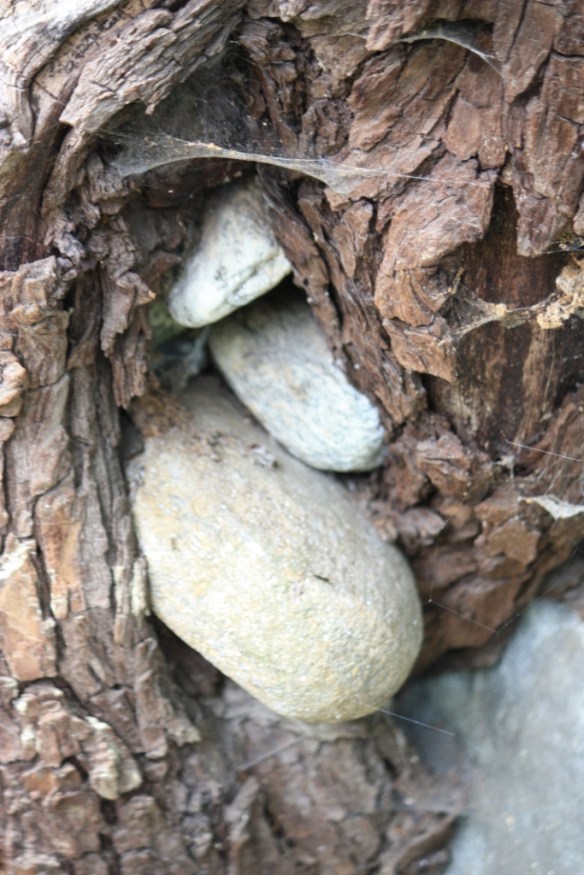
DAILY PHOTO: Mountain Shrines

Taken in July of 2015 in Great Himalayan National Park

Taken in July of 2015 in Great Himalayan National Park

IMG_2097 IMG_1176 IMG_1405 IMG_2076

DAILY PHOTO: Bombay Vada Pav Stands

Taken in November of 2015 in Mumbai

Taken in November of 2015 in Mumbai


This row of street food stalls is located across the street from Flora Fountain in Mumbai. They don’t all sell Vada Pav, but the most popular one does. (Alternative spellings: wada pav, vada paav, or vada pao)

FYI: Vada Pav is a delicious deep-fried, spiced potato ball served as a sandwich on a fluffy dinner roll style bun. It’s a Maharashtra specialty. There’s a video below if you’d like to see how they’re made or to make your own.