


 A Short History of Tractors in Ukrainian by Marina Lewycka
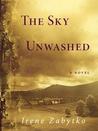 The Sky Unwashed by Irene Zabytko
My rating: 4 of 5 stars
The Sky Unwashed is a character-driven novel, telling the story of an elderly pensioner residing a few miles from the ill-fated Chernobyl nuclear plant. The protagonist’s name is Marusia, and she lives with her beaten-down son Yurko, his cheating wife Zosia, and the dysfunctional couple’s children (her grandchildren.)
The first part of the novel is a bit of a slog, though the character portraits of the adult family members may be enough to keep one intrigued if one enjoys being pulled into a dysfunctional Ukrainian village household. (The first part is a bit like “Jerry Springer—Ukraine Edition.”) Zosia’s unfaithfulness provides the main source of tension, but that tension is a quiet one between Marusia and Zosia. Yurko knows about his wife’s infidelity, but doesn’t seem to care–or doesn’t seem to be able to muster the energy to make the appearance of caring. Marusia, on the other hand, is the doting mother who feels that her doofus son could do better, but she bites her lip as she doesn’t feel it’s her place.
It’s the Chernobyl meltdown that kicks the novel into interesting territory. One is shown how tragedy can bring out the best and worst in people. Both Yurko and Zosia have jobs at the plant, but it’s Yurko who’s working when the incident occurs, and it’s he who gets a dose of radiation that will prove lingeringly fatal. Interestingly, the reader isn’t taken into the plant often. We don’t see Yurko fighting the fires, but rather we see the family in the village Starylis. We experience the family first noticing Yurko’s failure to return and then becoming increasingly concerned. We see the family noticing the subtle signs of something gone awry—like air that tastes of pennies.
Starylis’s occupants—including Marusia’s family–are eventually evacuated to Kiev. It’s here that we see how events press the once hostile family together before ultimately tearing them apart. The Zosia we found unpalatable in the first part is now seen in more sympathetic terms. We see her at her best and her worst, and we see that in sum she is a survivor. Her behavior, good and bad, is committed saving the remainder of her family—which is her children.
The truly visceral part of the novel is reached when Marusia opts to move back to Starylis, despite the fact that it’s abandoned. At first, the elderly woman is completely alone. It’s the eerie loneliness of an abandoned place that one once knew as a thriving community. Even the livestock Marusia left behind is long gone. Her daily ritual includes ringing the church bells to let any other stragglers know they aren’t alone. Eventually, she befriends a cat gone feral, and shortly thereafter others begin to trickle back to the village—virtually all of them women.
In retrospect it seems the author might not have been comfortable writing male characters. The only male character of note is Yurko, and he’s by far the most flat of the major characters—that’s probably on purpose and it feels true enough. The only other male character we get to know in any detail is quickly killed off. Given all the male-dominated works of literature, this isn’t necessarily a complaint or a problem—just an observation.
I’d recommend this book for the patient. If you need a hard and fast hook to keep you engaged, you’ll have trouble with this book. However, once one gets into the parts set in Kiev and the abandoned Starylis, you’ll find the book intensely engaging.




 Tiger Riding for Beginners