5 Thoughts on the Conscious Mind in Martial Arts Training

In recent years I’ve spent a lot of time trying to quiet the conscious mind in order to let the subconscious do what it does best. There’s a lot of terminology that’s used to describe the mind state in which one’s actions are effortless and one can adjust swiftly to unforeseen challenges: e.g. “in the zone,” the Flow, Zen mindset, and (in the Kotler and Wheal book I just reviewed) ecstasis. However, regardless of the name, one key to this state is a reduced activity of the part of the mind that’s self-critical and overly cautious, and that requires not letting the conscious mind do what it’s prone to do.


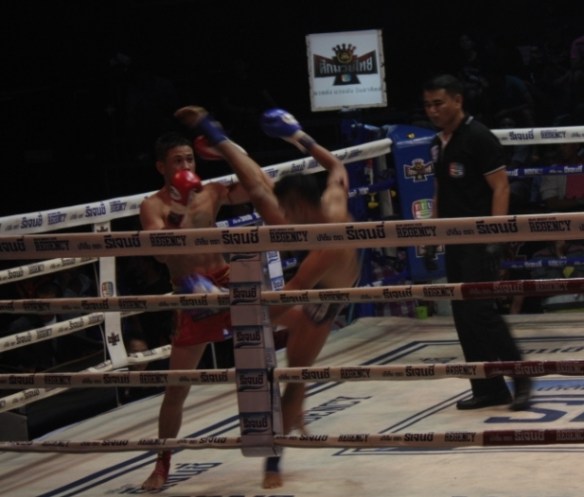
However, taking a course on mauythai advanced fundamentals recently has reminded me of the important roles the conscious mind plays in learning. The challenge is to use the conscious mind effectively–without letting it running amok.


The conscious mind is largely driven by anxiety about uncertainty. This makes the conscious mind a planner and worst-case scenario generator extraordinaire. (In meditation, I’ve begun to not only note what thought popped into my head before I dismiss said distraction, but I also have a classification scheme of kinds of thoughts, and “planning thoughts” are probably the most common type of thought to hijack my mind.) This planning / forecasting  proclivity can be beneficial if one is doing a job that requires such planning, anticipation of possible hazards, and the need to adjust to complex difficulties. However, it can also make one neurotic, overly risk-averse, and pessimistic.


So, here are my five thoughts on the conscious mind in martial arts training.


5.) Feed the right wolf:  There’s a well-known story about a Native American man telling his grandchild that inside each person there are two wolves at war, one good and one evil.

The child asks, “Which one wins?”

The old man replies, “The one you feed.”


This is a variation on the theme–not so much about good and evil as about positive and negative outlook. In martial arts training there are often competing emotional states. On one hand, there is often anxiety about either being injured or even about the embarrassment of being bested. (Surprisingly, it seems like the magnitude of the latter is often greater than the former.) On the other hand, there is an intense thrill that comes with making progress. For those who don’t understand how martial artists can put themselves through what they do, this is the part for which you’re probably not understanding the intensity of the high. When it clicks and you’re getting it right more often than you previously did, the feeling is transcendent.


So, when one sees either of these two feelings arising, choose the latter. If one notices the anxiety, remind oneself the promise of that awesome feeling of having it fall together.


4.) Scanning for lapses in form: The process of learning a martial art–like any movement art–is repetition of the movements until they become ingrained in one’s procedural memory. Early in the process, this feels clunky as one has to scan for imperfections in form with one’s super-intelligent but slow and cumbersome conscious mind. However, increasingly, the body begins to incorporate these movement patterns and they start to become second nature. The trick is to keep this in the moment and not let one’s thoughts linger on what one just got wrong, or any perceived ramifications of getting it wrong.


3.) Try visualization: This once would have been thought hippie guff, but now it’s entered the mainstream. Of course, the advice from #5 must be kept in mind. When I think of the technique of visualization, I’m reminded of a story that Dan Millman told about a girl that he was coaching in gymnastics. He came to check on her only to find her repeatedly cringing and grimacing. He asked what was going on, and she said she kept falling off the balance beam whenever she visualized her routine. It sounds silly, but attitude is a powerful thing, and I lot of people sabotage themselves in ways not much different from this. It’s your mind, you have the power to do the move perfectly every time, if you take the proper mindset.


2.) Conscious mind as governor of action and agent of trust: The subconscious mind can be feral. As one spars, one has to match speeds with one’s opposition so that learning can take place. While sparring looks reminiscent of fighting, the goal of sparring is learning, whereas the goal of fighting is winning (or–as a minimum in actual combat–not being destroyed.)


This is another role for the conscious mind. It can keep reminders to the fore to keep one’s movement appropriate to the occasion. It can inject an awareness that there’s a relationship of trust rather than warring competitiveness between. That one needn’t respond at the same magnitude that one would under attack.


1.) Dropping the Conscious Mind Out of the Equation: While the conscious mind is critical in the learning process, eventually one must do something that feels uncomfortable, which is shifting subconscious operations to the fore and quieting the conscious mind. Overthinking can be death in tests, competitions, not to mention, I’m told, actual combative situations. At some point you’ve got to have some trust in what you’ve trained to do up to that point. It might fail you, but not necessarily as spectacularly as if you let your conscious run amok, getting caught in a death spiral of self-criticism and futile guesswork.


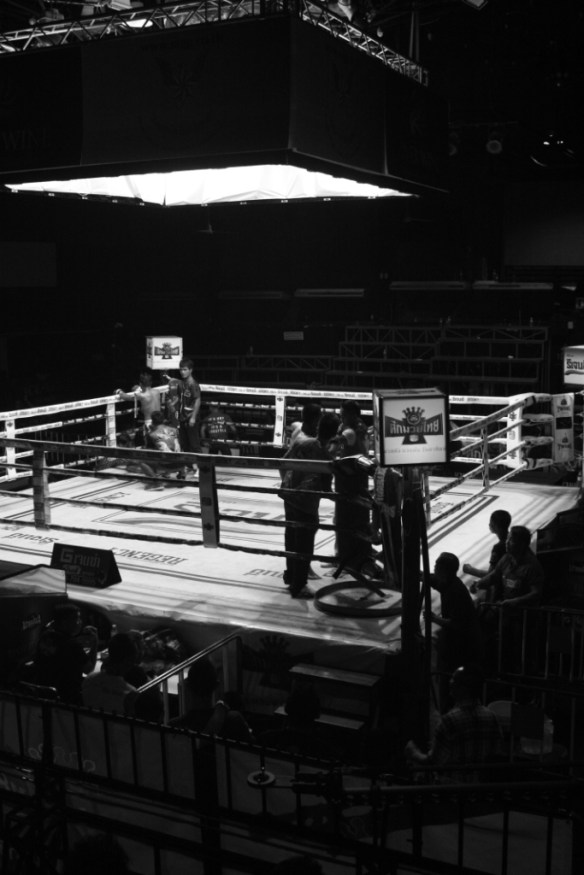
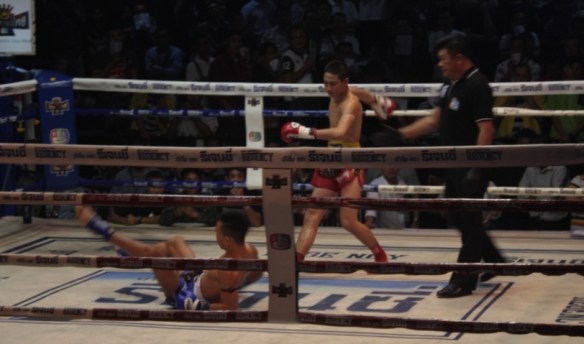
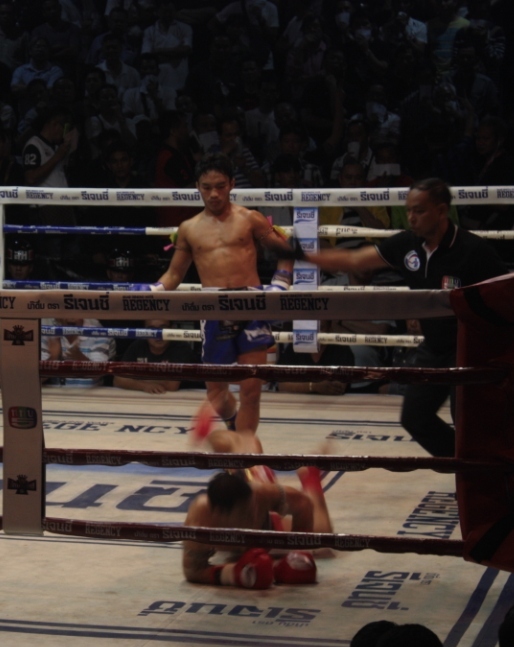
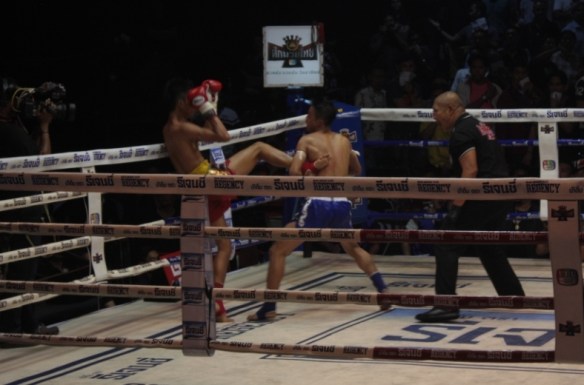
Since I’ve been watching quite a few muaythai fights recently at the Rangsit Boxing Stadium, I’ve begun to wonder just how useful corner advice is. I know that people think it’s beneficial because it’s done in droves. Not only is the fighter’s trainer trying tell them what to do, but also his parents, his siblings, his granny, and a hundred random people who may or may not have put money on him. It would be interesting to see a scientific study of how fighters performed who tuned everything out between rounds versus those who tried to take in all the advice. I tried to look up whether any such study had been done, but a cursor Google search came up empty.


What comes of all the corner talk?

What comes of all the corner talk?

DAILY PHOTO: Rangsit Fight Night Takedowns

Taken on February 19, 2017 at Rangsit Boxing Stadium

Taken on February 19, 2017 at Rangsit Boxing Stadium


img_6515

img_6458

img_6344

img_6338

img_6560

BOOK REVIEW: Judō: Skills and Techniques by Tony Reay

JudoJudo by Reay
My rating: 3 of 5 stars

Amazon page

Tony Reay wrote this book when he was both a 6th degree black belt and Development Officer for the British Judō Association. So his qualifications are beyond a doubt. The book is an overview of the sport of judō that covers techniques, etiquette, rules, warm-up exercises, grading approaches, and other specialty topics. It covers the gamut of issues related to the sport of judō, but without going into much detail. It would be a suitable book for a youngster who is considering whether they might want to get involved. I emphasize that it’s about “sport judō” because there are those who consider judō to be an approach to self-defense and others who think of it as a whole-life philosophy. This isn’t the book for those who want to learn more about judō as anything other than a competitive sport.

The eight chapters of the book cover: history, the grading structure, recreational judo, fitness, techniques, competition, the judō instructor, and judō as an art. However, most of the chapters are cursory. The bulk of the book is devoted to showing 69 of the art’s most fundamental techniques, including: 40 throws, 12 holds, 10 chokes, and 7 arm-locks. For each of these techniques there is a line drawing and a brief description. In a few cases there are black and white photos taken of the technique being performed in competition. This overview of techniques is mostly of value for learning names and accounting for what techniques one has (or hasn’t) learned. There’s not enough detail–either graphically or textually–to help a practitioner improve a technique that they’ve learned. (The latter isn’t a point of criticism, but rather to let people know what they are and aren’t getting in the book.) Still, there are tips scattered throughout the book that might help a practitioner improve their techniques in a general sort of way.

There is a glossary of Japanese terms commonly used in judō.

I found this book to be a fine overview of the sport of judō, and would recommend it for that purpose. While I’ve found other books on the art much more useful for my purposes, I think this is a fine book for someone looking to get into the sport from ground zero. I should point out that the book is from the mid-80’s, and so there will probably be details on rules, scoring, and grading that have changed, but the bulk of it will remain of value.

View all my reviews

BOOK REVIEW: Võ Dân Tộ Martial Arts by Hữu Ngọc & Lady Borton

Vo Dan Toc / Martial Arts (Handbooks of Vietnam Culture)Vo Dan Toc / Martial Arts by Hữu Ngọc
My rating: 3 of 5 stars

Amazon page

This book is part of a series that is subtitled “Vietnamese Culture: Frequently Asked Questions,” and that tells one a little about both the content and the format of the book. It’s better described as pamphlet than a book. At about 75 pages, it’s in bilingual format (i.e. one page is in Vietnamese and the adjacent page is the English translation.) So it’s about 38 pages in English that answer 11 questions about Vietnamese martial arts.

The 11 questions addressed by the book are:
1.) How have martial arts developed throughout Vietnamese history?
2.) How were training and examinations for martial arts organized by the court?
3.) What are the schools of Vietnamese martial arts?
4.) What are the main sects of Vietnamese martial arts in France?
5.) How did Liễu Ðôi become a village with a great wrestling tradition?
6.) Who killed a ferocious tiger in 1770 in Sài Gòn’s Tân Kiểng Market?
7.) How did the famous school of Lady Trà-Tân Khánh martial arts begin and develop?
8.) How did President Hổ Chí Minh keep himself fit?
9.) Who played a key role in the success of Thúy Hiển, the world wushu champion?
10.) What do foreigners think of Vietnamese martial arts?
11.) How did the female master Hổ Hoa Huệ impress the Europeans?

The listed questions tell the reader what the book is about. It starts with some general history from centuries past, and then goes on to discuss specific events. I have no idea to what degree propaganda / myth has seeped into the text—maybe not at all or maybe a lot. I purchased the book in Hue, and am not sure if it’s available outside Vietnam. As one can see from the questions, this book won’t give one much insight into the details of Vietnamese martial arts tactics or philosophy. Instead, one gets a bit of history that some readers will find interesting and others will not. There are black and white photos (about 8) that show static instances of Vietnamese martial arts practice, and there is a glossary.

I picked this book up because I was curious about Vietnam’s martial art history—knowing that it must have had an impressive one. There isn’t much English-language information available about Vietnamese martial arts other than Vovinam. Vovinam is a martial art that allegedly developed in the modern era utilizing pieces of other martial arts and arranged to be ideal for the typical Vietnamese body type. However, what one sees of Vovinam on-line is just a poor-man’s version of that signature move of Black Widow from the MCU movies, so I don’t know whether there is any substance there or if it’s just for show.

Considering that it’s only about $0.67 USD in bookstores in Vietnam, I’d say it’s worth picking up this little book if you want to learn something about Vietnam’s martial history.  [If you buy pay alot for a copy on-line, you’ll probably be disappointed.]

View all my reviews

BOOK REVIEW: Boxing Fitness by Ian Oliver

Boxing Fitness: A Guide to Get Fighting Fit (Fitness Series)Boxing Fitness: A Guide to Get Fighting Fit by Ian Oliver
My rating: 4 of 5 stars

Amazon page

How does one skip rope, work the pads, or avoid nipple rash? If you think that boxing would be a fun way to get fit, this would probably be a useful book for you. Oliver shows a range of fitness practices—many specific to boxing, but others that are used in a number of sports and fitness activities—that will help one improve one’s fitness.

The reader will gain insight into bagwork, padwork, and boxing drills–from beginner to advanced. While the book’s emphasis isn’t on boxing technique, there’s a minimal discussion of the basics of footwork and punching designed to allow a reader to safely begin practice of bagwork and padwork. One also learns about roadwork, the basics of weightlifting as it’s useful for boxers, calisthenics, and other exercise routines that boxers use. It’s a small book and, therefore, doesn’t go into great detail on any particular subject. However, it does offer useful tips in a concise form.

There’s a chapter on equipment, but throughout the book the author gives advice on equipment as it’s relevant to the discussion at hand. The same is true of safety tips. There’s a chapter on injury and illness, but you’ll find insights into how to avoid injuries woven throughout.

I liked the approach of this book. While it shows one the age-old practices of fighters, it also describes more recent developments. In other words, it’s neither crusty and obsolete, nor does it try to re-invent every wheel in order to prove itself cutting edge. I also appreciated the author’s pragmatism—e.g. emphasizing the benefit of a strong core over that of six-pack building and suggesting dietary practices that are sound and simple rather than fads and fables.

Graphics include black and white photographs throughout a few diagrams. Most chapters have photographs, and they are generally sufficient to convey the necessary information without being overwhelming.

While this is a book of the basics, I found it to be a beneficial read and I appreciated the way it was arranged and the way information was conveyed. I’d recommend it for anyone interested in fitness for combative sports or who thinks boxing would be a good way for them to stay motivated to get fitter.

View all my reviews

BOOK REVIEW: Obstacle Race Training by Margaret Schlachter

Obstacle Race Training: How to Beat Any Course, Compete Like a Champion and Change Your LifeObstacle Race Training: How to Beat Any Course, Compete Like a Champion and Change Your Life by Margaret Schlachter
My rating: 4 of 5 stars

Amazon page

If you’re a neophyte to the obstacle racing scene, as I am, this is the book for you. That’s not to say that it wouldn’t be useful for someone with some experience, but if you’re a competitive racer looking to shave time off your runs to boost your standings, I suspect you might want more detail on some topics (e.g. details on various approaches for getting over/under/through/around particular obstacles and more explanations of variations on obstacles.) That said, this book hits the Goldilocks zone for someone who has no idea what they are doing, but would like to give some form of obstacle race a try. (i.e. Not so much information as to be overwhelming, but not so little that you’ll be unprepared to have a good run.)

It’s a short book, less than 200 pages, arranged into 18 chapters that are in turn divided into five sections. The first section introduces one to obstacle course racing. While this sport / social event (there are both competitive and non-competitive participants involved in most races and some events are more about comradery than competition) has been growing wildly in popularity in recent years, there will be many readers who are completely unaware of it. However, by the end of these first three chapters you’ll have a thorough sketch of the scene. The rest of the book goes through what one needs to do long before the race (e.g. picking a race, training [general fitness as well as obstacle-specific], and dieting), immediately before the race (e.g. dressing for the race and eating / hydrating for the race), during the race, and after the race (e.g. recovery, choosing a next race, and moving forward with your participation.)

I found this book to be packed with valuable information (e.g. The mantra DON’T WEAR COTTON ON RACE DAY will be forever etched into your brain.) I found Schlachter’s practical, no-nonsense approach to be a breath of fresh air. For example, with respect to diet, her advice is sparse but invaluable. Basically, it boils down to “eat good food in the portions needed for your body.” It may sound like I’m being dismissive, but I’m not. I appreciate her making sense on the subject and not drawing it out with fad baloney diet (figuratively or literally) quackery. (Pet peeve: I really don’t like hearing about people’s ludicrous ideas about how one can eat a pound of bacon a day, but you’ll die if a slice of wheat bread or a wedge of orange goes in your mouth.)

There are several nice features of this guide that I’ll mention specifically. One is that it has a chapter that shares insights from other high performing obstacle course racers. This gives one some useful and varied advice. Second, it actually shows one how to make a couple of obstacles, e.g. walls and spear targets, that are either common or challenging. Finally, it gives one tips for making this an affordable hobby. (If you’re at the stage of reading this book, you’ll probably have to pay the entry fee out of pocket—no sponsors– and have little to no chance of running well enough to earn winnings.)

If you’re considering running an obstacle race, whether a mud run or an obstacle course race, I’d recommend you give this book a read.

View all my reviews

BOOK REVIEW: Why We Run by Bernd Heinrich

Why We Run: A Natural HistoryWhy We Run: A Natural History by Bernd Heinrich
My rating: 5 of 5 stars

Amazon page

This book is actually several different books woven together. It’s part autobiography of the author’s running life, it’s part a study of comparative biology between various creatures with an endurance bent and humans, it’s part an examination of the evolutionary biology of humanity’s proclivity to run, and it’s part guide to preparing to engage in ultramarathons. Often I pan such books as being unfocused, ill-planned, and—most often—attempts to whip an article’s worth of material into a book length piece. However, Heinrich keeps it interesting enough that I don’t feel it necessary to level these criticisms. Still, my first warning to readers is that one has to read on for quite a while before one gets to the book that one thought one bought—i.e. one that answers the title question of “why WE (i.e. people in general and not the author specifically) run.” In short, you’ll need to have an eclectic set of interests to get through the whole book, but some may find reading only part of it gives them all they wanted from the book.

It should be noted that the book is on its second title. The original title was: “Racing the Antelope: What Animals Can Teach Us about Running and Ourselves.” The author explains in the front matter why the original name was changed (apparently some loud and obnoxious writer had a similarly titled book on a different subject and whined about it.) Changing the title wasn’t required because: a.) titles cannot be copyrighted, and b.) it wasn’t exactly the same title anyway. Still the new, more succinct, title may lead one to expect a succinct book, which this isn’t so much.

Some readers will enjoy Heinrich’s writing style; others will find that it ventures too far into flowery territory on occasion. I did enjoy it. However, I can see how a reader might find some of the descriptive sequences to be excessive–particularly toward the beginning of the book.

While there’s some overlapping and interweaving, one can think of the book in three sections. It’s written in twenty chapters. The first six tell the author’s story of getting into running and his youth. The next eight chapters deal in comparative and evolutionary biology. In general, these chapters look at the biology of other creatures as they pertain to said animals’ ability to engage in running (or activities that are like running in that they involve endurance of muscles and the cardiovascular system.) Also included in this section is the evolutionary biology of humans as it relates to becoming a species of runners. This is the core of the book and was the most interesting section for me. In it, Heinrich considers the endurance activities of insects, birds, antelopes, camels, and frogs. Each of these has a particular relevance. For example, camels are masters of endurance under harsh conditions. Frogs tell the story of the difference between fast and slow twitch musculature (relevant to sprinters versus distance runners.) Antelopes are, of course, the exemplars running in the animal kingdom, but the nature of their running is so different from that of humans (i.e. making quick escapes versus pursuing wounded prey.) The last six chapters can be seen as a guide to preparing for ultramarathon races, but it’s also a continuation of the author’s self-examination of his running life from the time he began ultramarathoning.

I’d recommend this book for readers who are interested in the science of human performance. It’s well written, and the insights it offers into the biology of other animals are fascinating. Whether you read the whole book or just the part that pertains to your interests, you’ll take something away from this book.

View all my reviews

The Most Dangerous Combative Sport? Study Shows Boxing Beats MMA for Brutality

kangaroo_boxingA study by researchers at the University of Alberta found that while mixed martial arts (MMA) fighters are more likely to suffer minor injuries, boxers are more likely to suffer severe injuries like concussions or detached retinas. The study, to appear in the print edition of the Clinical Journal of Sports Medicine, involved 1181 mixed martial artists and 550 boxers who’d fought in Edmonton between 2003 and 2013. This was all fighters who fought professionally in that city in those two sports.

This finding seems counter-intuitive, given that so many more methods of delivering mayhem are allowed in MMA and the protection is less at least with respect to gloves.

Gloves may be an important factor. This isn’t a result from the aforementioned study, but it’s an idea put forth by MMA boosters. It goes like this, “Yes, the lightweight MMA glove offers less protection to the one being hit, but it also offers less protection to the hand of the one delivering the hit, and, ergo,  an MMA fighter is more likely to moderate his / her punches to avoid the (in this case ironically-named) ‘boxer’s break’ to the bones of said fighter’s hand.”

MMA style gloves on the left and 16oz. boxing gloves on the right

MMA style gloves on the left and 16oz. boxing gloves on the right (the same hand fits inside.)


I haven’t seen any rigorous scientific studies of whether the argument above has merit. There was a National Geographic Fight Science episode that made a comparison of gloves, but it was looking at a little different question. It studied how much force barehand, MMA glove, and boxing glove delivered to a heavy bag. Incidentally, it found minimal difference in force delivered between the two types of gloves, which at least might help to hush those who make a big deal about MMA’s “thin gloves.” However, this doesn’t tell us whether fighters put the same level of force into hitting a bony target when wearing the two types of gloves. Still a YouTube clip of the test is below for your information.


There are other explanations for why MMA fights might be less prone to cause concussions and severe head injuries. For example, there’s less time spent at an optimal distance to deliver strikes with maximal force. Once fighters are in close, there’s less room to get strikes up to speed. Once fighters are on the ground, putting a lot of body weight into a strike may be impossible. While submissions, whether chokes or joint locks, may seem brutal to the home viewing audience, it’s not clear that they result in major injuries to anything but the fighter’s self-esteem. (Though this might be an area that needs to be factored into studies.)

I’d like to see how muay thai compares to the two sports covered in the aforementioned study. I suspect it’s the only combative sport that might beat out these two. (All the nastiness of boxing, none of the close range grappling, plus elbows and shins to the side of the head.) Though, who knows?  Judoka do seem to land on their heads an unfortunate percentage of the time.

I’m curious about what you think about which combative sport is most damaging, and why?

FYI: The citation for the study mentioned above is:
Karpman, Shelby, et al. 2015. Combative Sports Injuries: An Edmonton Retrospective. Clinical Journal of Sports Medicine. To be published. Available on-line at: http://journals.lww.com/cjsportsmed/Abstract/publishahead/Combative_Sports_Injuries___An_Edmonton.99628.aspx. Last accessed: November 13, 2015

BOOK REVIEW: The Secrets of Judo by Jiichi Watanabe and Lindy Avakian

The Secrets of Judo: A Text for Instructors and StudentsThe Secrets of Judo: A Text for Instructors and Students by Jiichi Watanabe
My rating: 5 of 5 stars

Amazon page

Every once in a while, one stumbles onto a book that one feels desperately needed writing but which one thought didn’t yet exist. In the case of The Secrets of Judo, the book has been around for almost 60 years. First off, a more telling title for this book would be “The Science of Judo” or “The Physics of Judo.” It’s not a book that deals in arcane knowledge, as its title might suggest, but rather applies science to the skills of throwing, pinning, and submitting seen in judo.

While there’s a brief discussion of the nervous system as it pertains to reaction times, the bulk of the book is classic mechanics applied to judo techniques. The first six chapters (which constitute a little over half the book) provide a background of the relevant principles of both physics (e.g. force, momentum, and center of gravity) and judo (e.g. kuzushi [unbalancing], seiryoken zenyo [maximum efficiency], and ukemi [breakfalls].) The last two chapters provide explanations of how forces are applied to achieve successful throws (ch. 7) and grappling techniques—i.e. pins, chokes, and locks (ch. 8.)

I found this book to be invaluable and would recommend it for anyone who’s interested in grappling arts generally (whether judo or not) or even the science of human movement. The writing is clear. There are some mathematical equations, but just the algebraic formulas seen in basic physics. The graphics (mostly line drawings with a few photos) are useful, especially the drawings of the sequences of techniques which have letter labeled arrows to clarify the lines of force.

I should note that I read the original (1960) edition. Tuttle put out a 2011 edition that is probably what you will get–unless you stumble onto a copy in the used bookstore as I did. From a quick glance at the table of contents of the new edition, it doesn’t look like a major change and I suspect the new edition is at least as good.

View all my reviews

DAILY PHOTO: Pre-Fight Ritual

Taken on September 13, 2015 at Rangsit International Boxing Stadium

Taken on September 13, 2015 at Rangsit International Boxing Stadium

IMG_1742