BOOK REVIEW: The Color of Magic by Terry Prachett

The Color of Magic (Discworld, #1)The Color of Magic by Terry Pratchett

My rating: 3 of 5 stars

Amazon page
The Color of Magic is a hero’s journey tale done in comedic fashion. It’s the first book in Prachett’s disc world series. An incompetent wizard, Rincewind, becomes the guide to a goofy but wealthy tourist named Twoflower. However, as it happens the events that confront these two on their journey are part of a game being played between gods. I loved the humor, liked the story, but wasn’t a fan of the organization of the book.

I should admit up front that fantasy is–hands down–my least favorite genre, and I can’t say that view didn’t jaundice my perception of this book. However, it’s a testament to Pratchett’s humor and readability that I continued reading it.

What is my beef with fantasy in general? First, once one introduces magic, how does one maintain tension in an environment in which anything can happen effortlessly? Obviously, fantasy fans find plenty of tension to keep them reading, but I just don’t get it personally. I know that one retort is that the same could be said of other speculative fiction genres. To the degree that is true, I also don’t care for those other genres so much either. However, sci-fi (for example) has a basis for constraints that can be widely agreed upon. Second, the appeal of feudal society for setting perplexes me. I guess there is a certain romance to these periods for fans (perhaps because they imagine themselves in the statistically-unlikely role of king or knight as opposed to the much more likely position of serfdom, but whatever), but I see this type of society as backward and unsustainable (a ten millennia old kingdom maybe possible in a world of magic, but not in a world as we know it.)

I know fantasy fans will be able to come up with examples of how their favorite authors avoid both of the pet peeves mentioned. In truth, Pratchett does a good job of negating these pitfalls. With respect to the magic problem, he makes the protagonist wizard really inept and, therefore, easily in situations over his head. Simply put, he makes his lead weak relative to those confronting him. With respect to the setting issue, Pratchett creates an entirely different kind of world, the disc world. This is not Charlemagne’s Europe with wizards.

Prachett is often compared to Douglas Adams. In fact, if you Google “the Douglas Adams of fantasy,” you are sure to pull sites pertaining to Pratchett. One can see the same type of absurdist humor in Prachett’s work. Here’s a compilation of a few of my favorite lines:

“Being Ymor’s right-hand man was like being gently flogged to death with scented bootlaces.”

“No, what he didn’t like about heroes was that they were usually suicidally gloomy when sober and homicidally insane when drunk.”

“Yah. I outnumber you one to two.”

“He wondered what kind of life it would be, having to keep swimming all the time to stay exactly in the same place. Pretty similar to his own, he decided.”

“But the captain had long ago decided that he would, on the whole, prefer to achieve immortality by not dying.”

“Your affected air of craven cowardness does not fool me.”

Pratchett appeals to the downtrodden in all of us. This can best be gleaned from the tale of Goldeneyes Silverhand Dactylos. Dactylos is a superb craftsman who is blinded, has his hand cut off, and suffers ever greater indignities because the Emir wants him to never again produce anything as lovely. It’s like the myth about Shah Jahan having the hands cut off Taj Mahal craftsman, except Pratchett’s Emir keeps asking the same man of increasing handicaps back to construct ever greater marvels of engineering.

The book is arranged in just four chapters. This is a bit of an oddity for commercial fiction, and I don’t really care for the sparse employment of breaking points in this book. Again, if I was enough of a fan of fantasy to read this in a single sitting (or even a few sittings) I would likely not find this to be an issue. However, I read it over time and interspersed with many other books (a lot of which were more captivating to me personally.) This might seem like a ridiculously nit-picky point, but for those of us who have a lot of reading up in the air at once, being able to readily put a book down and pick it up seamlessly later without losing the story is of great benefit.

If you like humor, this book will appeal to you. If you like fantasy, I suspect you’ll doubly like it–as long as you have a sense of humor. If you don’t like either, this book will not be for you.

View all my reviews

BOOK REVIEW: Ishmael by Daniel Quinn

Ishmael: An Adventure of the Mind and SpiritIshmael: An Adventure of the Mind and Spirit by Daniel Quinn

My rating: 4 of 5 stars

A man answers an ad that says, “Teacher seeks pupil. Must have an earnest desire to save the world. Apply in person.” Expecting to find a charlatan, the man is surprised to find his new teacher is, in fact, a gorilla.

Like Socrates, this gorilla, Ishmael, uses questions to guide his pupil toward crucial knowledge. Ismael teaches his student to challenge some of his most deep-seated beliefs such as, the world was made for humans, humans are the ultimate culmination of biology, humans are inherently separate from (and above) nature, and that humans are fundamentally flawed in such a way as to make ruination of the planet inevitable.

The core of the book differentiates two human cultures. The author calls them the “takers” and the “leavers,” but they correspond to what we might call “us” and the “aboriginal peoples.” Takers are specialized, agricultural, and technologically advanced (if you’re reading this review on a computer and not chiseled on a cave wall, you, my friend, are a taker.)

The lives of “Leavers” aren’t that different from those of humans 10,000 years ago. They are tribal as opposed to (to borrow Desmond Morris’s term) super-tribal. [In a tribe everyone knows everyone else. Morris suggests that things go to shit –re: war, crime, and deviant behavior– in super-tribal societies.] Leavers live like animals in that they tend towards equilibrium within their ecosystem. Takers do not.

If you long for thrillers or potboilers, this isn’t the book for you. It’s a thinking person’s book. The nice thing about Ishmael’s use of the Socratic method is that one can think through the questions in parallel to the narrator’s discovery. In this way, the reader can install himself or herself into the conversation.

At the most generic level, the book’s value is in showing one how much one takes for granted. We can’t see forests for trees.

One may agree or disagree with the author, but either way one will be subjected to powerful food for thought. Some of the discussion may evoke a visceral emotional reaction that one may have trouble reconciling with logic, such as the discussion of the morality of feeding the starving.

The downside of the book is that the dialogue can be strained in places and it can get a bit repetitive. The latter serves to reinforce key concepts, but some of them feel as though they are reinforced inordinately. In making the narrating protagonist struggle, Quinn creates a lead who seems a bit dense sometimes. Also, as I indicated, the journey is by-and-large in the mind, and so the tension is limited. There is some drama when the narrator shows up one day to find that Ishmael has been evicted. However, this is resolved without too great a difficulty and they resume lessons with  Ishmael’s irritability being the only change to be seen. There is drama at the end that will remain unspoiled herein.

I’d recommend this book as a thought-provoking exercise for the mind.

View all my reviews

BOOK REVIEW: Dracula by Bram Stoker

DraculaDracula by Bram Stoker

My rating: 4 of 5 stars

Dracula leaves Transylvania to find a new pool of victims, and the only thing standing between him and the people of London is Dr. Van Helsing and his cast of allies.

The novel begins with the arrival in Transylvania of Jonathan Harker, a real estate agent from England. Both Harker and his beloved wife, Mina, play an important role in unraveling the mystery of Dracula. Soon after a ghost ship rams into port, Lucy Westenra (a friend of Mina’s) begins to suffer an unusual illness. A Dr. Seward brings in Dr. Van Helsing who has a rare expertise in her particular ailment. Professor Van Helsing’s knowledge is essential to driving Dracula out of London and back to Transylvania. They pursue the vampire– resulting an a final show down.

Bram Stoker uses a series of journal entries, letters, and memos to convey the story. This is an interesting approach, and popular at that time, but it does have its limitations.

Dracula was written early in the age of science and reason. While it was an age of superstition, there is an attempt to elevate vampirism from a strictly supernatural phenomena to one in which science has something to say.

The 19th century language and approach to tension makes for a less gripping tale than one would likely see today, but it is still a very readable book.

View all my reviews

BOOK REVIEW: The Comedy of Errors by Shakespeare

The Comedy of ErrorsThe Comedy of Errors by William Shakespeare
My rating: 5 of 5 stars

The premise is simple: mistaken identity. Twin boys separated at birth, neither knowing the other is alive, wander about Ephesus inadvertently wreaking confusion by their mere appearances. To add to the confusion (and hilarity), each of these men has a man-servant that is an identical twin of the other man’s servant. Servant and master confuse each other’s doppelgangers. There is a wife thought to be crazy by the man she only thinks is her husband. There is a merchant who is trying to collect from the wrong man.

It’s not the play’s leads, but rather Dromio of Syracuse (one of the identical servants) who I find to be the most clever and compelling character. Some of his witty lines are:

– “Was there ever any man thus beaten out of season?”
– “…she is spherical, like a globe; I could find out countries in her.”
– “…he must have a long spoon that must eat with the devil.”

If one can accept the strained credulity of the play’s premise, it’s an enjoyable and light-hearted read.

It may not offer the most clever of Shakespeare’s wordsmithing, but Shakespeare at his worst is pretty damn good.

View all my reviews

BOOK REVIEW: Blue Zones by Dan Buettner

The Blue Zones: Lessons for Living Longer From the People Who've Lived the LongestThe Blue Zones: Lessons for Living Longer From the People Who’ve Lived the Longest by Dan Buettner

My rating: 4 of 5 stars

Blue Zones are places with disproportionately large numbers of 100+ year old folks. Buettner’s book contains case studies on four of these blue zones: Sardinia, Okinawa, Loma Linda (California), and Hojancha (Costa Rica), and provides interesting insights on living from the places that produce lots of centenarians.

Even those who aren’t particularly interested in longevity will find a great deal of valuable information in the book. Not unexpectedly, nutrition is at the fore in this book. However, there are other factors such as family and social life, sleep, and being active that correlate strongly with longevity.

A few things I picked up:
– As in Okinawa, one should say hara hachi bu before each meal as a reminder to stop when one is 80% full– rather than 100% or 180% full.
– Most nuts make a good snack even if they’re roasted in an oil that isn’t particularly healthy (the density means limited saturation.)
– Despite our species’ history, which presumably involved gorging on meat when it was available,vegetarians (and near-vegetarians) live longer.
– When you eat is as important as what you eat.

View all my reviews

BOOK REVIEW: Something Wicked This Way Comes by Bradbury

Something Wicked This Way ComesSomething Wicked This Way Comes by Ray Bradbury

My rating: 4 of 5 stars

Bradbury creeps us out by showing us a carnival through the eyes of two young boys. The month is October, and the carnival arrives in the dead of night. Everything about this story is meant to make one ill at ease, but at first we don’t know they boys minds are just playing tricks on them. The author gradually reveals the carnival is pure evil.

The boys, best friends, end up in over their heads, and being pursued by the carnies. Believing his son’s fanciful tales of time-bending carousels and a hall of mirrors that distorts more than light, a father plays a key role in the battle to restore normality to their town.

The strength of this book is Bradbury’s use of language. The book exudes creepiness, and in doing so captures just the right tone.

The weakness is its ending (which I will not get into to avoid spoilers.) It falls a little flat, particularly given the great build up.

View all my reviews

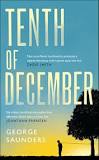
SHORT STORY REVIEW: Tenth of December by George Saunders

10thDecI’ve been reading the Best American Short Stories of 2012Within this anthology is a story called Tenth of December by George Saunders; it’s also the title and concluding story of Saunders’s most recent collection.

This story interweaves two arcs, one of a boy and the other an old man. It’s this contrast between a man just starting life and another nearing its end that’s the focal point for the story. The lives of these two are brought together during a tragic winter event that leaves the reader uncertain as to whether either, both, or neither of the two will survive.

Saunders’s style is sparse, not in the manner of Hemingway but in a way that happily and freely abandons the sentence as the essential basic unit of writing –as opposed to occasionally letting phrases shine. The author also forgoes the traditional approach to noting dialogue. However, like Cormac McCarthy, Saunders makes himself clearly understood nevertheless.

Saunders displays a great sense of humor in this work. This is particularly noted as we are shown the boy at play during the piece’s introduction. I cracked up when it’s mentioned in boy’s internal monologue that he invented a martial art called Toi Foi, A.k.a. “Deadly forearms.”

The author masterfully captures the varied voice of boy and old man. The contrast between the playful youth and the reflective elder is a powerful commentary on the cycle of life.

BOOK REVIEW: Matterhorn by Karl Marlantes

Matterhorn: A Novel of the Vietnam WarMatterhorn: A Novel of the Vietnam War by Karl Marlantes

My rating: 5 of 5 stars

Marlantes gives one insight into what it was like to be a soldier, in particular a young officer, during the Vietnam War. For those confused by the name, “Matterhorn” is the name of a fictional encampment in central Vietnam in the book.

In Matterhorn, war is as it has famously been defined, “long periods of intense boredom punctuated by brief instants of sheer terror.” The author builds his characters such that the periods of intense boredom are informative. We see how the tension of the war boils over into fresh hell that interrupts the boredom.

Racial issues play a major part in the drama of the book. The main character, Waino Mellas, is white and of the variety who are almost apologetic in the presence of blacks. However, within the unit there are both black-power movement types as well as good ole boys, making for one powder kegs that erupts during the course of the book.

Race is not the only fault line we see in Matterhorn. There is also a tension between “lifers” and draftees. However, the bigger tension is between the front line troops and those who direct them from afar. The most intense section of the book involves a raid on a hill for which the men are undernourished and under-supplied.

The author was a Marine in Vietnam, and this experience no doubt contributed to the book’s authenticity.

I highly recommend this book as a powerful examination of the role that valor and vice play in war.

View all my reviews

Book Review: LOST HORIZON by James Hilton

Lost HorizonLost Horizon by James Hilton

My rating: 4 of 5 stars

On its face, this is Hilton’s take on the tale of the lost city of Shangri-la. However, look more deeply and you’ll find a commentary on the clash of Western and Eastern civilizations. It follows three Brits and an American who find themselves hijacked, crashed, and rescued by the occupants of Shangri-la. The main character is a British diplomat. He’s  sharp, practical, and likable. He represents the West at its most virtuous. He is tolerant and polite. A second British man, who I think represents “Empire”, has a negative attitude throughout and looks down upon the locals as lesser beings. The third Brit is a missionary woman who represents “religion.” She considers the Shangri-Laians to be “godless” heathens because they aren’t Protestant Christians. But unlike “Empire” who just wants to get “back to civilization”, “Religion” is happy to stay to “save” and convert said heathens. The American represents “Commerce” and / or “Greed”, and is a business man who is on the lam and incognito after being wanted for white-collar crime. He becomes happy in Shangri-la, but only inasmuch as he sees it as a goldmine of opportunities not yet capitalized upon.

It’s an interesting read.

View all my reviews

Book Review: WATERSHIP DOWN by Richard Adams

Watership DownWatership Down by Richard Adams

My rating: 5 of 5 stars

This novel follows the trials and tribulations of a group of rabbits who leave a warren upon a warning from a prescient little rabbit named Fiver. Their exodus is fraught with peril from nature, man, other animals, and even other rabbits. The challenges they face threaten their unity as well as their survival.

Adams builds an intriguing cast of characters. Hazel is thrust into a leadership role. Bigwig is the physically powerful security chief. Fiver is the intelligent runt gifted with ESP. General Woundwort is the cunning and terror-inspiring enemy they must defeat to live in peace.

The book contains life lessons interspersed:
– One learns that the quintessential lover may also be a fighter.

– It shows how building alliances outside one’s comfort zone (sometimes outside one’s species) may allow one to win out over those rigidly uncompromising

– One discovers that sometimes one can only win by risking everything.

I found it to be a unique concept and very readable.

You’ll have to learn a little rabbit vocabulary and mythology, but there’s a glossary.

View all my reviews