POEM: Savage Gravity

This isn’t a gentle tidal temptation.
It has the power to pull eyes and minds —
the mighty diesel pulling from the station,
the force to strip the fruits from rinds.

That savage gravity can’t be rebuffed;
it won’t let itself by staked, strapped, or cuffed.

POEM: Horde Swarm Revolution

This horde had huddled down in the alley.
Past hordes had hid to overlook valleys,
but bucolic hordes are a beast long past.
The valleys, farms, and fields are too vast.

Like roaches hide in walls, they need tight spaces.
Unidentifiable by faces —
they’re only known en masse, not à la carte.
They’ve many chests, but just one beating heart.

I’ve heard it said, they eat both girls and boys,
and that they spit out bits of clothes and toys.
But that may be a horde-hating rumor,
like that they grow together into one tumor.

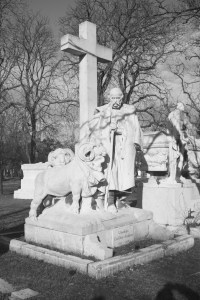
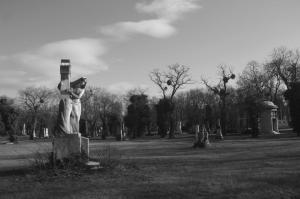
Graveyard Haiku

a headstone
worn unreadable
stone outlived bones


fresh flowers
and wild tufts of grass
tell mixed stories


granite mourners
draped over gravestones,
unweeping


no pyramid
is so sublime the Pharaoh
welcomed death


the potter’s field
has mystique unknown to
mausoleums

BOOK REVIEW: The Nightgown & Other Poems by Taisia Kitaiskaia

The Nightgown & Other PoemsThe Nightgown & Other Poems by Taisia Kitaiskaia
My rating: 5 of 5 stars

Amazon.in page


This playful poetry collection takes fairy tales and folklore as a theme, but — as in those tales — it makes magical leaps, refusing to be restrained. Amid poems that meander in a fun but stream-of-conscious way, denying the reader literal meaning, there are lines that — like Zen koan — slap the reader in the face for trying to rationally calculate a meaning. (An example that stuck with me is, “candles are dying to see me naked.”)

The poetess is clearly a word-lover, and occasionally makes bold choices of verbiage, sending me to the dictionary for words like “oubliette.” Though I must say there was always a nice pay-off. These weren’t words chosen solely for sound quality, they invariably represented evocative or profound ideas. (e.g. The aforementioned example, “oubliette” is “a secret dungeon with access only via a trapdoor in the ceiling.”)

Lest I make the collection sound impenetrable (if fun,) I’d say it just requires a certain surrender to whatever it kindles in the reader.

I immensely enjoyed reading this collection. It’s fun. Even when it’s taking on serious topics, which it does, it doesn’t take itself too seriously and it’s all the more effective fore it.

I’d highly recommend poetry readers give this one a try.

View all my reviews

POEM: Asylum Drop

dark room, dark floor —

fell through a trapdoor,

falling, falling

screaming, & calling

no one near to hear

&

no floor to fall to,

but wall-to-wall with fear

’cause of cyphers, who

— oh so rudely jeer

while singing,

“The end is near,

but your end is nearer,

so hold the past dear,

but the present dearer —

because that’s all…”

POEM: Hill Temple

Those old, stone boulders —

rough, cold, and lonely.

Topped with temples older

than the one and only —

that cave carved in a hill,

chiseled in ancient rock

by feat of iron will —

precise as key-in-lock.

How long will it last

for pilgrims to walk

into the distant past,

’til it erodes like chalk?

30 Flavors of Poetry: NaPoMo 2020 Recapped

Here’s a linked list of the thirty poems I did this month (each in a different style) for National Poetry Month (and the various other descriptors it’s become known by: e.g. #NaPoWriMo and #GloPoWriMo )

1.) Limerick: Viral Limerick

2.) Sonnet: A Sonnet in Contradictions

3.) Haiku: Solitude Haiku

4.) Ghazal: Away

5.) Acrostic: BANGALORE

6.) Villanelle: Escaping the Frame

7.) Clerihew: A Few Clerihew

8.) Ode: Ode to my Immune System

9.) Ruba’i: Cloud Ruba’iyat

10.) Tanka: Rainy Day Tanka

11.) Free Verse: Train of Sleep

12.) Rondeau: I’ve Seen Sunsets

13.) Senryu: A Few Senryu

14.) Pantoum: Bee Flow

15.) Elegy: Spanish Flu Elegy

16.) Narrative: The Philosopher

17.) Doggerel: All Hail, Warhol!

18.) Prose Poem: Perpetual City

19.) Idyll: Sense of the Meadow

20.) Sestina: Fear in Motion

21.) Lai: Rubber Ducky

22.) Ottava Rima: The Unblemished & the Indelible

23.) Aubade: Booty Call Aubade

24.) Confessional: Fear & the Snowflake

25.) Triolet: The Cult of Leandra

26.) Lyric: Sound

27.) Eclogue: After the Rains

28.) Symbolist: Pressure

29.) Dickinsonian: (1)

30.) Ballad: Orpheus Twisted

POEM: Orpheus Twisted [Day 30 NaPoMo: Ballad]

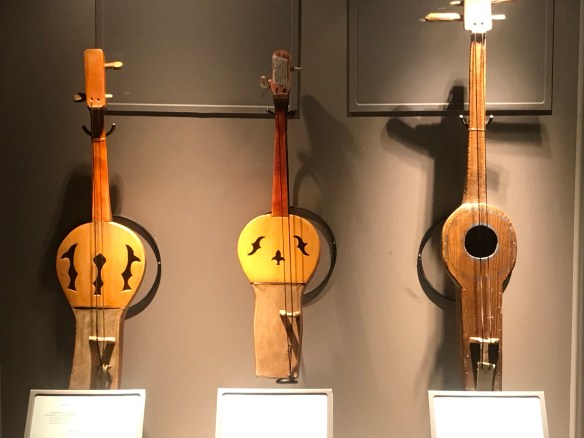
He played his way to the underworld,
capturing every ear.
Even the gods couldn’t move to fight,
but stood stock still to hear.

The musician made his merry way
to the throne of the gods.
And boldly made a petition
that defied rules and odds.

Ye, gods! There’s been a huge mistake.
My wife, she died too soon.
If you’ll let us go on our way
I’ll play THE most dulcet tune.

The gods conferred and reached a verdict:
“If our terms are heeded
and your tune is dreamy enough,
she Will be conceded.”

Tuning his lyre, the artist asked,
“May I, Now, hear the terms?”
“Lead her above — without a peek,
or t’s back to food for worms.”

The dulcet tune was as he claimed,
and Two had leave to go.
From Styx out to the burning sun,
he itched, her place, to know.

When almost out, he heard a thud
and his name feebly called.
He stayed true to the gods’ strict terms,
as her blood puddle sprawled.

As she was retaking bodily form,
she’d tripped upon a rock.
Maybe direct pressure on the wound
and she’d not bled into Shock.

So if god or man makes you a deal
contingent on ignorance,
you might think twice before taking
up residence inside that fence.

POEM: _____________________ [Day 29 NaPoMo: Dickinsonian]

[Emily Dickinson and Walt Whitman were poetic revolutionaries whose new approaches to the art were highly influential in the creation of a distinctive American tradition of poetry. It’s often said that all Dickinson’s poems are written in common meter (alternating lines of four and three feet) and can thus be sung to “Yellow Rose of Texas” or “God Rest Ye Merry Gentlemen.” While that’s not perfectly accurate, it is true that a substantial portion of her work fits that mold. In terms of form, the other thing Dickinson is famed for is the use of dashes, though there is no consensus agreement about a well-defined rationale for their use.

Moving from form to content, Dickinson’s style offers a singular approach to metaphor. Also, while she usually deals in weighty topics such as death and loneliness, her verse often has a whimsical / witty tone. (e.g. “Because I could not stop for Death — He kindly stopped for me –” (479)) Her poems normally feature a first person and frame that person as — first and foremost — an observer (i.e. a seer and a hearer.)

Also, I’ve not put a title to this poem because Dickinson didn’t title her poems. They are normally ordered by first line, a number, or both. This isn’t a form of laziness, but seems to reflect Dickinson’s preference for propelling the reader into the heart of the matter without prelude.]

A Poem lands a heavy blow
against these muted walls.
To those who think this Cell, my cell —
I’m never here — at all.

For I’m a wave on churning Seas —
a thousand miles away.
‘Twas written so — long days ago,
no page has bid me stay.

POEM: Pressure [Day 28 NaPoMo: Symbolism]

The overseeing angels-of-the-angry-kind strain, but can’t generate sufficient force of eye. So, they weep in their failure.

Chained to a pillar on the temple mount, the floggings amount to little more than bloodlettings. The thin fluid rolls away, replaced by thicker and more hardy concoction.

Even the ravenous robed one has no pull. He’s too far from the children and too familiar to the elders.

So the scene replays. It’s a dream scene that will roll over into real life, becoming more vivid and closer to true — no longer a dim facsimile.

One’s only hope is that one’s less evil twin isn’t evil enough.