
Dear Sister, Kim Yo-Jong,
won't have to wait long.
She'll take power easy as you please,
if her brother keeps eating wheels of cheese.
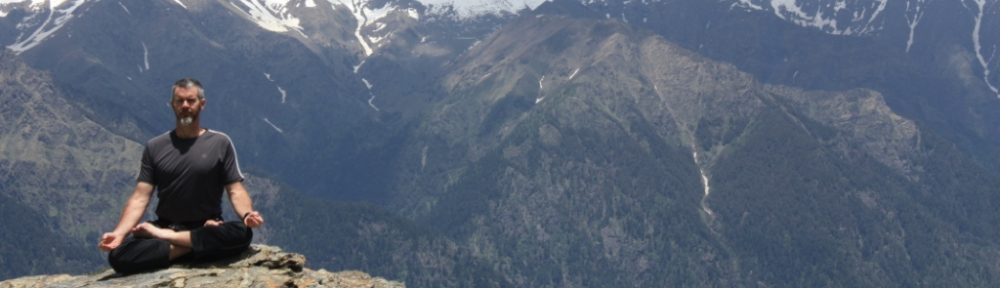
Dear Sister, Kim Yo-Jong, won't have to wait long. She'll take power easy as you please, if her brother keeps eating wheels of cheese.

I stare at the flowing river,
and, for a moment, it seems still,
as the world whips into
a wild ride of vertigo,

leading me to question
all I believe about
the still & the moving.

Everything that's still
is spinning, orbiting,
and expanding

Everyone who's still
is a seven-jetted
space monkey
on a rocket ride.
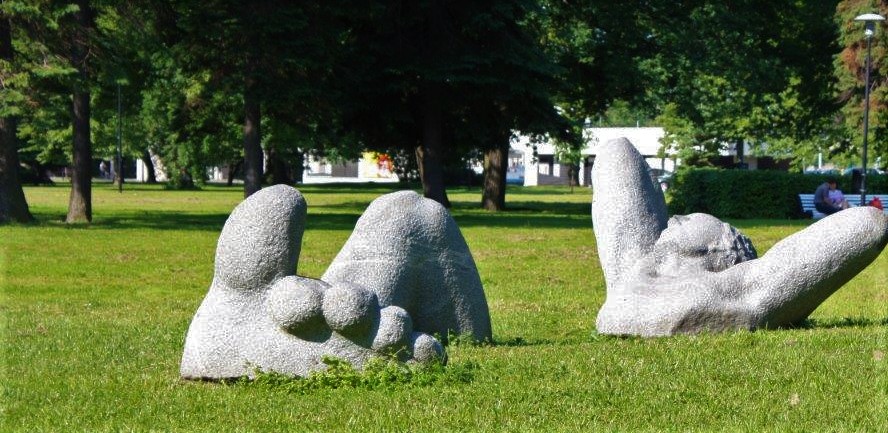
They say hands are the hardest human part to artistically render --
to draw or sculpt or paint,
causing artists to hide hands,
or at least to not replace them
when an earthquake or inept movers
break them off.

I believe them.

The perfect curve is not easily attained,
all those random crenulations and creases,
the lumps and knuckle nubs,
the veins and blemishes,
all that is necessary to convey life --
be it a hard, hammer-wielding hand,
or the soft suppleness of an unworked hand.

Straight digits can create an uncanny valley
as surely as does a rubberized face.

Emotion is expressed through hands,
as through faces.

I heard that the straightened fingers of
Olympia's left hand caused quite a controversy
when Manet presented the painting,
causing almost as much of a stir
as the fact that she was an ashen,
syphilitic prostitute.

In Dream Yoga, we do reality checks with our hands,
looking at the hand,
looking away,
flipping it over,
and then looking at it once more.

Doing this whenever one sees
anything strange or suspect.

It trains the brain,
which - in sleep - shuts down its suspicious bits,
to take note of the nonsensical.

If you're awake,
you just see your same old [underestimated] hand.

If you're asleep,
you won't see five perfectly curved fingers,
you might see an expansive fractal pattern,
or a cloven, bifurcated, mitt.

Even our sleeping brain can't keep track
of five wriggling little digits.

No wonder they give artists such fits.

The air was dry and the valley was dry. Tufts of yellow grass clung to the hillside and to the edges of the valley floor -- where they joined with the barren, brown tines of bleak shrubbery. In the riverbed, smooth stones and boulders sprawled to the shoulders, far wide of the feeble stream that flowed at the moment. The water ran gray, having come from the edges of a glacier that scoured its way down a granite channel. And in the "V" far ahead, clouds as thick as the mountains were being lifted and dropped over a snowcapped peak, pretending they'd bring their moisture into this arid landscape.
mountain clouds
may become your fog, or
may sit in wait
In haunted hours, I wilt to sleep,
and know that I'll be cursed in dreams.
I'll drift upon Stygian streams
at speeds between trickle and creep,
listening for some distant screams.

In haunted hours, I wilt to sleep,
and know that I'll be cursed in dreams
trapped down below the castle keep,
until the King should come to deem
me worthy of some healing dreams.

In haunted hours, I wilt to sleep,
and know that I'll be cursed with dreams,
drifting upon Stygian streams.

There was an old woman from Phnom Penh
who liked to canoe now and again,
but boating Tonlé Sap --
despite compass and map --
she'd forget which way it flowed, now-and-then.
[Note: The Tonlé Sap is one of the few rivers in the world that changes its flow each year due to the rainy season surge. (As opposed to owing to daily tidal surges — which are more common.)]
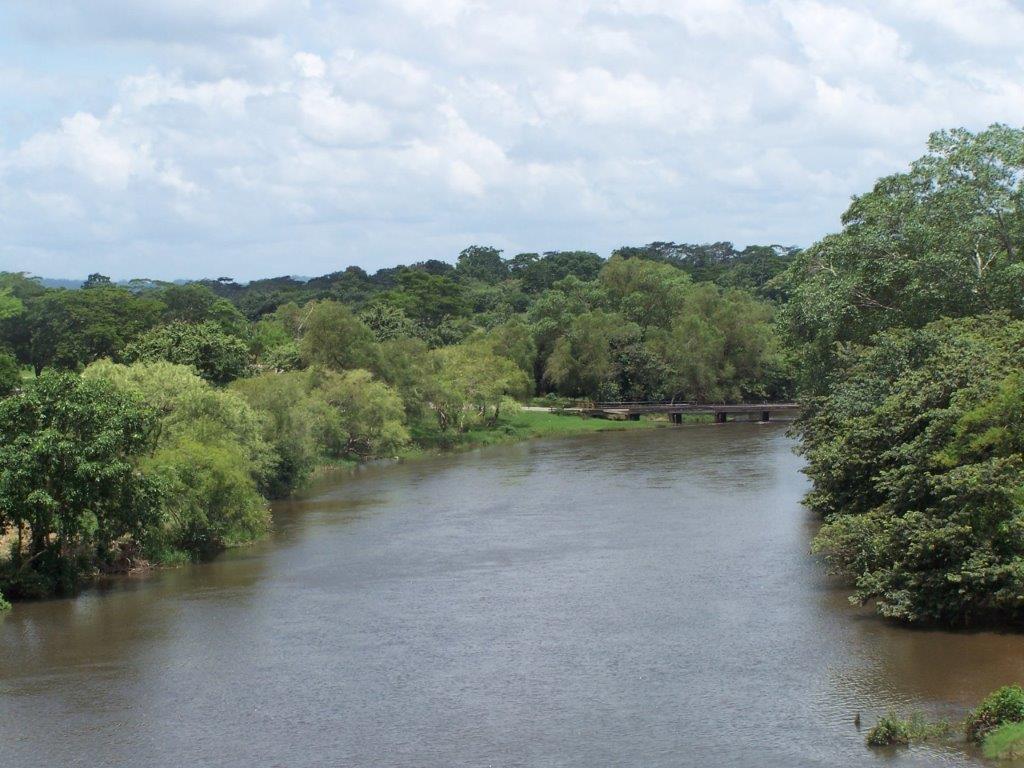
The rising waters spill into a flood.
All who aren't holding tightly are soon lost.
Dead swept away in tobacco-colored mud --
clogged and coated as they're rolled and tossed;
crushed and carried with all other debris;
ever moving toward a wide blue sea.

But one body will never reach that sea.
Some wide river will dissipate the flood,
and banks and bends will catch all that debris.
There's more than one route to a lifetime lost.
Not everything is caught that's deluge tossed --
some stay, hidden, buried in deepest mud.

What's stuck in mud long enough becomes mud,
and nothing more than silt reaches the sea.
Though clues will be found from the houses tossed --
like jack-booted thugs - so behaves the flood.
It ensures treasures remain ever lost,
while unloved scraps stay twisted in debris.

How quickly cherished goods become debris --
just swirl them around in some dodgy mud,
and what was loved will be forever lost
as if it were trapped deep below the sea
with speed as surprising as in flashflood.
Only spared heirlooms avert being tossed.

The churning river makes me feel I'm tossed --
as if circulating in the debris.
But I am not a victim of this flood,
just one who sees the future in the mud
and one who sees the past writ in the sea,
and, seeing both, is nonetheless still lost.

To know maps doesn't mean to never be lost.
To ride floods requires being rudely tossed,
and doesn't mean you'll ever detect the sea,
nor that you'll be classed: "unloved debris."
There's always something shining in the mud --
all the more so after the crest of flood.

So, be lost without becoming debris --
a thing that's tossed but shines in the mud,
and, never seeking sea, just rides the flood.

Everything I know spends time stuck at intersections:
-Forgotten & Loved
-Remembered & Invented
-Lost & Found
-Lost & Remembered
-Lost & Hopeful
-Hopeful & Naïve
-Naïve & Sentimental
-Sentimental & Rational
-Rational & Irrational
-Irrational & Humble
-Lucky & Smart
-Smart & Humble
-Forever & Never

&
so on,
&
 so on.
In the early morning hours,
a staggering drunk asked me
if I were him,

thinking he was looking
at a mirror
rather than through
a glass door.

I told him it was too early
for such metaphysical inquiry.
snowy mountain
two sets of tracks: one straight,
one meanders


